
Link to CAarl Thayer’s article:
Tháng: Tháng Năm 2015
Before and after: The South China Sea transformed
Hi cả nhà,
Em gửi 1 bài báo ạ.
Hình ảnh trong bài có slider (thanh trượt) ở giữa nhưng khi copy and paste thì slider này không có. Cả nhà nếu xem theo đường link thì sẽ thấy ạ.
Chúc cả nhà một ngày tốt lành.
Em Hương,
*****
US B-1 Bombers to Australia
Foreign Policy: Situation report
Thursday, May 14, 2015
By Paul McLeary with Ariel Robinson
Well, that’s news. Washington has big plans for stationing advanced weaponry in Australia, senior Defense Department officials say, in what would be a military first for the two close allies.
During testimony before the Senate Foreign Relations Committee on Wednesday, the Defense Department’s Assistant Secretary for Asian and Pacific Security Affairs David Shear said that in addition to the movement of U.S. Marines and Army units around the region, “we will be placing additional Air Force assets in Australia as well, including B-1 bombers and surveillance aircraft.”
The plans come just as Washington considers sending ships and aircraft to South China Sea to assert the right of free passage and challenge Beijing’s recent island building spree there, including airstrips in a bid to expand its scope of influence.
Requests for comment to the U.S. Pacific Command and Pacific Air Forces have not been returned, but stationing bombers in Australia is not an entirely new idea. Back in 2013, then-commander of the Pacific Air Forces Gen. Herbert “Hawk” Carlisle (who is now Commander of Air Combat Command) floated the idea, but nothing came of it.
But now U.S. officials are adamant. “We claim the right of innocent passage in such areas, and we exercise that right regularly, both in the South China Sea and globally,” Shear said. Earlier in the day, Pentagon spokesman Col. Steve Warren said that “international law does not recognize man-made islands as an extension of the mainland, and in this case, nor do we.”
“No matter how much sand you pile on a reef in the South China Sea, you can’t manufacture sovereignty,” Daniel Russel, Assistant Secretary of State for East Asian and Pacific Affairs, told the Senate committee.
Phạm Thu Hường
16 thg 5
Re: [unclosforum] Re: US B-1 Bombers to Australia
Người nhận khác: tdhoanh@gmail.com
Em cảm ơn anh Hoành đã thông tin,
Em gửi phần dịch sang tiếng Việt em đã đăng trên trang FB của Forum:
US B-1 BOMBERS TO AUSTRALIA
Tin tức mới. Washington có kế hoạch lớn cho việc đóng quân với các loại vũ khí tiên tiến ở Úc, các quan chức cấp cao của Bộ Quốc phòng nói rằng, điều này sẽ là một ưu tiên quân sự đầu tiên của hai đồng minh thân cận.
Trong phiên điều trần trước Ủy ban Đối ngoại Thượng viện hôm thứ Tư, Trợ lý Bộ trưởng Bộ Quốc phòng cho châu Á và Thái Bình Dương, David Shear nói rằng ngoài sự sẵn sàng của thủy quân lục chiến và quân đội các đơn vị xung quanh khu vực, “chúng tôi cũng sẽ lắp đặt thêm những căn cứ không quân ở Úc, bao gồm cả máy bay ném bom B-1 và máy bay giám sát.”
Các kế hoạch được đưa ra chỉ sau khi Washington xem xét gửi tàu và máy bay đến Biển Đông để khẳng định quyền đi qua tự do và để thách thức sự xây dựng đảo cấp tập gần đây của Bắc Kinh ở khu vực đó, bao gồm cả xây dựng đường băng trong một nỗ lực để mở rộng phạm vi ảnh hưởng của họ.
Những yêu cầu bình luận về Bộ Tư lệnh Thái Bình Dương và Không quân Thái Bình Dương Hoa Kỳ đã không được đáp lại, nhưng việc đóng quân máy bay ném bom ở Úc không phải là một ý tưởng hoàn toàn mới. Từ năm 2013, chỉ huy của Lực lượng Không quân Thái Bình Dương khi đó là Tướng Herbert “Hawk” Carlisle (hiện là Tư lệnh của Bộ Tư Lệnh Combat Air) đã đưa ra ý tưởng này, nhưng không có gì xảy ra.
Nhưng bây giờ các quan chức Mỹ đang kiên quyết. “Chúng tôi yêu cầu quyền đi qua vô hại trong các khu vực này, và chúng tôi thực hiện quyền đó thường xuyên, cả ở Biển Đông và trên toàn cầu,” Shear nói. Trước đó trong cùng ngày, phát ngôn viên Lầu Năm Góc, Đại tá Steve Warren nói rằng “Luật pháp quốc tế không công nhận các đảo nhân tạo như một phần mở rộng của đất liền, và trong trường hợp này, chúng tôi cũng không công nhận.”
“Bất kể bao nhiêu đống cát được đổ trên một rạn san hô ở Biển Đông, không ai có thể sản xuất chủ quyền,” Daniel Russel, Trợ lý Ngoại trưởng đặc trách Đông Á và Thái Bình Dương, nói với ủy ban Thượng viện.
https://foreignpolicy.com/…/situation-report-b-1-bombers-t…/
By Paul McLeary with Ariel Robinson
em Hường
Foreign Policy
Friday, March 15, 2015
Paul McLeary with Ariel Robinson
The flap over Down Under. The comments by a senior U.S. Defense Department official about American B-1 bombers and surveillance planes possibly being stationed in Australia have caused quite a stir Down Under, where defense officials maintain that “the official misspoke.”
But neither Australian nor American officials will deny that talks over the planes are ongoing, and sources on both sides admit that the Australian-U.S. security relationship continues to grow, and the expansion of American presence in the region will continue. They just won’t say exactly how.
One Pentagon official told FP that the deployment of bombers and spy planes are “in the plans, but it’s not yet planned.” Implication: talks are ongoing but nothing has been finalized.
U.S. Air Force Capt. Ray Geoffroy of the U.S. Pacific Air Forces Command emailed us that the Air Force “has routinely deployed bomber assets through Australia in the past, including a B-52 visit last December.”
“With regard to our force posture initiatives in Australia,” Geoffroy wrote, the Defense Department “is currently exploring a range of options for future rotations with our Australian counterparts. The specifics of future force posture cooperation are yet to be finalized.”
The controversy began when the Pentagon’s Assistant Secretary for Asian and Pacific Security Affairs David Shear told a Senate panel on Wednesday that B-1s and surveillance planes will soon be deployed to Australia.
US: A Cooperative Strategy For 21st Century Seapower, March 2015
Dear Brothers and Sister,
A COOPERATIVE STRATEGY FOR 21ST CENTURY SEAPOWER, MARCH 2015 is the document outlining how the US Navy, Marines Corps and Coast Guard plan a cooperative strategy with other countries’ navies around the world to respond to security risks globally.
the 48-page document is available here:
Nhấp để truy cập 150227-CS21R-Final.pdf
The “Indo-Asia-Pacific section is below for your convenience.
Hoanh
___________________
Indo-Asia-Pacific
With strategic attention shifting to the Indo-Asia-Pacific, we will increase the number of ships, aircraft, and Marine Corps forces postured there. Tiếp tục đọc “US: A Cooperative Strategy For 21st Century Seapower, March 2015”
HẾT GẠC MA, TRUNG QUỐC NGANG NGƯỢC ẦM ẦM XÂY ĐẢO Ở HUY GƠ
19/05/2015 13:49
(TNO) Đá Huy Gơ là bãi đá ngầm nằm trong cụm đảo Sinh Tồn, thuộc quần đảo Trường Sa (Khánh Hòa, Việt Nam), bị Trung Quốc chiếm giữ trái phép từ cuối tháng 2.1988. Đá Huy Gơ còn được gọi với tên khác là đá Tư Nghĩa, cách Gạc Ma khoảng 15 hải lý theo hướng tây nam. Tiếp tục đọc “HẾT GẠC MA, TRUNG QUỐC NGANG NGƯỢC ẦM ẦM XÂY ĐẢO Ở HUY GƠ”
US Congressional Research Services : US-VN relation 2014
Dear brothers and sisters,
FYI, if you haven’t got it.
US-VN relations 2014: Current Issues and Implications for US Policy
Hoanh
Document: Pentagon 2015 Report to Congress on China’s Military Power
The Report can be downloaded here:
Japan Chair Platform – John Hemmings on the New U.S.-Japan Defense Guidelines
Dear brothers and sisters
Below is a good analysis of the new Guidelines for U.S.-Japan Defense Cooperation (April 27, 2015)
I have highlighted the parts related to Biển Đông and China .
Hoành Tiếp tục đọc “Japan Chair Platform – John Hemmings on the New U.S.-Japan Defense Guidelines”
Images show Vietnam South China Sea reclamation but not as vast as China’s actions
The Telegraph
Images show Vietnam South China Sea reclamation but not as vast as China’s actions
The expansion of the land area of Vietnamese-controlled Sand Cay and West London Reef in the Spratly is shown in satellite images from Washington’s Centre for Strategic and International Studies
Tiếp tục đọc “Images show Vietnam South China Sea reclamation but not as vast as China’s actions”
ASIA Maritime Transparency Project: Sandcastles of Their Own: Vietnamese Expansion in the Spratly Islands
US-PH war drills open amid China buildup
http://globalnation.inquirer.net/121004/us-ph-war-drills-open-amid-china-buildup/
US-PH war drills open amid China buildup
Allan Macatuno, Armand Galang, Cynthia D. Balana | Inquirer Central Luzon Philippine Daily Inquirer 12:52 AM | Tuesday, April 21st, 2015
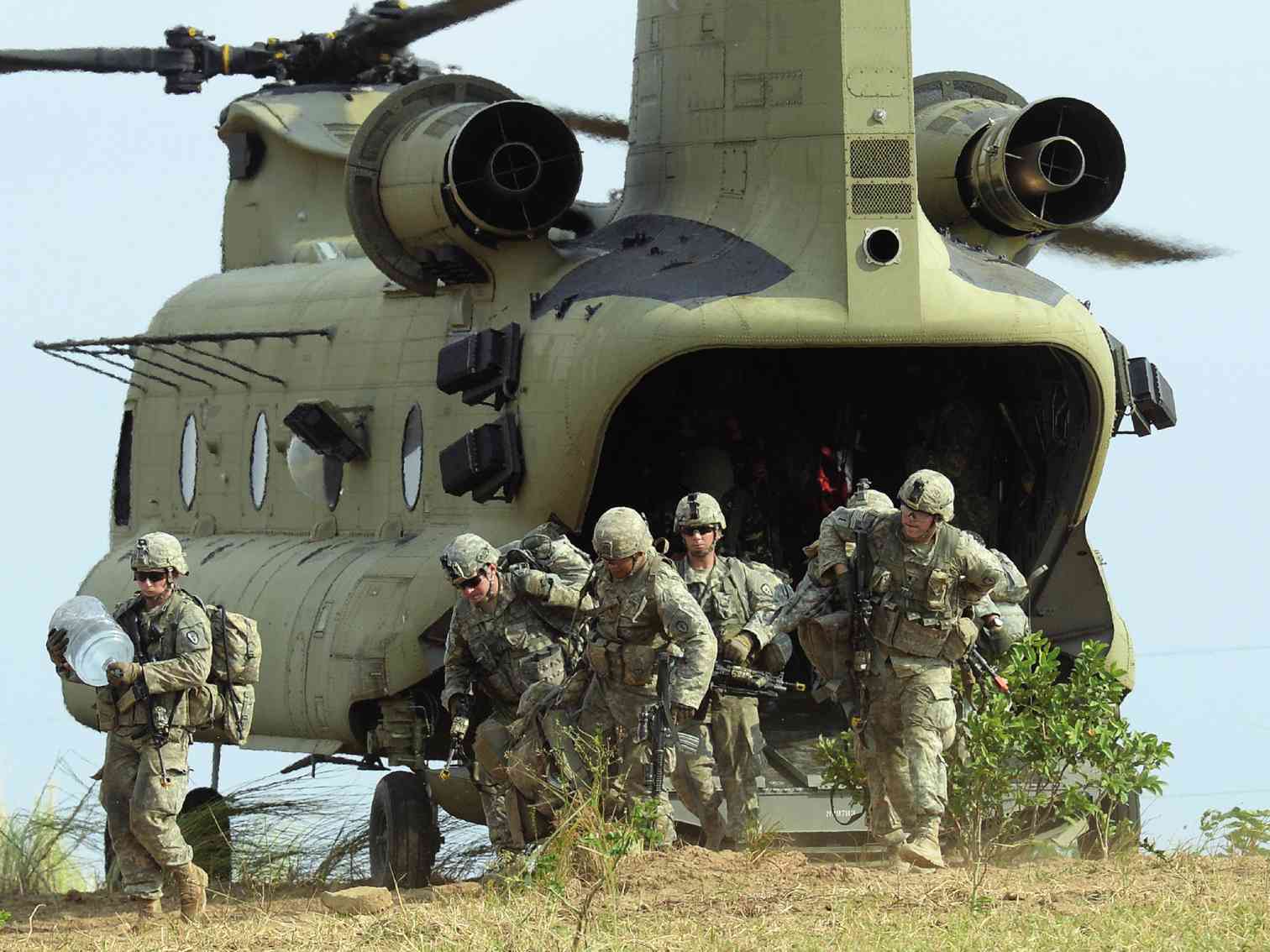 LET THE WAR GAMES BEGIN US soldiers disembark from a Chinook helicopter during an air assault exercise with their Filipino counterparts in Fort Magsaysay, Nueva Ecija province, at the start of the joint US-Philippines annual military exercises. AFP PHOTO
The Maritime Security Implications of the New U.S.-Japan Guidelines
http://amti.csis.org/the-maritime-security-implications-of-the-new-u-s-japan-guidelines/
The Maritime Security Implications of the New U.S.-Japan Guidelines
The new U.S.-Japan Defense Guidelines will upgrade bilateral operational cooperation and enhance the alliance structure. The new Guidelines enable Japanese and U.S. forces to conduct effective combined operations defending each other’s units and assets in the high seas—even beyond Japanese territorial waters. The new Alliance Coordination Mechanism will endorse this upgraded operational cooperation. Under this new Mechanism, the Japan Self-Defense Force (JSDF) and U.S. military will share information and situational awareness from peacetime to gray-zone and full-fledged military contingencies, while coordinating bilateral responses. The Guidelines will have huge implications for U.S.-Japan cooperation in the maritime domain. Tiếp tục đọc “The Maritime Security Implications of the New U.S.-Japan Guidelines”
Vietnam acquires land attack missiles for its submarines
CSIS
May 14, 2015
Vietnam acquires land attack missiles for its submarines. Vietnam is set to operate 50 Russian-made submarine-based land attack missiles that are capable of striking the Chinese mainland as well as Chinese ports and other facilities in the South China Sea, according to an April 30 Reuters report. Vietnam expert Carl Thayer said the purchase signaled a “massive shift” in Vietnam’s deterrence tactics. The new missiles, 28 of which have been delivered over the past two years, will bolster the threat of Vietnam’s new fleet of Kilo-class submarines.
Bạch thư về các quần đảo Hoàng Sa và Trường Sa, VNCH , 1975
Chào các bạn,
Mình vừa post trên unclosforum blog bản tiếng việt “Bạch thư về các quần đảo Hoàng Sa và Trường Sa” mà chính phủ Việt Nam Cộng Hòa (nam Việt Nam) công bố năm 1974, sau khi Trung quốc cưỡng chiếm Hoàng Sa.
http://unclosforum.com/2015/04/24/bach-thu-ve-cac-quan-dao-hoang-sa-va-truong-sa-vnch-1975/
Các bạn có thể download bach thư ở đây.
Mến,
Hoành
Pham Thanh Van
Thứ Bảy, ngày 02 tháng 5 năm 2015
Dự án Đại Sự Ký Biển Đông xin giới thiệu và đăng tải bản số hoá của cuốn tư liệu này ở đây:
Thay mặt dự án,
Vân.
Viet Nam’s Sovereignty Over Hoang Sa And Truong Sa Archipelagoes
PREFACE
BTO – Viet Nam has more than 3,000 coastal islands and two offshore archipelagoes, namely Hoang Sa archipelago and Truong Sa archipelago. The closest point of Hoang Sa archipelago is 120 nautical miles from the east of Quang Ngai. Meanwhile, the closest point of Truong Sa archipelago is about 250 nautical miles to the east of Cam Ranh Bay, Nha Trang city, Khanh Hoa province.
These two archipelagoes are the inseparable part of Viet Nam’s territory. The State of Viet Nam has already exercised the sovereignty over the two archipelagoes for hundred of years. The sovereignty of Viet Nam over Hoang Sa and Truong Sa archipelagoes is in full accordance with international law and supported by numerous legal and historical evidences.
With a view to helping the readers have a better understanding of the process of establishing and exercising Viet Nam’s sovereignty over these two archipelagoes, the National Political Publishing House publishes “Viet Nam’s Sovereignty over Hoang Sa and Truong Sa Archipelagoes.” Tiếp tục đọc “Viet Nam’s Sovereignty Over Hoang Sa And Truong Sa Archipelagoes”
 CVD
CVD 