A black dog in the southern province of Long An has become famous after a heartbreaking story was recently shared on social networks.
Ms. Nguyen Thi Ut, 58, from Hamlet 1, Tan Thanh commune, Tan Thanh district, Long An province, said her family began raising a black dog named Muc (Black) when her grandchild named Kiet was 2 years old.
VỞ DIỄN CƯỠNG ĐOẠT CHỨC “TRƯỞNG NAM CỦA ÔNG NAM HẢI”
Vậy là hai chứng nhân/ứng viên hụt vào danh vị ‘trưởng nam của Ông’ đã được dàn xếp cho khỏi có mặt ở tang lễ của Ông, cũng như từ đây về sau, biến khỏi làng chài Bích Điệp…
1.
Cũng vào tháng 9 âm lịch như hiện tại nhưng lui về quá khứ hơn 100 năm trước, bão tố cũng hoành hành dữ dội ở vùng biển tỉnh Khánh, miền trung Trung Việt. Riêng đối với một làng chài nằm trên hòn Bích Điệp ngoài khơi xa, trận bão cuối tháng 9 ta dù sao cũng được xem là “nhẹ tay” bởi chỉ có một ghe cá chìm, vài bạn (1) kéo lưới mất tích – đặc biệt là tàu cá của ông Bảy, chủ phường cá Bích Điệp, đã lọt vào tâm bão, tưởng chết mười mươi nhưng lại thoát, ông chủ cùng cả chục bạn đều bình an vô sự.
Thursday, October 29, 2020, 11:04 GMT+7 TUOITRENEWS
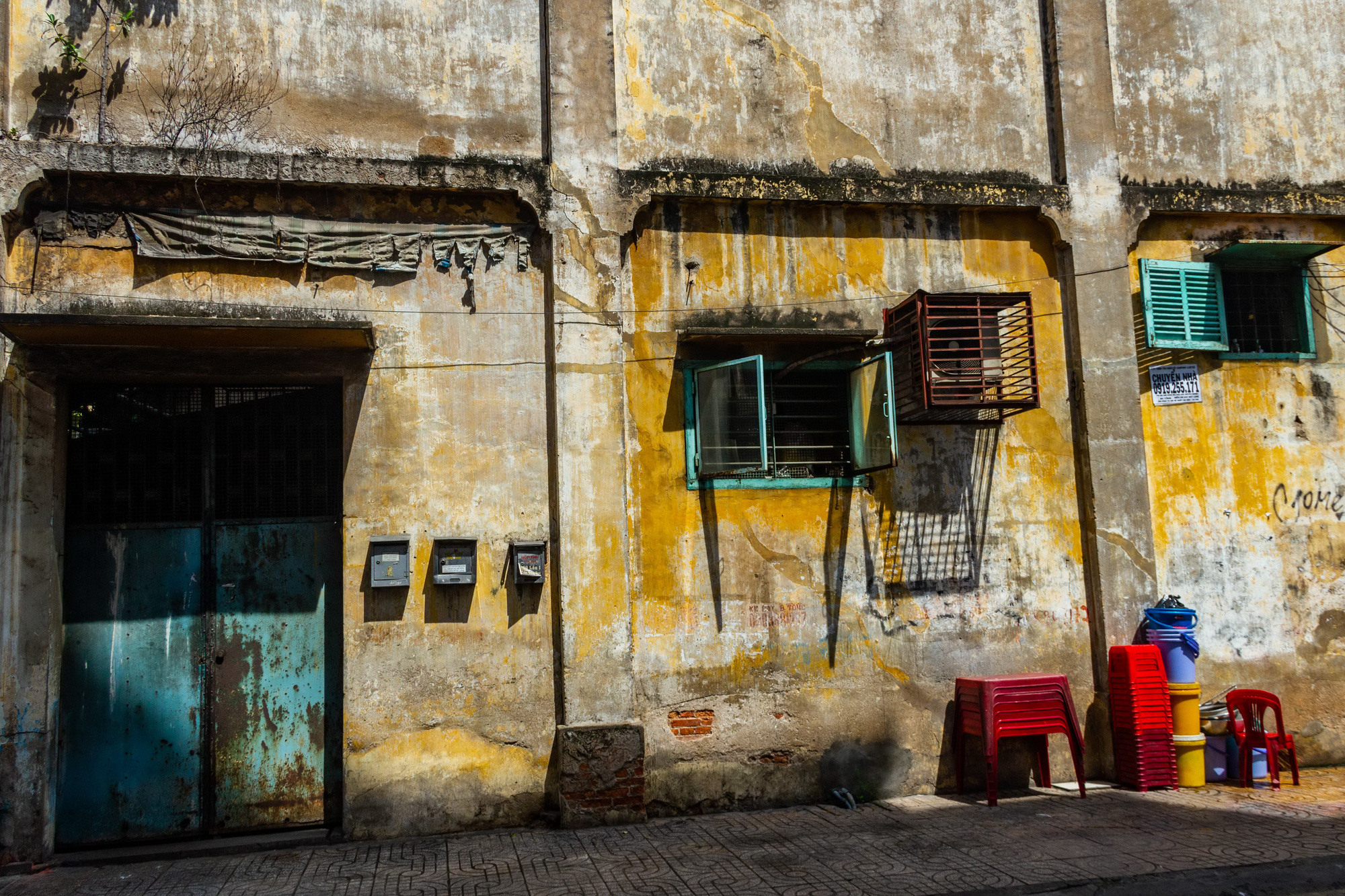
An old wall is seen in Ho Chi Minh City, Vietnam. Photo: Tran Hong Ngoc / Tuoi Tre
Ho Chi Minh City, also known as Saigon, is Vietnam’s largest city and known as the country’s economic and financial hub. Though many visit the city to check out modern life in the metropolis, they often forget about its role as a hub of culture and scientific development.
Dam San Music, Dancing and Singing Theatre in the Central Highlands province of Gia Lai recently hosted the water source worship ceremony for Jrai ethnicity locals in Krêl Village, Krêl Commune, Duc Co District.
The ceremony aims to wish for good health and bountiful crops.
As many as three shamans and four assistants join the ceremony. Offerings include a pig, 10 chickens, sticky rice and a jar of wine.
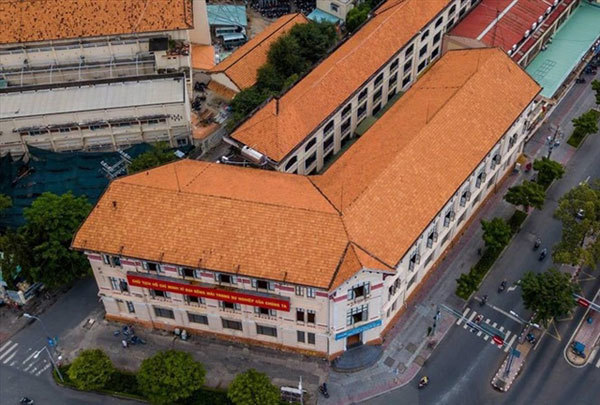
Many experts agree that the 20th-century building in downtown HCM City serving as the headquarters of the Sai Gon Railway Company on 136 Ham Nghi Street needs to be preserved.
The Sai Gon Railway Company headquarters, located at 136 Ham Nghi Street District 1 in HCM City, needs to be restored and preserved. — Photo tienphong.vn
Two architects give their views about the need for preservation:
Phần này bàn về cách dùng nhà thương vào thời LM de Rhodes đến truyền đạo. Đây là lần đầu tiên danh từ này được dùng trong tiếng Việt, so với cách dùng nhà Thương (Thương triều 商朝) cùng một cách phát âm nhưng nghĩa hoàn toàn khác nhau.
Vietnamese American author Nguyen Thanh Viet is seen in a photo uploaded to his personal website vietnguyen.info.
Vietnamese American 2016 Pulitzer winner Nguyen Thanh Viet has been selected as the newest member of the Pulitzer Prize Board, according to an announcement on the award’s official website.
The selection was announced on September 8.
“It’s an honor to join the #Pulitzer Board, especially as its first Vietnamese American and Asian American member,” Viet wrote in a tweet on September 9.
“As someone fortunate enough to be a recipient of the prize, I know the impact that the prize has on a writer’s career and on the perceptions of readers. I’m delighted to join in the Board’s crucial work,” Viet told the Pulitzer.
French photographer Pierre Dieulefils documented Vietnamese landmarks like Saigon Notre Dame Cathedral, Ha Long Bay and Ban Gioc Waterfall in the late 19th century.
The 2.29-kilometer Long Bien Bridge, which connects the downtown district of Hoan Kiem with Long Bien District, was built between 1898 and 1902 by the French during their colonial rule. It was initially called Doumer Bridge after Paul Doumer, a French governor-general of Indochina. At the time of construction it was one of the world’s longest bridges. After the country’s liberation it was renamed Long Bien Bridge. Pierre Dieulefils was a soldier in Indochina before returning to Vietnam in 1888 to follow his passion for photography. A total 261 of his photos, taken across Vietnam, were printed in the book “Beautiful and Magnificent Indochina” released last August.
An aerial view of Nam Dinh Town’s center. The town is now capital of Nam Dinh Province in northern Vietnam, nearly 90 km from Hanoi.
Ha Long Bay more than a century ago. In 1994, the bay in the northern province of Quang Ninh was recognized by UNESCO as a world natural heritage, earning it global fame.
Ban Gioc is considered Vietnam’s most beautiful waterfall, one of the largest natural waterfalls in Southeast Asia, and also the fourth largest in the world amongst those located on an international border. Ban Gioc Waterfall is in Trung Khanh District of Cao Bang Province on the border with China, around 340 km (225 miles) to the north of Hanoi.
The area outside the Hue Imperial Citadel in Hue Town, central Vietnam. The relic was built under the reigns of Kings Gia Long and Minh Mang, to the north of Huong (Perfume) River. It combines traditional Vietnamese architecture, the eastern philosophy of yin and yang, and Western military architecture. Gia Long was the first emperor (ruling 1802-1820) of the Nguyen Dynasty, Vietnam’s last royal family (1802-1945), while Minh Mang was the second emperor (ruling 1820-1841).
Mossy stone steps at Thieu Tri Mausoleum, the tomb of Emperor Thieu Tri, the third Nguyen Dynasty king (ruling 1841-1847). This area is now part of the Hue Monuments Complex recognized by UNESCO as a world cultural heritage in 1993. Today, the mausoleum is located in Cu Chanh Village of Huong Thuy Town in Hue.
Ninedynastic urns stand in front of The Mieu Temple in the Hue Imperial Citadel. Construction on these nine urns started in 1835 and completed in 1837 under the reign of King Minh Mang. Each urn was decorated with 17 bas-reliefs and named in accordance with the posthumous titles of Nguyen emperors worshipped at The Mieu Temple.
Binh Loi Bridge in Saigon. Stretching 276 m with six spans, Binh Loi was the first bridge to cross Saigon River and part of the initial phase of the Saigon-Nha Trang railway line. It was built by Levallois-Perret, a construction company formed out of the former Maison Eiffel, founded by legendary engineer Gustave Eiffel. Last June, the bridge was dismantled because of deterioration after more than 100 years.
Boats in front of a factory in Cho Lon area, formed between the 17th and 19th centuries when ethnic Chinese and their relatives settled here and built a bustling area. In the French colonial time, Cho Lon was a town distinct from Saigon. The two were combined in 1956. Currently, the Cho Lon area is in Saigon’s Districts 5 and 6.
The Saigon Notre Dame Cathedral did not have two bell towers when inaugurated in 1880. They were later added in 1985, to include a total of six large bronze bells, with two crosses at the top, 60.5 m above ground. Located in a tourist precinct that includes the historic Central Post Office in District 1, the 140-year-old cathedral is popular among foreign and local visitors, especially during holiday season.
Pierre Dieulefils (1862-1937) joined the army in 1883 and was later assigned to Indochina in 1885. Two years later, he was discharged and returned to France. In 1888, he returned to northern Vietnam and became a professional photographer and postcard publisher. In 1909, he gathered a set of photos on Indochina and published a photo book entitled “Indo-chine Pittoresque & Monumentale: Annam – Tonkin”. The work earned him a gold medal at the Brussels International Exposition of 1910.
French lensman Pierre Dieulefils captured images of daily life in Vietnam in the 1880s.
At the end of the 19th century southern women preferred “ao ngu than” (five-piece ao dai) and beaded jewelry. According to designer Sy Hoang, rich women used to wear this type of ao dai, with four layers representing the parents of the wife and husband and the fifth, the wearer. The tunic also had five buttons, symbolic of the five qualities everyone should have – nhan (kindness), le (decorum), nghia (uprightness), tri (wisdom) and tin (faithfulness). Tiếp tục đọc “Vietnam in the late 19th century through French photographer’s lens”→
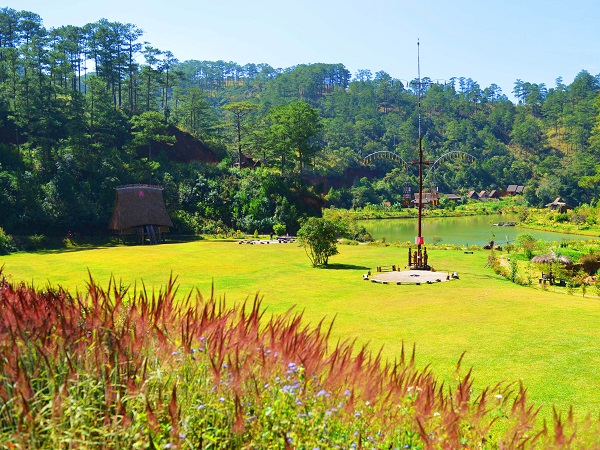
Trong những ngày cả nước giãn cách phòng chống dịch Covid-19, du khách vắng bóng, hàng trăm lao động ở thung lũng ngàn hoa vẫn tất bật xây dựng thêm dãy nhà sàn lưu trú dưới tán rừng, hoàn tất dần từng khâu cần chăm chút cho tuors Đại Ngàn mà chủ doanh nghiệp tự tin sẽ “bùng nổ” khi dịch qua đi.
Nép giữa cỏ hoa
Cách Đà Lạt tới 21 km, đường tới Làng Cù Lần uốn lượn giữa ngàn thông tuyệt đẹp, dù khá bất tiện với những người ngại di chuyển, thời gian ít.
Sau khi ra khỏi phòng vé, Trung đi tìm số chiếc xe đò sẽ đưa anh về lại Tịnh Biên, Tây Ninh. Lúc anh sắp bước lên, xe đã gần đầy khách, một anh bán vé số chống nạng trờ tới, mời mua ; sẵn còn ít tiền lẻ, Trung mua ba tấm rồi bước lên xe và ngồi xuống ghế ; mười phút sau xe lăn bánh khởi hành.
Suốt cuộc hành trình từ ngã tư An Sương đi Tây Ninh, anh miên man nghĩ về năm ngày phép anh vừa trải qua với gia đình. Trung đã có bốn ngày tròn để ở bên vợ và con anh, thằng Phương sáu tuổi năm nay vào lớp năm trường tiểu học. Nhưng thật ra anh không được những giờ phút hạnh phúc trọn vẹn với gia đình : vợ anh Tiên Phụng là chị bếp của cha xứ Giuse Cù Long Mạch và hai ngày nay cô rất bận rộn với việc nấu tiệc cho giáo xứ kỷ niệm 10 năm cha xứ được truyền chức linh mục, sau đó được điều về đây làm cha xứ. Những ngày này Tiên Phụng về rất khuya, mệt mỏi và lạnh lùng. Cô trò chuyện với Trung cho có lệ, sau đó họ làm tình nhưng rất thụ động, thờ ơ như một búp bê bằng sáp lạnh, không còn sự đáp ứng sôi nổi, nhịp nhàng như khi cô chưa sinh thằng Phương. Tiếp tục đọc “Bên này ảo vọng”→
Hôm nay là ngày nghỉ việc theo “tua” nên ông trưởng phòng kỹ thuật ga xe lửa Hòa Hưng Phạm Tiến Phong có thể ngồi lâu giờ trước ly cà phê đen nóng mà vợ ông, bà Mai Dung, sáng nào cũng pha sẵn cho ông trước khi ông đi làm. Ông rút điếu thuốc thứ ba nhìn lên bàn thờ Phật với hình Đức Phật khép mắt ngồi thiền dưới gốc bồ đề rồi lan man suy nghĩ. Tiếp tục đọc “Bến nước mười ba”→
Muslims began the annual haj pilgrimage this year on July 29, 2020 in Mecca, Saudi Arabia. But the 2020 pilgrimage is very different because of the Covid-19 pandemic. Only about 10,000 residents of the kingdom were selected to join, instead of the usual millions of pilgrims who arrive from around the world. As part of the ritual, the Kaaba’s sacred black stone is normally kissed, but that practice as well as other activities have been banned. The pilgrimage will last through to August 2, 2020.


 Linh mục Alexandre de Rhodes và cuốn Phép Giảng Tám Ngày