
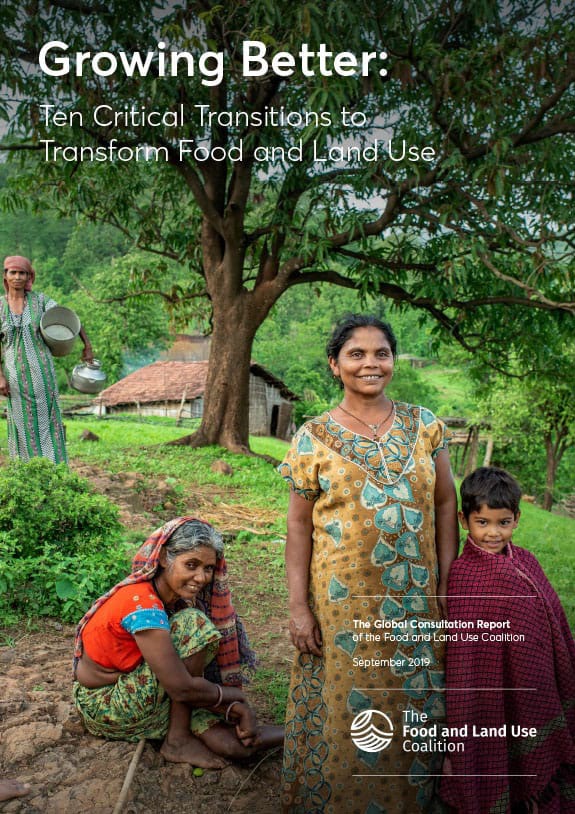
Growing Better: Ten Critical Transitions to Transform Food and Land Use
The Global Consultation Report of the Food and Land Use Coalition September 2019
For people, nature and climate
There is a remarkable opportunity to transform food and land use systems, but as the challenges are growing, we need to act with great urgency. The global report from the Food and Land Use Coalition (FOLU) proposes a reform agenda – centred around ten critical transitions – of real actionable solutions. These could deliver the needed change to boost progress towards the Sustainable Development Goals (SDGs) and the Paris Agreement, help mitigate the negative effects of climate change, safeguard biodiversity, ensure more healthy diets for all, drastically improve food security and create more inclusive rural economies. Tiếp tục đọc “Growing Better report 2019”


 At the end of the Vietnam War, agriculture in Vietnam employed around 75 per cent of the total workforce and produced roughly 10 million tons of rice, the country’s staple. The majority of Vietnam’s population of 50 million was significantly undernourished. Agricultural recovery was slow, blocked by the government’s collectivisation policies. Formal reform efforts through Directive 100 in 1981 partially freed up agricultural markets. They accelerated with doi moi (renovation) in 1986 and the Law on Land in 1988. The latter granted land use rights to households and stimulated a dramatic response from farmers.



 CVD
CVD 