California Becomes First State to Label Monsanto’s Roundup as a Carcinogen

| September 8, 2015 1:40 pm

EcoWatch – In a first for the country, California’s Environmental Protection Agency (Cal/EPA) has issued plans to list glyphosate—the toxic active ingredient in Monsanto’s Roundup herbicide—as known to cause cancer.

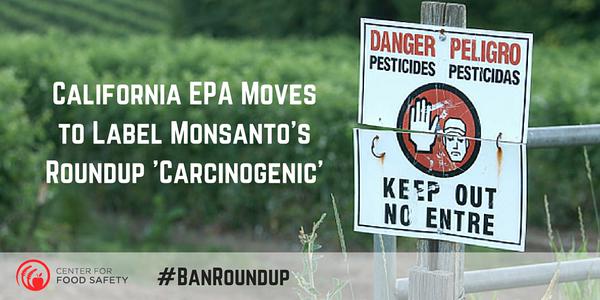
CA label GlyphosateCALIFORNIA EPA MOVES TO LABEL MONSANTO’S ROUNDUP ‘CARCINOGENIC’

Tiếp tục đọc “California Becomes First State to Label Monsanto’s Roundup as a Carcinogen”

Huyện Kiên Lương, Kiên Giang: Dân chết dần vì ô nhiễm môi trường

() – Số 269 GIA BẢO – 10:44 AM, 17/11/2014

Khói bụi từ một nhà máy ximăng bao trùm khu dân cư (ảnh chụp lúc 14h ngày 4.11.2014).

Hàng chục ngàn dân sống trong khu vực các nhà máy ximăng trên địa bàn huyện Kiên Lương (Kiên Giang) khổ sở vì khói bụi thải ra. Không chỉ mắc các chứng bệnh về đường hô hấp, mà khói, bụi còn làm thay đổi cuộc sống của người dân nơi đây. Nhiều người dân ở đây cho biết, sống ở đây mấy chục năm rồi, đã kêu tưởng thấu trời xanh, nhưng đâu vẫn hoàn đấy.

Sống cùng ô nhiễm

Nhờ điều kiện tự nhiên (có nhiều núi đá vôi, có bờ biển), Kiên Lương là nơi có nhiều công ty, nhà máy, xí nghiệp sản xuất ximăng và vật liệu xây dựng lớn nhất khu vực Đồng bằng sông Cửu Long. Chỉ tính riêng nhà máy ximăng (NMXM) đã có đến 5 cái với công suất hàng trăm ngàn tấn/năm mỗi nhà máy. Tiếp tục đọc “Huyện Kiên Lương, Kiên Giang: Dân chết dần vì ô nhiễm môi trường”

What the VW Scandal Means for Clean Diesel

The cars in question include the Passat, Jetta, Beetle, Golf, and Audi A3.

MITtechnologyreview – When Volkswagen debuted the so-called “clean diesel” Jetta TDI sedan and wagon in 2009, it was regarded as something of a breakthrough. The company claimed its new diesel technology would reduce emissions—most notably soot and nitrogen oxides (NOx)—without disrupting the car’s exemplary efficiency or performance.

We now know that unsuspecting owners of some 500,000 VW diesel cars in the United States—and as many as 11 million worldwide—were all the while subjecting themselves and others on the road to extraordinarily high levels of the emissions that cause smog. The company’s CEO apologized after the U.S. Environmental Protection Agency revealed that VW used technology to produce overly forgiving results during smog tests that did not match emissions on the road. Tiếp tục đọc “What the VW Scandal Means for Clean Diesel”

“Sư phụ” của chim trời

27/09/2015 09:16 GMT+7

TT Từ những “mật mã” riêng biệt, ông đã gọi chim trời lũ lượt kéo về làm tổ trong những thế giới yên bình trải rộng khắp miền Tây.

Vừa thấy ông Cương, lũ chim giang sen vui mừng như gặp “tri kỷ” - Ảnh: Chí Quốc
Vừa thấy ông Cương, lũ chim giang sen vui mừng như gặp “tri kỷ” – Ảnh: Chí Quốc

Người ta nói ông là “tri kỷ” của chim trời với phần lớn đời người gắn bó với loài chim. Tận tay ông đã tạo ra hàng loạt vườn chim nổi tiếng ở khắp các tỉnh đồng bằng sông Cửu Long.

Người ta gọi ông là “sư phụ” của các loài chim, yêu chim trời như thành viên trong gia đình và ngược lại, những cánh chim hoang cũng gửi trọn “niềm tin” cho ông. Làm được như điều Hai Cương (Lê Danh Cương, 56 tuổi, ngụ TP Bạc Liêu, tỉnh Bạc Liêu) đã làm, có lẽ chẳng được mấy người. Tiếp tục đọc ““Sư phụ” của chim trời”

Ông Tây canh giữ đàn voọc ở Hòn Hèo: “Bó tay, tôi mệt lắm rồi”

() – Số 218 LINH PHẠN – 3:46 PM, 22/09/2015

Sylvio Lamarche: “bó tay”!.

Sylvio Lamarche, một người Canada trót phải lòng nét hoang sơ của núi cao, biển rộng Khánh Hòa, quyết định ở lại Việt Nam làm du lịch. Từ một lần tình cờ bắt gặp đàn voọc chà vá chân đen rong chơi trên sườn núi Hòn Hèo, Sylvio trở thành “người giám hộ” cho đàn voọc như một cơ duyên.

Cũng chỉ từ khi Sylvio lên tiếng, chính quyền địa phương mới chú ý đến loài voọc này và giới bảo vệ động vật cũng nhanh chóng vào cuộc. Nhưng đó là lúc bắt đầu những nhùng nhằng giữa các bên, chủ trương lập khu bảo tồn sau đó bị rơi vào lãng quên…Đàn voọc chà vá chân đen liệu có an toàn, ai sẽ cứu? Tiếp tục đọc “Ông Tây canh giữ đàn voọc ở Hòn Hèo: “Bó tay, tôi mệt lắm rồi””

Những người “đỡ đẻ” cho rùa biển

10/07/2015 14:40 GMT+7

TTCần mẫn, kiên trì, tỉ mỉ, chăm chút, những “bà đỡ” của rùa biển đang làm nhiệm vụ hồi sinh, nảy nở loài động vật nằm trong “sách đỏ”.

Rùa biển mẹ mang số hiệu “VN 1561” đẻ trứng vào đêm cuối tháng 6-2015 - Ảnh: Đông Hà
Rùa biển mẹ mang số hiệu “VN 1561” đẻ trứng vào đêm cuối tháng 6-2015 – Ảnh: Đông Hà

Từ hơn 20 năm qua, lực lượng kiểm lâm Côn Đảo đã “đỡ đẻ” cho hàng chục ngàn tổ và thả về tự nhiên hàng triệu con rùa biển (còn gọi là vích).

Có thể nói Côn Đảo là vương quốc của rùa biển. Hằng năm cứ vào mùa sinh sản từ tháng 4 đến tháng 11 (trong đó tập trung tháng 6, 7, 8), hàng trăm con rùa mẹ lại kéo nhau về đây đẻ trứng, duy trì nòi giống.

Những điểm rùa biển lên đẻ trứng là hòn Bảy Cạnh, hòn Tre Lớn, hòn Cau, hòn Tài, bãi Dương, bãi Bàng, bãi Ông Đụng, bãi Ông Cường, bãi Đất Thắm, trong đó hòn Bảy Cạnh là nơi chiếm tới 90% số lượng rùa biển đẻ trứng ở Côn Đảo. Tiếp tục đọc “Những người “đỡ đẻ” cho rùa biển”

Đến Campuchia xem sếu đầu đỏ

18/03/2015 10:28 GMT+7

TT – Khu bảo tồn Anlung Pring (Campuchia) đang thu hút sếu đầu đỏ quay về bởi sự kết hợp hài hòa giữa phát triển du lịch với bảo vệ loài chim có tên trong sách đỏ.
Sếu đầu đỏ tại khu bảo tồn Anlung Pring, Campuchia – Ảnh: Thanh Nhã

Trong khi sếu đầu đỏ đang vắng bóng dần ở các khu bảo tồn tại VN thì cách Hà Tiên (Kiên Giang) khoảng 30km, khu bảo tồn Anlung Pring (huyện Kampong Trach, tỉnh Kampot, Campuchia) lại đang thu hút những đàn sếu đầu đỏ quay về. Tiếp tục đọc “Đến Campuchia xem sếu đầu đỏ”

Xâm nhập lãnh địa nuôi gấu lớn nhất miền Bắc

DTNhững con gấu thở hồng hộc, gầm gừ man dại sau song sắt những chiếc lồng chật chội, nhếch nhác. Nhiều chủ trại gấu luôn sẵn sàng giới thiệu về tác dụng chữa bệnh, bồi bổ sức khỏe của mật gấu và cung cấp các sản phẩm từ chân đến mật gấu. Tiếp tục đọc “Xâm nhập lãnh địa nuôi gấu lớn nhất miền Bắc”

Hàng ngàn hải sâm dạt vào bờ, nguy cơ gì?

21/09/2015 06:00 GMT+7

TTOHàng ngàn con hải sâm trôi dạt vào bờ biển làm nhiều người lo lắng, liệu đang có vấn đề gì đang xảy ra dưới đáy biển? Vì sao lại có hiện tượng này?

 Hải sâm dạt vào bờ hàng ngàn con, nằm lẫn lộn với rác thải - Ảnh: Lê Khoa

Hải sâm dạt vào bờ hàng ngàn con, nằm lẫn lộn với rác thải – Ảnh: Lê Khoa

Các nhà khoa học giải mã vì sao hàng ngàn con hải sâm dạt vào bờ biển Phú Quốc ngày 18-9 vừa qua.

Nền đáy san hô bị tổn thương

Ông Nguyễn Văn Long, người dân ở xã Dương Tơ, Phú Quốc cho biết ngày 18-9 nghe mọi người báo tin mới biết rất nhiều hải sâm dạt vào bờ biển ở khu vực từ Dinh Cậu đến Cửa Lấp. Nhà ông thu gom được khoảng 100kg. Tiếp tục đọc “Hàng ngàn hải sâm dạt vào bờ, nguy cơ gì?”

Pollution alarm sounded as sea cucumbers stranded on Vietnam’s Phu Quoc Island

TUOI TRE NEWS

Updated : 09/21/2015 11:52 GMT + 7


Dead sea cucumbers are seen on the seashore on Phu Quoc Island, off Kien Giang Province, located in southern Vietnam.
Thousands of sea cucumbers were washed up on the beach of Phu Quoc Island over the weekend, raising concern among experts that the ecosystem of the famous Vietnamese tourist destination is at risk of severe pollution.

On Saturday, locals and visitors were surprised to see thousands of the marine animals pushed ashore and fill the beach on Phu Quoc, a district administered by the Mekong Delta province of Kien Giang. Tiếp tục đọc “Pollution alarm sounded as sea cucumbers stranded on Vietnam’s Phu Quoc Island”

11 Facts About Pollution

Welcome to DoSomething.org, one of the largest orgs for young people and social change! After you’ve browsed the 11 facts (with citations at the bottom), take action and volunteer with our millions of members. Sign up for a campaign and make the world suck less.

  1. Pollution is one of the biggest global killers, affecting over 100 million people. That’s comparable to global diseases like malaria and HIV.
  2. Cleanups can save animals’ lives and discourage people from littering in the future. Take initiative and host a cleanup — wearing anything but clothes! — at a park near you. Sign up for ABC Cleanup.

Tiếp tục đọc “11 Facts About Pollution”

Policy: Four gaps in China’s new environmental law

Bo Zhang & Cong Cao

21 January 2015

Implementation and accountability will remain challenging, especially at the local level, warn Bo Zhang and Cong Cao.

Article tools PDF Rights & Permissions

STR/AFP/Getty

Nature – A resident of China’s Hubei province clears the Fuhe river of dead fish, thought to have been poisoned by high levels of ammonia.

On 1 January, a new environmental protection law (EPL) took effect in China. It is the nation’s first attempt to harmonize economic and social development with environmental protection.

The EPL is perceived as the most progressive and stringent law in the history of environmental protection in China. It details harsher penalties for environmental offences — for example, for acts of tampering and falsifying data, discharging pollutants covertly and evading supervision. It contains provisions for tackling pollution, raising public awareness and protecting whistle-blowers. It places more responsibility and accountability on local governments and law-enforcement agencies and sets higher standards for enterprises. Tiếp tục đọc “Policy: Four gaps in China’s new environmental law”

Google lays bare overlooked deforestation ‘hotspots’

Search giant and researchers map emerging clusters of tropical forest loss in Southeast Asia, South America and Africa

Deforestation in Bhutan. Forests are vital stocks of carbon and water resources (Flickr/ World Bank)

By Alex Pashley

Forests are being cut down at a rapid clip in previously spared territories, data from the University of Maryland and Google reveals.

RCCT – New hotspots are appearing in Southeast Asia’s Mekong Basin, South America’s Gran Chaco region and Madagascar, high-resolution satellite mapping released by Global Forest Watch shows.

The world lost more than 18 million hectares of forest in 2014, an area twice the size of Portugal.

Over 2012-14, the three-year average was the worst since records began in 2001, in a troubling trend as rates reverse after years of decline.

An interactive map shows advances in tree cover loss and gain worldwide between 2001-2014 (Credit: Global Forest Watch)

Carbon-rich forests hacked down for cash crops, such as beef, soy and palm oil, together with weak governance, are the main drivers of tree cover loss, said Nigel Sizer at the World Resources Institute. Tiếp tục đọc “Google lays bare overlooked deforestation ‘hotspots’”

Large-scale illegal trade in hundreds of wild-collected ornamental plants in Southeast Asia

Date:September 14, 2015

Source:National University of Singapore

Sciencedaily – Southeast Asia is a widely recognised centre of illegal wildlife trade — both as the source region for species ranging from seahorses to tigers, and as a global consumer of ivory carvings, wild pets, and traditional Chinese medicinal products.

While there are mounting efforts to tackle illegal wildlife trade, including within Singapore to reduce demand for wildlife products, the illegal trade in some species still remains undocumented.

Associate Professor Edward L. Webb, from the Department of Biological Sciences at the National University of Singapore (NUS), and NUS PhD graduate Dr Jacob Phelps, have uncovered a previously little recognised Southeast Asian wildlife trade — the illegal sale of wild-collected ornamental plants, especially orchids.

Their findings were recently published in the journal Biological Conservation in June 2015.

Uncovering the “invisible” orchid trade

The researchers conducted extensive surveys of wildlife markets across Thailand, including border markets with Laos and Myanmar, and identified more than 400 species of ornamental plants in illegal trade — species widely prized by plant enthusiasts for their beauty, fragrance and/or rarity. Over 80% of these plants traded at the markets are wild orchids. Some of these were even listed in published literature as threatened. Tiếp tục đọc “Large-scale illegal trade in hundreds of wild-collected ornamental plants in Southeast Asia”

Những nông dân bị “bắt” làm giám đốc

(LĐ)Sau một đêm thức trắng, ông Trần Ngọc Huỳnh (Hai Huỳnh) ở ấp 12, xã Khánh Thuận, huyện U Minh (tỉnh Cà Mau) quyết định mình phải làm… giám đốc bằng cách thành lập công ty.

Ông thanh minh: “Không phải kinh doanh làm giàu, cũng không phải để dựt le với bà con, tui làm giám đốc chỉ với mục đích duy nhất là để được thuê lại chính đất rừng của mình thay vì phải hợp tác với Cty TNHH MTV U Minh Hạ và bị họ phát canh thu tô suốt 15 năm nay…”.

Những nông dân bị “bắt” làm giám đốcNgười trồng tràm theo hình thức LDLK ở rừng U Minh Hạ đang bị “phát canh thu tô”. Ảnh: H.V.M Tiếp tục đọc “Những nông dân bị “bắt” làm giám đốc”