Những chuyến ly hương của người già Đồng bằng Sông Cửu Long

Tiasang – Võ Kiều Bảo Uyên, Nhung Nguyễn

Những biến đổi về môi trường, khí hậu đã đẩy người lớn tuổi ở Đồng bằng Sông Cửu Long (ĐBSCL) phải rời quê tìm đường mưu sinh.  

Bà Nguyễn Thị Áp (63 tuổi) tại chỗ ngủ của mình – một tầng hầm để xe ở chung cư nơi bà làm nhân viên vệ sinh. Ảnh: Thành Nguyễn

Chuyến rời quê đầu tiên trong đời bà Nguyễn Thị Áp* là khi bà đã bước qua tuổi 63. Sáng sớm một ngày tháng Bảy, người phụ nữ tóc bạc trắng xách giỏ quần áo, một mình ra lộ bắt xe đi khỏi quê nhà Chợ Mới, An Giang, tỉnh thượng nguồn ĐBSCL đến Thành phố Hồ Chí Minh (TP.HCM). Không chỉ mưu sinh, với bà, đó còn là một cuộc chạy trốn.

Khoản nợ hơn 100 triệu đồng tích tụ “từ ngày còn mần lúa”, lãi chồng lãi, cùng bệnh tim của người chồng đã đẩy bà Áp – gần như cả đời chỉ quen ruộng vườn – đến đô thị xa lạ tìm kiếm việc làm. Đích đến ban đầu trong kế hoạch của bà là Bình Dương, khu công nghiệp lớn nhất nước, nhưng những hàng xóm đi trước rỉ tai rằng nơi ấy chỉ có việc cho người trẻ. Cuối cùng, theo lời họ hàng chỉ, bà đặt cược vào TPHCM, nơi sẵn công việc làm thuê qua ngày.

“Ruộng đã bán. Con cái có gia đình riêng, và cũng khổ. Dì ở lại [quê] hết đời cũng không thể trả hết nợ”, bà Áp nói, không quên dặn người phỏng vấn giấu danh tính vì sợ chủ nợ nhận ra.

Tiếp tục đọc “Những chuyến ly hương của người già Đồng bằng Sông Cửu Long”

Làng sạt lở thôi sợ sạt lở

13/10/2022 10:38 GMT+7

TTONhìn con nước cuồn cuộn đổ về, ký ức chạy “hà bá” của người dân Triêm Tây lại ùa về. Nhưng 15 năm nay, từ khi biết cách chung sống thuận tự nhiên, cảnh nơm nớp sợ sạt lở đã không còn dù mỗi năm nơi đây vẫn bị nhiều trận nước lụt.

Làng sạt lở thôi sợ sạt lở - Ảnh 1.

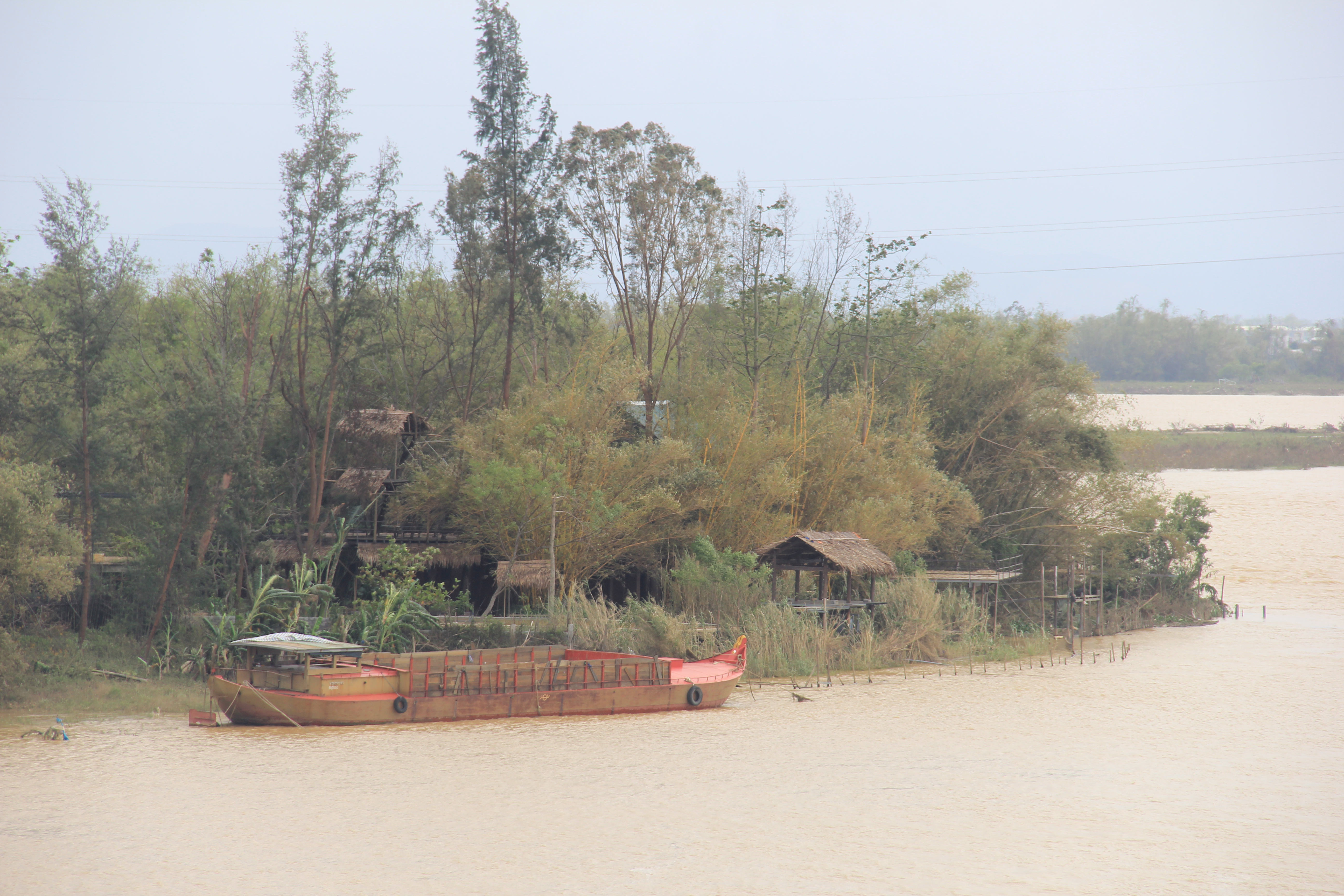
Những dự án du lịch về thôn Triêm Tây đã “tự tin” ra sát sông Thu Bồn khi áp dụng kè thuận tự nhiên – Ảnh: TRƯỜNG TRUNG

“Mang vào kẻo đạp gai, vít. Uốn ván thì khổ”, quăng cho khách đôi ủng, bà Huỳnh Thị Tài (67 tuổi, thôn Triêm Tây, xã Điện Phương, thị xã Điện Bàn, tỉnh Quảng Nam) dẫn đi lội bùn. 

Đây đã là lần thứ hai trong tháng, người dân vùng đất ngã ba cuối sông Thu Bồn dọn lụt với tâm thế bình thản.

Tiếp tục đọc “Làng sạt lở thôi sợ sạt lở”

Hơn 2.500 hải cẩu chết hàng loạt

Câu chuyện của tác giả Đoàn Dương • 1 giờ trước VNEXPRESS

Một số lượng lớn hải cẩu có nguy cơ tuyệt chủng đã chết trên bờ biển Caspi của Nga, hãng thông tấn RIA Novosti hôm 4/12 đưa tin.

Các quan chức từ Cơ quan Tài nguyên Thiên nhiên tại Dagestan, một khu vực ở phía tây nam nước Nga, ban đầu cho biết chỉ có khoảng 700 con hải cẩu chết được tìm thấy dọc theo bờ biển Caspi vào ngày 3/12, nhưng “thật không may, con số này đã tăng lên đáng kể và hiện ở mức 2.500 con”.

Tiếp tục đọc “Hơn 2.500 hải cẩu chết hàng loạt”

Nước và người đồng bằng sông Cửu Long: 25 câu chuyện từ những con số


DV – Thiên nhiên ưu đãi cho đồng bằng sông Cửu Long (ĐBSCL) đất đai màu mỡ, nước ngọt dồi dào, là những thế mạnh để phát triển nông nghiệp và thủy sản. Nơi đây trở thành khu vực có ý nghĩa quan trọng đối với an ninh lương thực và an ninh kinh tế của nước ta. Nhưng trong những năm vừa qua, do nhiều yếu tố gây ảnh hưởng đến môi trường sống, người dân vùng ĐBSCL phải thay đổi tập quán canh tác lúa và hoa màu, đánh bắt và nuôi trồng thủy sản, thậm chí chuyển đổi nghề nghiệp và nơi ở.

Trong bài báo sau đây, chúng tôi phân tích dữ liệu về nông nghiệp, thủy điện, xâm nhập mặn, lượng mưa, thu nhập, tỷ lệ việc làm và tỷ lệ người di cư ở ĐBSCL trong hơn 20 năm qua, nhằm mang lại bức tranh toàn cảnh về những thay đổi trong điều kiện canh tác nông, ngư nghiệp ở vùng ĐBSCL, giải thích vì sao có sự sụt giảm trong diện tích trồng lúa và sản lượng thủy sản, và phải làm gì để thích ứng với sự thay đổi này, mang lại cuộc sống ổn định cho người dân.

Tiếp tục đọc “Nước và người đồng bằng sông Cửu Long: 25 câu chuyện từ những con số”

Elderly fleeing Mekong Delta as climate change hits

mekongeye – By Nhung Nguyen

28 November 2022 at 7:00 (Updated on 28 November 2022 at 15:02)

Vietnamese farmers flee the Delta for city jobs as climate change, droughts and creeping saltwater take a toll.

mekong delta

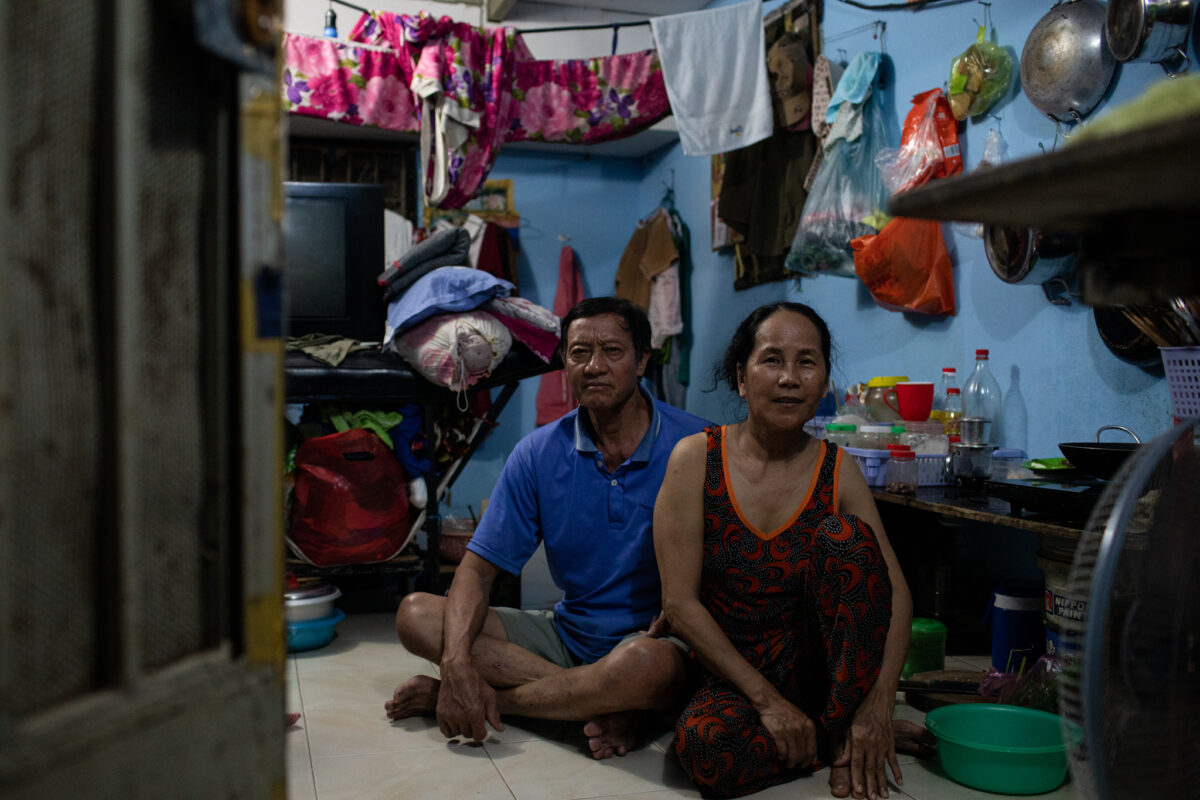
Tu Day, 58, and her husband, 63, in their small rented room in Ho Chi Minh City, Vietnam. The couple moved to the city in 2016 after environmental changes left their fish farm in the Mekong Delta unprofitable. PHOTO: Thanh Nguyen

HO CHI MINH CITY, VIETNAM – At 63, Nguyen Thi Ngoc landed her first full-time ‘company’ job as a security guard in Ho Chi Minh City. She had never been to a city before taking the job in early 2021, but the former farmer from the Mekong Delta in southern Vietnam was indifferent to the urban bustle of the country’s largest city.

“I came here to work, make some money, not to play around,” she said, while sitting outside the semi-abandoned housing complex she guarded. “In the past six months, the only place I have visited is the market.”

Tiếp tục đọc “Elderly fleeing Mekong Delta as climate change hits”

Statement on ISDS and climate

ISDS.bilaterals.org

facebook sharing button
twitter sharing button
whatsapp sharing button

All the versions of this article: [English] [Español] [français]

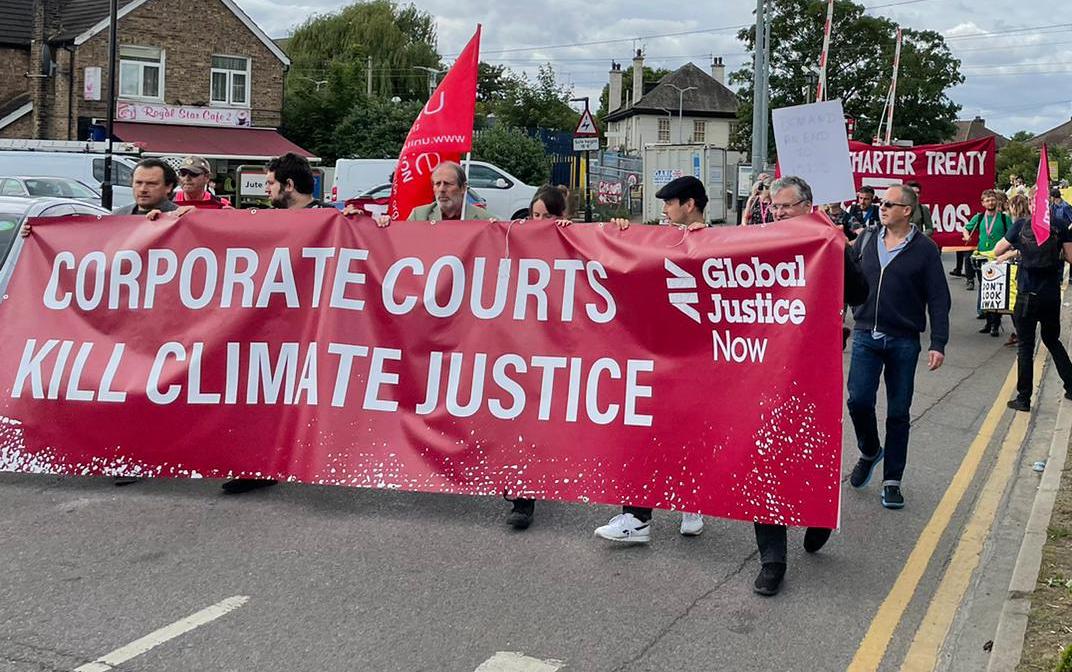
Photo: Global Justice Now

14 November 2022

Statement on ISDS and climate

Civil society organisations are calling on governments to remove the threat that ISDS (investor state dispute settlement) poses to the climate. The following statement outlines our primary concerns and demands. We seek to put pressure on our governments as they meet at COP 27 in November 2022.

Please read it and consider signing on using the form at the bottom

Tiếp tục đọc “Statement on ISDS and climate”

In Vietnam’s Mekong Delta, sand mining means lost homes and fortunes

mekongeyeResidents of the Mekong Delta are seeing houses tumble into rivers and livelihoods disappear due to erosion driven by sand mining

Local government workers use sandbags to fill in areas of subsidence along the Hau River in Chau Phu district, An Giang province, Vietnam (Image: Dinh Tuyen)

Dinh Tuyen – July 5, 2022

Editor’s note: In light of increasingly volatile seasons, the unquantified effects from hydropower, and continued sand mining, mainland Southeast Asia finds itself combating ever more mercurial sandbanks. For the highly populated Mekong Delta region of Vietnam, homes being washed away has become a regular facet of the wet season. But the effects of overdevelopment on the Mekong are felt across the Mekong basin. In Cambodia, the recent consequences have been stark: in May, Vannak Si and Bun Thoeun Srey Leak, both 12, died when a bank gave way in Kandal province, on the border with Vietnam. As the land beneath river-dwellers’ feet becomes ever more unstable, the sand mining and concrete industry defy solutions, as mainland Southeast Asia continues with breakneck development.

When a riverbank subsided and gave way four years ago, Tran Van Bi’s house collapsed into a river in Vietnam’s Mekong Delta. Everything his family had accumulated over 32 years was gone in an instant.

Tiếp tục đọc “In Vietnam’s Mekong Delta, sand mining means lost homes and fortunes”

Đồng bằng sông Cửu Long: Trước nguy cơ dần biến mất

TS – Nhung Nguyễn, Võ Kiều Bảo Uyên

Phải mất hàng nghìn năm, đồng bằng sông Cửu Long mới ra đời. Con người có thể chỉ cần vài thập kỷ để làm nó co rút. Sạt lở chỉ mới là triệu chứng khởi đầu.

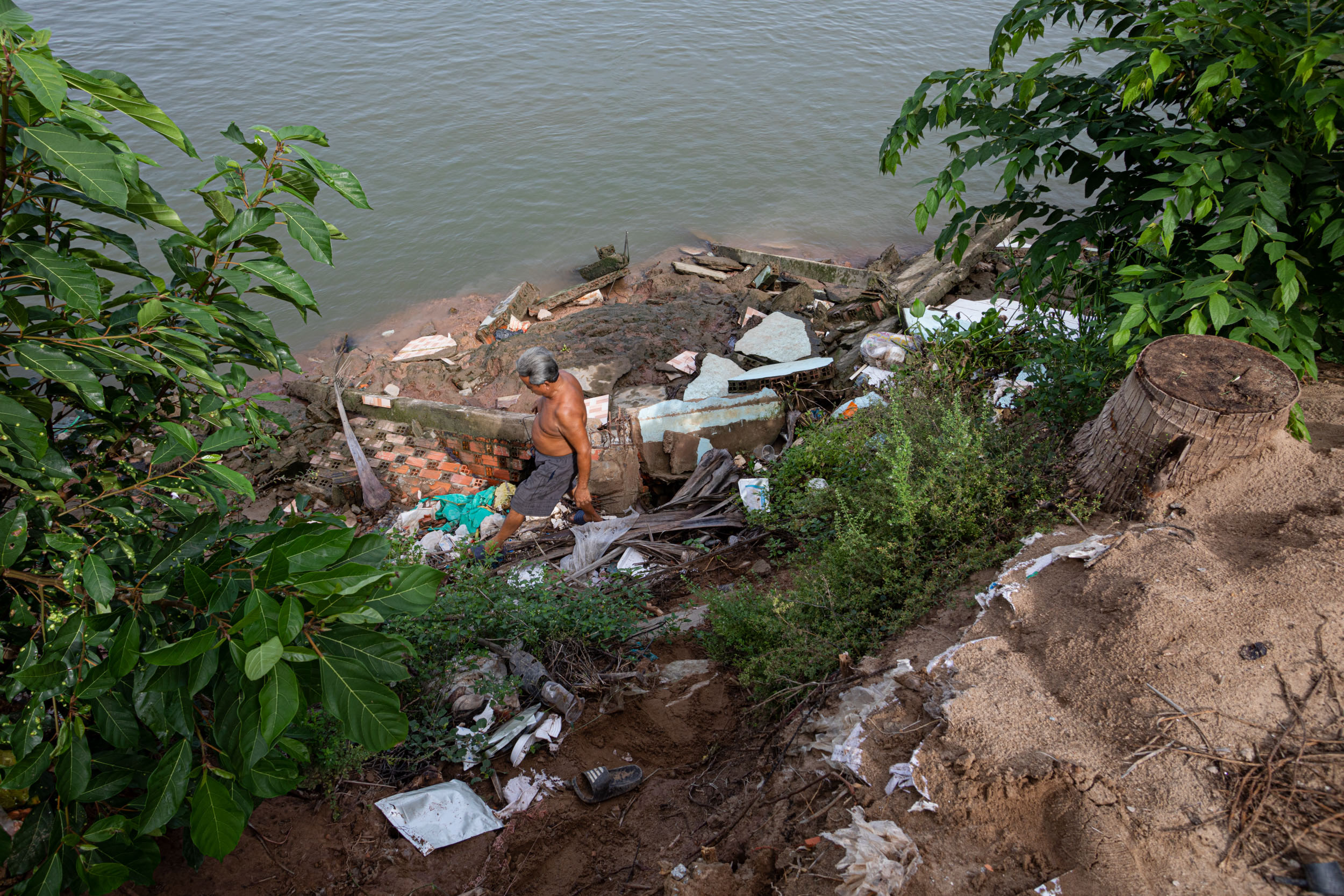
Ông Trương Phi Hải bên khu vực sạt lở từng là căn nhà của gia đình bên sông Tiền, thị xã Hồng Ngự, tháng 6/2020. Ảnh: Thành Nguyễn

Euro Cup 2016, sân vận động Parc des Princes (Pháp) nhuộm nỗi buồn của các cổ động viên Bồ Đào Nha khi cầu thủ của họ liên tục dứt bóng hỏng trước khung thành Áo. Cùng thời khắc ấy, ở một múi giờ khác cách Trung Âu sáu tiếng, nơi cuối dòng Mekong, trận bóng thất vọng của Bồ Đào Nha đã cứu một người đàn ông thoát chết trong gang tấc.

Đêm ấy, ông Trương Phi Hải không ngủ sớm như thường lệ. Người đàn ông 67 tuổi thức bên chiếc tivi, cổ vũ cho Cristiano Ronaldo, cầu thủ ông ái mộ. Phía sau nhà, dòng sông Tiền chảy qua thị xã Hồng Ngự (Đồng Tháp) đang trong con nước ròng, đâu đó vài chiếc sà lan chở cát nổ máy rì rì chạy ngang.

3h sáng, tiếng nước sôi xuất hiện, kéo ông Hải ra khỏi trận đấu. “Nó kêu ục ục. Tui đoán bọn cá lóc trong hồ trước nhà làm bọt bóng”, ông chủ trại cá nhớ lại. Nhưng âm thanh sủi bọt lớn dần, át cả giọng bình luận viên trên tivi. Lo cho đàn cá chỉ còn vài tiếng nữa là đến giờ hẹn bán, ông uể oải đứng lên kiểm tra. Được vài bước, bên tai ông vang tiếng “roạt-rầm”. Và nền đất dưới chân như ai đó bẻ ra, căn nhà tường gạch mái tôn ông vừa bước khỏi bỗng rớt gọn xuống con sông. Tủ, giường, bàn ghế, và cả chiếc tivi đang chiếu hình ảnh Ronaldo cũng trượt vào làn nước.

Trong tích tắc, mảnh sân sau ông Hải đang đứng biến thành một hòn đảo nhỏ giữa dòng nước xoáy đục ngầu. Rồi “hòn đảo” cũng tụt dần. Cú sốc đông cứng chân người đàn ông, ông ngồi thụp xuống, hai tay ôm đầu, phó mặc cho số phận. “Người tôi giống như đi thang máy vậy đó. Ngước mắt lên nhìn, không còn thấy trời, không còn thấy sao. Tôi nghĩ mình chết rồi”, ông Hải rít mẩu thuốc, nhớ lại giây phút sinh tử lúc đó.

Tiếp tục đọc “Đồng bằng sông Cửu Long: Trước nguy cơ dần biến mất”

COP27: What’s at Stake for the World?

Council on Foreign Relations

The COP27 climate conference in Sharm el-Sheikh, Egypt, closes out another year of disasters: record-breaking floods, deadly heat waves, and devastating droughts. The urgency for the world’s leaders to make progress at this conference has never been higher, but many obstacles remain. The Council on Foreign Relations explains the issues and lays out what’s at stake in the world’s fight against climate change. 
Tiếp tục đọc COP27: What’s at Stake for the World?

Belching lakes, mystery craters, ‘zombie fires’: How the climate crisis is transforming the Arctic permafrost

Newly formed lakes in the permafrost landscape of Russia's Siberia.

Newly formed lakes in the permafrost landscape of Russia’s Siberia.Evgeny Chuvilin/Skoltech

By Katie Hunt, CNN

Published 7:06 AM EST, Sat November 12, 2022

CNN — Four years ago, Morris J. Alexie had to move out of the house his father built in Alaska in 1969 because it was sinking into the ground and water was beginning to seep into his home.

“The bogs are showing up in between houses, all over our community. There are currently seven houses that are occupied but very slanted and sinking into the ground as we speak,” Alexie said by phone from Nunapitchuk, a village of around 600 people. “Everywhere is bogging up.”

What was once grassy tundra is now riddled with water, he said. Their land is crisscrossed by 8-foot-wide boardwalks the community uses to get from place to place. And even some of the boardwalks have begun to sink.

“It’s like little polka dots of tundra land. We used to have regular grass all over our community. Now it’s changed into constant water marsh.”

Tiếp tục đọc “Belching lakes, mystery craters, ‘zombie fires’: How the climate crisis is transforming the Arctic permafrost”

A technologically advanced society is choosing to destroy itself. It’s both fascinating and horrifying to watch

Published: November 6, 2022 7.04pm GMT The Conversation

Authors

  1. Christopher WrightProfessor of Organisational Studies, University of Sydney
  2. Daniel NybergProfessor of Management, Newcastle Business School, University of Newcastle
  3. Vanessa BowdenLecturer, University of Newcastle

Disclosure statement

Christopher Wright receives funding from the Australian Research Council.

Daniel Nyberg receives funding from the Australian Research Council.

Vanessa Bowden receives funding from the Australian Research Council.

Partners

University of Sydney and University of Newcastle provide funding as members of The Conversation AU.

View all partners

CC BY ND
We believe in the free flow of information
Republish our articles for free, online or in print, under Creative Commons licence.

As world leaders assemble for the United Nations climate change conference (COP27) in Egypt, it’s hard to be optimistic the talks will generate any radical departure from the inexorable rise in global carbon emissions over the past two centuries.

After all, before last year’s Glasgow talks, experts warned the summit was the world’s last chance to limit global warming to 1.5℃ this century. And yet, a UN report last week found even if all nations meet their climate goals this decade, the planet would still heat by a catastrophic 2.5℃.

Tiếp tục đọc “A technologically advanced society is choosing to destroy itself. It’s both fascinating and horrifying to watch”

Loss and damage: Who is responsible when climate change harms the world’s poorest countries?

The Conversation

Author

  1. Bethany TietjenResearch fellow in climate policy, The Fletcher School, Tufts University

Disclosure statement

Bethany Tietjen does not work for, consult, own shares in or receive funding from any company or organisation that would benefit from this article, and has disclosed no relevant affiliations beyond their academic appointment.

Partners

Tufts University provides funding as a founding partner of The Conversation US.

View all partners

CC BY ND
We believe in the free flow of information
Republish our articles for free, online or in print, under Creative Commons licence.

You may be hearing the phrase “loss and damage” in the coming weeks as government leaders meet in Egypt for the 2022 U.N. Climate Change Conference.

It refers to the costs, both economic and physical, that developing countries are facing from climate change impacts. Many of the world’s most climate-vulnerable countries have done little to cause climate change, yet they are experiencing extreme heat waves, floods and other climate-related disasters. They want wealthier nations – historically the biggest sources of greenhouse gas emissions – to pay for the harm.

Tiếp tục đọc “Loss and damage: Who is responsible when climate change harms the world’s poorest countries?”

Egypt faces criticism over crackdown on activists ahead of COP27 climate summit

Ivana Kottasová

By Ivana Kottasová, CNN

Updated 12:44 PM EDT, Sat November 5, 2022

View of a COP27 sign on the road leading to the conference area in Egypt's Red Sea resort town of Sharm el-Sheikh, taken on October 22, as it prepares to host the COP27 summit.

View of a COP27 sign on the road leading to the conference area in Egypt’s Red Sea resort town of Sharm el-Sheikh, taken on October 22, as it prepares to host the COP27 summit.Sayed Sheasha/ReutersCNN — 

Egypt is facing a barrage of criticism over what rights groups say is a crackdown on protests and activists, as it prepares to host the COP27 climate summit starting Sunday.

Rights groups have accused the Egyptian government of arbitrarily detaining activists after Egyptian dissidents abroad called for protests to be held against President Abdel Fattah el-Sisi on November 11, during the United Nations climate talks.

According to rights groups, security forces have been setting up checkpoints on Cairo streets, stopping people and searching their phones to find any content related to the planned protests.

Tiếp tục đọc “Egypt faces criticism over crackdown on activists ahead of COP27 climate summit”

Hundreds of elephants, wildebeests and zebras dead in Kenya amid prolonged drought

Prolonged drought across the Horn of Africa over the past four consecutive rainy seasons has left some 18 million people affected by food shortages in Somalia, Ethiopia and Kenya

By Idris Mukhtar, CNN

Published 7:45 AM EDT, Sat November 5, 2022

The carcass of an adult elephant, which died during the drought, is seen in Namunyak Wildlife Conservancy, Samburu, Kenya on October 12, 2022.

The carcass of an adult elephant, which died during the drought, is seen in Namunyak Wildlife Conservancy, Samburu, Kenya on October 12, 2022.Luis Tato/AFP/Getty ImagesCNN — 

Hundreds of elephants, wildebeests, and zebras have died across Kenya amid the nation’s longest drought in decades.

“The Kenya Wildlife Service Rangers, Community Scouts, and Research Teams counted the deaths of 205 elephants, 512 wildebeests, 381 common zebras, 51 buffalos, 49 Grevy’s zebras, and 12 giraffes in the past nine months,” a report released Friday by the country’s Ministry of Tourism said.

Tiếp tục đọc “Hundreds of elephants, wildebeests and zebras dead in Kenya amid prolonged drought”

Muốn chống ngập phải biết… giữ nước

 NĐT – 09:39 | Chủ nhật, 13/11/2016 0

Quy hoạch đô thị và những giải pháp phi công trình được nhà quy hoạch Nguyễn Đỗ Dũng phân tích với Người Đô Thị như một trong những lời giải cho bài toán “biến” ngập lụt từ thách thức trở thành sức mạnh đô thị của TP.HCM.

Người đi đường ở TP.HCM đánh vật với dòng nước sau trận mưa lớn chiều 26.9 vừa qua. Ảnh: Zing


Đầu tư gần 30.000 tỉ đồng từ năm 2008, nhiều khu vực trước đây ở TP.HCM được ví như “rốn ngập” nay đã không còn nữa, nhưng những tuyến đường chưa từng ngập giờ trở thành “sông”. Tương tự, số điểm ngập bắt đầu tăng trở lại (năm 2008: 126 điểm ngập, năm 2011: 58 điểm, năm 2015 còn 23 điểm ngập, năm 2016 tăng 59 điểm).

Tuy nhiên theo các chuyên gia, con số này vẫn chưa phản ánh hết thực trạng. Cùng với kinh nghiệm và nghiên cứu của mình, theo ông nguyên nhân chính nào dẫn đến tình trạng này?

Tiếp tục đọc “Muốn chống ngập phải biết… giữ nước”