(PLO)- Họp rà soát tiến độ 16 dự án phát triển bền vững vùng ĐBSCL ứng phó với biến đổi khí hậu (Mekong DPO), Bộ KH&ĐT mong các dự án này sẽ được phê duyệt đề xuất trong quý III này.
Ngày 15-7, tại TP Cần Thơ, Bộ KH&ĐT chủ trì hội nghị với 13 tỉnh, thành vùng đồng bằng sông Cửu Long (ĐBSCL) và bộ, ngành liên quan để rà soát, thúc đẩy tiến độ các dự án phát triển bền vững vùng ĐBSCL ứng phó với biến đổi khí hậu (Mekong DPO), gồm 16 dự án.
Thứ trưởng Bộ KH&ĐT Trần Quốc Phương cho biết 3 tháng qua, tiến độ chuẩn bị các dự án Mekong DPO đã có những chuyển biến tích cực.
Cụ thể, đề xuất dự án của Bộ GTVT đã được Thủ tướng phê duyệt đề xuất. Nhiều đề xuất dự án đã được các địa phương điều chỉnh, bổ sung, hoàn thiện căn cứ góp ý của các cơ quan có liên quan và gửi lại Bộ KH&ĐT, Bộ Tài chính.
The world’s largest and most populous continent is reckoning with the deadly effects of extreme summer weather, as countries endure blistering heatwaves and record monsoon rainfall, with governments warning residents to prepare for more to come.
This month torrential rains inundated parts of Japan, China, South Korea and India, upending the lives of millions and causing flash floods, landslides and power cuts. Record temperatures also led to a rise in heat-related illnesses, particularly among vulnerable communities such as the elderly.
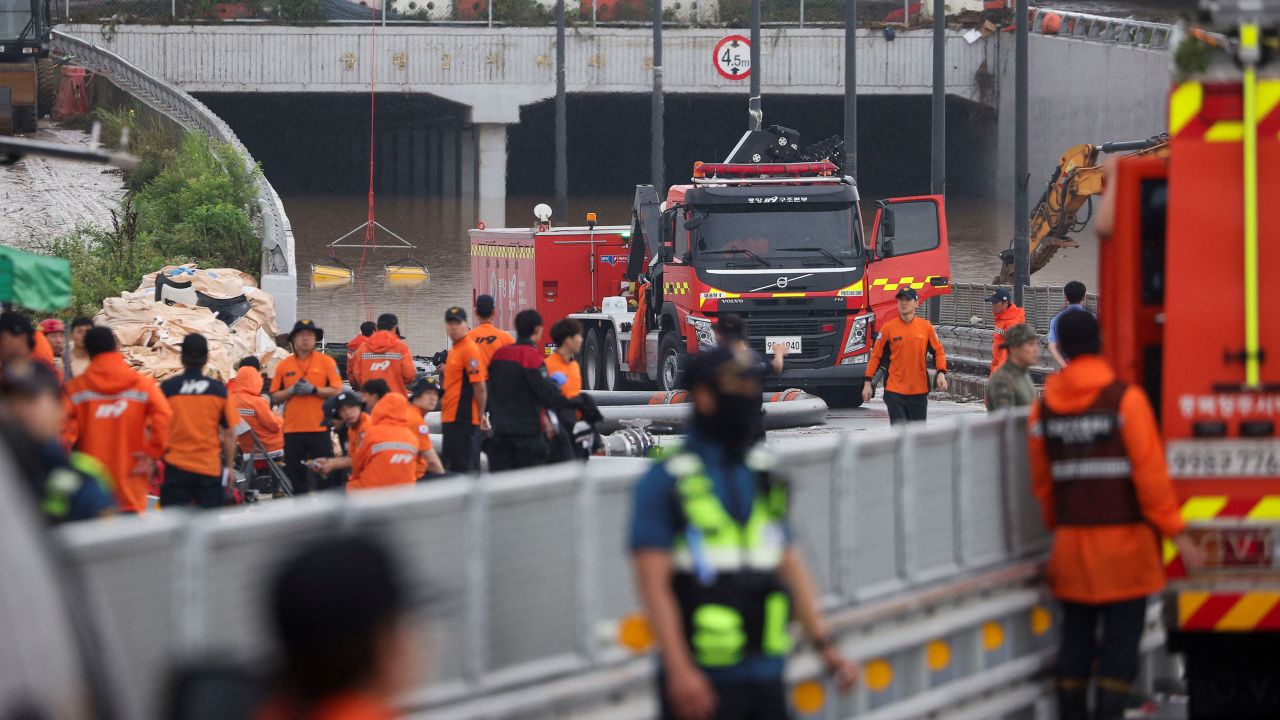
On Saturday, at least 13 people in the central South Korean city of Cheongju died after waters from a burst riverbank flooded an underpass, trapping vehicles, including a public bus.
At least 41 people have died in South Korea in recent days and thousands more have been forced to evacuate their homes and seek temporary shelter, as heavy downpours hit central and southern parts of the country.
In response to the loss of life, South Korean President Yoon Suk Yeol called for an overhaul of the country’s approach to extreme weather.
“This kind of extreme weather event will become commonplace — we must accept climate change is happening, and deal with it,” Yoon said Monday.
Ad Feedback
Rescue workers at the flooded underpass in Cheongju, South Korea on July 16, 2023.Kim Hong-ji/Reuters
In neighboring Japan, record rainfall in the southwest of the country resulted in devastating flooding that left at least six people dead, and many others still missing.
Bitter and earthy. Fit for instant brews only. Robusta coffee has a dire reputation, but a small group of farmers in Vietnam are trying to turn its fortunes around as a warming world threatens the industry.
Climate change has threatened to erase major cities in Vietnam, including its biggest metropolis, Ho Chi Minh City. A historic downpour which sank many parts of the city late last year was seen as a mere tip of the iceberg. It’s predicted that by 2050, the city will go underwater if no concrete measures are taken to prevent the phenomenon of rising sea levels, land subsidence, weak soil foundation due to groundwater extraction, rapid developments and population growth. What has been done to respond to the gradual sinking of the city? Can it survive a looming threat to its existence?
World leaders and global organisations meet in Paris
Agreement for development banks to boost lending
Rich nations close in on $100 bln climate finance pledge
U.S., China adopt conciliatory tone on debt relief
PARIS, June 23 (Reuters) – Multilateral development banks like the World Bank are expected to find $200 billion in extra firepower for low-income economies by taking on more risk, a move that may require wealthy nations to inject more cash, world leaders said on Friday.
The leaders, gathered at a summit in Paris to thrash out funding for the climate transition and post-COVID debt burdens of poor countries, said their plans would secure billions of dollars of matching investment from the private sector.
A Kashmiri man cools off at a stream on a hot summer day on the outskirts of Srinagar, Indian controlled Kashmir, Tuesday, July 4, 2023. The entire planet sweltered for the two unofficial hottest days in human recordkeeping Monday and Tuesday, according to University of Maine scientists at the Climate Reanalyzer project. The unofficial heat records come after months of unusually hot conditions due to climate change and a strong El Nino event. (AP Photo/Mukhtar Khan)
Climate Nearing Point of No Return: Land & Sea Temperatures Break Records (Photo Source: Pixabay)
Climate experts are sounding the alarm as the target of keeping long-term global warming within 1.5 degrees Celsius (2.7 Fahrenheit) appears to be slipping away. Despite months of unprecedented heat on both land and sea, nations have failed to set more ambitious goals in the fight against climate change.
According to the EU-funded Copernicus Climate Change Service (C3S), average global surface air temperatures were more than 1.5 degrees Celsius above pre-industrial levels for several days in early June, coinciding with the gathering of envoys in Bonn to prepare for this year’s annual climate talks in November. While temperatures have breached the 1.5-degree threshold temporarily in the past, this was the first time it occurred during the northern hemisphere summer, which began on June 1. Additionally, sea temperatures have broken records in April and May.
North and South: French president Emmanuel Macron greets Barbadian prime minister Mia Mottley, whose Bridgetown Initiative inspired this week’s New Global Financing Pact Summit in Paris. Ludovic Marin/AFP via Getty Images
SHARE
When world leaders meet for their much-vaunted “summits,” what do they actually do? The question was posed by last week’s meeting in Beijing between US secretary of state Anthony Blinken and Chinese president Xi Jinping. The meeting lasted a whole thirty-five minutes. It was barely long enough to exchange diplomatic pleasantries, let alone to make progress on the various areas of US–China rivalry, in the South China Sea, on trade, technology and Ukraine. The actual negotiations had clearly happened elsewhere. The summit was mainly an exercise in symbolism: a handshake for the cameras and a carefully worded communique for the record.
Nam Thủy Bắc Điều – tham vọng chuyển nước nhiều tranh cãi của Trung Quốc
Nam Thủy Bắc Điều là đại dự án đưa nước từ các con sông miền nam tới miền bắc khô hạn của Trung Quốc, nhưng gây nhiều tranh cãi về môi trường.
Sơ đồ các tuyến dẫn nước trong dự án Nam Thủy Bắc Điều. Nguồn dữ liệu: Global Times
Hãng thông tấn Xinhua của Trung Quốc cho biết dự án Nam Thủy Bắc Điều, hệ thống vận chuyển nước lớn nhất thế giới, đưa nước từ miền nam lên miền bắc Trung Quốc xuyên qua lòng sông Hoàng Hà, được thử nghiệm thành công ngày 25/8. Đợt thử nghiệm được tiến hành nhằm đánh giá quá trình vận hành toàn bộ 155 đơn vị và đưa toàn bộ đại dự án vào hoạt động.
Kinhtedothi – Tình trạng cắt điện luân phiên tại các địa phương đang khiến hoạt động sản xuất, kinh doanh của doanh nghiệp đảo lộn, ngưng trệ, chi phí đội lên cao… Để đảm bảo duy trì sản xuất, doanh nghiệp mong muốn ngành điện có phương án cân đối nguồn điện ưu tiên cho những ngành đặc thù.
Sản xuất ngưng trệ, đội chi phí
Những ngày này, anh Nguyễn Văn Chữ – Chủ tịch chuỗi thực phẩm sạch Organic Green như ngồi trên đống lửa khi nhìn vào lịch cắt điện luân phiên dày đặc. Bởi doanh nghiệp của anh hoạt động trong lĩnh vực sản xuất, chế biến và kinh doanh thực phẩm sạch, vì vậy nguồn điện rất cần cho các kho bảo quản thực phẩm tươi sống.
Anh Chữ chia sẻ, mặc dù cơ sở đã trang bị máy phát điện nhưng chỉ đủ duy trì một số hoạt động cơ bản và khu văn phòng, không đảm bảo được hệ thống cấp đông, bảo quản sản phẩm. Nếu mất điện lâu, doanh nghiệp có thiệt hại tới hàng chục tỷ đồng. Bởi mặt hàng thực phẩm tươi sống cần được bảo quản trong nhiệt độ thấp, nếu không được bảo quản sẽ bị giã đông và ảnh hưởng chất lượng.
Kho bảo quản thực phẩm tại chuỗi thực phẩm Organic Green
Ngoài ra, cũng vì mất điện, nên nhà máy sản xuất thức ăn chăn nuôi của doanh nghiệp này cũng phải tạm dừng hoạt động. Ngừng hoạt động khiến công ty không đủ hàng giao cho các đại lý. “Lịch cắt điện không phải chỉ luân phiên 1-2 tiếng, mà cắt cả ngày cả đêm, nên ảnh hưởng nghiêm trọng đến hoạt động sản xuất kinh doanh của Công ty” – anh Chữ bức xúc.
Hydroelectric reservoirs’ water levels are lower than annual averages, according to a May 10 report from Vietnam Electricity Group (EVN), and 10 are either close to or under the ‘dead level’.
Current water levels at Lai Chau hydroelectric reservoir. (Photo: kinhtedothi.vn)
Hanoi (VNS/VNA) – Hydroelectric reservoirs‘ water levels are lower than annual averages, according to a May 10 report from Vietnam Electricity Group (EVN), and 10 are either close to or under the ‘dead level’.
During the monitoring of the national electricity system in April and early May, prolonged intense heat waves across a wide area led to a significant increase in electricity consumption.
Even though the early May heatwave in the northern region only lasted a few days, it resulted in very high levels of power capacity and electricity consumption throughout the country.
For instance, the total power consumption on May 6, albeit a Saturday, reached 43,300 megawatts, while the total energy consumption reached 895 million kilowatts per hour (kWh).
Forecast for the upcoming months of May, June, and July indicates that the northern region will enter the peak period of hot weather, resulting in an increasing trend of electricity consumption, surpassing the planned operation of the national power system approved by the Ministry of Industry and Trade.
Meanwhile, the hydrological situation of reservoirs in recent months has experienced unfavourable fluctuations, significantly lower than the multi-year average.
Many hydropower reservoirs across the country are facing water shortages, with several hydropower reservoirs in the central and southern regions experiencing low water levels.
According to the EVN, 10 are close or under the “dead level”, which means that the total consumption is under 4,500 megawatts.
These reservoirs are Lai Chau, Tri An, Ialy, Ban Chat, Huoi Quang, Trung Son, Buon Kuop, Buon Tua Srah, Srepok 3, and Song Ba Ha.
The remaining electricity production in the entire system is 4.5 billion kWh, which is 1.6 billion kWh lower than the planned amount and 4.1 billion kWh lower than the same period in 2022.
According to the forecast by the National Centre for Hydro-Meteorological Forecasting (NCHMF), as El Nino is expected to occur in the later months of 2023, there will be higher temperatures and lower rainfall compared to the multi-year average, which will further contribute to a decreasing trend in water inflow to reservoirs during the second half of the year.
To deal with this situation, EVN asked its customers to tighten energy-saving consumption, especially in the noon and evening hours.
EVN recommends putting air conditioners at a reasonable level, between 26 to 27 degrees Celsius, and avoiding using multiple high-capacity electrical devices simultaneously./.
Humans are taking colossal risks with the future of civilization and everything that lives on Earth, a new study published in the journal Nature shows. Developed by an international science commission engaging more than 40 researchers from across the globe, the scientists deliver the first quantification of safe and just Earth system boundaries on a global and local level for several biophysical processes and systems that regulate the state of the Earth system.
For the first time, safety and justice for humanity on Earth is assessed and quantified for the same control variables regulating life support and Earth stability. Justice, assessed based on avoiding significant harm to people across the world, tightens the Earth system boundaries, providing even less available space for humans on Earth. This is extremely challenging, as the Earth Commission concludes that numerous of the safe boundaries are already crossed today.
“We are in the Anthropocene, putting the stability and resilience of the entire planet at risk. This is why, for the first time, we present quantifiable numbers and a solid scientific foundation to assess the state of our planetary health not only in terms of Earth System stability and resilience but also in terms of human wellbeing and equity / justice.” said Prof. Johan Rockström, Earth Commission Co-Chair, lead author and Director of the Potsdam Institute for Climate Impact Research.
“Justice is a necessity for humanity to live within planetary limits. This is a conclusion seen across the scientific community in multiple heavyweight environmental assessments. It is not a political choice. Overwhelming evidence shows that a just and equitable approach is essential to planetary stability. We cannot have a biophysically safe planet without justice. This includes setting just targets to prevent significant harm and guarantee access to resources to people and for as well as just transformations to achieve those targets” said co-author Prof. Joyeeta Gupta, Co-Chair of the Earth Commission, Professor of Environment and Development in the Global South at the University of Amsterdam and Professor of Law and Policy in Water Resources and Environment at IHE Delft Institute for Water Education.
The stability and resilience of the Earth system and human well-being are inseparably linked1,2,3, yet their interdependencies are generally under-recognized; consequently, they are often treated independently4,5. Here, we use modelling and literature assessment to quantify safe and just Earth system boundaries (ESBs) for climate, the biosphere, water and nutrient cycles, and aerosols at global and subglobal scales. We propose ESBs for maintaining the resilience and stability of the Earth system (safe ESBs) and minimizing exposure to significant harm to humans from Earth system change (a necessary but not sufficient condition for justice)4. The stricter of the safe or just boundaries sets the integrated safe and just ESB. Our findings show that justice considerations constrain the integrated ESBs more than safety considerations for climate and atmospheric aerosol loading. Seven of eight globally quantified safe and just ESBs and at least two regional safe and just ESBs in over half of global land area are already exceeded. We propose that our assessment provides a quantitative foundation for safeguarding the global commons for all people now and into the future.
One year in the next five will almost certainly be the hottest on record and there’s a two-in-three chance a single year will cross the crucial 1.5℃ global warming threshold, an alarming new report by the World Meteorological Organization predicts.
The report, known as the Global Annual to Decadal Climate Update, warns if humanity fails to reduce greenhouse gas emissions to net zero, increasingly worse heat records will tumble beyond this decade.
So what is driving the bleak outlook for the next five years? An expected El Niño, on top of the overall global warming trend, will likely push the global temperature to record levels.
Has the Paris Agreement already failed if the global average temperature exceeds the 1.5℃ threshold in one of the next five years? No, but it will be a stark warning of what’s in store if we don’t quickly reduce emissions to net zero.
One year in the next five will almost certainly be the hottest on record, bringing more heatwaves like this boy experienced in Britain around the time the last record was set. Andy Rain/EPA
The World Meteorological Organization update says there is a 98% chance at least one of the next five years will be the hottest on record. And there’s a 66% chance of at least one year over the 1.5℃ threshold.
The Intergovernmental Panel on Climate Change published the “synthesis report” of its sixth assessment report (AR6) on Monday. Eight years in preparation, this mammoth report encompasses the entire range of human knowledge of the climate system, compiled by hundreds of scientists from thousands of academic papers, and published in four parts, in August 2021, February and April 2022, and March 2023.
The report drew together the most important findings – but also highlighted some key measures that governments and countries must take immediately if we are to avoid climate catastrophe:
Reduce methane
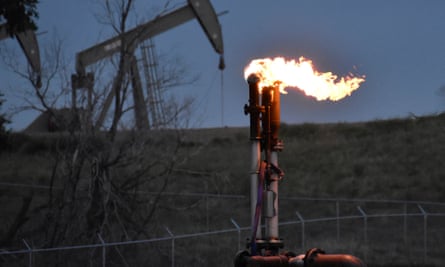
A flare to burn methane from oil production in North Dakota, US. Photograph: Matthew Brown/AP
Sharp cuts to short-lived climate pollutants, methane chief among them, could cut more than half a degree from global heating. Produced from oil and gas operations and coalmines, and from animal husbandry and natural sources – such as decaying vegetation – methane is a greenhouse gas about 80 times more powerful than carbon dioxide. But it lasts only for about 20 years before degrading into CO2.







 We believe in the free flow of information