Last update 11:00 | 30/08/2017
Visitors can never resist the allure of the south-central coastal province of Binh Dinh and its beautiful beaches, coral reefs and imposing beauty of Thi Nai Bridge.
 Quy Nhon City at night.
|
Conversations on Vietnam Development

Visitors can never resist the allure of the south-central coastal province of Binh Dinh and its beautiful beaches, coral reefs and imposing beauty of Thi Nai Bridge.
Quy Nhon City at night.
|

| Many students attend competitions just because they offer them privileges on entrance exams to secondary and high schools. At some schools, the scores students get from competitions are used as an assessment of students’ and teachers’ capability. |
Tiếp tục đọc “Education Ministry’s decision on suspending online competitions stirs controversy”
VietNamNet Bridge – A team called Architecture for Community (Kicodo club) from Da Nang’s Architecture College has completed painting murals on a set of concrete stairs and manhole covers in Cam Le District in the central city. Tiếp tục đọc “Students create river side art space”
VietNamNet Bridge – The amount of bagasse, a sugarcane byproduct, that Vietnamese throw away every year could be used to generate billions of kwh of electricity.

Bagasse can be a source of environmentally friendly renewable energy. Brazil, the Philippines and Thailand all take full advantage of sugarcane by-products – bagasse – to generate electricity. And so can Vietnam. Tiếp tục đọc “Sugar mills await policies to produce electricity from bagasse”

Research shows that HCM City has an abundant source of energy from sunlight, with high radiation, about 1,581 kWh/m2/year on average. The highest radiation level of 6.3 kWh/m2/day can be obtained in February and the lowest of 3.3 KWh/m2/day in July. There are 100-300 sunny hours every month.
HCM City residents not only can use sunlight to heat water, but can also generate electricity with solar panels installed on their roofs. Tiếp tục đọc “New energy sources: households can generate solar power”
Shrinking and degrading wild elephant habitats in the Central Highlands province of Dak Lak have led to a shortage of food and more conflicts between wild and domestic animals, according to Director of the Dak Lak Elephant Conservation Centre Huynh Trung Luan.

Degrading wild elephant habitats in Dak Lak province have led to a shortage of food and more conflicts between wild and domestic animals.
The locality has witnessed five conflicts between wild and domestic elephants since March. The wild animals, in group of six to seven, have reportedly been approaching forest ranger stations and residential areas to search for food and attack domestic ones. They hurt seven animals of the centre and killed another in Krong Na commune, Buon Don district. Tiếp tục đọc “Hungry wild elephants hurt domestic ones”
A conference took place in the central province of Thua Thien – Hue on August 31 to discuss the protection and resilience of the marine ecosystem in the waters in the four central regions that suffered from mass fish deaths last year.

Mass fish deaths, caused by wastewater discharged by Taiwan’s Hung Nghiep Formosa Ha Tinh steel company, were first reported in Ha Tinh on April 6, 2016. The incident also occurred in Quang Binh, Quang Tri and Thua Thien Hue.
As a result, more than 200 kilometres of coastline were polluted, devastating the marine environment and local economies of those provinces, which largely rely on fishing and tourism. Tiếp tục đọc “Conference spotlights recovery of central marine ecology”
VietNamNet Bridge – With increased land subsidence, HCM City needs to build dykes like the ones used in the Netherlands to prevent tides and floods, experts have urged.

HCM City Mayor Nguyen Thien Nhan said MONRE has surveyed the soil and terrain conditions at 17 points in HCMC. The monitoring shows continued subsidence at all points. Subsidence of up to 30 cm in the last 10 years has been found in two places.
“If the soil sinks by 1 cm per annum and the sea water level rises by 0.5 cm per annum, or 1.5 cm in total, the difference between the earth surface and sea water level would be up to 45 cm. If so, the problem will be very serious,” Nhan said. Tiếp tục đọc “Will HCM City build dykes similar to those used in the Netherlands?”

The Vietnamese government has approved a plan for a legal framework to manage and deal with electronic money, virtual assets and currencies. This has raised hopes that bitcoin and other virtual currencies would be accepted for legal payment in Vietnam.
Vo Minh Hoang, a gamer in HCMC, said bitcoin is being used by gamers all over the world. There are games that allow people to play and receive bitcoins, while other games allow users to buy game products with bitcoins. Tiếp tục đọc “Experts divided on recognizing bitcoins, VN central bank says no”
He claimed three crocodiles had been found along a canal in the Mekong Delta
 |
| A screenshot of the status update of Pham Van Toan’s Facebook account, which has been deleted |
The fine was imposed by officials from the provincial Department of Information and Communications on Pham Van Toan, a resident of Thoi Binh Commune, Thoi Binh District.
Toan posted a status on his personal Facebook page under the pseudonym Thanh Toan on August 21 reporting that local residents had sighted three crocodiles along the Zero Thoi Binh Canal at around 11:00 am. Tiếp tục đọc “Vietnamese man fined for posting fake news to Facebook”
Forbes Mar 13, 2017 @ 05:19 AM 341,975 12 Stocks to Buy Now

I am an intern with Forbes Asia. Opinions expressed by Forbes Contributors are their own.
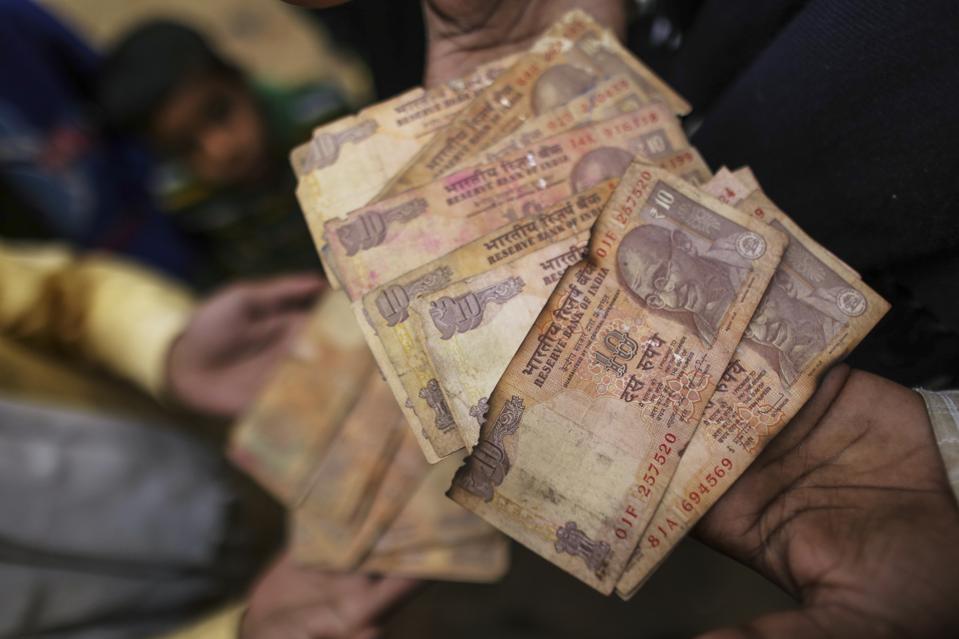
Ten rupees Indian banknotes (Photographer: Dhiraj Singh/Bloomberg)
From South Korea’s presidential scandal to Malaysia’s 1MDB fund, not many Asian countries have been able to avoid the smear of corruption. But just how pervasive is the problem across the continent?
An 18-month long survey by Transparency International reveals there is much work to be done. After talking to more than 20,000 people in 16 countries, regions and territories in Asia Pacific, the report found more than one in four people have paid a bribe when using a public service.
Tiếp tục đọc “Asia’s Five Most Corrupt Countries”
ANI | New Delhi Last Updated at September 1, 2017 15:11 IST

A recent survey by the Transparency International states that India is the most corrupt country in Asia.
Depicting how pervasive the problem is across Asia, a list released by Forbes – Asia’s Five Most Corrupt Countries – says that India beats Vietnam, Thailand, Pakistan and Myanmar, when it comes to bribery rate.
The Forbes article, which rates India the highest in the list with 69 per cent bribery rate, describes India as: “In five of the six public services – schools, hospitals, ID documents, police, and utility services – more than half the respondents have had to pay a bribe.”
The article goes on to praise Prime Minister Narendra Modi for his ‘fight against corruption’.
“However, Prime Minister Narendra Modi’s fight against corruption has made a mark: 53 per cent of the people think he is going it fairly or very well. And it has led to people feeling empowered, as 63 per cent believe ordinary people can make a difference,” it adds.
India is closely followed by Vietnam at 65 per cent bribery rate.
India’s neighbour, Pakistan, stands fourth in the list with 40 per cent bribery rate. The article describes the nation as: “In Pakistan, about three-fourths of respondents perceive most or all of the police to be corrupt. Of the people who encountered either the police or the courts, nearly seven in ten had to pay a bribe. Sadly, people don’t feel things can change-only a third think ordinary people can make a difference.”
The 18-month long survey by Transparency International was concluded after talking to more than 20,000 people in 16 countries, regions and territories in the Asia Pacific.
The Berlin-based corruption watchdog had put India at rank 76 out of 168 countries in its Corruption Perception Index last year.
The country’s 2015 corruption perception score remained the same as 2014’s – 38/100 – showing lack of improvement.
According to figures published in March, 2017, while citizens of Pakistan were the most likely of any country to be asked for bribes in law and order institutions, for India the police bribery rate was 54 per cent and for China a low 12 per cent.
India had the highest bribery rates of all the countries surveyed for access to public schools (58 per cent) and healthcare (59 per cent).
(Only the headline and picture of this report may have been reworked by the Business Standard staff; the rest of the content is auto-generated from a syndicated feed.)
Vietnam on Thursday opposed what it called a Chinese announcement of military exercises in the disputed South China Sea, disagreements over which have pushed tension between the neighbours to its highest in three years.
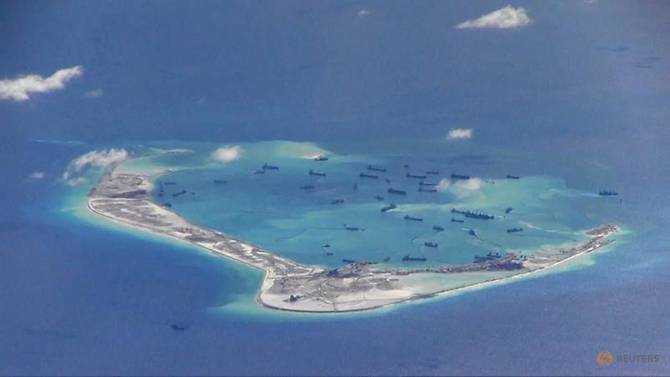
China has appeared uneasy at Vietnam’s efforts to rally Southeast Asian countries over the busy waterway as well as at its neighbour’s growing defence ties with the United States, Japan and India.
In July, under pressure from Beijing, Vietnam suspended oil drilling in offshore waters that are also claimed by China.
Vietnam was deeply concerned about drills in the region of the Gulf of Tonkin, at the north end of the South China Sea, Foreign Ministry spokeswoman Le Thi Thu Hang said in a statement, but did not make clear what drills were being referred to. Tiếp tục đọc “Vietnam protests over Chinese military drill in South China Sea”
Thailand’s prestigious Chulalongkorn University has removed the head of its student council, a vocal critic of military rule, after he was accused of disrupting a royalist initiation ceremony.

BANGKOK: Thailand’s prestigious Chulalongkorn University has removed the head of its student council, a vocal critic of military rule, after he was accused of disrupting a royalist initiation ceremony.
But Netiwit Chotiphatphaisal, 20, and the student council said they refused to accept the university order against him and four other members, and would appeal against the decision. Tiếp tục đọc “Thai university removes student leader for defying royalist tradition”
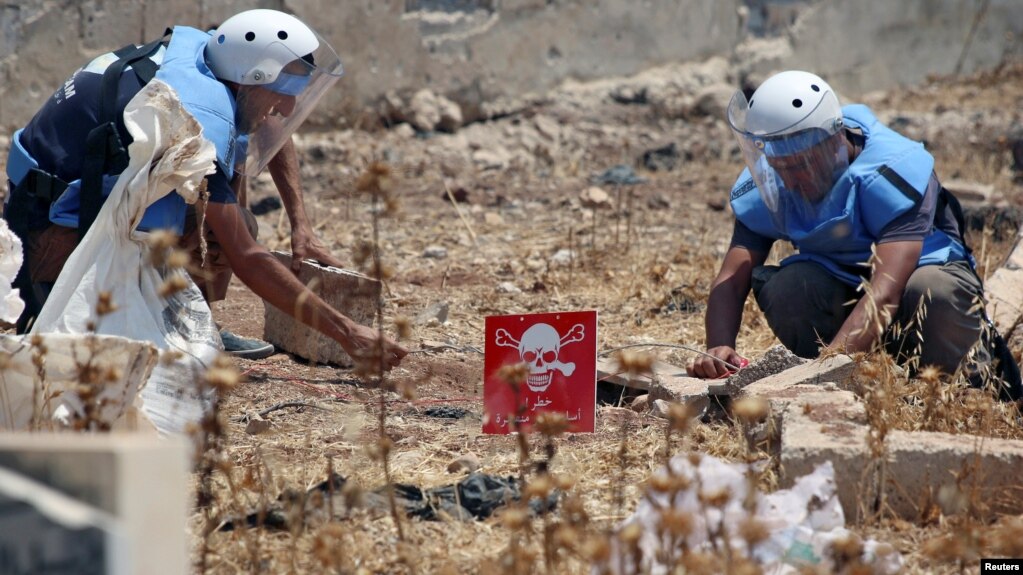
Civil defense members prepare to safely detonate cluster bombs in the rebel-held area in Deraa, Syria, July 26, 2017.
GENEVA, SWITZERLAND — A report released ahead of next week’s U.N. conference on the Convention on Cluster Munitions has condemned the continued use of cluster munitions by Syria and Yemen. They are the only two countries that still use the bombs, which are banned under international law. Tiếp tục đọc “Report: Cluster Munitions in Syria, Yemen Increase Civilian Casualties”

 CVD
CVD 