WASHINGTON: Secretary of Defense Mark Esper announced on Wednesday (Sep 16) an ambitious plan to expand the US Navy with a range of unmanned and autonomous ships, submarines and aircraft to confront the growing maritime challenge from China.
SYDNEY: Australia has named China in a court document as the foreign state under investigation by police in its first foreign interference investigation, though Beijing dismissed the allegation as an anti-China smear.
Pharos Energy said Friday it had received approval from the Prime Minister of Vietnam for the development plan of an offshore oil field in Vietnam.
Pharos, until recently known as Soco International, said that the approval of what is called the TGT Full Field Development Plan represented the “last stage of the required process.”
Pharos has previously said that the plan, which includes drilling of six producer wells, had been approved by all partners in the field, and was awaiting PM’s green light. The PM’s approval, announced Friday, follows the recently granted two-year TGT field license extension to December 7, 2026.
“Ordering of long-lead items can now proceed to enable the commencement of the drilling of six firm development wells contained in the FFDP in Q4 2021 as planned,” Pharos Energy said.
This infill-drilling program is targeted to increase gross production at TGT field off Vietnam from the current levels of around 15,000 boepd to around 20,000 boepd in 2022. Credit: Pharos EnergyEd Story, President, and Chief Executive Officer, said: “We are pleased to have received approval from the Prime Minister of Vietnam for the TGT Full Field Development Plan. This final approval enables us to put plans in place to commence the drilling of the six new producer wells on TGT starting in Q4 2021, allowing us to realize further resources in the TGT field.” Tiếp tục đọc “Vietnam Approves Pharos Energy’s Offshore Oil Project”→
Vietnam’s greenhouse gas emissions are set to grow significantly by 2030, under an updated climate plan submitted to the UN.
The country’s large cement sector is factored into the plan for the first time, which experts welcomed. But they said the overall target was not substantially more ambitious than the previous version.
Under the new plan, Vietnam committed to cut its emissions growth by 9% or nearly 84 million tonnes of CO2 by 2030 compared with business as usual projections, using a 2014 baseline. Emissions are still expected to grow by 844 million tonnes of CO2 during that time.
My Khe beach in Da Nang City, July 2020. Photo by VnExpress/Nguyen Dong.
With Storm Noul set to make landfall in central provinces Friday afternoon, Vietnamese authorities are preparing to evacuate half a million to safety.
As of Wednesday afternoon, the eye of the tropical storm lay around 680 km to the southeast of Vietnam’s Hoang Sa (Paracel) Islands off the central coast, packing winds of 70 kph.
On Wednesday, the storm is expected to move west-northwest at a speed of 15 kph and further intensify.
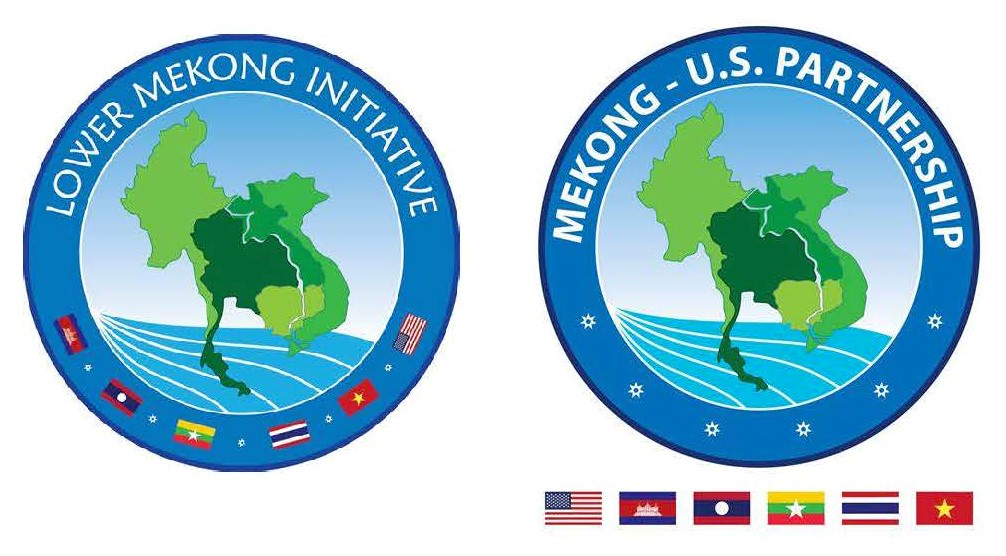
The launch of the Mekong-U.S. Partnership reflects the importance of the Mekong region to the United States. Our relationship with Mekong partner countries is an integral part of our Indo-Pacific vision and our strategic partnership with ASEAN. With more than $150 million in initial investments in regional programs, we will build on the good work of the Lower Mekong Initiative and the $3.5 billion in regional U.S. assistance during the last eleven years.
The Mekong-U.S. Partnership is committed to the autonomy, economic independence, good governance, and sustainable growth of Mekong partner countries. The United States has dedicated more than $52 million to fight COVID-19 in the region, building on more than twenty years of Mekong-U.S. cooperation on infectious diseases. We have supported economic growth with more than $1 billion to develop infrastructure in ASEAN countries through the U.S. International Development Finance Corporation (DFC), and plan to invest billions more in the coming years.
The Mekong-U.S. Partnership will also continue to strengthen water security and the work of the Mekong River Commission. It will include $55 million in planned new investments to help our Mekong partners combat transnational crime, including narcotrafficking and trafficking in persons, arms, and wildlife. It will also increase support for energy security and electricity sector development through Asia EDGE (Enhancing Development and Growth), the Japan-U.S.-Mekong Power Partnership (JUMMP), and the Japan-U.S. Strategic Energy Partnership (JUSEP). In all our efforts, the United States intends to work closely with partners like Japan, Australia, South Korea, India, and other good friends of the Mekong.
We need to be candid, however, about the challenges we face, including those from the Chinese Communist Party (CCP), which increasingly threatens the Mekong’s natural environments and economic autonomy.
The CCP’s unilateral decisions to withhold water upstream have exacerbated an historic drought. The United States stands with the region and the Mekong River Commission in calling for transparent data sharing. We encourage countries of the Mekong region to hold the CCP accountable to its pledge to share its water data. That data should be public. It should be released year-round. It should include water and water-related data, as well as land use, and dam construction and operation data. And it should be shared through the Mekong River Commission, the organization that serves the interests of Mekong-region countries, not those of Beijing.
We are also concerned about infrastructure-linked debt and the predatory and opaque business practices of Beijing’s state-owned actors, such as China Communications Construction Company. Concerning also is the boom in trafficking of persons, drugs, and wildlife, much of which emanates from organizations, companies, and special economic zones linked to the CCP.
Countries of the Mekong region have undergone an amazing journey in the last few decades. They deserve good partners. Through the Mekong-U.S. Partnership, we look forward to many more years of collaboration to ensure a peaceful, secure, and prosperous Mekong region.
Phiên tòa xơ thẩm xử 29 người Đồng Tâm tháng 9/2020
Ngay sau khi Tòa án Nhân dân Tối cao TP Hà Nội tuyên án với 29 bị cáo Đồng Tâm trong phiên sơ thẩm ngày 14/9, Ân xá Quốc tế (Amnesty) và Tổ chức Theo dõi Nhân quyền (Human Rights Watch) đã lên tiếng bày tỏ quan điểm về sự việc.
Trong một văn bản gửi cho BBC News Tiếng Việt, tổ chức Ân xá Quốc tế nhận định rằng “Đây là một bản án vô nhân đạo sau một phiên tòa bất công trắng trợn”.
Vietnamese American author Nguyen Thanh Viet is seen in a photo uploaded to his personal website vietnguyen.info.
Vietnamese American 2016 Pulitzer winner Nguyen Thanh Viet has been selected as the newest member of the Pulitzer Prize Board, according to an announcement on the award’s official website.
The selection was announced on September 8.
“It’s an honor to join the #Pulitzer Board, especially as its first Vietnamese American and Asian American member,” Viet wrote in a tweet on September 9.
“As someone fortunate enough to be a recipient of the prize, I know the impact that the prize has on a writer’s career and on the perceptions of readers. I’m delighted to join in the Board’s crucial work,” Viet told the Pulitzer.
French photographer Pierre Dieulefils documented Vietnamese landmarks like Saigon Notre Dame Cathedral, Ha Long Bay and Ban Gioc Waterfall in the late 19th century.
The 2.29-kilometer Long Bien Bridge, which connects the downtown district of Hoan Kiem with Long Bien District, was built between 1898 and 1902 by the French during their colonial rule. It was initially called Doumer Bridge after Paul Doumer, a French governor-general of Indochina. At the time of construction it was one of the world’s longest bridges. After the country’s liberation it was renamed Long Bien Bridge. Pierre Dieulefils was a soldier in Indochina before returning to Vietnam in 1888 to follow his passion for photography. A total 261 of his photos, taken across Vietnam, were printed in the book “Beautiful and Magnificent Indochina” released last August.
An aerial view of Nam Dinh Town’s center. The town is now capital of Nam Dinh Province in northern Vietnam, nearly 90 km from Hanoi.
Ha Long Bay more than a century ago. In 1994, the bay in the northern province of Quang Ninh was recognized by UNESCO as a world natural heritage, earning it global fame.
Ban Gioc is considered Vietnam’s most beautiful waterfall, one of the largest natural waterfalls in Southeast Asia, and also the fourth largest in the world amongst those located on an international border. Ban Gioc Waterfall is in Trung Khanh District of Cao Bang Province on the border with China, around 340 km (225 miles) to the north of Hanoi.
The area outside the Hue Imperial Citadel in Hue Town, central Vietnam. The relic was built under the reigns of Kings Gia Long and Minh Mang, to the north of Huong (Perfume) River. It combines traditional Vietnamese architecture, the eastern philosophy of yin and yang, and Western military architecture. Gia Long was the first emperor (ruling 1802-1820) of the Nguyen Dynasty, Vietnam’s last royal family (1802-1945), while Minh Mang was the second emperor (ruling 1820-1841).
Mossy stone steps at Thieu Tri Mausoleum, the tomb of Emperor Thieu Tri, the third Nguyen Dynasty king (ruling 1841-1847). This area is now part of the Hue Monuments Complex recognized by UNESCO as a world cultural heritage in 1993. Today, the mausoleum is located in Cu Chanh Village of Huong Thuy Town in Hue.
Ninedynastic urns stand in front of The Mieu Temple in the Hue Imperial Citadel. Construction on these nine urns started in 1835 and completed in 1837 under the reign of King Minh Mang. Each urn was decorated with 17 bas-reliefs and named in accordance with the posthumous titles of Nguyen emperors worshipped at The Mieu Temple.
Binh Loi Bridge in Saigon. Stretching 276 m with six spans, Binh Loi was the first bridge to cross Saigon River and part of the initial phase of the Saigon-Nha Trang railway line. It was built by Levallois-Perret, a construction company formed out of the former Maison Eiffel, founded by legendary engineer Gustave Eiffel. Last June, the bridge was dismantled because of deterioration after more than 100 years.
Boats in front of a factory in Cho Lon area, formed between the 17th and 19th centuries when ethnic Chinese and their relatives settled here and built a bustling area. In the French colonial time, Cho Lon was a town distinct from Saigon. The two were combined in 1956. Currently, the Cho Lon area is in Saigon’s Districts 5 and 6.
The Saigon Notre Dame Cathedral did not have two bell towers when inaugurated in 1880. They were later added in 1985, to include a total of six large bronze bells, with two crosses at the top, 60.5 m above ground. Located in a tourist precinct that includes the historic Central Post Office in District 1, the 140-year-old cathedral is popular among foreign and local visitors, especially during holiday season.
Pierre Dieulefils (1862-1937) joined the army in 1883 and was later assigned to Indochina in 1885. Two years later, he was discharged and returned to France. In 1888, he returned to northern Vietnam and became a professional photographer and postcard publisher. In 1909, he gathered a set of photos on Indochina and published a photo book entitled “Indo-chine Pittoresque & Monumentale: Annam – Tonkin”. The work earned him a gold medal at the Brussels International Exposition of 1910.
The pharmaceutical company Eli Lilly announced that a single infusion of its monoclonal antibody treatment was shown to drastically lower levels of the coronavirus in newly infected patients and lower the likelihood of requiring hospitalization. It is the first potential treatment for patients with mild or moderate Covid-19. (The two other treatments that have proved helpful, the antiviral remdesivir and the steroid dexamethasone, are only for the seriously ill.) Scientists used blood plasma from Covid-19 survivors, isolating and testing their antibodies to find the most powerful ones. They then manufactured vats of antibodies to make the drug. In a trial of more than 450 newly diagnosed Covid-19 patients, Eli Lilly said, only about 1.7 percent of those who received the drug ended up in the hospital, compared with 6 percent who were given a placebo — a 72 percent risk reduction. Those treated with the drug reportedly also had fewer symptoms, and the levels of virus in their bodies plummeted. Other companies are also working on treatments with monoclonal antibodies, but they are difficult and expensive to make. A single dose could cost thousands of dollars. They offer only a temporary solution, with the antibodies lasting about a month. But without a vaccine — the only way to elicit a lasting immune response — the treatment could give doctors another weapon in an arsenal with few options. The study will eventually enroll 800 patients in the U.S. of all ages and risk categories, including people in nursing homes. Eli Lilly has already started manufacturing 10,000 doses in hopes that these interim results, which have not yet been peer reviewed, will bear out.
The company plans to discuss the state of the trial with the Food and Drug Administration, as well as the possibility of emergency use authorization to market the drug. Here’s our treatment tracker.
By Viet Anh September 16, 2020 | 10:02 am GMT+7 vnexpressThe Xayaburi dam in the lower Mekong River in Laos. Photo by CK Power/Handout via AFP.
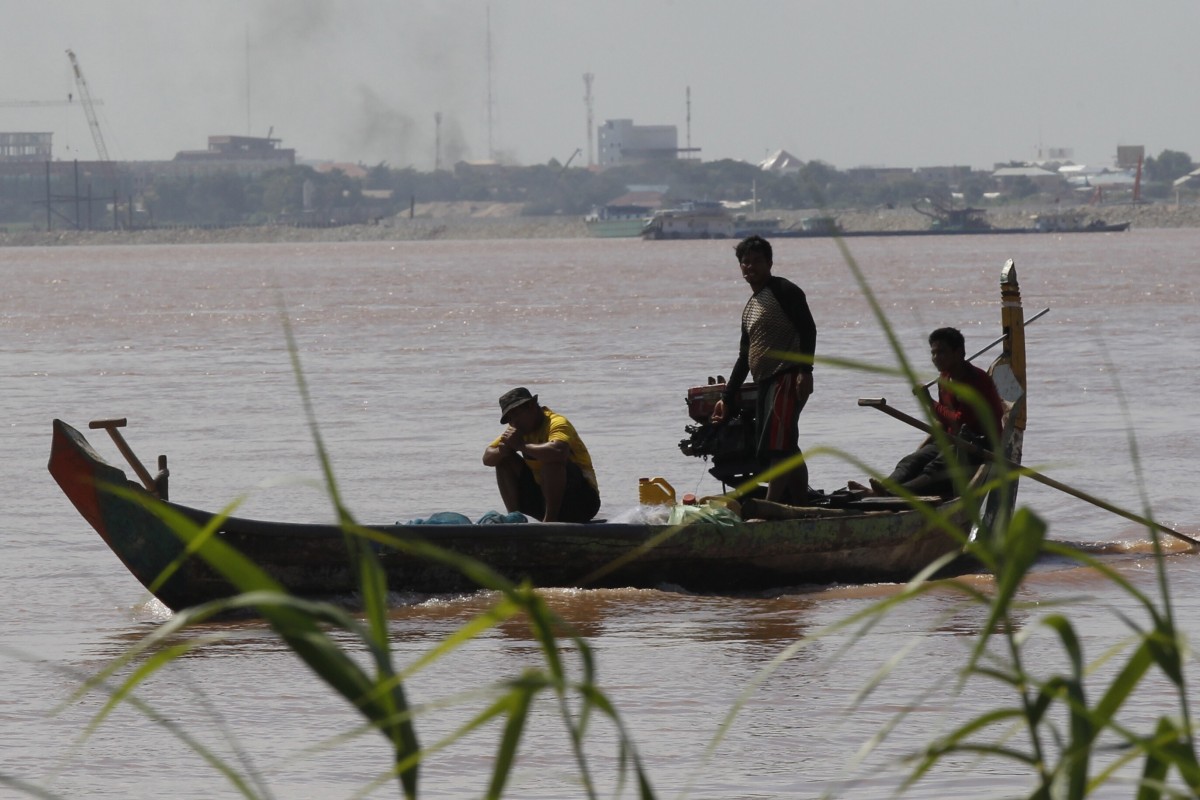
Germany has provided equipment to the Mekong River Commission to monitor the environmental impacts of two mainstream dams on the lower reaches of the Mekong River.
The equipment, worth around $600,000, meant to help monitor the impacts of Laos’s Xayaburi and Don Sahong dams, was handed over on Tuesday as part of the German government’s support for the MRC’s Joint Environment Monitoring of Mekong Mainstream Hydropower Projects (JEM) program, which is now in the pilot stage.
The Supreme People’s Procuracy on Monday issued an indictment to prosecute former Minister of Industry and Trade Vu Huy Hoang and his accomplices for their involvement in a violation case related to the land plot at 2-4-6 Hai Ba Trung Street, HCMC.
Former Minister of Industry and Trade Vu Huy Hoang. — VNA/VNS Photo
Former Director of the Ministry of Industry and Trade (MoIT)’s Light Industry Department Phan Chi Dung, Former Vice Chairman of the HCM City People’s Committee Nguyen Huu Tin, former Director of the municipal Department of Natural Resources and Environment Dao Anh Kiet, and six others will also face prosecution.
File photo of a H-6 bomber of the Chinese People’s Liberation Army Air Force flying near a Taiwan F-16 in this Feb 10, 2020 handout photo. (Photo: Reuters)