
Suy giảm 90% san hô ở Vịnh Nha Trang
TS – 01/03/2021 07:15 – Vịnh Nha Trang, một trong những vịnh đẹp nhất thế giới, được đánh giá là có đa dạng sinh học cao so với nhiều vùng ven bờ khác ở Việt Nam, đã giảm tới 90% lượng san hô khỏe mạnh, phong phú so với bốn thập niên trước.

Rạn san hô khu vực Hòn Mun, vịnh Nha Trang. Nguồn: Ảnh do Ban Quản lý vịnh Nha Trang cung cấp/ Báo Người Lao động.
Đây là kết quả nghiên cứu được công bố vào năm ngoái của nhóm các nhà khoa học tại Viện Sinh thái học và Tiến hóa, Viện Hàn lâm Khoa học Nga và Viện Hải dương học tại Nha Trang công bố trên tạp chí Marine and Freshwater Research1. Tiếp tục đọc “Suy giảm 90% san hô ở Vịnh Nha Trang”
Băm đất nông nghiệp làm điện mặt trời
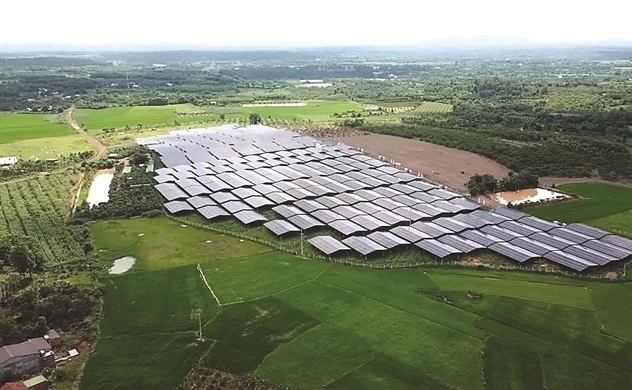
NCDT – Kim Thuỳ Thứ Sáu | 26/02/2021 14:00
Trong 3 tháng cuối năm 2020, khu vực Tây Nguyên đặc biệt là các tỉnh Đắk Lắk, Gia Lai, Đắk Nông, Bình Phước xuất hiện nhiều nhóm nhà đầu tư thuê đất của dân để làm dự án điện mặt trời áp mái và hứa hẹn người dân chỉ cần ký giấy tờ do bên họ chuẩn bị sẵn thì sẽ nhận được tiền thuê đất hằng tháng khoảng 30 triệu đồng/ha.
Nhóm đầu tư này mua gom đất nông nghiệp của các hộ dân, rồi làm thủ tục xin đấu nối với Điện lực Đắk Lắk (PC Đắk Lắk). Điều kiện để được đấu nối là phải có dự án nông nghiệp (chăn nuôi, trồng trọt), tận dụng tầng mái công trình lắp pin năng lượng. Theo quy định của Tập đoàn Điện lực Việt Nam (EVN), các công trình điện mặt trời trên 1 MWp (điện đấu lưới) phải được Bộ Công Thương phê duyệt. Vì vậy, nhóm nhà đầu tư này thành lập thêm nhiều công ty con, chia nhỏ dự án (dưới 1 MWp) nhằm lách luật. Tiếp tục đọc “Băm đất nông nghiệp làm điện mặt trời”
Nuclear energy, ten years after Fukushima
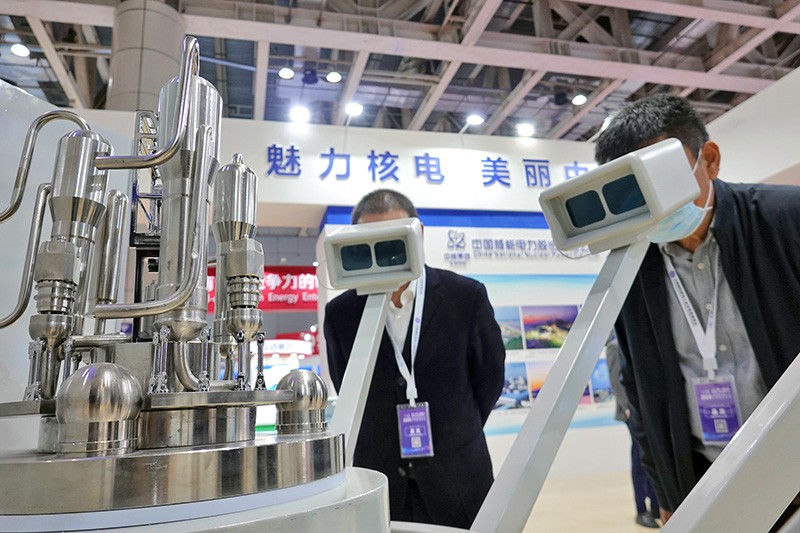
Visitors to an industry exhibition in 2020 in China view a model nuclear-power reactor through augmented-reality headsets.Credit: Tang Ke/VCG via Getty
Ten years have passed since a catastrophic earthquake and tsunami damaged the Fukushima Daiichi nuclear power plant in Japan, triggering the worst nuclear accident since the Chernobyl disaster in 1986.
The accident struck at a time of renewed hope and untested optimism surrounding a new wave of nuclear-energy technologies and the part they might play in achieving a low-carbon future. It led to retrenchment, amid fresh concerns over the technological, institutional and cultural vulnerabilities of nuclear infrastructures, and the fallibility of humans in designing, managing and operating such complex systems. Tiếp tục đọc “Nuclear energy, ten years after Fukushima”
“Phi chính trị hóa lực lượng vũ trang”- vấn đề nhìn từ Myanmar
CAND – 07:59 20/02/2021 Việc chính phủ cầm quyền ở Myanmar nhanh chóng bị lật đổ sau một cuộc đảo chính của quân đội có lẽ sẽ là bài học đắt giá với rất nhiều chính đảng cầm quyền trên thế giới. Một trong những bài học đó là “phi chính trị hóa Công an, Quân đội”.

Sáng 1/2/2021, truyền thông trong nước và quốc tế đồng loạt đưa tin, Tổng thống Myanmar Win Myint, Cố vấn nhà nước Aung San Suu Kyi và một loạt nhân vật cấp cao khác của đảng Liên minh Quốc gia vì Dân chủ (NLD) cầm quyền bị Quân đội bắt. Người phát ngôn của NLD Myo Nyunt sau đó xác nhận thông tin và nói rằng với những gì đang diễn ra thực sự là một cuộc đảo chính. Tiếp tục đọc ““Phi chính trị hóa lực lượng vũ trang”- vấn đề nhìn từ Myanmar”
IEEFA: Lessons from the Texas energy crisis for emerging LNG importers in Asia – Việt Nam cần rút bài học gì từ cuộc khủng hoảng năng lượng ở Texas
Sam Reynolds March 1, 2021 IEEFA
IEEFA: Lessons from the Texas energy crisis for emerging LNG importers in Asia
LNG importers will bear climate-related risks of exporting countries, threatening energy security and electricity costs
The Texas energy crisis has become world news.
During last week’s extreme winter weather, surging electricity demand collided with falling generation, forcing the state’s grid operator to implement rolling blackouts. In many cases, blackouts lasted for over 24 hours, causing fuel and electricity supply shortages and disruptions throughout the gas supply chain. At least 4.5 million Texans were at one point without electricity and more than 30 deaths have been attributed to power losses, though the final toll could be much larger.
News of the Texas power crisis has spread throughout Asia, where energy growth markets such as Vietnam, the Philippines, and Bangladesh are considering U.S. liquified natural gas (LNG) imports as an alternative to coal-fired electricity generation. But the events in Texas have highlighted the risks inherent in LNG imports for both the energy transition and climate change adaptation.
Below are five lessons from the crisis for emerging markets in Asia.
Lesson 1. Gas/LNG volatility is here to stay.
It has been a tumultuous year in global LNG markets. The COVID-19 outbreak sent global LNG demand plummeting and Asian prices hit an all-time low of $1.85/MMBtu last May. U.S. LNG export facilities remained idle for much of the summer, oil and gas drilling fell by 40% internationally, and bankruptcies in the North American oil and gas sector soared to their highest level since 2016. Starting in the fall, a combination of production shut-ins, shipping delays, and cold weather caused Asian LNG prices to spike to a record high of $32.50/MMBtu.

The Texas energy crisis is another sign that volatility in global gas markets is likely to continue. High electricity demand combined with supply chain disruptions sent wholesale natural gas prices skyrocketing. At Texas’s Waha Hub, for example, prices jumped from $2.77 to $219, while spot prices in Oklahoma’s Oneok hub jumped to over $1,000/MMBtu. For gas producers able to keep wells operating, the Texas freeze was “like hitting the jackpot,” but for LNG exporters, power outages disrupted liquefaction trains and feedgas pipelines. Several LNG export terminals scaled back production, while Corpus Christi LNG and Cameron LNG went offline completely. Overall, 10 cargoes amounting to 1 billion cubic meters of gas were likely delayed from the already-volatile global LNG market.
Volatility in global gas markets is likely to continue
Lesson 2. Volatile prices can cause LNG-fired power plants in Asia and associated infrastructure to go under-utilised.
Volatile LNG prices create an increasingly challenging environment for price-sensitive emerging markets. High prices and difficulties sourcing gas can cause gas-fired power plants in importing countries to go underutilized. In turn, all the associated infrastructure – ports, regasification facilities, pipelines – are also at risk of being stranded. IEEFA recently estimated that volatile LNG prices put over $50 billion of natural gas projects at risk of cancellation in Vietnam, Bangladesh, and Pakistan.
Since the value of associated infrastructure is dominated by fixed costs, per unit natural gas prices depend largely on total gas demand. This means that to realize any economic benefits from imported gas, costs must be spread over a wider consumer base than currently exists in many south and southeast Asian countries. The decision to import LNG is therefore not an incremental one. Rather, it will lead to new sources of financial vulnerability resulting from long-term, large-scale fossil gas lock-in. Without major storage capacity, volatile LNG prices will be a constant threat to the affordability of gas and gas-powered electricity in import markets.
Lesson 3. LNG imports come at the cost of domestic energy security.
By importing greater volumes of LNG, Asian countries become more vulnerable to supply disruptions in global gas markets and geopolitical dynamics beyond their control. With increasingly severe and frequent weather events caused by climate change, Asian importers are not just assuming the risks of climate-related disruptions in their own country, they are also assuming risks of climate-related weather events in exporting countries. In Texas, generators were not required to invest in cold weather safeguards, leaving them vulnerable to unpredictable weather events.
LNG import infrastructure in Asia is highly vulnerable to extreme weather
LNG import infrastructure in Asia is also highly vulnerable to extreme weather. While numerous countries rely on floating storage and regasification units (FSRUs) as cheaper alternatives to land-based import terminals, FSRUs are difficult to operate in poor weather conditions. In 2018, Bangladesh announced it would cancel plans to build additional FSRUs because they were unreliable during the monsoon season. In Malta, the inoperability of FSRUs during storms has caused the complete shut-down of the country’s gas-fired power plants.
Lesson 4. Grid expansion and modernization must take centre stage.
Some commentators have suggested the solution to climate-related blackouts is to build more generation capacity, but all power sources are susceptible to outages when weather events occur. In Texas, 30,000MW of thermal capacity was forced offline – including 40% of natural gas capacity and a nuclear reactor – as well as 17,000MW of wind capacity. As a result, wholesale electricity prices skyrocketed to the state’s $9,000 per MWh cap, up from their average of $30.
Along with generation capacity, grid reliability depends largely on transmission infrastructure and interconnections to other areas. The Texas grid is highly isolated from surrounding power systems, limiting power imports from nearby markets. In small portions of the state connected to other grids, cities experienced brief blackouts compared to the rest of the state.
A greater emphasis on system-level planning in emerging Asian markets, rather than a myopic focus on generation, could improve the efficiency of existing generators, enable the installation of greater capacities of domestic renewable energy, and lower wholesale electricity prices during times of short supply.
Lesson 5. The energy transition is a humanitarian issue.
The COVID-19 pandemic and the Texas energy crisis have exacerbated the risks inherent in LNG imports and revealed the flaws of centralized generation capacity buildouts. In Texas, blackouts disproportionately affected low-income communities, while electricity bills for some households that maintained power spiked into the tens of thousands of dollars. The total cost of electricity sold in Texas from February 15-19 was $50.6 billion, up from $4.2 billion in the prior week. For Asian countries already grappling with high electricity prices, the risks of LNG imports and associated infrastructure lock-in are simply too high. Instead, reliability and resilience are key to keeping costs down and the lights on.
Read the Vietnamese translation here.
Related articles:
LNG volatility causes tender cancellations in Bangladesh, Pakistan
Growing risks for US$50 billion of Mozambique LNG projects
Risks rise for ExxonMobil, Total LNG projects in MozambiquePosted in: Asia, Bangladesh, Climate Risk, Commentary, Energy Investment Trends, Energy Markets, Energy Policy, Energy Security, Natural Gas, Newsletter Daily, North America, Philippines, Stranded Assets, Texas, Vietnam
Freedom House report: Freedom in the World 2021 – Democracy under Seize

As a lethal pandemic, economic and physical insecurity, and violent conflict ravaged the world, democracy’s defenders sustained heavy new losses in their struggle against authoritarian foes, shifting the international balance in favor of tyranny.
WRITTEN BY Sarah Repucci Amy Slipowitz
As a lethal pandemic, economic and physical insecurity, and violent conflict ravaged the world in 2020, democracy’s defenders sustained heavy new losses in their struggle against authoritarian foes, shifting the international balance in favor of tyranny. Incumbent leaders increasingly used force to crush opponents and settle scores, sometimes in the name of public health, while beleaguered activists—lacking effective international support—faced heavy jail sentences, torture, or murder in many settings.
Tiếp tục đọc “Freedom House report: Freedom in the World 2021 – Democracy under Seize”US Interrim National Security Strategic Guidance
Macquarie profits, among other companies, could trigger U.S. hearings

Robert Besser
03 Mar 2021, 12:25 GMT+10 asiapacificnews.net
The winter storms that swept across the U.S., particularly Texas, upending the energy market and knocking out power for millions of people, have delivered a windfall for Macquarie Group, with the Australian bank lifting its profit outlook for 2021 by as much as 10 percent, just two weeks after warning that earnings would be “slightly down”.
“Extreme winter weather conditions in North America have significantly increased short-term client demand for Macquarie’s capabilities in maintaining critical physical supply across the commodity complex,” according to the company, which is the second-largest supplier of gas in North America after oil major BP, as quoted by Reuters.
Tiếp tục đọc “Macquarie profits, among other companies, could trigger U.S. hearings”COVID-19: Schools for more than 168 million children globally have been completely closed for almost a full year, says UNICEF
UNICEF unveils ‘Pandemic Classroom’ at United Nations Headquarters in New York to call attention to the need for governments to prioritise the reopening of schools

Chris Farber/UNICEF via Getty ImagesOn 1 March 2021, a view of UNICEF’s ‘Pandemic Classroom’ installation at United Nations Headquarters in New York, United States of America. To call attention to the education emergency wrought by the COVID-19 pandemic, and to and raise awareness of the need for governments to keep schools open, UNICEF unveiled ‘Pandemic Classroom’ – a model classroom made up of 168 empty desks, each seat representing one million children living in countries where schools have been almost entirely closed since the onset of lockdowns.
Germany to send 1st warship through South China Sea in nearly 2 decades
German frigate’s forthcoming transit comes as Western allies step up ‘freedom of navigation’ passages in disputed sea

German Sachsen-class frigate the Hamburg (Bundeswehr photo)
TAIPEI (Taiwan News) — A German frigate will traverse the South China Sea this summer for the first time since 2002, German officials confirmed Tuesday (March 1).
Officials in the country’s defense and foreign ministries told Reuters that the frigate, scheduled to embark on a trip to Asia in August, will traverse the South China Sea on the return leg of its journey.
Tiếp tục đọc “Germany to send 1st warship through South China Sea in nearly 2 decades”Vietnam: New draft decision on the future Solar Auction Program
Baker McKenzi
In brief
On 21 January 2021, the Electricity and Renewable Energy Authority of Vietnam (EREA) submitted Report No. 20/BC-DL to the Deputy Minister of Industry and Trade in charge. The report requests the Ministry of Industry and Trade (MOIT)’s internal approval of the draft of the Prime Minister’s decision on the selection of investors for grid-connected solar power projects in Vietnam (“Draft Decision”).
This Draft Decision would apply the selection mechanism on a long-term basis. Bidding rounds will be conducted based on a so-called Renewable Energy Development Plan formulated by the MOIT for each five-year period. A more specific plan will be circulated on a biannual basis.
Contents
Tiếp tục đọc “Vietnam: New draft decision on the future Solar Auction Program”‘Superhero’ delivery driver catches toddler falling from 12th-floor balcony in Vietnam
‘Luckily, the baby fell into my lap,’ says 31-year-old in Hanoi who climbed on to a roof to get closer to dangling child

Helen Sullivan@helenrsullivanTue 2 Mar 2021 05.16 GMT The Guardian
A “superhero” delivery driver in Hanoi has saved a two-year-old girl who fell from a 12th-floor balcony.
Nguyen Ngoc Manh, 31, was sitting in his car waiting to make a delivery at 5pm on Sunday when he heard a child crying, he told the Anninhthudo news organisation. A woman started screaming and he stuck his head out of the window to see what was going on.
He told local media in the Vietnam capital that he first thought it was a child having a tantrum, but quickly realised it was something else. The child was nearly 50 metres above ground.
“I saw a girl climbing out of the balcony,” he said. He jumped out of his car and climbed up on to a nearby building to get closer should the child fall.
“I mounted a two-metre-high tile roof to seek a proper position to get the girl,” he said, still trembling from the rescue, according to the Vietnam Times.Baby on small inflatable rescued by coastguard 1km off Turkish coastRead more
Standing on a metallic roof used to store generators, he lost his footing as the child began to fall, he told VN Express International. But he flung himself forward to catch her, landing so hard that he left a dent in the roof.
“I tried to reach out my hand and took the maximum effort to catch the girl,” he said, hoping that at the very least he might be able to prevent her from falling straight to the ground.
In a video of the incident taken from a nearby apartment building, the child can be seen climbing over the balcony railing and on to a thin ledge. Neighbours in a building opposite can be heard crying out to her. The child holds on for a few moments before losing her grip and falling.
“Luckily, the baby fell into my lap,” Nguyen said. “I hurriedly embraced her then saw blood leaking from her mouth, I was very frightened.”
The child was taken to the National Children’s Hospital where doctors told local media she had dislocated her hip but suffered no other injuries. Le Ngoc Duy, a doctor at the hospital, said she was in a cast and being monitored.
BEIJING BOLSTERS THE ROLE OF THE CHINA COAST GUARD
BY SUMATHY PERMAL | MARCH 1, 2021
AMTI UPDATE
Beijing’s South China Sea moves have ramped up with the passing of a law allowing the China Coast Guard (CCG) to fire on what it identifies as illegal foreign vessels in waters under its jurisdiction. By virtue of China’s nine-dash line claim, this law applies to the entire South China Sea. Given that China’s claims are opposed by other South China Sea claimants as well as numerous non-claimant countries, the law has proven controversial and raises concerns over whether it will increase the risk of confrontation and conflict in the disputed waters.
The Law
On January 22, the standing committee of China’s National People’s Congress passed a new law empowering the CCG to employ “all necessary means” to stop or prevent threats from foreign vessels and specifying the circumstances under which different weapons, “handheld, shipborne, or airborne,” can be deployed, as well as allowing it to demolish structures built by other claimants in areas China considers its own. This new law is another manifestation of the CCG’s expanding role. The roles and practices of the CCG have generally been in line with those of other coast guards around the world. This specific law, however, lays out the powers and duties of the CCG in so called “jurisdictional waters,” which include the highly contested areas in the South China Sea. For now, the law amounts to a figurative shot across the bows of other claimants—but that shot could soon be literal.
Tiếp tục đọc “BEIJING BOLSTERS THE ROLE OF THE CHINA COAST GUARD”US raise concerns over China’s upstream dams on Mekong

ANI
02 Mar 2021, 02:18 GMT+10 Asiapacificnews.net
Washington [US], March 1 (ANI): Raising concerns over the dipping water-levels of the Mekong River and upstream dams in China, Principal Deputy Assistant Secretary of State for East Asian and Pacific Affairs Ambassador Atul Keshap points out that upstream dams in China that exacerbate droughts are hurting the communities and ecosystems that have relied for countless generations on the Mekong River’s natural flood pulse.
Speaking at the Indo-Pacific conference on Strengthening Transboundary River Governance, Keshap on Saturday (local time) said the conference report launched at the event is excellent and summarizes our work examining the challenges facing the Mekong River basin and its ties to the economies, livelihoods, and culture of nearly 70 million people.
“We remain concerned just as we were in October during the conference–that record droughts and the upstream dams in China that exacerbate them are hurting the communities and ecosystems that have relied for countless generations on the Mekong River’s natural flood pulse,” he said as reported by the Frontier Post.
Tiếp tục đọc “US raise concerns over China’s upstream dams on Mekong”
