Thứ Bảy, ngày 6/6/2020 – 06:06 Đồ họa: THÙY TRANG
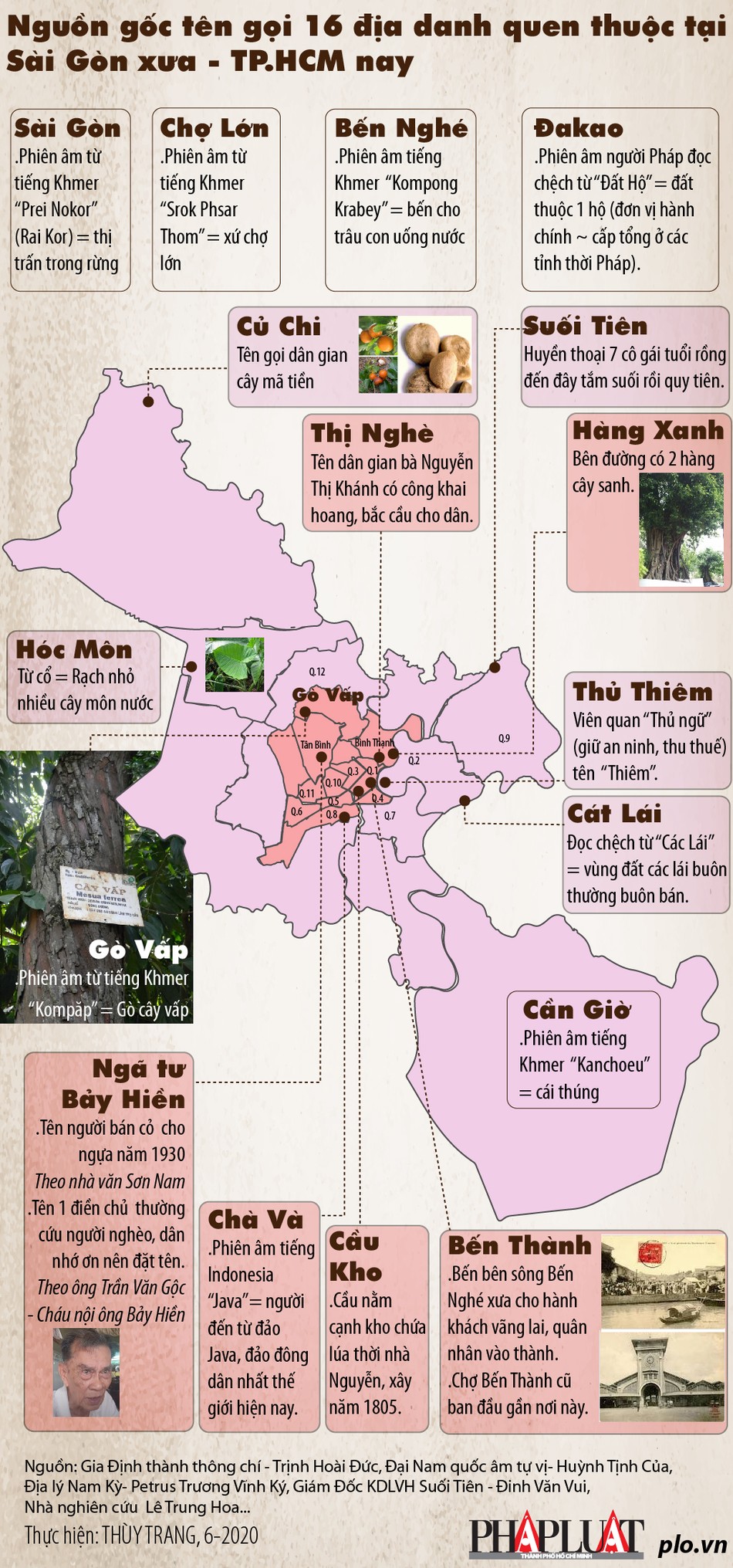
(PLO)- Trong nguồn gốc tên gọi của 16 địa danh quyen thuộc ở Sài Gòn xưa – nay là TP.HCM, có nhiều địa danh liên quan tiếng Khmer, cây cối, nhớ ơn người có công…
Conversations on Vietnam Development

Thứ Bảy, ngày 6/6/2020 – 06:06 Đồ họa: THÙY TRANG
(PLO)- Trong nguồn gốc tên gọi của 16 địa danh quyen thuộc ở Sài Gòn xưa – nay là TP.HCM, có nhiều địa danh liên quan tiếng Khmer, cây cối, nhớ ơn người có công…
English: The World’s Most Important Body of Water: More than most, four men shaped the oft-cited “strategic tensions” over the South China Sea.
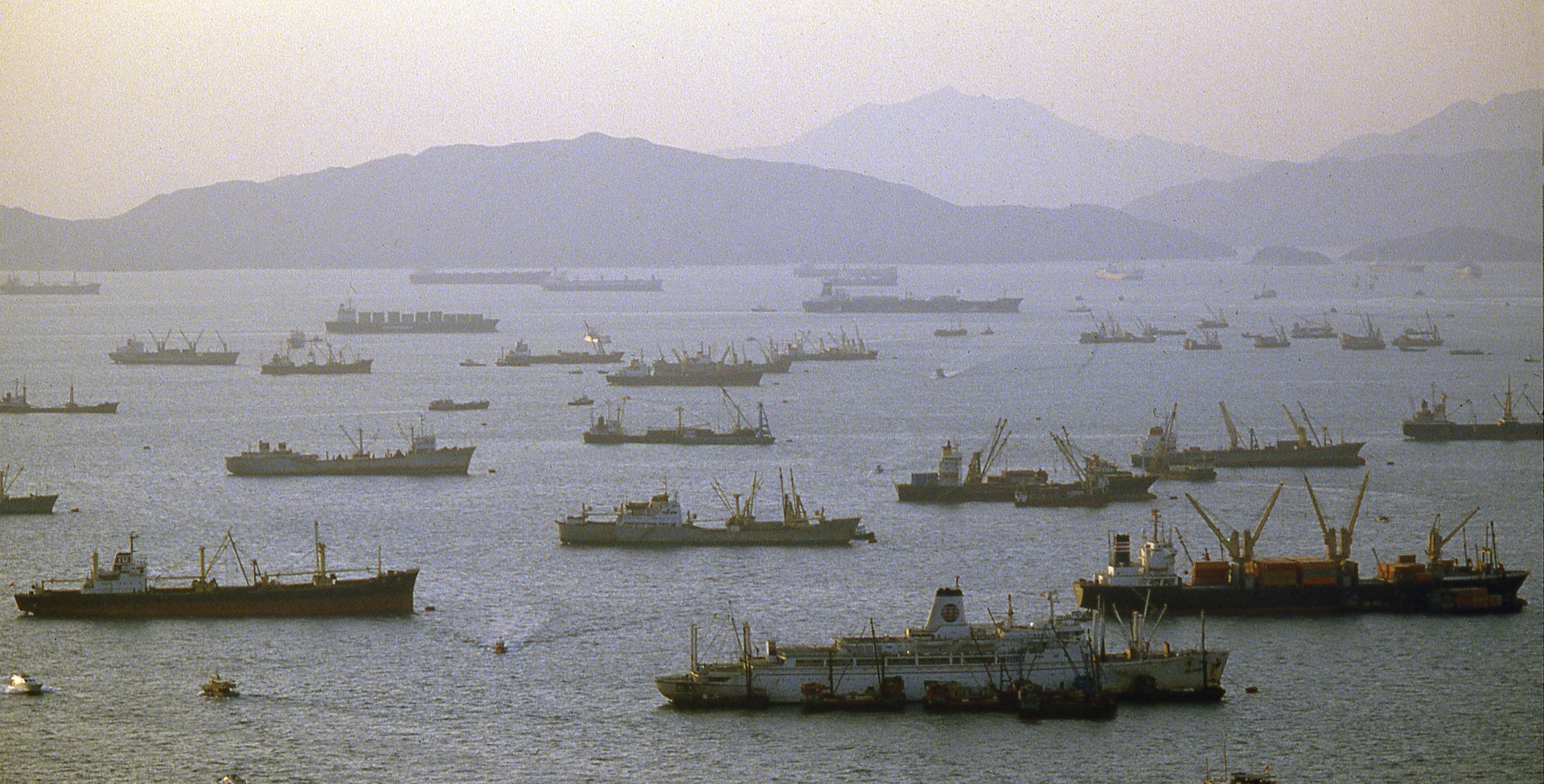
Hơn ai hết, có bốn nhân vật đã định hình “căng thẳng chiến lược” thường được nhắc đến về Biển Đông
Biển Đông là vùng lãnh hải quan trọng nhất cho nền kinh tế thế giới — nơi mà ít nhất một phần ba thương mại toàn cầu thông thương qua lại. Đây cũng là vùng biển nguy hiểm nhất thế giới, nơi mà quân đội Hoa Kỳ và Trung Quốc có thể dễ dàng va chạm nhất.
Các tàu chiến của Trung Quốc và Mỹ gần như chỉ ngăn chặn được một số sự cố ở đó trong vài năm qua, và quân đội Trung Quốc đã cảnh báo về các máy bay phản lực của Mỹ bay phía trên. Vào tháng 7, hai quốc gia đã tiến hành các cuộc tập trận hải quân cạnh tranh trong vùng biển này. Với việc được gọi là “cạnh tranh chiến lược” ngày càng tăng giữa Washington và Bắc Kinh, nỗi lo sợ về một tai nạn có thể châm ngòi cho một cuộc đối đầu quân sự lớn hơn khiến các nhà chiến lược ở cả hai bên phải bận tâm.
Những căng thẳng này xuất phát từ bất đồng giữa hai nước về việc liệu Biển Đông có phải là lãnh thổ của Trung Quốc hay không, một cuộc cãi vã nói lên tranh chấp sâu sắc hơn về chủ quyền vùng biển, chủ quyền được quyết định ra sao, và các quyền di chuyển cơ bản trong các vùng biển đó.
Tiếp tục đọc “BIỂN ĐÔNG: VÙNG BIỂN QUAN TRỌNG NHẤT TRÊN THẾ GIỚI”
NĐT – 16:54 | Thứ năm, 24/12/2020 Ăn quận Năm, nằm quận Ba… Ai đó đã đúc kết thành tục ngữ. Nhưng quận Ba đâu chỉ có những con đường biệt thự “cây dài bóng mát” – mơ ước nhà cửa của thị dân. Quận Ba còn có nhiều “kho báu” khác mà người viết nhân dự Hội thảo “Tiềm năng phát triển đô thị của quận Ba, TP.HCM” vào ngày 22.12 vừa qua, đã đề nghị khai thác. Mong rằng việc nhận diện các kho báu di sản của từng quận/huyện cụ thể sẽ góp thêm việc thúc đẩy kinh tế di sản cho toàn thành phố và các nơi khác.

Biệt thự 110 – 112 Võ Văn Tần (quận 3, TP.HCM) đã có kế hoạch trùng tu để trả lại một kiến trúc ẩn chứa nhiều giá trị Việt Nam. Ảnh: Trung Dũng Tiếp tục đọc “Từ 5 “kho báu” di sản quận Ba nghĩ đến việc thúc đẩy kinh tế di sản”
NN – Tôi tìm lại con của nhân chứng “My Lai massacre” giữa ánh đèn đêm le lói, ngồi nghe Chi kể chuyện, nghe cảm giác lạnh dọc xương sống…
My Lai Massacre, đó là cụm từ phía Mỹ lưu trong hồ sơ vụ thảm sát Mỹ Lai tại xã Tịnh Khê, TP Quảng Ngãi vào ngày 16/3/1968. Một nhân chứng sống sót được báo chí quốc tế và trong nước không ngừng nhắc tên là Đỗ Ba.

Nhưng còn một Đỗ Ba khác thì sống đời ẩn dật, vào định cư ở Trại phong Quy Hòa, tỉnh Bình Định, sau đó qua đời. Đầu tháng 9/2020, người con trai Đỗ Ba đột ngột gọi ra Đà Nẵng và nói giọng buồn bã: “Xin chú tìm giúp một nơi nương náu cho người em trai, xin chú giúp đỡ…!”. Tiếp tục đọc “Con Đỗ Ba, bây giờ ra sao?”
By Mai Nhat September 16, 2020 | 11:51 am GMT+7 vnexpress
 |
| The 2.29-kilometer Long Bien Bridge, which connects the downtown district of Hoan Kiem with Long Bien District, was built between 1898 and 1902 by the French during their colonial rule. It was initially called Doumer Bridge after Paul Doumer, a French governor-general of Indochina. At the time of construction it was one of the world’s longest bridges. After the country’s liberation it was renamed Long Bien Bridge. Pierre Dieulefils was a soldier in Indochina before returning to Vietnam in 1888 to follow his passion for photography. A total 261 of his photos, taken across Vietnam, were printed in the book “Beautiful and Magnificent Indochina” released last August. |
 |
| An aerial view of Nam Dinh Town’s center. The town is now capital of Nam Dinh Province in northern Vietnam, nearly 90 km from Hanoi. |
 |
| Ha Long Bay more than a century ago. In 1994, the bay in the northern province of Quang Ninh was recognized by UNESCO as a world natural heritage, earning it global fame. |
 |
| Ban Gioc is considered Vietnam’s most beautiful waterfall, one of the largest natural waterfalls in Southeast Asia, and also the fourth largest in the world amongst those located on an international border. Ban Gioc Waterfall is in Trung Khanh District of Cao Bang Province on the border with China, around 340 km (225 miles) to the north of Hanoi. |
 |
| The area outside the Hue Imperial Citadel in Hue Town, central Vietnam. The relic was built under the reigns of Kings Gia Long and Minh Mang, to the north of Huong (Perfume) River. It combines traditional Vietnamese architecture, the eastern philosophy of yin and yang, and Western military architecture. Gia Long was the first emperor (ruling 1802-1820) of the Nguyen Dynasty, Vietnam’s last royal family (1802-1945), while Minh Mang was the second emperor (ruling 1820-1841). |
 |
| Mossy stone steps at Thieu Tri Mausoleum, the tomb of Emperor Thieu Tri, the third Nguyen Dynasty king (ruling 1841-1847). This area is now part of the Hue Monuments Complex recognized by UNESCO as a world cultural heritage in 1993. Today, the mausoleum is located in Cu Chanh Village of Huong Thuy Town in Hue. |
 |
| Ninedynastic urns stand in front of The Mieu Temple in the Hue Imperial Citadel. Construction on these nine urns started in 1835 and completed in 1837 under the reign of King Minh Mang. Each urn was decorated with 17 bas-reliefs and named in accordance with the posthumous titles of Nguyen emperors worshipped at The Mieu Temple. |
 |
| Binh Loi Bridge in Saigon. Stretching 276 m with six spans, Binh Loi was the first bridge to cross Saigon River and part of the initial phase of the Saigon-Nha Trang railway line. It was built by Levallois-Perret, a construction company formed out of the former Maison Eiffel, founded by legendary engineer Gustave Eiffel. Last June, the bridge was dismantled because of deterioration after more than 100 years. |
 |
| Boats in front of a factory in Cho Lon area, formed between the 17th and 19th centuries when ethnic Chinese and their relatives settled here and built a bustling area. In the French colonial time, Cho Lon was a town distinct from Saigon. The two were combined in 1956. Currently, the Cho Lon area is in Saigon’s Districts 5 and 6. |
 |
| The Saigon Notre Dame Cathedral did not have two bell towers when inaugurated in 1880. They were later added in 1985, to include a total of six large bronze bells, with two crosses at the top, 60.5 m above ground. Located in a tourist precinct that includes the historic Central Post Office in District 1, the 140-year-old cathedral is popular among foreign and local visitors, especially during holiday season. |
 |
| Pierre Dieulefils (1862-1937) joined the army in 1883 and was later assigned to Indochina in 1885. Two years later, he was discharged and returned to France. In 1888, he returned to northern Vietnam and became a professional photographer and postcard publisher. In 1909, he gathered a set of photos on Indochina and published a photo book entitled “Indo-chine Pittoresque & Monumentale: Annam – Tonkin”. The work earned him a gold medal at the Brussels International Exposition of 1910. |
Photos by Pierre Dieulefils
By Mai Nhat September 14, 2020 | 08:40 am GMT+7 vietnamnet
 |
| At the end of the 19th century southern women preferred “ao ngu than” (five-piece ao dai) and beaded jewelry. According to designer Sy Hoang, rich women used to wear this type of ao dai, with four layers representing the parents of the wife and husband and the fifth, the wearer. The tunic also had five buttons, symbolic of the five qualities everyone should have – nhan (kindness), le (decorum), nghia (uprightness), tri (wisdom) and tin (faithfulness). Tiếp tục đọc “Vietnam in the late 19th century through French photographer’s lens” |
By Ha Thanh September 5, 2020 | 12:03 pm GMT+7 VNExpress
Ho Chi Minh’s Stilt House, the living and working space of the former president, is a popular historic site in Hanoi for both Vietnamese and foreign travelers. |
| Built in 1958, the tile-roofed stilt house at 1 Hoang Hoa Tham Street in Ba Dinh District has a single floor and measures 10.5 metres in length and 6.2 metres in width. It resembles the style of the traditional of the Tay – Thai ethnic stilt houses in Viet Bac, the northernmost region of Vietnam consisting of six provinces, Cao Bang, Bac Kan, Lang Son, Ha Giang, Tuyen Quang, and Thai Nguyen. Viet Bac was the name of the region in the time of war against the French colonists (1945-1954). Tiếp tục đọc “President Ho Chi Minh’s Stilt House in Hanoi” |
By Mai Nhat August 24, 2020 | 08:33 am GMT+7 vnexpress
 |
| Locally published “Indo-Chine Pittoresque & Monumentale: Annam – Tonkin” book includes a collection of photos taken by different French photographers, including Dieulefils. These images serve to expose Vietnamese culture during the French colonial period and can be dated back to 1885. |
Tiếp tục đọc “A slip down memory lane: Vietnam in the 1880s”
Microbes buried beneath the sea floor for more than 100 million years are still alive, a new study reveals. When brought back to the lab and fed, they started to multiply. The microbes are oxygen-loving species that somehow exist on what little of the gas diffuses from the ocean surface deep into the seabed.
The discovery raises the “insane” possibility, as one of the scientists put it, that the microbes have been sitting in the sediment dormant, or at least slowly growing without dividing, for eons.
The new work demonstrates “microbial life is very persistent, and often finds a way to survive,” says Virginia Edgcomb, a microbial ecologist at the Woods Hole Oceanographic Institution who was not involved in the work
Tiếp tục đọc “Scientists pull living microbes, possibly 100 million years old, from beneath the sea”
On a long-distance bicycle trip from London to St. Petersburg in 2002, photographer Chris Herwig encountered something unexpected in the barren post-Soviet landscapes—artsy, unusual, and almost spaceship-like bus stops. The more he rode, the more he came across such unique transit structures.
Pitsunda, Abkhazia, Georgia
As Herwig traveled through and later began living in post-Soviet states, he would keep an eye out for unusual bus stops. Having grown up in Canada, he says that the U.S.S.R. was always a mystery to him. Something dark and inexplicable. It fascinated him to find colorful, almost celebratory structures in a land that was once so rigidly governed.
22/07/2020 05:20 GMT+7 Vietnamnet
Làm kinh tế giỏi, cựu binh bỏ tiền túi xây, sửa 8 cây cầuNhững cựu binh Mỹ tìm lại bạn gái Việt sau nhiều năm xa cáchCựu binh mua hơn 50 xe đạp tặng học sinh nghèo
Một đám cưới đầy đủ nghi lễ, mọi người xúng xính áo quần đi đón dâu nhưng chỉ có di ảnh của cô dâu, chú rể. Tại nhà gái, đại diện nhà trai đặt di ảnh của đôi vợ chồng bên cạnh nhau, đôi mắt ai nấy đều đỏ hoe.
Đó là hình ảnh xúc động trong đám cưới của liệt sĩ Hoàng Thị Hồng Chiêm (1954 – 1979) và liệt sĩ Bùi Văn Lượng (1955 – 1979) ở TP Móng Cái (Quảng Ninh) vào năm 2017.
Tiếp tục đọc “Đám cưới 2 liệt sĩ: Người thân mang di ảnh cô dâu, chú rể làm lễ”

by Lady Borton*
No one knew the Geneva Agreement’s signing ending Việt Nam’s French-American War (1945‒1954) was imminent. This included the Vietnamese, French, Europeans, and Africans who fought at Cầu Lồ in northern Việt Nam’s Red River Delta on July 14, 1954, nine weeks after Việt Nam’s victory over France in the prolonged battle at Điện Biên Phủ and a week before the Geneva signing.
The officers of the 36th Regiment, 308th Division of the PAVN (People’s Army of Việt Nam) were famous for devising innovative strategy and for protecting their troops, yet at Cầu Lồ the PAVN lost one-third of a full-strength regiment—318 soldiers. Most lie in nameless graves.
How could this huge loss have happened?
The answer? Geography, strong French defences, and American heavy weapons.
But that’s not all.[1] Tiếp tục đọc “WE NEVER KNEW: Napalm use during Việt Nam’s French-American War”
Đây là buổi trả lời phỏng vấn của Bác Hồ với phóng viên thuộc văn phòng phát thanh truyền hình Pháp (ORTF). Video được thực hiện vào ngày 5 tháng 6 năm 1964, và buổi phỏng vấn được trích từ bộ phim tài liệu sản xuất năm 1964 của Pháp có tên là “Hai miền Việt Nam : Bắc Việt” (Les deux Vietnam: Vietnam du Nord).
 CVD
CVD 