‘Mỗi năm Việt Nam có khoảng 40.800 bé gái không được sinh’

bvpshn – 07/10/2020

'Mỗi năm Việt Nam có khoảng 40.800 bé gái không được sinh'

Theo bà Hà Thị Quỳnh Anh, Chuyên gia của Quỹ Dân số Liên hợp quốc UNFPA, báo cáo Dân số thế giới năm 2020 cho thấy, mỗi năm Việt Nam có khoảng 40.800 bé gái không được sinh.

Con số bà Quỳnh Anh đưa ra trong buổi tư vấn trực tuyến “Giảm thiểu mất cân bằng giới tính khi sinh” tại VnExpress vào ngày 6/10, được tính dựa trên sự khác biệt giữa con số ước tính trẻ em gái phải được sinh ra theo quy luật tự nhiên và số trẻ em gái thực tế được sinh ra trong một năm.

Theo ông Phạm Vũ Hoàng, Phó Tổng cục trưởng Tổng cục Dân số-Kế hoạch hóa gia đình, Bộ Y tế, tại Việt Nam, nguyên nhân cơ bản khiến tỷ lệ bé trai nhiều hơn bé gái là nền văn hóa truyền thống với tư tưởng Nho giáo đóng vai trò chủ đạo. Một trong những giá trị quan trọng của tư tưởng này là có con trai để nối dõi tông đường, thờ phụng tổ tiên, phụng dưỡng cha mẹ. Trả lời độc giả, Phó giáo sư, tiến sĩ Nguyễn Duy Ánh – Giám đốc Bệnh viện Phụ sản Hà Nội cho rằng, cả nam giới và nữ giới nên lựa chọn độ tuổi sinh con tốt nhất. Với nữ là từ 25-35 tuổi, nam từ 25 đến 50 tuổi. Dưới đây là nội dung buổi tư vấn:

Tiếp tục đọc “‘Mỗi năm Việt Nam có khoảng 40.800 bé gái không được sinh’”

20 years for Vietnam to become rich and strong


24/05/2021    06:00 GMT+7 vietnamnet

If developing countries do not make breakthroughs during the golden population period, they will find it difficult to overcome the middle-income trap to become developed countries.
20 năm, gấp rút để trở nên giàu mạnh-1

According to China’s 2020 census results released on May 11, China’s population is rapidly aging, and the number of people of working age is decreasing. The number of people of working age (15-59 years old) is 894.38 million, accounting for 63.35% of the population, down 6.79% compared to 2010. The number of children aged 14 and under is 253.38 million, equivalent to 17.95% of the population and the number of people aged 65 and over is 190.64 million, accounting for 13.5% of the population.

According to criteria of the United Nations Population Fund (UNFPA), a country with a maximum proportion of children under 14 years old accounting for 30% and elderly people (aged 65 and over) less than 15% of the total population is considered to be in the golden population age.

Based on the criteria, China is still in the golden population period. However, as the number of people over 65 years old has increased rapidly, from 7% of the population in 2000 to 13.5% in 2020, China’s population aging trend is unlikely to reverse. Over the past four decades, China’s economy has grown thanks to an abundant workforce, but the country is on the way from labor surplus to labor shortage, at the fastest pace in history.

China has become a society of the elderly in just 20 years, much faster than France (140 years), Sweden (85 years), and the United States (72 years). The problem is that aging population occurs when China’s GDP per capita is only about $10,000/year, compared to over $30,000/year in developed countries. This is negatively affecting economic development and major national goals of China.

Since 2007 Vietnam has entered the golden population period and the current proportion of people of working age account for nearly 70% of the population, of which about half are young people, who are under 34 years old. However, according to the 2019 census, Vietnam’s population is aging at an unprecedented rate. In 2019, the country had 11.4 million people aged 60 and over, accounting for 11.86% of the total population and the aging index increased from 35.9% in 2009 to 48.8% in 2019. It is estimated that the number of people aged 65 and over will reach over 10% by 2026 and exceed 15% by 2039.

This will be the end of the golden population period in Vietnam.

Vietnam is now in the group of low-middle-income economies and has set a goal to become a high-middle-income country by 2030 and a high-income developed country by 2045.

Experts said that developing countries, if failing to make breakthrough in the golden population period, will find it difficult to overcome the middle-income trap and will never become developed countries.

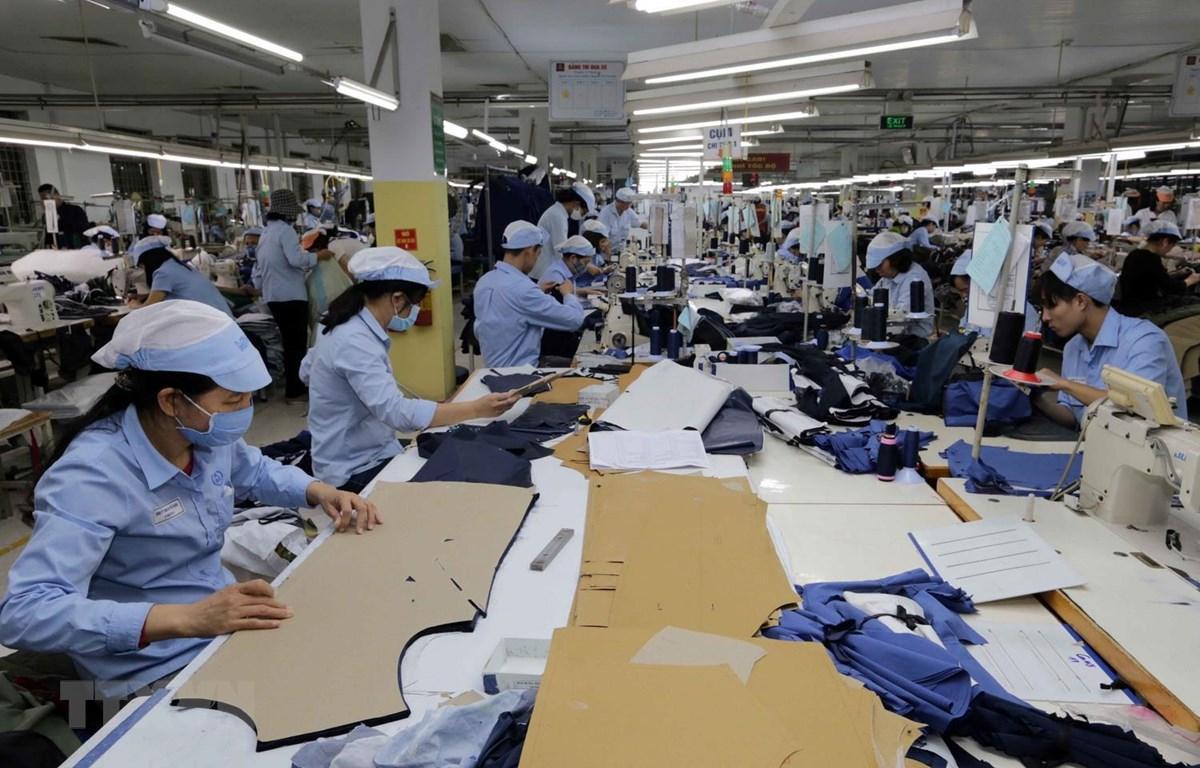
The first 10 years of the golden population period have passed. It is forecasted that Vietnam’s population in the period 2030-2040 will likely be aging. Therefore, only the period from 2020-2030 is the optimal time, an extremely important opportunity for economic development.20 năm, gấp rút để trở nên giàu mạnh-2
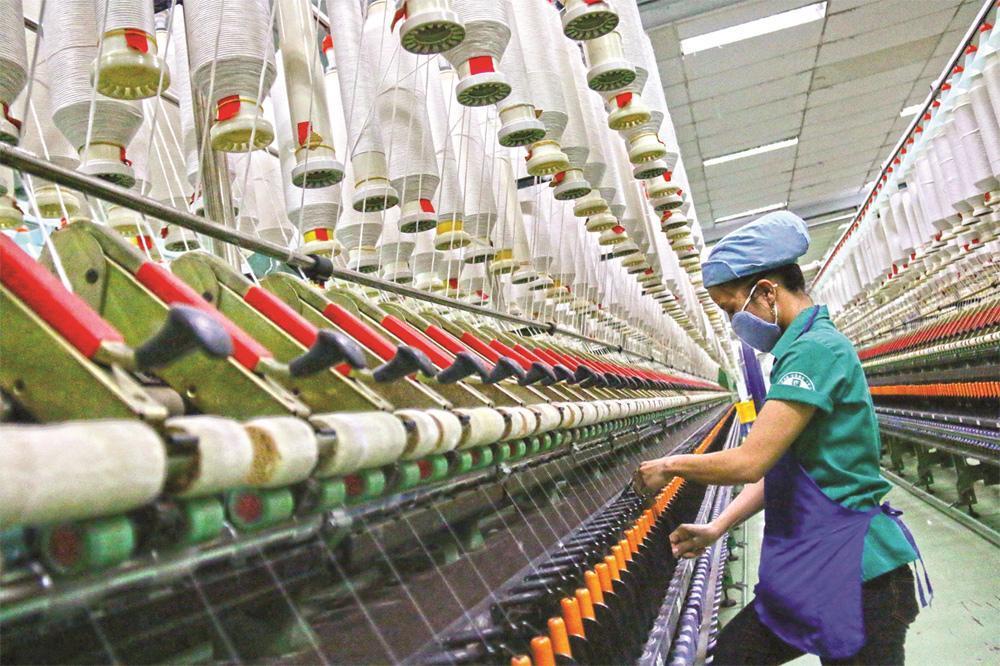
However, the golden population structure is only a possibility and an opportunity, not a guarantee for economic breakthroughs. It is important that people of working age must be able to work, have jobs and create high productivity.

Labor productivity of Vietnam is low compared to other countries in the region: 26 times lower than Singapore, 7 times lower than Malaysia, 4 times lower than China, 2 times lower than the Philippines, 3 times lower than Thailand. One of the main causes of low labor productivity is the poor qualifications and capacity of workers.

According to the Ministry of Labor, Invalids and Social Affairs, unskilled labor accounted for 39% of the total workforce in 2009, down to 36% in 2018. In 10 years, it only fell by 3%, so for a long time, the economy retained the structure of using cheap labor. Vietnam is lacking skilled workers, labor groups with technical expertise, managers, and innovators. These are the groups capable of leading the economy.

Compared with some countries in the region, the proportion of trained workers in Vietnam seems to be good, but the quality and qualifications are still a concern. Most of the recruited workers need to be retrained, and many people work in the wrong profession.

For the Human Development Index (HDI), a measure of population quality, published by the United Nations Development Program (UNDP), Vietnam ranked 117th out of 189 countries and territories in 2019. Vietnam has never entered the top 100 most developed countries, has not closed the gap with other countries in the world. In particular, labor productivity is still the weakest factor when it comes to population quality.

According to the Vietnam Chamber of Commerce and Industry (VCCI), nearly 70% of foreign-invested enterprises in Vietnam have difficulty in recruiting skilled technicians. With human resources for positions that require strategic and leadership thinking, it is even harder to find. They have to seek personnel from other countries. In addition to the lack of high-quality labor, the discipline of workers is still poor.

The 4.0 industrial revolution is taking place in the world and economic experts say that Vietnam needs to transit to a digital economy. Digital transformation will help increase labor productivity and help Vietnam make a breakthrough.

However, this process is facing many challenges. Most Vietnamese businesses still do not know how to start their digital transformation strategy. Small and medium-sized enterprises do not understand much about the concept of digital transformation. Most of them have not approached digital technologies, are not equipped with a business mindset on a digital platform, and lack a business strategy on a digital platform. The main reason is the lack of human resources in digital services.

Experts said that Japan and Germany were severely damaged in the second world war, but have risen strongly to become developed countries thanks to a skilled, well-trained workforce.

According to demographers, Vietnam’s golden population period will last for about 20 more years and will not return. Therefore, during this period, it is necessary to train a strong young workforce who are capable of changing the country’s economy. We need to make the most of this precious resource. In fact, the golden population opportunity does not automatically bring a positive impact, but it must be “held” to “create” a golden workforce, leading the country to fast and sustainable development.

It is necessary to have a good labor market management policy. There should be specific regulations to link training and vocational institutions with the market. The education system must be able to handle the provision of knowledge and professional skills for workers, so it can become a strong driving force of the economy, bringing Vietnam to a higher position in the global value chain.

Tran Thuy

Vietnam to enter aging population stage in 2026

Twenty percent of Vietnam’s population will be 60 years of age or older within the next 20 years, resulting ….

Aging in Vietnam: The elderly to account for 20.4% by 2050

It takes Vietnam only 20 years to transform from 7% to 14% of the population aged 65 and over.

ALMOST 10 MILLION CHILDREN MAY NEVER RETURN TO SCHOOL FOLLOWING COVID-19 LOCKDOWN


Buba*, 12, Yobe, Nigeria

New report from Save the Children warns of ‘unprecedented global education emergency’.

    • World is facing a hidden education emergency.
    • COVID-19 leaves estimated $77 billion gap in education spending for world’s poorest children.
    • Children in 12 countries are at extremely high risk of dropping out of school forever.
    • In another 28 countries children are at moderate or high risk of not going back to school.
    • Girls are at increased exposure to gender-based violence and risk of child marriage and teen pregnancy during school closures.
    • Save the Children calls for increased funding of education, including conversion of debt liabilities into investment in children.

Tiếp tục đọc “ALMOST 10 MILLION CHILDREN MAY NEVER RETURN TO SCHOOL FOLLOWING COVID-19 LOCKDOWN”

40,800 female births doomed in Vietnam every year

By Minh Nga   July 19, 2020 | 05:24 pm GMT+7 VNExpress

40,800 female births doomed in Vietnam every year

A newborn baby lies on a trolley at the Central Obstetrics Hospital in Hanoi. Photo by Reuters/Kham.

Every year, the long-standing preference for boys in Vietnam’s society terminates 40,800 baby girls before they are born, according to the United Nations Population Fund. Tiếp tục đọc “40,800 female births doomed in Vietnam every year”

Elderly Vietnamese at mercy of abusive families

By Long Nguyen   July 4, 2020 | 08:00 am GMT+7 VNexpress

Elderly Vietnamese at mercy of abusive families

A reason for the mistreatment of senior citizens is the lack of knowledge and skills related to elderly care. Photo by Shutterstock/mrmohock.

Issues of dependency and lack of support leave many elderly citizens exposed to mistreatment by those charged with their care. Tiếp tục đọc “Elderly Vietnamese at mercy of abusive families”

Vietnam sees alarming rise in elderly abuse, abandonment

VIETNAM’S elderly face issues of dependency and lack of support, leaving many of them exposed to mistreatment by those charged with their care. Tiếp tục đọc “Vietnam sees alarming rise in elderly abuse, abandonment”

Sinh đủ 2 con được giảm thuế, ưu tiên mua nhà xã hội

thanhnien.vn

Thủ tướng đề nghị thí điểm biện pháp hỗ trợ các cặp vợ chồng sinh đủ 2 con như: khuyến khích nam, nữ kết hôn trước 30 tuổi, không kết hôn muộn và sớm sinh con, phụ nữ sinh con thứ 2 trước 35 tuổi; giảm thuế thu nhập cá nhân, miễn giảm các khoản đóng góp công ích theo hộ gia đình cho phụ nữ sinh đủ 2 con; ưu tiên mua nhà ở xã hội, thuê nhà ở, ưu tiên cho con vào các trường công lập, hỗ trợ chi phí giáo dục trẻ em đối với các cặp vợ chồng sinh đủ 2 con;

Thủ tướng đề nghị thí điểm biện pháp hỗ trợ các cặp vợ chồng sinh đủ 2 con như: giảm thuế thu nhập cá nhân; ưu tiên mua nhà ở xã hội, thuê nhà ở, ưu tiên cho con vào các trường công lập…

U.N. warns economic downturn could kill hundreds of thousands of children in 2020

UNITED NATIONS (Reuters) – Hundreds of thousands of children could die this year due to the global economic downturn sparked by the coronavirus pandemic and tens of millions more could fall into extreme poverty as a result of the crisis, the United Nations warned on Thursday.

The world body also said in a risk report that nearly 369 million children across 143 countries who normally rely on school meals for a reliable source of daily nutrition have now been forced to look elsewhere.
Tiếp tục đọc “U.N. warns economic downturn could kill hundreds of thousands of children in 2020”

How Many Women Worldwide Are Single Moms?

BY STEVE CRABTREE AND SOFIA KLUCH
How Many Women Worldwide Are Single Moms?

STORY HIGHLIGHTS

  • Sub-Saharan Africa has the highest percentage of single mothers worldwide, at 32%.
  • U.S. among countries where single mothers have relatively low incomes

WASHINGTON, D.C. — Gallup finds that about one in eight women aged 18 to 60 worldwide — 13% — are unmarried and have children younger than 15 in their household. However, this figure is sharply higher in a few regions, especially sub-Saharan Africa at 32% and Latin America at 24%.

Women’s Family Status, by Region
Tiếp tục đọc “How Many Women Worldwide Are Single Moms?”

Why gender imbalance continues to grow?

vietnamlawmagazineUpdated: 07:46’ – 02/08/2017

In Duong Lam, an old village in Son Tay town just 50 km west of Hanoi, having a son is almost a responsibility toward the family line every couple must shoulder.

Kieu Thi L. has given birth six times to have a son since her husband is a family line head who is burdened with the duty of maintaining the continuance of his clan. L. and her husband have no choice but have a boy to fulfill their obligation as in Duong Lam, no excuse for not having a son will be accepted for a family line head. Tiếp tục đọc “Why gender imbalance continues to grow?”

8 lý do tôi lo lắng và hy vọng vào thế hệ tương lai

UNICEF

Bức thư gửi tới trẻ em thế giới của Bà Henrietta Fore, Giám đốc Điều hành UNICEF nhân dịp kỷ niệm 30 năm Công ước Liên Hợp Quốc về Quyền Trẻ em

Bà Henrietta Fore, Giám đốc Điều hành UNICEF

Chúng ta phải giúp các con chia sẻ các vấn đề tinh thần một cách dễ dàng

18 Tháng 9 2019

Gửi các con, trẻ em của thế giới hôm nay và mai sau,

Cách đây 30 năm, trong bối cảnh trật tự thế giới thay đổi – sự sụp đổ của Bức tường Berlin, sự tuy tàn của chế độ phân biệt chủng tộc apartheid, sự ra đời của mạng lưới toàn cầu world wide web – thế giới đã đoàn kết lại để bảo vệ trẻ em và tuổi thơ của các con. Mặc dù phần lớn những bậc cha mẹ thời kỳ đó đã lớn lên dưới sự lãnh đạo của những chế độ độc tài hay những chính phủ thất bại, họ vẫn hi vọng cuộc sống tốt đẹp hơn, nhiều cơ hội hơn và nhiều quyền được thực hiện cho con em của mình. Vì vậy, khi các vị lãnh đạo toàn cầu đoàn kết lại vào năm 1989 trong một dịp rất hiếm hoi nhằm đưa ra một cam kết mang tính lịch sử đối với trẻ em thế giới để bảo vệ và thực hiện đầy đủ quyền trẻ em, chúng ta có một sự hi vọng thực sự cho thế hệ mai sau. Tiếp tục đọc “8 lý do tôi lo lắng và hy vọng vào thế hệ tương lai”

Học sinh lớp 1 sắp học kỹ năng phòng chống xâm hại tình dục

Cứ 6 học sinh lớp 1 sẽ có 1 bộ tranh về kỹ năng phòng chống xâm hại và tiếp cận với kỹ năng này trong môn học tự nhiên và xã hội.
Học sinh tiểu học trang bị kiến thức về phòng chống xâm hại /// B.THANH


Học sinh tiểu học trang bị kiến thức về phòng chống xâm hại

B.THANH

Học phòng tránh xâm hại qua tranh

Bắt đầu từ ngày 21.5, thông tư ban hành danh mục thiết bị dạy học tối thiểu lớp 1 của Bộ GD-ĐT chính thức có hiệu lực. Trong đó, đối với môn học tự nhiên xã hội, để giúp cho học sinh có kiến thức giữ cho cơ thể khỏe mạnh và an toàn, Bộ quy định, cứ 6 học sinh có một bộ tranh về phòng tránh bị xâm hại

Bộ tranh này có mục đích giúp học sinh hình thành năng lực tìm tòi khám phá kiến thức thông qua quan sát, vận dụng kiến thức đã học vào thực tế cuộc sống. Tiếp tục đọc “Học sinh lớp 1 sắp học kỹ năng phòng chống xâm hại tình dục”

Where the dead help the living

By Trong Nghia   December 24, 2018 | 09:57 am GMT+7

In northern Vietnam, old people risk their lives to pick up small notes drivers toss out on a highway to honor the dead.

It’s around noon and Hoang Van Dang sits quietly in a shabby hut on a national highway, his eyes glued to the street.

Then, suddenly, he plunges into the highway before returning with three VND500 and VND2,000 (8.6 cents) currency notes in his palm. The 76-year-old man in a pair of worn-out flip-flops is quick and agile.

Within 10 minutes he runs out to pick up bills five times.

Tiếp tục đọc “Where the dead help the living”

Hoang Van Dang sits in his hut by a national highway that runs near his house in Lang Son Province in northern Vietnam. Photo by VnExpress/Trong Nghia

Hoang Van Dang, 76, sits in his hut along a national highway that runs near his house in Lang Son Province. Photos by VnExpress/Trong Nghia

Dạy trẻ em kĩ năng tài chính: Hàng hóa và Dịch vụ

Bài cùng chuỗi:

– Dạy tài chính căn bản cho trẻ em 
– Dạy trẻ em kĩ năng tài chính: Tiền là gì?
– Dạy trẻ em kĩ năng tài chính: Kiếm tiền
– Dạy trẻ em kĩ năng tài chính: Hàng hoá và dịch vụ
– Dạy trẻ em kĩ năng tài chính: Cần và Muốn
– Dạy trẻ em kĩ năng tài chính: Lựa chọn trong chi tiêu
– Dạy trẻ em kỹ năng tài chính : Tiết kiệm cho mục tiêu ngắn hạn
– Dạy trẻ em kỹ năng tài chính: Tài khoản tiết kiệm

Hàng hóa và dịch vụ là hai trong số những khái niệm cơ bản nhất của kinh tế học. Kinh tế học là ngành nghiên cứu về cách  các nguồn lực được sử dụng  để cung cấp hàng hóa và dịch vụ, hay cách hàng hoá dịch vụ được tạo ra , phân phối, tiêu thụ và trao đổi. Trẻ em và vị thành niên có thể áp dụng hiểu biết của các em về hàng hóa và dịch vụ với các khái niệm kinh tế sâu hơn hơn, ví dụ như khái niệm về sự khan hiếmcung và cầu. Ở độ tuổi nhỏ hơn, trẻ có thể dễ dàng hiểu được   chúng ta dùng tiền để mua cả hàng hóa và dịch vụ và điều đó cũng sẽ giúp cho trẻ ý thức được sự khác biệt giữa hai khái niệm một cách dễ dàng hơn. Hay  đơn giản hơn, hàng hóa là các loại vật phẩm còn dịch vụ là các hành động.

Hàng hóa

Hàng hóa là thứ được làm hoặc được trồng và là thứ mà bạn có thể sử dụng hay tiêu thụ. Một cách tốt để giải thích cho trẻ khái niệm này là nói với chúng hàng hóa/đồ vật là những thứ chúng có thể chạm vào. Bạn hãy cho con nhìn ngắm quanh phòng trong nhà  và tìm xem có bao nhiêu đồ vật/hàng hóa con kể tên được. Danh sách đó có thể bao gồm: Tiếp tục đọc “Dạy trẻ em kĩ năng tài chính: Hàng hóa và Dịch vụ”