Bài học cho tương lai thịnh vượng của Việt Nam

English: Learning lessons for Vietnam’s future prosperity

Việt Nam đã gặt hái được nhiều thành công kinh tế trong năm 2019 và đang mong đợi một mùa bội thu trong năm nay 2020. Raymond Mallon, cố vấn kinh tế cấp cao đến từ Chương trình cải cách kinh tế Úc – Việt, phân tích những thành tựu và thảo luận về hành động ưu tiên cần thiết cho Việt Nam trở thành quốc gia thịnh vượng trong những thập kỷ tới.

Sự tăng trưởng của Việt Nam là 7% trong năm 2019 dẫn đầu là sự tăng trưởng trong ngành sản suất11,3%. Tổng sản lượng ngành công nghiệp tăng 8,9%, dịch vụ là 7,3% và nông nghiệp là 2%. Tăng trưởng đã đạt được ổn định trong kinh tế vĩ mô, bao gồm lạm phát dưới 3% và dự trữ ngoại hối tăng. Tỷ lệ thương mại và đầu tư nước ngoài của Việt Nam trong số cao nhất thế giới và tiếp tục tăng Tiếp tục đọc “Bài học cho tương lai thịnh vượng của Việt Nam”

Vietnam ranks low in clean energy adoption

vnexpress.net

By Nguyen Quy   May 19, 2020 | 09:31 am GMT+7

Vietnam ranks low in clean energy adoption

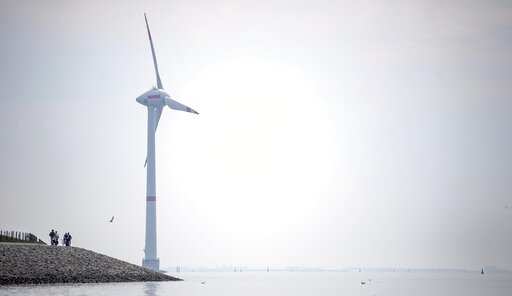
Three wind towers generating electricity among rice fields in the south-central province of Ninh Thuan. Photo by Shutterstock/Nguyen Quang Ngoc Tonkin.

In the bottom half of a global, clean energy transition ranking, Vietnam languishes far behind many of its neighbors.

Vietnam placed 65th out of 115 economies in 2020 Energy Transition Index, released by World Economic Forum (WEF), down nine spots from last year to continue lagging behind many other Southeast Asian countries.

The ranking measured countries and territories on how well they are able to balance energy security and access with environmental sustainability and affordability based on 40 indicators grouped into two sub-indices.

In Southeast Asia, Vietnam ranked lower than Singapore (13th), Malaysia (38th), Brunei (49th), Thailand (53rd), and the Philippines (57th).

In the region, Vietnam did better than Indonesia (70th) and Cambodia (91st).

The country gained an average score of 53.5 percentage points out of 100, lower than the global average of 55.1.

Tiếp tục đọc “Vietnam ranks low in clean energy adoption”

The magic washing machine – Máy giặt thần kỳ


Renewable Energy Buyers Vietnam Working Group: Webinar Series

Hosted by the Clean Energy Investment Accelerator (CEIA) and USAID Vietnam Low Emission Energy Program (V-LEEP)

Due to travel and meeting restrictions related to COVID-19, this webinar series is temporarily replacing the in-person Renewable Energy Buyers Vietnam Working Group normally held in Ho Chi Minh City on a quarterly basis.

BACKGROUND

The Renewable Energy Buyers Vietnam Working Group is co-organized by the Clean Energy Investment Accelerator (CEIA) and the USAID Vietnam Low Emission Energy Program (V-LEEP). Since 2017, the Working Group has brought together commercial and industrial (C&I) energy users interested in procuring clean energy, as well as renewable energy project developers and investors, and Government of Vietnam representatives.

The recurring Working Group is a platform for corporate RE market stakeholders to collectively identify and work toward policy, regulatory and financing frameworks needed to meet clean energy goals in Vietnam.

Tiếp tục đọc “Renewable Energy Buyers Vietnam Working Group: Webinar Series”

Xe gom rác mini tự chế giá thành dưới 1 triệu đồng của thầy giáo trường làng

tienphong.vn

TPO – “Xe rác thầy Tùng”, một sản phẩm tự chế của một thầy giáo trường làng tại Thừa Thiên Huế đang gây được sự chú ý của nhiều người, bởi tính cơ động, gọn nhẹ, hiệu quả và đặc biệt là giá thành chỉ dưới 1 triệu đồng để tạo ra sản phẩm phục vụ vệ sinh môi trường công cộng khá tiện lợi này.

Xe rác thầy Tùng.
Xe rác thầy Tùng.

Global poverty update from the World Bank: New poverty estimates for 2018

worldbank.org

|

The March 2020 global poverty update added more than 200 new surveys to PovcalNet, bringing the total number of surveys to more than 1,900. New poverty estimates for the reference year 2018 are now included for some regions, and the previously published global and regional estimates from 1981 to 2015 have been revised, reflecting data revisions and the availability of new data. More details on the revisions can be found in Atamanov et al. (2020).
Tiếp tục đọc “Global poverty update from the World Bank: New poverty estimates for 2018”

3 WAYS TO TELL IF CORPORATIONS ARE GENUINE ABOUT FIGHTING CLIMATE CHANGE

ensia.com

When Larry Fink announced in mid-January he’d be putting solving the climate emergency at the center of his US$7.43 trillion investment company BlackRock’s strategy, even long-time critics acknowledged it was a huge deal. “It takes leadership and a certain kind of courage to admit that change is needed,” wrote Sierra Club executive director Michael Brune at CNBC. “Now we must keep the pressure on.”

BlackRock had earlier stated a commitment to “sustainability,” yet for years faced pressure from the Sierra Club and others over its investments in fossil fuels and Amazon deforestation. In a letter last month to shareholders, Fink promised measurable change: BlackRock would no longer invest in companies deriving 25% or more of their revenues from thermal coal.

Shortly after, however, the environmental and human rights group Urgewald calculated that less than 20% of the coal industry would be affected. “The scope of the policy is still far too limited and further steps will need to follow quickly,” it argued.

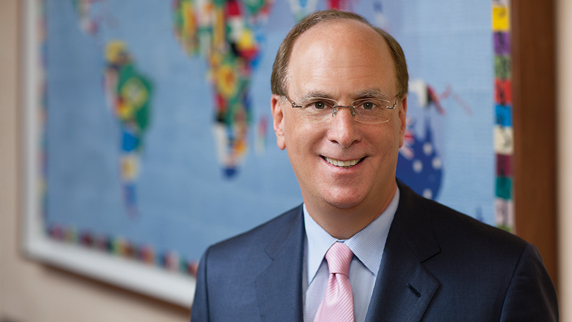
In January, CEO Larry Fink announced that BlackRock would make the environment a key consideration in shaping its investment policy. Photo courtesy of BlackRock, Inc.

This is a familiar cycle these days: A large company makes an impressive-sounding climate commitment, but on closer inspection the reality ends up being messier and less inspiring than it first appeared. For example: Microsoft pledges to go “carbon negative” by 2030, removing more carbon from the atmosphere than it emits, while donating to the election campaign of U.S. Senator Mitch McConnell, who has questioned the science of climate change and has a 7% lifetime score from the League of Conservation Voters.

Tiếp tục đọc “3 WAYS TO TELL IF CORPORATIONS ARE GENUINE ABOUT FIGHTING CLIMATE CHANGE”

Three ways national development banks can unlock climate-smart growth

28 January 2020
ATMs in Yangon, Myanmar. Photo: Asian Development Bank, 2015. CC BY-NC-ND 2.0

There is no doubt the world is facing a climate emergency. We must all act now to shift to climate-smart growth by redirecting our current investment and financing flows towards the Paris Agreement. National development banks (NDBs) have huge untapped potential to support this transformation. But our new report finds that despite their collective firepower – which far exceeds that of the multilateral and bilateral development banking system – NDBs have yet to step out of the shadows and into the international and domestic limelight. It is now time for NDBs to claim their rightful place at the policy table.
Tiếp tục đọc “Three ways national development banks can unlock climate-smart growth”

Ra mắt Văn phòng Đại diện Hiệp hội Năng lượng Sạch Việt Nam tại TP.HCM

Ngày 9/2/2020, Hiệp hội Năng lượng Sạch Việt Nam đã tổ chức Lễ ra mắt Văn phòng đại diện Hiệp hội tại Thành phố Hồ Chí Minh.

TS Mai Duy Thiện trao quyết định cho ông Hoàng Giang, Trưởng Văn phòng Đại diện Hiệp hội Năng lượng Sạch Việt Nam tại Thành phố Hồ Chí Minh

Đến tham dự buổi lễ có TS Mai Duy Thiện – Phó Chủ tịch Thường trực, Hiệp hội Năng lượng Sạch Việt Nam (VCEA) và đông đảo đại diện các doanh nghiệp, hội viên hoạt động trong lĩnh vực năng lượng tái tạo.

Phát biểu tại buổi lễ, ông Mai Duy Thiện cho biết, Việt Nam nằm trong khu vực nhiệt đới gió mùa, số giờ nắng bình quân trong năm từ 2.500 – 3.000 giờ; nhiệt độ bình quân năm trên 21 0 C; hơn 8% diện tích có tiềm năng gió rất tốt (tốc độ gió ở độ cao 65m là 7 – 8 m/giây)… Với lợi thế đó, Việt Nam xác định, đây là 2 nguồn năng lượng chính để phát triển điện sạch.
Tiếp tục đọc “Ra mắt Văn phòng Đại diện Hiệp hội Năng lượng Sạch Việt Nam tại TP.HCM”

Fast fashion giant H&M appoints former sustainability head as CEO; activists call for a different business model

eco-business.com 

Industry observers hope H&M Group’s new CEO, Helena Helmersson, will push for more durable fashion and steer the company away from overproduction.

In an appointment that created buzz within sustainability circles last week, Swedish fast fashion giant H&M named its former sustainability head and chief operating officer (COO), Helena Helmersson, to the top job.

Helena Helmersson

Helena Helmersson. Image: Mattias Bardå/ H&M Group

Helmersson is the 73-year-old company’s first female chief executive, but what has caught the eye of activists and fashion industry insiders is the 46 year-old’s career path in the company that she joined in 1997. Tiếp tục đọc “Fast fashion giant H&M appoints former sustainability head as CEO; activists call for a different business model”

Children to bear the burden of negative health effects from climate change

sciencedaily.com 

Date: January 27, 2020

Source: University of Texas Health Science Center at Houston

Summary: The grim effects that climate change will have on pediatric health outcomes was the focus of a recent article.Share:

The grim effects that climate change will have on pediatric health outcomes was the focus of a “Viewpoint” article published in the Journal of Clinical Investigation by Susan E. Pacheco, MD, an expert at The University of Texas Health Science Center at Houston (UTHealth).

Pacheco, an associate professor of pediatrics at McGovern Medical School at UTHealth, along with professors from Johns Hopkins Medicine and the George Washington University, authored a series of articles that detail how increased temperatures due to climate change will negatively affect the health of humanity. In the article authored by Pacheco, she shines a light on the startling effects the crisis has on children’s health before they are even born. Tiếp tục đọc “Children to bear the burden of negative health effects from climate change”

Vietnam needs to choose the path less traveled

vnexpress.net

By Nguyen Dang Anh Thi   January 26, 2020 | 07:27 am GMT+7

In copying other countries’ development mistakes, Vietnam has paid a heavy price for not deploying due foresight. Now, we cannot ignore hindsight wisdom.

Nguyen Dang Anh Thi

Nguyen Dang Anh Thi

When he was 18, my eldest brother faced a tough decision – should he go to university or take up vocational training?

Although he wanted to persist with his academic pursuit, he deferred to the family’s economic needs and decided to join the workforce to support the family.

So, instead of going to university, he decided to go to Tay Loc District in my home province, Thua Thien Hue, and learn tailoring.

One year, with a sudden surge in the need for making windcheaters in HCMC, my brother left home and headed for the southern metropolis in search of better work opportunities. He boarded the crammed bus, not daring to look behind at his sobbing family.

Tiếp tục đọc “Vietnam needs to choose the path less traveled”

World Consumes 100 Billion Tons of Materials Every Year

An open pit mine in Russia.

An open pit mine in Russia. RINAT GAREEV/WIKIMEDIA COMMONS

The amount of material consumed by humanity has passed 100 billion tons every year, report has revealed, but the proportion being recycled is falling.

The climate and wildlife emergencies are driven by the unsustainable extraction of fossil fuels, metals, building materials, and trees. The report’s authors warn that treating the world’s resources as limitless is leading towards global disaster.
Tiếp tục đọc “World Consumes 100 Billion Tons of Materials Every Year”

5 shocking facts about inequality, according to Oxfam’s latest report

weforum.org

  • Oxfam’s Time To Care report looks at wealth inequality and how it’s partly driven by the burden placed on women to provide unpaid – and underpaid – care work.
  • The charity proposes six solutions to “close the gap between care workers and the wealthy elite”.

“Governments around the world can, and must, build a human economy that is feminist and benefits the 99%, not only the 1%.”

That’s the message from Oxfam, the aid and development charity, in its latest report on the state of global inequality, Time To Care.

It focuses on the impact that unpaid and underpaid care work has on the prospects and livelihoods of women and girls across the world – and how that’s driving growing inequality.

Oxfam lists six recommendations to “close the gap between care workers and the wealthy elite who have profited most from their labour”, from ending extreme wealth to challenging harmful norms and sexist beliefs. Tiếp tục đọc “5 shocking facts about inequality, according to Oxfam’s latest report”