Opinion: Energy importers must consider true ‘sustainability’ of Laos hydropower

Proponents describe regional power grids as a way to promote economic growth, energy security and renewables in Southeast Asia, but this might come at a heavy cost

Lat Tha Hae temple in Luang Prabang province, Laos, half submerged by the Nam Ou 1 hydropower dam (Image: Ton Ka/China Dialogue)

Ming Li Yong

the third pole – August 23, 2022

On 23 June 2022, the import of 100 megawatts (MW) of hydropower from Laos to Singapore through Thailand and Malaysia was hailed as a historic milestone. Part of a pilot project known as the Lao PDR-Thailand-Malaysia-Singapore Power Integration Project (LTMS-PIP), this event represented Singapore’s first ever import of renewable energy, and also the first instance of cross-border electricity trade involving four countries from the Association of Southeast Asian Nations (ASEAN).

However, this development takes place amid rising concerns for the ecological future of the transboundary Mekong River and the millions of people who depend on it. A 2018 study by the Mekong River Commission concluded that further hydropower development on the river would negatively affect ecosystems, and would reduce soil fertility, rice production, fish yields and food security, while increasing poverty in the river basin.

Tiếp tục đọc “Opinion: Energy importers must consider true ‘sustainability’ of Laos hydropower”

In the Mekong Basin, an ‘unnecessary’ dam poses an outsized threat

  • A dam being built in Laos near the border with Cambodia imperils downstream communities and the Mekong ecosystem as a whole, experts and affected community members say.
  • The Sekong A dam will close off the Sekong River by the end of this year, restricting its water flow, blocking vital sediment from reaching the Mekong Delta in Vietnam, and cutting off migration routes for a range of fish species.
  • Experts say the energy to be generated by the dam — 86 megawatts — doesn’t justify the negative impacts, calling it “an absolutely unnecessary project.”
  • This story was supported by the Pulitzer Center’s Rainforest Investigations Network where Gerald Flynn is a fellow.

Tiếp tục đọc “In the Mekong Basin, an ‘unnecessary’ dam poses an outsized threat”

Hợp tác cấp vùng về thương mại điện năng

IUCN – 06 Th12, 2022

Trong lúc việc phát triển và mở rộng năng lượng mặt trời và gió sẽ là yếu tố quan trọng giúp Việt Nam giảm tiêu thụ than và đáp ứng yêu cầu trong lộ trình thực hiện các cam kết tại COP26, thì việc tăng cường nhập khẩu điện từ các nước láng giềng là một giải pháp bổ sung. Trong Kế hoạch Phát triển Điện lực 8 của Việt Nam (PDP 8) ban hành tháng 4 năm 2022 đã đưa ra dự đoán lượng điện nhập khẩu sẽ tăng từ 572 MW vào năm 2020 lên khoảng 4.000 MW vào năm 2025.

content hero image

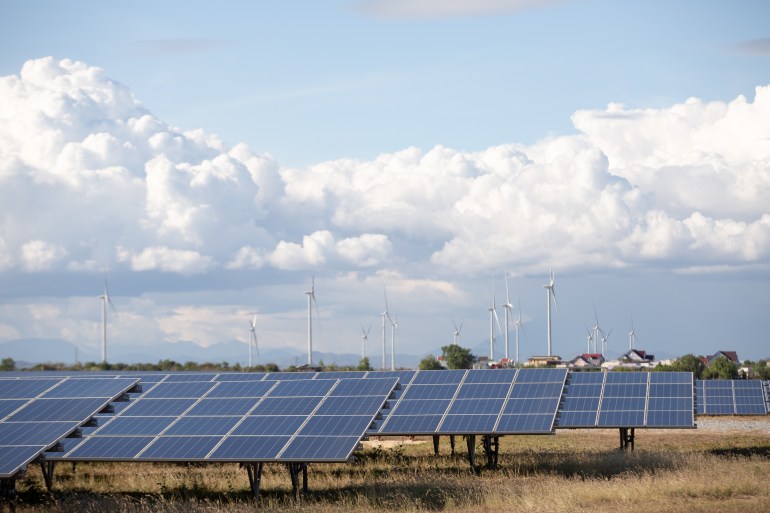
Photo: A solar project invested by Trung Nam Group © Trung Nam Group

Tương lai thì nguồn điện nhập khẩu vào Việt Nam phần lớn sẽ đến từ CHDCND Lào và có thể từ Campuchia. Tuy nhiên, cách thức Việt Nam tham gia thương mại điện năng với các nước láng giềng này sẽ có ảnh hưởng trực tiếp đến việc phát triển các dự án phát điện ở các quốc gia này. Phần lớn nguồn điện năng mà Việt Nam nhập khẩu từ CHDCND Lào đến từ các đập thủy điện và các đập này có thể có tác động tiêu cực đáng kể cho Việt Nam.

Tiếp tục đọc “Hợp tác cấp vùng về thương mại điện năng”

Political declaration on establishing the Just Energy Transition Partnership with Viet Nam

GOV.UK

Published 14 December 2022

  1. The Governments of the Socialist Republic of Viet Nam, together with the International Partners Group, consisting of the European Union, the United Kingdom of Great Britain and Northern Ireland, the United States of America, Japan, the Federal Republic of Germany, the Republic of France, the Italian Republic, Canada, the Kingdom of Denmark and the Kingdom of Norway;
  2. Recognising the need to accelerate action towards the objectives and long-term goals of the United Nations Framework Convention on Climate Change (UNFCCC) and the Paris Agreement, including through the implementation of the Glasgow Climate Pact, to minimise the worst adverse impacts of climate change for countries, people and the environment;
  3. Noting that limiting global warming to 1.5°C to mitigate the worst adverse impacts of climate change requires rapid, deep and sustained reductions in global greenhouse gas emissions, including reducing global carbon dioxide emissions by 45% by 2030 relative to the 2010 level and to net zero around mid-century as well as deep reductions in other greenhouse gas emissions, emphasising climate change adaptation and achieving net zero emissions as an opportunity for sustainable development;
  4. Recognising that for Viet Nam, as an independent, sovereign and fast developing lower middle income country heavily affected by the impacts of climate change, it will be key to embrace the opportunities brought about by the fast decreasing cost of renewable energies as an opportunity for sustainable development and to tackle related challenges such as poverty, inequality and unemployment, which are exacerbated by the impact of the COVID-19 pandemic and climate change, and that vulnerable groups and some important economic sectors may be impacted by the energy transition, including thermal electricity generation, coal mining, heavy industry and transport;
  5. Recognising the need for new, predictable, long-term and sustainable support from partner countries, multilateral organisations and investors in finance, technology and capacity building for Viet Nam to exploit fully the opportunities of the transition in accordance with the national framework of public debt and external debt management to contribute significantly to the implementation of the NDC of Viet Nam, its commitment to reach to net zero greenhouse gas emissions by 2050 and its development orientation to become a high-income developed country by 2045;
  6. Tiếp tục đọc “Political declaration on establishing the Just Energy Transition Partnership with Viet Nam”

Cuộc chiến tranh hạ tầng

TƯỜNG ANH 04/12/2022 09:37 GMT+7

TTCTTrên mạng Internet những ngày này lan truyền hình ảnh vệ tinh cho thấy hầu hết các thành phố lớn của Ukraine chìm trong bóng tối. Các cuộc tấn công của Matxcơva vào hạ tầng năng lượng Kiev đang ảnh hưởng thế nào tới cục diện chiến sự?

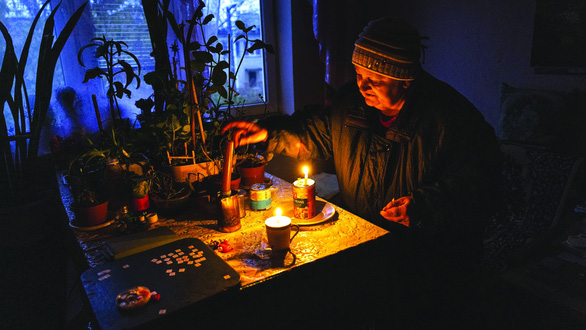
Cuộc chiến tranh hạ tầng - Ảnh 1.

Ekaterina Martynyuk thắp nến trong căn hộ của bà ở Kherson, Ukraine, ngày 15-11, cả thành phố đã cúp điện và nước từ khi quân Nga rút đi năm ngày trước. Ảnh: Getty Images

Từ 23-11, lần đầu tiên trong lịch sử Ukraine, ba nhà máy điện hạt nhân còn lại của nước này (Rivne, Khmelnytsky và Nam Ukraine) được đặt ở chế độ khẩn cấp, hầu hết các nhà máy nhiệt điện tạm thời cúp điện, 11 khu vực chìm trong bóng tối, bao gồm Kiev, Lvov và Odessa. 

Hệ thống nước và sưởi ấm đã ngừng hoạt động ở nhiều thành phố. Kiev mất điện 70%. Thông tin liên lạc và giao thông một số nơi cũng gián đoạn. Thị trưởng Kiev Vitaly Klitschko kêu gọi người dân, những ai có thể, tạm thời sơ tán về vùng quê để trụ qua mùa đông 2022 này.

Tiếp tục đọc “Cuộc chiến tranh hạ tầng”

Chinese Solar Makers Evaded U.S. Tariffs, Investigation Finds

The Biden administration pre-emptively halted any penalties from the case in June, prompting critics to say the administration had shortcut its own trade rules

Rooftop solar panels.
Ana Swanson
Brad Plumer

By Ana Swanson and Brad Plumer, WSJ

Dec. 2, 2022

WASHINGTON — U.S. officials have determined that four of eight major Chinese solar companies under investigation in recent months tried to evade tariffs by funneling products into the United States through Southeast Asian countries, in a trade case that has pitted clean energy advocates against domestic solar panel manufacturers.

The decision applies to the Thailand operations of Canadian Solar and Trina Solar, as well as BYD Cambodia and Vina Solar Vietnam, according to documents published by the Department of Commerce Friday morning.

Tiếp tục đọc “Chinese Solar Makers Evaded U.S. Tariffs, Investigation Finds”

Chuyển đổi điện năng của Việt Nam: Ai sẽ chi trả ? (2 kỳ)

Chuyển đổi điện năng của Việt Nam: Ai sẽ chi trả ? (Kỳ 1)

tiasang  – Minh Hà-Dương

Tiền đâu để Việt Nam có thể chi trả cho việc phát triển hệ thống điện bắt kịp sự phát triển kinh tế? Và liệu có cách nào để các tập đoàn nhà nước tự chủ tài chính mà không tăng giá điện trung bình trên mỗi người dân không?

Các tổ chức, cá nhân trong và ngoài nhà nước đều có cách ‘đầu tư’ vào thiết bị, công nghệ tiết kiệm điện mà vẫn có ‘lời’. Ảnh: GIZ Energy

Bài viết dưới đây được chia làm hai phần, trong phần I này thảo luận về việc có thể giảm chi phí phát triển hệ thống bằng cách sử dụng năng lượng tái tạo thay cho năng lượng hóa thạch và thúc đẩy việc tiết kiệm điện. Nhưng kể cả vậy, đó mới chỉ giải quyết được một nửa vấn đề.

Tiếp tục đọc “Chuyển đổi điện năng của Việt Nam: Ai sẽ chi trả ? (2 kỳ)”

After renewables frenzy, Vietnam’s solar energy goes to waste

AljazeeraSolar and wind farms forced to limit operations due to infrastructure limitations following the renewables boom.

Solar panels in Vietnam
Vietnam’s Ninh Thuan province has more solar and wind energy projects than the country’s national grid can handle [Courtesy of Yen Duong]

By Lam Le

Published On 18 May 202218 May 2022

Ninh Thuan, Vietnam – For up to 12 days every month, Tran Nhu Anh Kiet, a supermarket manager in Vietnam’s Ninh Thuan province, is forced to turn off his solar panels during the most lucrative peak sunshine hours.

“I’m losing on average 40 percent of output,” Kiet told Al Jazeera, referring to the solar panels he installed on the roof of his store so he could sell power to the national grid.

“Before the curtailments, our revenue was 100 million Vietnamese Dong [$4,136], now it is just 60 million Vietnamese Dong [$2,589].”

Tiếp tục đọc “After renewables frenzy, Vietnam’s solar energy goes to waste”

Analysis: Can Indonesia ditch coal and improve lives with new green deal?

reuters.com

By Michael Taylor

  • Summary
  • Indonesia secures $20 billion worth of pledges
  • Improving lives just as important as closing coal power plants
  • Training workforce for green energy is key to ‘just transition’

KUALA LUMPUR, Nov 18 (Thomson Reuters Foundation) – After clinching one of the largest-ever climate finance deals to shutter its coal-fired power plants early, Indonesia needs to work out how to make sure communities that will be impacted by the shift to renewable energy do not lose out, analysts said.

A coalition of rich nations pledged $20 billion of public and private finance to help Indonesia retire its coal power plants sooner than planned, the United States, Japan and other partners said this week

The Indonesia Just Energy Transition Partnership (JETP), which involves providing grants and concessional loans over a three- to five-year period linked to cuts in emissions from the power sector, is based on a similar deal made with South Africa last year.

Tommy Pratama, executive director of Indonesian policy think-tank Traction Energy Asia, said a “just transition” that benefits local communities is vital for the green deal’s success.

“The key decisions about how the funding is spent must be open and transparent with the full involvement of acknowledged experts, affected local communities and civil society groups,” said Pratama in an interview.

Tiếp tục đọc “Analysis: Can Indonesia ditch coal and improve lives with new green deal?”

Small Modular Reactor update: The fading promise of low-cost power from UAMPS’ SMR

November 17, 2022

David Schlissel, IEEFA


Download as PDF

  • The original target power price for a planned 12-module SMR by UAMPS (Utah Associated Municipal Power Systems) and NuScale Power Corporation was $55 per megawatt-hour (MWh).
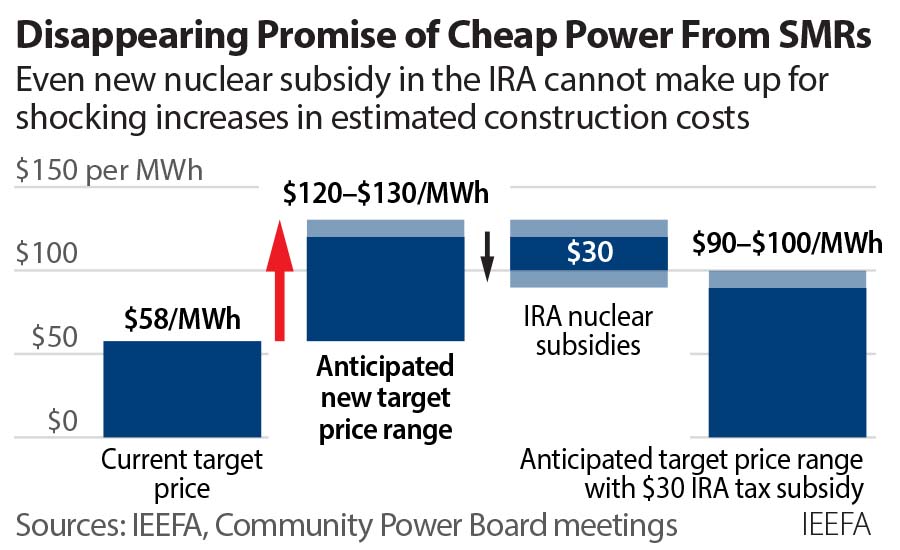
  • When UAMPS reduced the size of the carbon-free power plant (CFPP) to six modules in the summer of 2021, it raised the target power price to $58 per MWh.
  • Recent presentations to the power boards of Washington City and Hurricane, two of the Utah communities that have signed agreements to buy power from the CFPP, suggest that project power prices are now likely to end up in the range of $90-$100 per MWh.
  • The prices include an anticipated $1.4 billion subsidy from the U.S. Department of Energy and a new subsidy from the Inflation Reduction Act (IRA) on the order of $30 per MWh. The unsubsidized price of the power from the CFPP would be substantially higher than $100 per MWh, perhaps even double the current $58 target price.
  • The estimated target price of the power from the CFPP has gone up because projected building costs have increased. According to minutes of the October 2022 meeting of the Idaho Falls Power Board, the increased costs in the new Class 3 cost estimate currently being finalized for the CFPP have been shocking, even to NuScale and Fluor, the company responsible for overall management of the project.

IEEFA US SMR Cost Update
  • Even if the new target price is only in the range of $90 to $100 per MWh, there is no guarantee that this will be the actual price that communities will pay for the power from the CFPP. The power sales contract for the project binds communities to pay the actual costs and expenses of the project—no matter how much.
  • An official at the Hurricane, Utah, power board’s October meeting said the anticipated new cost estimate increase is a “big red flag in our face.” 
  • If the new estimated target price for the power from the CFPP is higher than the current price of $58 per MWh, which the power department director for Washington City, Utah, has said he believes will happen, communities will be able to terminate their power purchase agreements with UAMPS for the power from CFPP without any financial penalties. UAMPS also would have the option of cancelling the project. 

The CFPP Can Be Expected to Experience Additional Cost Increases 

  • UAMPS currently projects that the CFPP will be completed in 2030. That leaves eight years left in the project schedule to complete the project’s design, licensing, construction and pre-operational and startup testing.
  • NuScale has told the Nuclear Regulatory Commission that the project design work won’t be completed until an application for a combined operating license is submitted, which is not expected until early 2024. Nuclear-related construction is not expected to begin before late 2025.
  • Nuclear industry experience over the past four decades points to the likelihood of future cost increases and schedule delays during all phases of the project—design, construction, licensing, and testing. For example, the estimated all-in cost of the two new reactors at Georgia Power’s Vogtle project, the only new reactors currently being built in the U.S., has increased by 140% since nuclear construction began in 2011. Vogtle’s construction also has taken far longer than originally estimated; both reactors are currently more than six years behind schedule. 

Few New Utilities Have Signed Up to Buy Power From the CFPP

  • When IEEFA released its report on the NuScale SMR in February 2022, communities had signed up to buy only 101 megawatts (MW) of the 462MW CFPP. According to the presentations to the Washington City and Hurricane power boards, the situation appears not to have changed. For example, the Washington City power department director told the city’s power board on Nov. 1 that the biggest challenge to the CFPP is the number of MWs subscribed. Parties seem interested in the CFPP but are wary about potential cost overruns
  • It is reasonable to expect that if communities were reluctant to sign on to the CFPP at a target price of $58 per MWh, they’re likely to be much more wary if the project’s target price of power goes to $90 to $100 per MWh or higher.
  • The general manager of the Idaho Falls Power Board believes it would be difficult to secure financing for the CFPP without a fully subscribed project. 

Higher CFPP Power Prices Will Make It Even Less Competitive  

For more information, please contact David Schlissel at dschlissel@ieefa.org.

David Schlissel

David Schlissel is IEEFA’s Director of Resource Planning Analysis. His work focuses primarily on the technical and economic viability of resources being used or being proposed for use in the electric power sector.

Go to Profile

EU and international partners launch ground-breaking partnership on just energy transition with Indonesia

ec.europe.eu

Today, the President of Indonesia, Joko Widodo, the President of the European Commission, Ursula von der Leyen , on behalf of the EU, and the leaders of the International Partners Group (IPG), which is jointly led by the United States and Japan and includes Canada, Denmark, France, Germany, Italy, Norway and the United Kingdom, launched a Just Energy Transition Partnership (JETP) with Indonesia . The launch takes place in connection with an event within the framework of the Partnership for Global Infrastructure and Investment (PGII) at the G20 summit, which takes place on 15-16 November 2022 in Bali.

In a joint statement , Indonesia and international partners have announced their commitment to meeting ground-breaking climate targets and related financing. This is done to support the Asian country in an ambitious and fair energy transition, which is in line with the goals of the Paris Agreement and which contributes to keeping the global warming limit of 1.5 °C within reach.

Tiếp tục đọc “EU and international partners launch ground-breaking partnership on just energy transition with Indonesia”

Bình dân hóa thịt lợn: Cái giá phải trả ?

TS – Võ Kiều Bảo Uyên

Sự bùng nổ của đàn lợn đã không đi cùng với khả năng xử lý chất thải, đe dọa môi trường tự nhiên, sức khỏe và sinh kế của người dân. 

Tháng ba, sau nhiều năm chịu đựng mùi hôi của phân lợn, Nguyễn Thị Bông, 47 tuổi, cùng những phụ nữ thôn 5, xã Phú An, huyện Tân Phú, tỉnh Đồng Nai, kéo nhau lên Ủy ban Nhân dân xã khiếu nại một trại nuôi lợn.

“Không thể thở nổi. Ban đêm đi ngủ còn phải đeo khẩu trang”, Bông ngồi bên hiên nhà kể lại, trong một buổi chiều tháng sáu hiếm hoi có thể mở toang cửa nhà đón gió hè. “Cái mùi ấy hôi tanh nồng nặc làm tôi đau đầu, choáng váng”.

Năm 2014, trại lợn quy mô 10.000 con cùng các hố chứa chất thải lộ thiên mọc lên cạnh nhà bà. Chất thải dẫn ra từ trang trại sớm nhuộm đen ao cá gần nhà. Trong khi đàn ông, người trẻ trong làng đi học, đi làm xa, những phụ nữ trung niên làm việc tại nhà như Bông hứng chịu nhiều nhất sự ô nhiễm này.

Trại lợn đã rút cạn bầu không khí trong lành của một vùng quê với đồi núi bao bọc. Không chỉ mỗi ngôi làng của Bông ngạt thở trong chất thải chăn nuôi. Có hàng loạt ngôi làng như vậy ở Đồng Nai, cũng như trên khắp Việt Nam. Sự bùng nổ của đàn lợn đã không đi cùng với khả năng xử lý chất thải, đe dọa môi trường tự nhiên, sức khỏe và sinh kế của người dân bản địa.

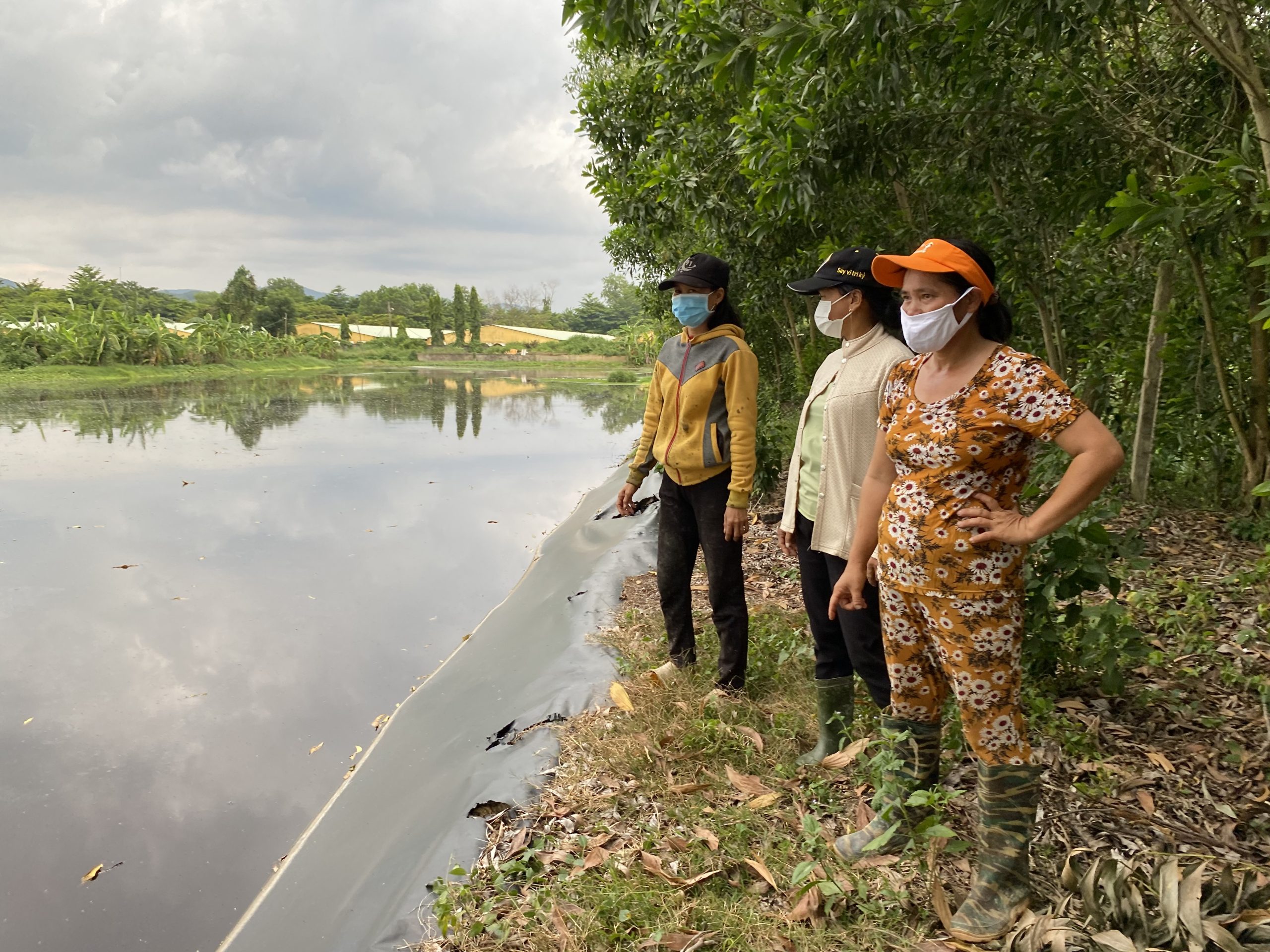
Những người phụ nữ ở xã Phú An, Tân Phú, Đồng Nai đang đứng trước một hố nước thải của trại lợn. Ảnh: Võ Kiều Bảo Uyên.

Tiếp tục đọc “Bình dân hóa thịt lợn: Cái giá phải trả ?”

Thị trường điện lực bền vững ở Việt Nam ?

TS  – Thái Doãn Hoàng Cầu

Cơ chế mua điện trực tiếp đang được trông đợi có thể đem lại một thị trường điện bền vững cho Việt Nam?

Nhà máy LEGO bền vững nhất thế giới sắp được xây dựng tại Bình Dương. Ảnh: Lego

Tháng 3/2022 vừa qua, Tập đoàn đồ chơi LEGO (Đan Mạch) đã tuyên bố một tin vui đối với Việt Nam sau bầu không khí u ám của đại dịch COVID-19 vừa đi qua: họ sẽ khởi công xây dựng một nhà máy trị giá 1,3 tỉ USD tại Bình Dương và đây cũng là dự án có số vốn lớn nhất của nhà đầu tư Đan Mạch tại Việt Nam. Điều đặc biệt, Phó Chủ tịch LEGO Preben Elnef nói rằng đây là nhà máy bền vững nhất của tập đoàn này trên thế giới và hoàn toàn trung hòa về mặt carbon.

Nhưng mong ước đó sẽ không thể thực hiện được nếu nhà máy này không sử dụng 100% năng lượng tái tạo. Sau tuyên bố trên không lâu, đại diện LEGO đã gặp Bộ trưởng Bộ Công thương để đề xuất có cơ chế mua điện trực tiếp từ các nhà sản xuất điện năng lượng tái tạo – gọi tắt là DPPA.

Tiếp tục đọc “Thị trường điện lực bền vững ở Việt Nam ?”

Gasoline vendors back in business on cities’ streets

VNE – By Ngoc Thanh, Thanh Tung, Hoai Thu   November 6, 2022 | 12:07 pm GMT+7

The sight of street-side hawkers of gasoline has returned to Hanoi and Ho Chi Minh City after several decades, as gas stations continue to report shortages.

Gasoline vendors back in business on cities' streets

A fuel station on Thuy Khue Road in Hanoi’s Tay Ho District has put up a sign that reads “waiting for inventory.” Residents have to look elsewhere to fuel their vehicles.

Gasoline vendors back in business on cities' streets

Near a fuel station on Yen Phu Road in the capital city, a man pours gasoline into containers to sell at VND25,000-30,000 ($1.01-1.21) per liter, 10-32% higher than retail prices at gas stations.

Tiếp tục đọc “Gasoline vendors back in business on cities’ streets”

How small modular reactors may fuel nuclear power’s comeback

Al Jazeera English – 1 thg 11, 2022

Nuclear power gained a bad reputation following the disasters at Chernobyl, Fukushima and Three Mile Island.

Now, with global energy disruptions caused by Russia’s war in Ukraine and sky-high fuel prices means aging nuclear plants are getting a new lease on life.

And there is new type of nuclear plant is on the horizon- one that could revolutionize the industry.

They are called Small Modular Reactors, or SMRs for short.

Al Jazeera’s Rob Renolds reports from San Luis Obispo California.