Exclusive: Illegal Tiger Trade Fed by ‘Tiger Farms,’ New Evidence Reveals

National Geographic

A shocking video and new intelligence suggest that legal and illegal captive tiger facilities fuel Asia’s tiger trafficking—with brutal efficiency.

Fewer than 4,000 tigers remain in the wild, but more than 8,000 are held in captive facilities in Asia. Investigations have shown that many of these facilities breed and slaughter tigers for the illegal trade.

PHOTOGRAPH BY DARIO PIGNATELLI, GETT

IN THE LIVING room of a house at the end of a narrow country road in central Vietnam, a little way off the main highway, the skeleton of a tiger was laid out on the floor—the only complete one they had for sale, the man told the pair of visitors.

It was an attractive offer for someone looking to make tiger bone wine, a coveted brew made from bones soaked in rice wine, but what the visitors were interested in were the live tigers.
Tiếp tục đọc “Exclusive: Illegal Tiger Trade Fed by ‘Tiger Farms,’ New Evidence Reveals”

Làm nông nghiệp hữu cơ: Câu chuyện từ nhận thức đến thực tiễn – 5 bài

***
Đừng kinh doanh “hữu cơ” trong bóng tối”

Jerry Do – 09:55, 13/05/2018

TheLEADER Giấc mơ “hữu cơ” nào cũng đáng quý, mặc dù không có giấc mơ nào giống nhau, chỉ có điều chúng ta phải trung thực với những gì có thể làm hay nói cách khác là minh bạch thông tin vườn trồng cũng như sản phẩm để cộng đồng lựa chọn.

Đừng kinh doanh "hữu cơ" trong bóng tối

Sản phẩm nông nghiệp hữu cơ vẫn còn là giấc mơ của nhiều người. Tiếp tục đọc “Làm nông nghiệp hữu cơ: Câu chuyện từ nhận thức đến thực tiễn – 5 bài”

Mekong Delta’s splendors now a relic of the past

VNE – By Dang Hung Vo   July 26, 2018 | 10:11 am GMT+7

Development policies have all but destroyed the natural bounty that the delta was blessed with.

Mekong Deltas splendors now a relic of the past
Dang Hung Vo, former Deputy Minister of Natural Resources and Environment

In 1954, when the French withdrew from Hanoi and peace reigned once more in our capital, I was only 8 years old. Where I am from, students could only study up to 3rd grade. Our teacher, originally from the south, was a child of the Mekong Delta.

He often told us stories about his hometown, about how it needed no dam to tame the Mekong River unlike our Red River since the Mekong people had learned to live with the behemoth. Tiếp tục đọc “Mekong Delta’s splendors now a relic of the past”

Q&A: Air Pollution Remains Cause for Alarm in Asia

IPSnews.net

IPS correspondent Sinsiri Tiwutanond spoke to Global Green Growth Institute’s director-general Dr. Frank Rijsberman about Asia’s fight against air pollution.

On any given day, a pall of smog and dust hangs over Kabul’s streets. It clings to the face, burns the eyes, and stains the hands. It bathes the cars, often stuck bumper-to-bumper in traffic, and occludes the view of the distant mountains. Credit: Anand Gopal/IPS

BANGKOK , Jul 17 2018 (IPS) – At the start of the year the pollution in Vietnam’s capital, Hanoi, reached six times the World Health Organization’s guideline levels for air quality.

Yet the levels, which appear higher than those of South Korea’s capital Seoul—where most people monitor the air pollution levels daily—is not treated with equal concern because of a lack of general awareness. This is despite the fact that air pollution has become the largest cause of premature deaths in Asia.

“When I went to Vietnam, I realised no one thought there was an air pollution problem because no one was directly addressing it. It was worse than Seoul when we checked the level there. In Seoul, people talk about air pollution everyday. In the morning, you check the air quality to see if you need a mask or if the kids can play outside. In Hanoi, the problem is just as bad but people just don’t know about it,” Global Green Growth Institute’s director-general Dr. Frank Rijsberman told IPS. Tiếp tục đọc “Q&A: Air Pollution Remains Cause for Alarm in Asia”

When you eat a Mekong Giant Catfish, you are paying criminals

By Marc Goichot   July 25, 2018 | 09:39 am GMT+7

When you eat a Mekong Giant Catfish, you are paying criminals

Cambodia Fisheries personnel release a Mekong giant catfish. Photo by Reuters

Vietnamese restaurant owners, chefs and customers are complicit in the crime of catching, advertising, serving and eating an endangered species.

Most people in Vietnam knows it is illegal to sell tiger meat or pangolin scales or rhino horn.

It is common knowledge that trading elephant ivory is a criminal offense, punishable by fines and jail time. But few of us seem to know that it is just as illegal to sell a Mekong Giant Catfish or Giant Barb.

But it is. Every restaurant advertising these endangered giants is breaking the law. Every time you eat a plate of Mekong Giant Catfish in Hanoi or Da Nang or Ho Chi Minh City, you are helping a criminal. In fact, you are paying a criminal.

And you are also helping to drive this extraordinary species toward extinction.

Instead of choosing one of these dishes from the menu, you should choose to contact the Provincial Department of Fisheries. The government and Vietnamese people have taken significant steps in recent years to tackle wildlife crime and trafficking of species like tigers, elephants and rhinos. It is time we ended the illegal trade in the Mekong’s most magnificent fish.

Tiếp tục đọc “When you eat a Mekong Giant Catfish, you are paying criminals”

Việt Nam họp khẩn để bàn cách ứng phó với nước lũ từ đập thủy điện Lào


(NTD) – Ban chỉ đạo Trung ương về phòng chống thiên tai tổ chức cuộc họp khẩn chiều nay (25/7) để đánh giá những tác động của vụ vỡ đập thủy điện Xe Pian – Xe Namnoy đối với vùng đồng bằng sông Cửu Long của Việt Nam.TIN LIÊN QUAN

Attapeu8
Người dân Lào chuẩn bị sơ tán sáng 25/7. Dự báo nước lũ sẽ có thể tiếp tục dâng cao trong những ngày tới do mưa lớn ở Attapeu và các tỉnh phụ cận. (Ảnh: ABC Lao News)

Tiếp tục đọc “Việt Nam họp khẩn để bàn cách ứng phó với nước lũ từ đập thủy điện Lào”

Bảo vệ động vật hoang dã ở Việt Nam

VNA – 10/07/2018 00:01 GMT+7

Trong hơn một thập kỷ qua, Việt Nam đã có những chính sách và hành động được thế giới đánh giá cao, cụ thể như tuyền truyền nâng cao nhận thức cộng đồng, thành lập các trung tâm cứu hộ động vật hoang dã trong việc thực thi những cam kết về bảo vệ các loài động vật hoang dã, quý hiểm trong sách đỏ.


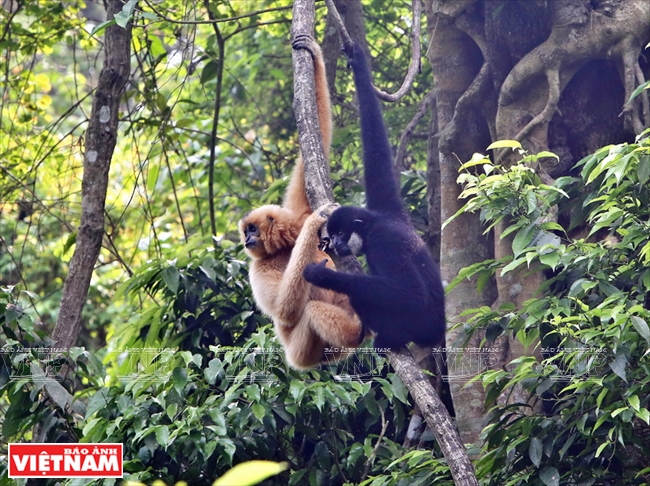
Trung tâm cứu hộ Linh Trưởng nguy cấp (EPRC) Cúc Phương hiện đang có 6 loài linh trưởng quý hiếm mà không nơi nào trên thế giới nuôi nhốt bảo tồn được. Ảnh: Công Đạt
Tiếp tục đọc “Bảo vệ động vật hoang dã ở Việt Nam”

“Khai quật” thế giới ngầm buôn bán động vật hoang dã ở Việt Nam – 6 kỳ

Chợ trung tâm ở Sầm Nưa với nhiều sạp thịt thú rừng được bày bán.

***

“Khai quật” thế giới ngầm buôn bán động vật hoang dã ở Việt Nam

BVR&MT – Nhập vai đệ tử của một quan chức có máu mặt đang cần gấp nguồn “hàng hiếm”, nhóm phóng viênBảo vệ Rừng và Môi trườngđã thâm nhập được vào đường dây buôn bán động vật hoang dã tương đối lớn mà ở đó không chỉ có sự móc ngoặc giữa những “ông trùm” nội địa mà còn thông qua rất nhiều đầu nậu xuyên biên giới, đặc biệt là từ Lào, Campuchia và châu Phi. Tiếp tục đọc ““Khai quật” thế giới ngầm buôn bán động vật hoang dã ở Việt Nam – 6 kỳ”

ENV ra mắt ấn phẩm “Hướng dẫn thực thi pháp luật về bảo vệ động vật hoang dã”

ENV – Trung tâm Giáo dục Thiên nhiên (ENV) là một tổ chức xã hội trực thuộc Liên hiệp các Hội Khoa học và Kỹ thuật Việt Nam (VUSTA) được thành lập từ năm 2002 với mục tiêu bảo vệ đa dạng sinh học của đất nước thông qua việc hỗ trợ các cơ quan chức năng tăng cường thể chế, chính sách và thực thi pháp luật về bảo vệ động vật hoang dã (ĐVHD) cũng như khuyến khích cộng đồng cùng tham gia bảo vệ ĐVHD.

anh-bia Tiếp tục đọc “ENV ra mắt ấn phẩm “Hướng dẫn thực thi pháp luật về bảo vệ động vật hoang dã””

Yok Đôn National Park ends elephant riding

VNN – Update: July, 13/2018 – 18:05

Tourists ride elephants in the Lắk lake ecotourism area in the Central Highland province of Đắk Lắk. — VNA/VNS Trần Lê Lâm

ĐẮK LẮK — As of this month, Yok Đôn National Park will no longer offer elephant riding for tourists visiting the Central Highland province of Đắk Lắk.

Under an agreement signed by the national park and Animals Asia Foundation on Friday, the park committed to develop an alternative tourism activity designed around watching elephants in social groups within an elephant sanctuary. This will help to move the region away from elephant-riding tourism towards an animal-friendly alternative. Tiếp tục đọc “Yok Đôn National Park ends elephant riding”

Southeast Asia is in the grip of a biodiversity crisis

theconversation.com

Rich in wildlife, Southeast Asia includes at least six of the world’s 25 “biodiversity hotspots” – the areas of the world that contain an exceptional concentration of species, and are exceptionally endangered. The region contains 20% of the planet’s vertebrate and plant species and the world’s third-largest tropical forest.

In addition to this existing biodiversity, the region has an extraordinary rate of species discovery, with more than 2,216 new species describedbetween 1997 and 2014 alone.

Global comparisons are difficult but it seems the Mekong region has a higher rate of species discovery than other parts of the tropics, with hundreds of new species described annually.

Habitat loss

Southeast Asia’s biodiversity is under serious threat; some parts of the region are projected to lose up to 98% of their remaining forests in the next nine years. It’s also thought to be the world’s most threatened region for mammals. Tiếp tục đọc “Southeast Asia is in the grip of a biodiversity crisis”

Thailand: The rich world’s new dumpsite for e-waste

Royal Thai Police raid Wai Mei Dat. Gaylord boxes and Super Sacks filled with imported e-waste. Photo Copyright The Nation, Thailand Portal. May 22, 2018. [baselactionnetwork / Flickr]

Thailand has become one of the largest dumpsites for electronic waste from developed countries since China’s January ban on the import of plastic waste. EURACTIV’s partner Le Journal de l’environnement reports. Tiếp tục đọc “Thailand: The rich world’s new dumpsite for e-waste”

Will Thailand’s New Power Development Plan Change the Mekong Status Quo?

Stimson

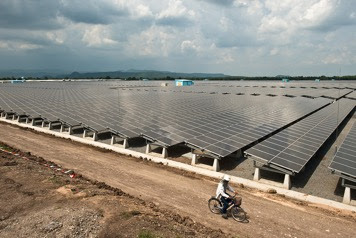
Thailand is moving ahead with a scheduled update to the national Power Development Plan. A slew of contradictory news reports indicate a lively internal debate over the how big of a pivot Thailand will make towards domestic renewable energy and away from power imports from neighboring Laos and Myanmar. The Power Development Plan (PDP), which is revised approximately every three years, should be released in September 2018. The release is timely as prices of alternative technologies like wind and solar power are at record lows and continuing to fall. Given the ongoing need for power sector expansion, Thailand and other countries in the Mekong region are well positioned to take advantage of these low prices if the right policies are set.
Tiếp tục đọc “Will Thailand’s New Power Development Plan Change the Mekong Status Quo?”

Nghịch lý ngành xi măng (3 bài)

Nghịch lý ngành xi măng - ảnh 1
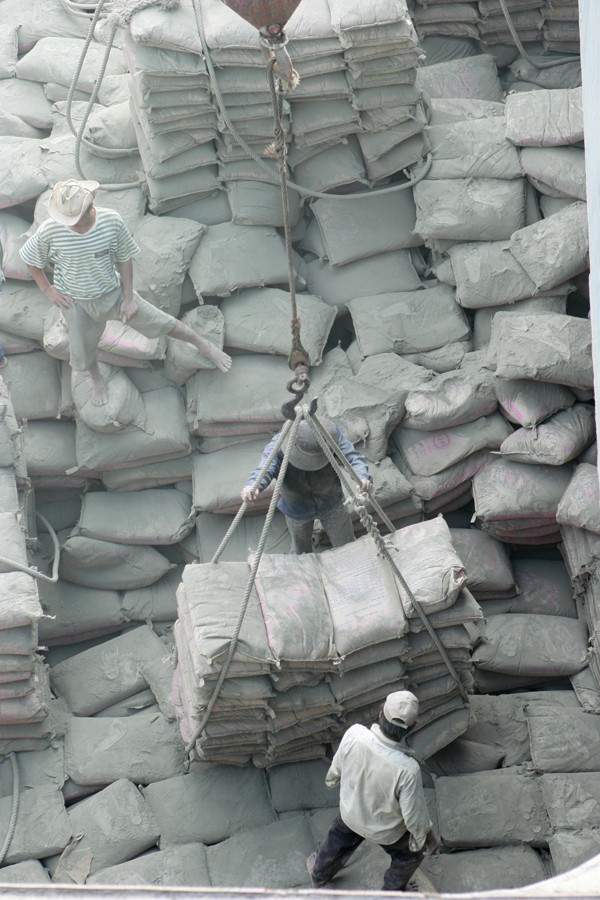
Xi măng trong nước ế ẩm, xuất khẩu giá rẻ. Ảnh: ngọc châu

***

Giá xuất khẩu chỉ hơn nửa giá trong nước:

Nghịch lý ngành xi măng

TP – Giá xi măng xuất khẩu chỉ bằng hơn nửa giá bán trong nước, chỉ giải quyết tình trạng tồn kho; ngân sách không thu được gì, thậm chí mất tài nguyên, gây ô nhiễm.

Tiếp tục đọc “Nghịch lý ngành xi măng (3 bài)”

Why #SaveSonDoong is larger than just about a cave?

#SaveSonDoong was founded as a campaign to save the pristine charm of the world’s largest cave from mass tourism. But overtime, this citizen-led campaign started to carry more just the mission of saving one cave. In this talk, Lê Nguyễn Thiên Hương, one of the co-founders of #SaveSonDoong will reveal to you what its ultimate goal is actually about. Lê Nguyễn Thiên Hương is an educator by day and an environmental activist by night. She has been working in the field of education for a decade at different roles – a tutor, a teaching assistant, a teacher, a counselor, an admissions officer, etc. On the other hand, traveling has always been a big part of her life. And her expedition to Sơn Đoòng in 2014 has marked a big turning point for her. At the time, Hương was in the process of applying to graduate school for the major of Educational Psychology. But what she found out at Sơn Đoòng has changed her direction completely. Her #SaveSonDoong campaign earned her a scholarship to Brandeis University, where she did two Master degrees in Nonprofit Management and Sustainable Development. This talk was given at a TEDx event using the TED conference format but independently organized by a local community. Learn more at https://www.ted.com/tedx