The world may be facing a devastating “hidden” collapse in insect species due to the twin threats of climate change and habitat loss.
UCL’s Centre for Biodiversity & Environment Research has carried out one of the largest-ever assessments of insect declines around the world – assessing three-quarters of a million samples from around 6,000 sites.
The new study, published in Nature, finds that climate-stressed farmland possesses only half the number of insects, on average, and 25% fewer insect species than areas of natural habitat.
Insect declines are greatest in high-intensity farmland areas within tropical countries – where the combined effects of climate change and habitat loss are experienced most profoundly.
The majority of the world’s estimated 5.5 million species are thought to live in these regions – meaning the planet’s greatest abundances of insect life may be suffering collapses without us even realising.
Lowering the intensity of farming by using fewer chemicals, having a greater diversity of crops and preserving some natural habitat can mitigate the negative effects of habitat loss and climate change on insects.
Considering the choices we make as consumers – such as buying shade-grown coffee or cocoa – could also help protect insects and other creatures in the world’s most climate-vulnerable regions.
The first Earth Day was in 1970. What’s changed since? Our population has doubled. We’re emitting 2.6 times more CO2. Sea levels have risen 12 centimeters
There’s good news and bad news for forests. Over the last 10 years, satellite imagery and other remote sensing technologies have revolutionized our ability to monitor and understand the causes of forest loss.
The bad news is that deforestation data spanning the last two decades reveals a persistent hemorrhaging of the world’s most valuable terrestrial ecosystems — and we’re not doing enough to stop the bleeding.
What do trends in forest loss tell us?
Global tree cover loss trends show that in the 21st century, by far the most deforestation — meaning when forests are permanently converted to other land uses — is occurring in the tropics. We now have two decades of data on the loss of primary tropical forests, and it paints a sobering picture: stubbornly persistent annual losses hovering between 3 and 4 million hectares each year, punctuated by spikes associated with major fires.
The main direct cause of tropical forest loss is expansion of commercial agriculture, augmented in different regions to varying degree by clearing for small-scale agriculture, extractive activities, and roads and other infrastructure, with complex linkages among them. Even lockdowns associated with the coronavirus pandemic didn’t appear to disrupt those patterns in any consistent way; in fact, losses ticked up in 2020 compared to the previous year.
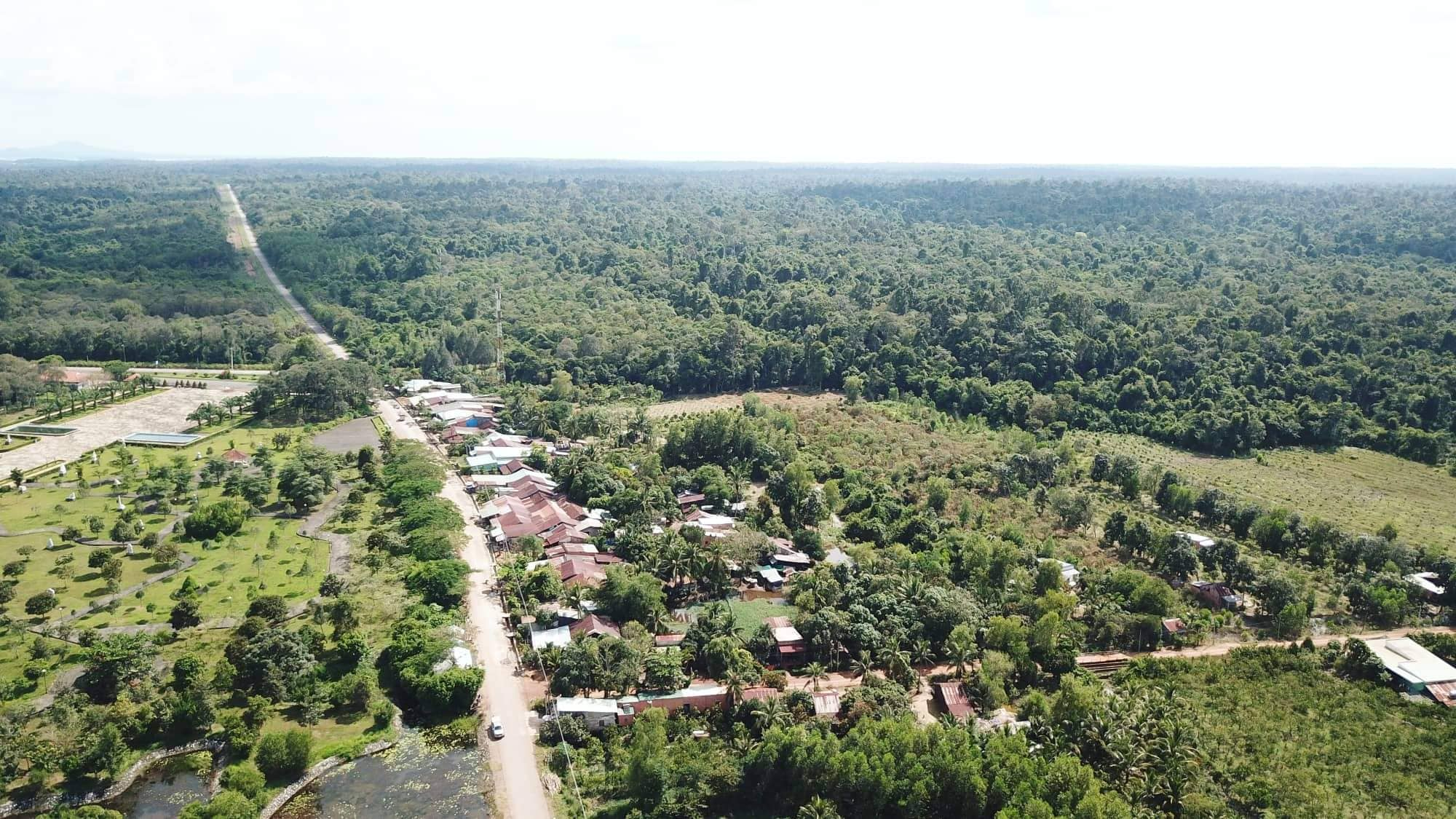
TTO – Sau khi tỉnh Bình Phước có ý kiến làm cầu Mã Đà nối vào tuyến quốc lộ 13C đã quy hoạch, tỉnh Đồng Nai đã họp bàn và yêu cầu có giải pháp để bảo vệ Khu bảo tồn thiên nhiên – văn hóa Đồng Nai vì đây là khu dự trữ sinh quyển thế giới.
Khu bảo tồn thiên nhiên – văn hóa Đồng Nai nhìn từ trên cao – Ảnh: NGỌC KHẢI
Thời tôi còn công tác, tỉnh Bình Phước muốn làm cầu Mã Đà qua Đồng Nai. Hai tỉnh họp bàn, lo ngại kết nối tuyến đường với 2 tỉnh sẽ ảnh hưởng đến việc bảo vệ rừng ở khu bảo tồn nên dừng lại không làm. Tỉnh Bình Phước cũng đình chỉ bến đò tự phát ngang sông Mã Đà. Nay lại có kiến nghị muốn làm cầu Mã Đà để kết nối với tuyến quốc lộ 13C đi xuyên qua khu bảo tồn. Làm đường có nhiều vị trí và phương án khác không đụng đến rừng sao không lựa chọn, lại muốn làm đường xuyên rừng thì liệu có động cơ khác không? Đồng Nai đã đổ bao mồ hôi, nước mắt để bảo vệ rừng mấy chục năm nay, không thể chỉ vì tuyến đường được rút ngắn hơn mà để rừng tự nhiên biến mất vĩnh viễn. Dứt khoát không đụng đến rừng và không nên làm đường qua khu bảo tồn. Nếu cho làm tức là chấp nhận phá bỏ khu dự trữ sinh quyển thế giới. Bởi đường đi vào rừng sẽ chia cắt đa dạng sinh học, làm thú nhát, không sinh sản được, mất dần, tuyệt chủng và chúng ta sẽ trả giá rất đắt.. Ông Trần Văn Mùi, nguyên giám đốc Khu bảo tồn thiên nhiên – văn hóa Đồng Nai
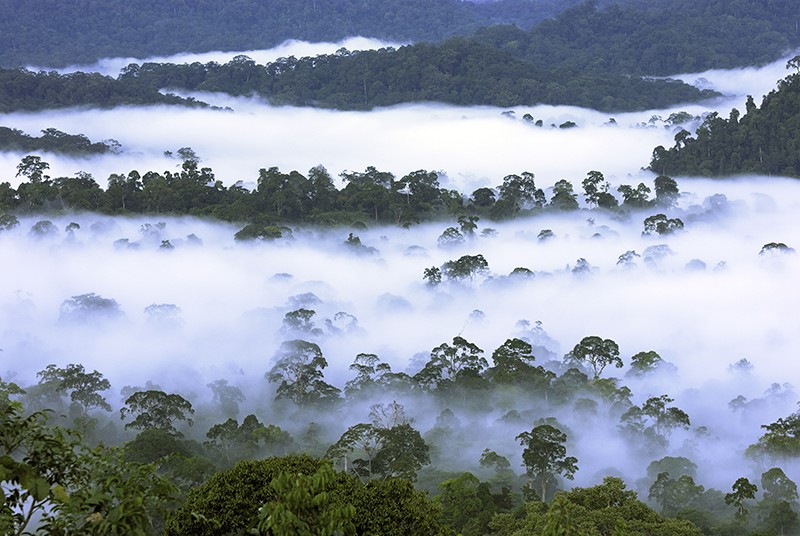
Tropical forests create cloud cover that reflects sunlight and cools the air.Credit: Thomas Marent/Minden Pictures
Tropical forests have a crucial role in cooling Earth’s surface by extracting carbon dioxide from the air. But only two-thirds of their cooling power comes from their ability to suck in CO2 and store it, according to a study1. The other one-third comes from their ability to create clouds, humidify the air and release cooling chemicals.
This is a larger contribution than expected for these ‘biophysical effects’ says Bronson Griscom, a forest climate scientist at the non-profit environmental organization Conservation International, headquartered in Arlington, Virginia. “For a while now, we’ve assumed that carbon dioxide alone is telling us essentially all we need to know about forest–climate interactions,” he says. But this study confirms that tropical forests have other significant ways of plugging into the climate system, he says.
Đồng bằng sông Cửu Long thiếu nước phục vụ sinh hoạt và sản xuất trầm trọng. Ảnh từ www.moitruongvadothi.vn.
1. Bối cảnh
Đồng bằng sông Cửu Long (ĐBSCL) của Việt Nam là đồng bằng lớn thứ ba trên Trái Đất, là nơi sinh sống của gần 18 triệu người với sinh kế chủ yếu là sản xuất nông nghiệp và nuôi trồng thủy sản. Được coi là “Vựa lúa” của Việt Nam, ĐBSCL đóng góp hơn một nửa tổng sản lượng gạo của cả nước và 95% sản lượng gạo xuất khẩu, góp phần đưa Việt Nam trở thành quốc gia xuất khẩu gạo lớn thứ ba thế giới. Khu vực này cũng đóng góp 70% sản lượng trái cây và hơn 60% sản lượng thủy sản xuất khẩu của cả nước.1
The Río de la Plata and the city of Buenos Aires, Argentina. A report has warned of the contamination of the world’s rivers by active pharmaceutical ingredients (APIs), especially in developing countries. Copyright: Dan DeLuca/Flickr, (CC BY 2.0).
Pharmaceutical pollution in the world’s rivers is threatening environmental and human health and the attainment of UN goals on water quality, with developing countries the worst affected, a global study warns.
Active pharmaceutical ingredients (APIs) could be contributing to antimicrobial resistance in microorganisms, and may have unknown long-term effects on human health, as well as harming aquatic life, according to the report published in Proceedings of the National Academy of Sciences.
APIs – the chemicals used to make pharmaceutical drugs – can reach the natural environment during their manufacture, use and disposal, according to the study.
“Early results suggest that some of the more polluted mixes are extremely toxic to plants and invertebrates.”
Alistair Boxall, Department of Environment and Geography, University of York, UK
Researchers say they monitored 1,052 sampling sites along 258 rivers in 104 countries, representing the “pharmaceutical fingerprint” of 471 million people linked to these areas.
The highest cumulative concentrations of APIs were seen in Sub-Saharan Africa, South Asia and South America, with the most contaminated sites found in low-to-middle income countries where waste water management infrastructure is often poor, the report says.
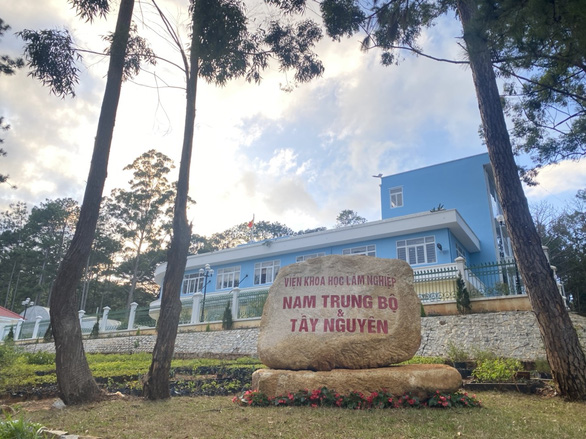
TTO – Viện Khoa học lâm nghiệp Nam Trung Bộ và Tây Nguyên được giao 3.280 ha rừng, đất rừng nhưng từ khi quản lý, đơn vị này lại để mất tới hơn 2.000 ha rừng, đất rừng.
Viện Khoa học lâm nghiệp Nam Trung Bộ và Tây Nguyên (tại số 9 đường Hùng Vương, TP Đà Lạt, Lâm Đồng) – Ảnh: fsih.gov.vn
Ngày 28-2, Sở Tài nguyên và môi trường Đắk Nông cho biết vừa ban hành kết luận thanh tra về công tác quản lý đất đai, bảo vệ rừng tại lâm phần do Viện Khoa học lâm nghiệp Nam Trung Bộ và Tây Nguyên (trụ sở tại xã Đắk Som, huyện Đắk Glong) quản lý.
TTCT – Cả rừng tin tức tiêu cực về môi trường vẫn thường dễ dàng che khuất những nỗ lực có thực nhằm chữa lành thiên nhiên. Nhưng nay thế giới đã có một “tụ điểm” dành riêng cho những câu chuyện trồng rừng tốt đẹp.
Ảnh: Andres Azpurua
Tại Chiang Mai (Thái Lan), việc phục hồi rừng bản địa đã được nâng lên thành câu chuyện sinh kế. Dân làng nhận tiền thù lao khi tham gia chăm nom vườn ươm và đất đai, đồng thời được hưởng lợi từ nguồn lâm sản ngoài gỗ. Dự án này đã “bám rễ” và phát triển rực rỡ trong hơn 16 năm với sự chung sức đồng lòng của các nhà khoa học, người dân Hmông bản địa và cơ quan quản lý vườn quốc gia.
Giữa thời buổi “tuyệt chủng” và “biến đổi khí hậu”, những nỗ lực phục hồi và bảo tồn rừng có hiệu quả, như ví dụ ở Chiang Mai, có thể giúp chúng ta gieo mầm hy vọng về tương lai của Mẹ Trái đất. Trên bản đồ tương tác trực tuyến Restor (restor.eco/map) có hàng chục ngàn ví dụ như thế.
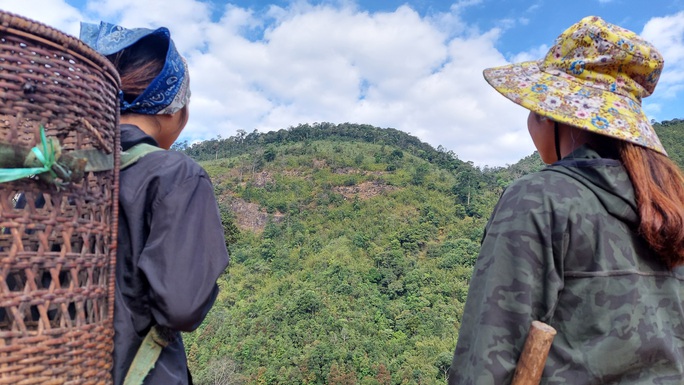
(NLĐO) – Không chỉ giữ rừng len xanh, những sơn nữ Vân Kiều ở phía Tây Quảng Trị còn tham gia tuần tra, bảo vệ rừng cộng đồng – công việc tưởng chừng như chỉ cánh mày râu mới dám đứng ra đảm nhận.
Rừng len xanh nằm trên lèn đá cheo leo
Những sơn nữ này tuổi đời chỉ mới 20 – 30 nhưng đảm nhận công việc đòi hỏi phải có đủ sức vóc và cơ bắp. Đó là phòng chống cháy rừng và tham gia tuần tra, giữ rừng cộng đồng.
Financial problems and complicated procedures have created a situation in which 11 tigers raised in captivity for 15 years remain unwanted in north-central Vietnam.
In 2007, Nguyen Mau Chien, a local in Thanh Hoa Province, bought 10 tiger cubs weighing around seven kilos each from an unidentified seller and brought them from Laos to Vietnam to raise near his home in Xuan Tin Commune of Tho Xuan District.
While his intent in making the purchase was not stated, demand for tiger parts for medicinal purposes has been high in Vietnam and China for a long time.
Chien was fined VND30 million ($1,300) for animal trafficking and tasked with raising the cubs.
In 2008, Chien bought another five tiger cubs from Laos and was fined the same amount. Once again, he was asked to raise the cubs with support from local authorities and the ranger force.
LTS: Rừng bị tàn sát mênh mông. Cán bộ tha hóa đi tù vì bảo kê cho lâm tặc. Nhiều nghìn héc-ta (ha) rừng tự nhiên biến mất trong xót xa. Tất cả, dường như vẫn là chưa đủ với lòng tham và sự nhẫn tâm của không ít kẻ.
Gần đây, lại rộ lên phong trào “bứng” cây cổ thụ về trưng diện cho nhà cửa, công trình, đặc biệt là các biệt thự, resort, khách sạn để… thể hiện đẳng cấp.
Những “rừng” cây khổng lồ, có khi đường kính đến một, hai, ba mét, được cắt rễ, đánh bầu, cưa ngọn, cẩu đi, ghép mầm hoa…
Các “lão mộc tinh” được tập kết trong các vựa buôn cây khắp từ Bắc chí Nam, đặc biệt là ở các khu vực trọng điểm như dọc đường Láng Hòa Lạc (huyện Hoài Đức), xã Yên Bài (Ba Vì – Hà Nội), miền núi các tỉnh Thanh Hóa, Nghệ An, Quảng Nam, Bình Định, Gia Lai, Kon Tum, Đắk Lắk, Bình Dương và TP HCM…
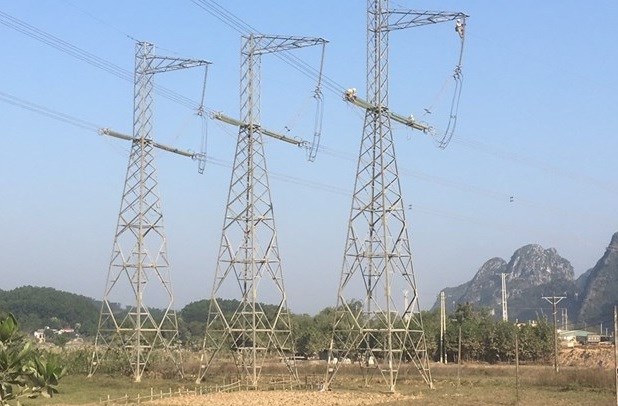
The Lao Government has given the green light for two private companies to carry out a feasibility study on the construction of a 220kV transmission line which would carry electricity from five dams in northern Laos to Vietnam.
If the study is approved, the line will transmit electricity from Nam Ou dams No.3, 4, 5, 6 and 7 through Luang Prabang and Phongsaly provinces to Vietnam.
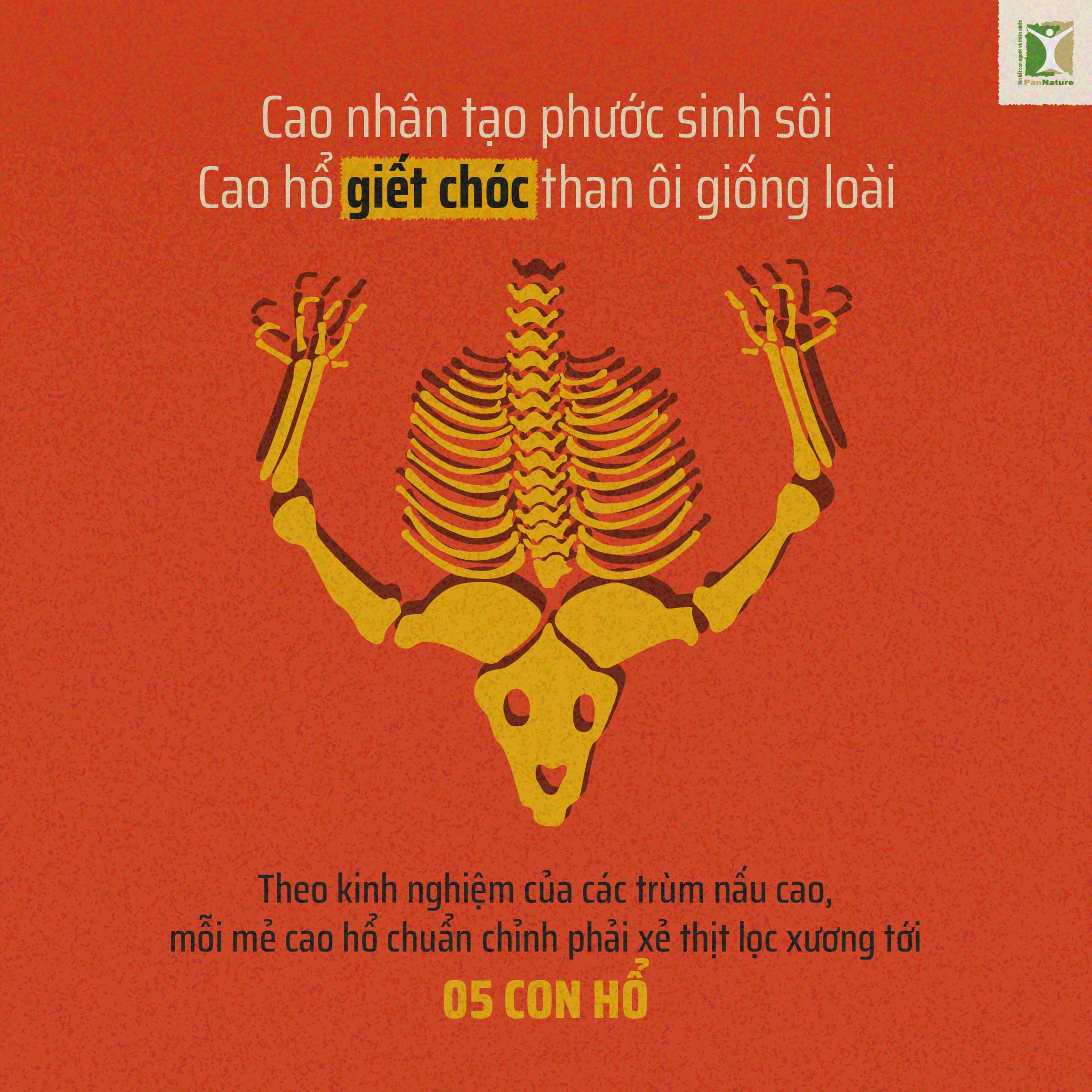
Nhân dịp năm mới Nhâm Dần, Trung tâm Con người và Thiên nhiên (PanNature) phát động chiến dịch truyền thông “Cao nhân không cần cao hổ”, kêu gọi người dân không sử dụng sản phẩm từ hổ nói chung và cao hổ nói riêng.
Từ những kết luận thiếu căn cứ khoa học và được củng cố bằng niềm tin mù quáng của con người, cao hổ đã bị thổi phồng thành một thứ xa xỉ và đẩy loài hổ tới bờ vực tuyệt chủng trong tự nhiên. Chiến dịch truyền thông này mong muốn gửi đi thông điệp rằng chính lối sống lành mạnh, lý trí khôn ngoan và tâm thế vững vàng để nói không với những hành vi sai trái sẽ giúp chúng ta trở nên đẳng cấp, chứ không phải việc tặng, biếu hay sử dụng một món hàng chết chóc như cao hổ và các sản phẩm khác từ ĐVHD.
After years of largely neglecting the buildup of plastic waste in Earth’s environment, the U.N. Environment Assembly will meet in February and March in the hopes of drafting the first international treaty controlling global plastics pollution.
Discarded plastic is currently killing marine life, threatening food security, contributing to climate change, damaging economies, and dissolving into microplastics that contaminate land, water, the atmosphere and even the human bloodstream.
The U.N. parties will debate how comprehensive the treaty they write will be: Should it, for example, protect just the oceans or the whole planet? Should it focus mainly on reuse/recycling, or control plastics manufacture and every step of the supply chain and waste stream?
The U.S. has changed its position from opposition to such a treaty under President Donald Trump, to support under President Joe Biden, but has yet to articulate exactly what it wants in an agreement. While environmental NGOs are pushing for a comprehensive treaty, plastics companies, who say they support regulation, likely will want to limit the treaty’s scope.
At the end of February, the United Nations Environment Assembly (UNEA) will tackle a challenging task: the creation of a landmark treaty to control plastic pollution worldwide. While most nations have agreed to participate, the scope and timing of such an agreement aren’t settled, with many countries, environmental NGOs, and the plastics industry expressing widely different ideas as to what should be included.







 CVD
CVD 