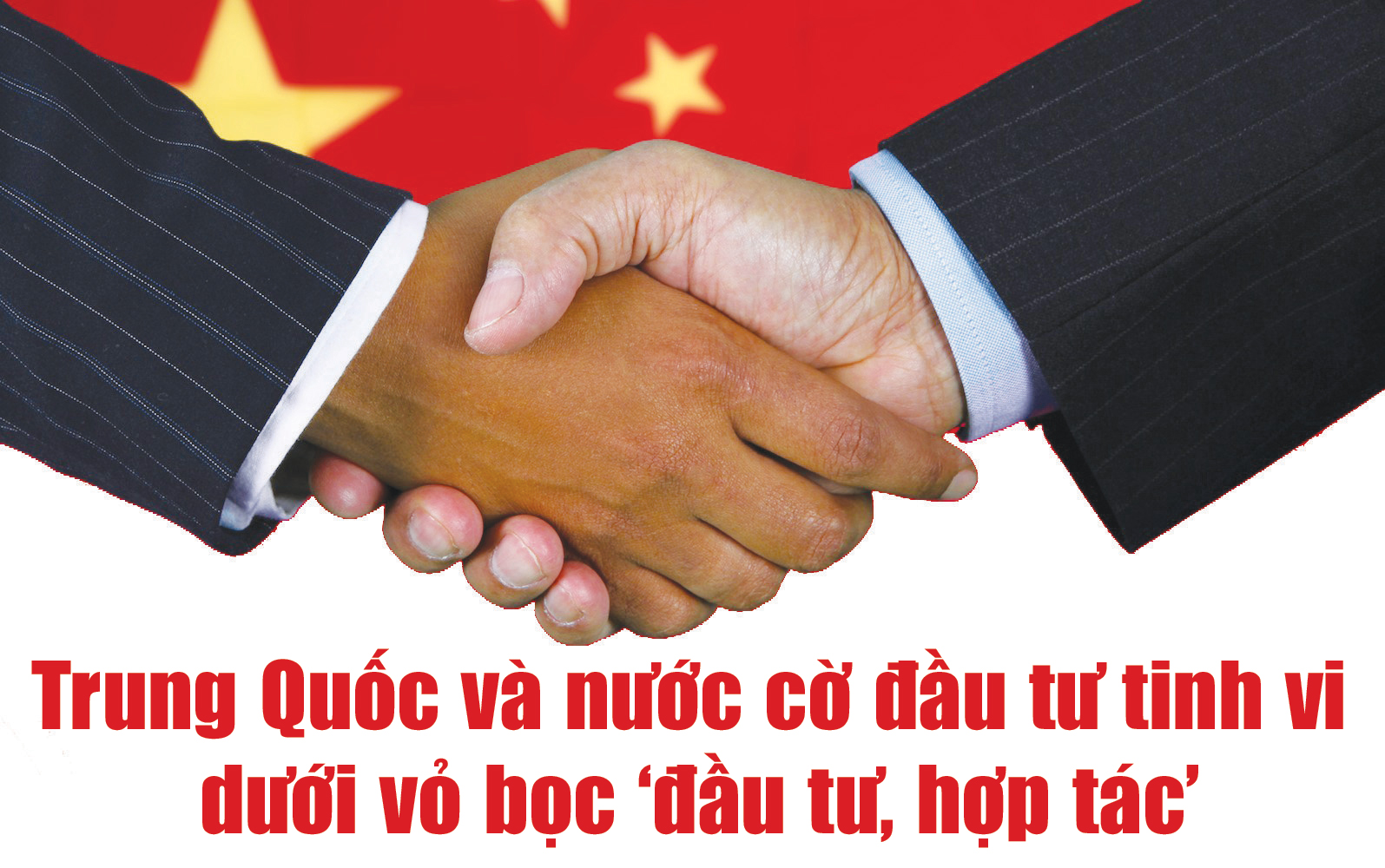
Trung Quốc và nước cờ đầu tư tinh vi dưới vỏ bọc ‘đầu tư, hợp tác’

PNKhoác vỏ bọc “đầu tư, hợp tác”, hàng loạt dự án thuê đất ở nước ngoài theo kiểu “đôi bên cùng có lợi” thực chất chỉ mang đến lợi ích đơn phương cho Trung Quốc, trong khi kinh tế, an ninh và ổn định chính trị của các quốc gia về lâu dài bị đe dọa nghiêm trọng.

5 USD/ha và cuộc “xâm lăng” thầm lặng

Năm 2015, Trung Quốc gây chú ý với kế hoạch thuê đất vùng Siberia, vùng lãnh thổ lớn nhất của Nga. Trung Quốc hiểu rõ lợi thế 1,35 tỷ dân áp đảo dân số 144 triệu người của Nga, với tỷ lệ tương quan 10:1.

Tiếp tục đọc “Trung Quốc và nước cờ đầu tư tinh vi dưới vỏ bọc ‘đầu tư, hợp tác’”

U.S., China trade barbs at U.N. over South China Sea

Michelle Nichols, Reuters

U.S. Secretary of State Antony Blinken leaves after speaking during a briefing at the State Department in Washington, U.S. August 2, 2021. Brendan Smialowski/Pool via REUTERS/File Photo
U.S. Secretary of State Antony Blinken speaks to the media prior a meeting with Ukrainian Foreign Minister Dmytro Kuleba at the State Department in Washington, DC, U.S. August 5, 2021. Saul Loeb/Pool via REUTERS

U.S. Secretary of State Antony Blinken speaks to the media prior a meeting with Ukrainian Foreign Minister Dmytro Kuleba at the State Department in Washington, DC, U.S. August 5, 2021. Saul Loeb/Pool via REUTERS

NEW YORK, Aug 9 (Reuters) – U.S. Secretary of State Antony Blinken called out bullying in the South China Sea on Monday and warned the U.N. Security Council that a conflict “would have serious global consequences for security and for commerce,” sparking a strong rebuke from China.

The South China Sea has become one of many flashpoints in the testy relationship between China and the United States, with Washington rejecting what it calls unlawful territorial claims by Beijing in the resource-rich waters.

Tiếp tục đọc “U.S., China trade barbs at U.N. over South China Sea”

Ra mắt hệ thống dữ liệu và các nền tảng phòng chống dịch thống nhất, liên thông

Ngày đăng: 08/08/2021 – 22:03

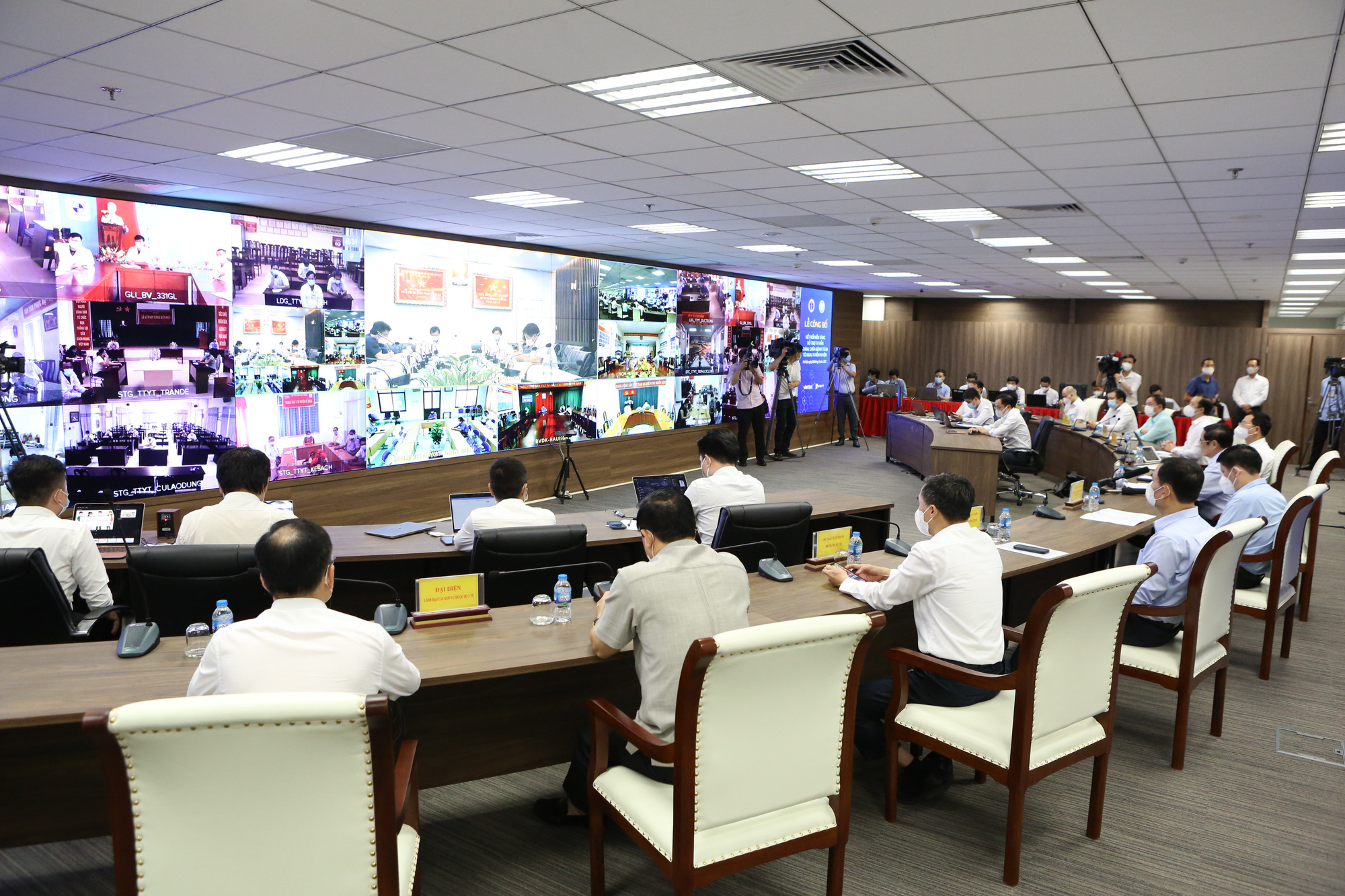
TTChiều 8-8, với sự chứng kiến của Thủ tướng Phạm Minh Chính, Trung tâm Công nghệ phòng chống COVID-19 đã chính thức ra mắt, trở thành hệ thống dữ liệu và các nền tảng phòng chống dịch bệnh thống nhất, liên thông trong toàn quốc.

Ra mắt hệ thống dữ liệu và các nền tảng phòng chống dịch thống nhất, liên thông - Ảnh 1.

Trung tâm Công nghệ phòng chống COVID-19 quốc gia do Bộ Thông tin và truyền thông trực tiếp điều hành – Ảnh: ĐỨC HUY

Trung tâm Công nghệ phòng chống COVID-19 với lực lượng nòng cốt là Bộ Thông tin và truyền thông, Bộ Y tế và 20 doanh nghiệp công nghệ số, hàng ngàn chuyên gia, lập trình viên trong và ngoài nước, là nơi hợp lực để phát triển và triển khai thống nhất các nền tảng phòng, chống dịch COVID-19 trên toàn quốc.

Hiện nay đã có ba nền tảng công nghệ thiết yếu bắt buộc triển khai thống nhất trên toàn quốc là Nền tảng khai báo y tế và ghi nhận vào ra địa điểm công cộng bằng mã QRCode, Nền tảng hỗ trợ lấy mẫu và trả kết quả xét nghiệm, Nền tảng quản lý tiêm chủng COVID-19.

Phát biểu tại sự kiện, Thủ tướng Phạm Minh Chính đánh giá cao việc Bộ Thông tin và truyền thông thành lập Trung tâm Công nghệ phòng chống COVID-19 và chỉ đạo các doanh nghiệp công nghệ phối hợp cùng Bộ Y tế xây dựng và kết nối Nền tảng tư vấn khám chữa bệnh từ xa Telehealth với 100% cơ sở y tế tuyến huyện.

Đánh giá đây là những nỗ lực hiệu quả góp phần vào chuyển đổi số trong lĩnh vực y tế nói riêng và chuyển đổi số quốc gia, Thủ tướng nhấn mạnh: Chúng ta đang từng bước hoàn thiện thông điệp phòng chống dịch bệnh COVID-19 để chống dịch hiệu quả hơn, từ thông điệp 5K tiến tới thông điệp “5K + vắc-xin + thuốc” và bây giờ là thông điệp “5K + vắc-xin + thuốc và công nghệ”.

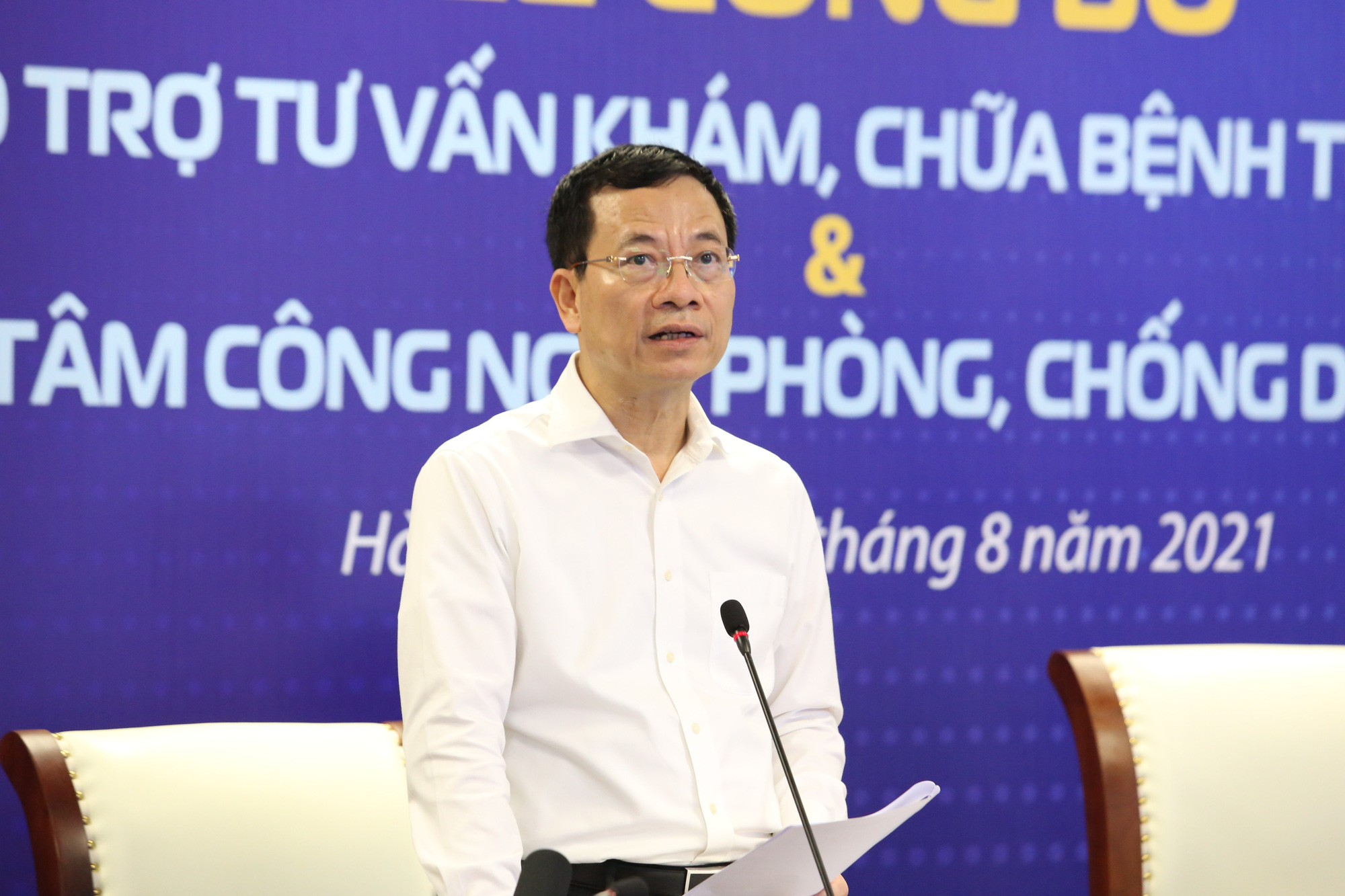
Ra mắt hệ thống dữ liệu và các nền tảng phòng chống dịch thống nhất, liên thông - Ảnh 2.

Bộ trưởng Nguyễn Mạnh Hùng cho biết Trung tâm Công nghệ phòng chống COVID-19 có thể phục vụ 100 triệu người sử dụng các công nghệ, nền tảng do trung tâm cung cấp – Ảnh: ĐỨC HUY

Bộ trưởng Bộ Thông tin và truyền thông Nguyễn Mạnh Hùng cho biết: Trong vòng chưa đầy hai tháng, gần 1.500 tỉ đồng thiết bị phần cứng được các doanh nghiệp tập trung về cho trung tâm, gần 1.000 người làm việc miễn phí cho trung tâm. 18 doanh nghiệp công nghệ số hàng đầu Việt Nam cung cấp hạ tầng và phát triển các nền tảng số chống dịch, 18 nền tảng số đã đưa vào khai thác, phục vụ cho tất cả các khâu chống dịch, từ sổ sức khỏe điện tử, tới nhập cảnh, tới khai báo y tế, truy vết, cách ly, xét nghiệm, tiêm chủng, giám sát giãn cách xã hội, tư vấn hỗ trợ người bệnh, hỗ trợ người dân gặp khó khăn, cơ sở dữ liệu về người cao tuổi cần được ưu tiên tiêm vắc xin, cơ sở dữ liệu về những người vô gia cư, không giấy tùy thân cần trợ giúp,…

“Hiện nay, mỗi ngày trung tâm đang phục vụ 20 triệu người và tiến tới khi tất cả các tỉnh dùng thì sẽ là 100 triệu người” – ông Hùng thông tin.

T. HÀ

Giáo dục về sự Đồng Thuận (cho phép) liên quan đến tình dục và tự chủ cơ thể, thông qua các môn học khác nhau như thế nào

Edutopia.org: How to teach Consent across cirriculum

*Chú thích của người biên tập:

ở bài viết này: khái niệm Đồng Thuận – consent nói về sự Đồng Thuận hay cho phép, đồng ý trong vấn đề tình dục và tự chủ của cơ thể, có thể gọi là sexual consent. Có rất nhiều định nghĩa khác nhau về consent trong các mối quan hệ. Có thể có các định nghĩa về mặt kỹ thuật, hay về mặt pháp lý và thường là phức tạp. Cơ bản nhất, sự Đồng Thuận là cần có sự giao tiếp giữa hai bên. Trong mối liên hệ về tình cảm, tình dục đó là bạn cần cho đối tác hay bạn tình hiểu được mối quan tâm của bạn, và đi đến quan hệ chỉ khi nào có sự Đồng Thuận và đồng thuận của cả hai người. Một điều rất quan trọng là, sự im lặng hoặc không có vẻ chống cự không có nghĩa là Đồng Thuận . Một người bị mất khả năng hành vi vì dùng chất cồn, rượu hoặc thuốc mê hay vì dùng bất cứ loại thuốc nào khác thì không thể đưa ra sự Đồng Thuận. Sự Đồng Thuận ở một việc (như chạm tay, ôm, hôn) không đồng nghĩa ám chỉ là Đồng Thuận cho hành động khác như tiến đến quan hệ tình dục . Khi không có sự Đồng Thuận – consent, có thể coi là bị cưỡng hiếp (rape) hay bị bạo hành, tấn công tình dục (sexual assault), bị quấy rối tinh dục (sexual harassment)
Tham khảo video ngắn của UNWomen để hiểu điều gì KHÔNG được coi là Đồng Thuận liên quan đến tình dục và tự chủ của cơ thể https://www.facebook.com/watch/?v=560361574760787

( Đào Thu Hằng chú thích)

Tiếp tục đọc “Giáo dục về sự Đồng Thuận (cho phép) liên quan đến tình dục và tự chủ cơ thể, thông qua các môn học khác nhau như thế nào”

Các luận cứ hiến pháp và luật pháp liên quan đến vaccine

Chào các bạn,

Hiện nay đang có nhiều cuộc  biểu tình tại nhiều quốc gia trên thế giới, đặc biệt là Châu Âu, chống vaccine Covid. Và mình nghĩ rằng trong tương lai, khi các chính phủ gia tăng yêu cầu vaccine, thì những biểu tình chống đối của những người không thích vaccine có thể tăng theo, cộng với nhiều vụ khởi kiện chống lại quyết định của chính phủ. Để giúp các bạn hiểu được những yếu tố pháp lý nằm bên dưới những hiện tượng xã hội lớn lao này, mình viết bài này để trình bày một vài yếu tố hiến pháp và luật pháp chính. Tiếp tục đọc “Các luận cứ hiến pháp và luật pháp liên quan đến vaccine”

Reconciling the Past for a Stronger Partnership: Shaping U.S.-Vietnam Relations under the Biden Administration

Lê Thu Hương, August 4, 2021 CSIS

As the first trip by a Biden administration cabinet official, Defense Secretary Lloyd Austin’s visit to Southeast Asia last week held considerable symbolic significance. His speech in Singapore marked a clear distinction between the administration’s approach to the region and that of the Trump team. Austin delivered a message consistent with the U.S. intention to compete with China while tailoring the tone to reflect the concerns of Southeast Asians. In his remarks, Austin clarified that the United States will not force countries to “choose” between Washington and Beijing—addressing a strongly held, and unpopular, perception in the region based on the Trump administration’s sharp rhetoric.

Tiếp tục đọc “Reconciling the Past for a Stronger Partnership: Shaping U.S.-Vietnam Relations under the Biden Administration”

Rửa tay đúng cách là biện pháp hàng đầu ngừa COVID-19

19-08-2020 9:20 AM | Bệnh thường gặp

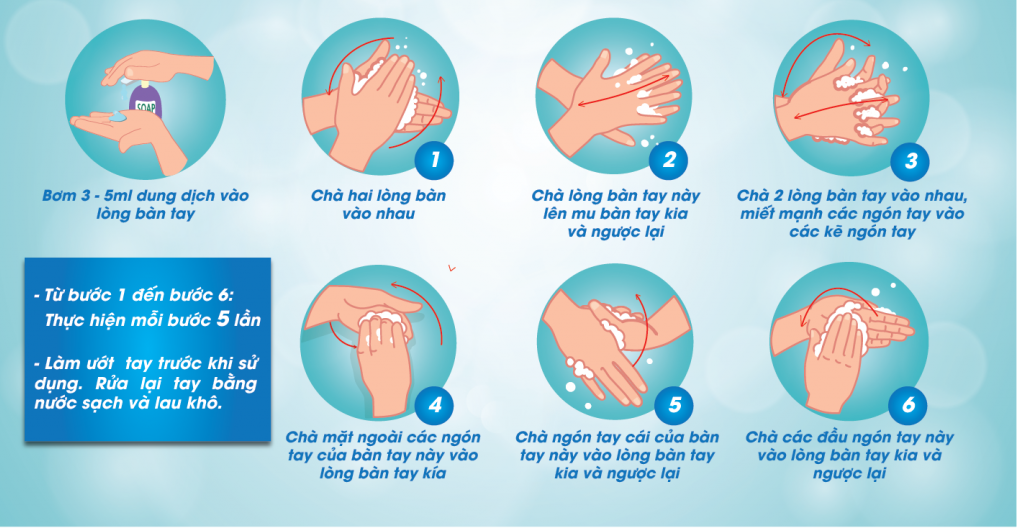
SKĐSTheo Tổ chức Y tế Thế giới (WHO), chỉ một động tác rửa tay sạch đã làm giảm tới 35% khả năng lây truyền vi khuẩn. Trước tình hình đại dịch COVID-19, Bộ Y tế cũng khuyến cáo thường xuyên rửa tay với xà phòng/xà bông/dung dịch rửa tay nhanh và nước sạch hoặc dung dịch rửa tay có cồn là biện pháp phòng ngừa đơn giản nhưng hiệu quả giúp hạn chế khả năng lây lan dịch bệnh.

Quy trình rửa tay 6 bước của Bộ Y tế.

Quy trình rửa tay 6 bước của Bộ Y tế.

Tiếp tục đọc “Rửa tay đúng cách là biện pháp hàng đầu ngừa COVID-19”

Nguồn gốc đàn tranh Việt Nam

Đây là ấn bản tiếng Việt thứ năm của tiểu luận Nguồn Gốc Đàn Tranh Việt Nam. Nếu ấn bản thứ nhất (1987), thứ hai (1990) và thứ ba (1996) đặt tiền đề và cơ sở lý luận về nguồn gốc đàn tranh Việt dựa trên các yếu tố ngôn ngữ học và thiết kế nhạc khí thì ấn bản thứ tư (2020) và ấn bản này cung cấp nhiều tư liệu lịch sử và khảo cổ để làm rõ và cũng cố những giả thuyết và kết luận được nêu ra trong ba ấn bản trước đây. Mong rằng tiểu luận này sẽ giúp bạn đọc mở ra một cái nhìn mới về lịch sử đàn tranh Việt và nhạc Việt.

Người viết xin chân thành cảm ơn Gsts. Nguyễn Thuyết Phong đã gửi tặng 2 tấm ảnh đàn tre goong trong bộ ảnh điền dã cuả Gs tại Việt Nam để minh họa cho phần viết về đàn tre trong tiểu luận này.

Lê Tuấn Hùng

Đọc và download >>

Advancing a Rules-based Maritime Order in the Indo-Pacific


Pacific Forum

Issues & Insights Vol. 21, SR 2 — Advancing a Rules-based Maritime Order in the Indo-Pacific

Overview

Authors of this volume participated in the Indo-Pacific Maritime Security Expert Working Group’s 2021 workshop that took place, virtually on March 23-24. The working group, composed of esteemed international security scholars and maritime experts from Japan, the United States, and other Indo-Pacific states, was formed to promote effective U.S.-Japan cooperation on maritime security issues in the region through rigorous research on various legal interpretations, national policies, and cooperative frameworks to understand what is driving regional maritime tensions and what can be done to reduce those tensions. The workshop’s goal is to help generate sound, pragmatic and actionable policy solutions for the United States, Japan, and the wider region, and to ensure that the rule of law and the spirit of cooperation prevail in maritime Indo- Pacific.

Table of Contents

  1. Introduction: Advancing a Rules-based Maritime Order in the Indo-Pacific | Jeffrey Ordaniel, Director, Maritime Programs, Pacific Forum
  2. Strengthening Maritime Crisis Prevention in Northeast Asia: A Focus on Subnational and Nonstate Actors | Shuxian Luo, Post-doctoral Research Fellow, Brookings Institution
  3. The Gaps in Japanese Maritime Security Law and the Senkaku Situation | Yurika Ishii, Associate Professor, Graduate School of Security Studies, National Defense Academy of Japan
  4. Maritime Security in the East China Sea: Japan’s Perspective | Atsuko Kanehara, Professor, Sophia University; President, Japanese Society of International Law
  5. Use of Force in International Law and the New China Coast Guard Law | Nguyen Thi Lan Huong, Research Fellow, East Sea Studies Institute, Diplomatic Academy of Vietnam
  6. Are We Ready for the Quad? Two Contradictory Goals | Kyoko Hatakeyama, Professor of International Relations, Graduate School of International Studies and Regional Development, University of Niigata Prefecture
  7. Modernizing U.S. Alliances for Maritime Security in the Indo-Pacific Virginia Bacay Watson, Professor, Daniel K. Inouye Asia-Pacific Center for Security Studies
  8. Maritime Governance Capacity Building: A U.S.-Japan Alliance Agenda for Rule of Law in the Indo-Pacific | John Bradford, Senior Fellow, Maritime Security Programme at the S. Rajaratnam School of International Studies (RSIS), Nanyang Technological University

Download the Full Volume >>


The Indo-Pacific Maritime Security Expert Working Group’s 2021 workshop and this volume were funded by a grant from the U.S. Embassy Tokyo, and implemented in collaboration with the Yokosuka Council on Asia Pacific Studies (YCAPS).

The statements made and views expressed are solely the responsibility of the authors and do not necessarily reflect the views of their respective organizations and affiliations. For questions, please email maritime@pacforum.org.


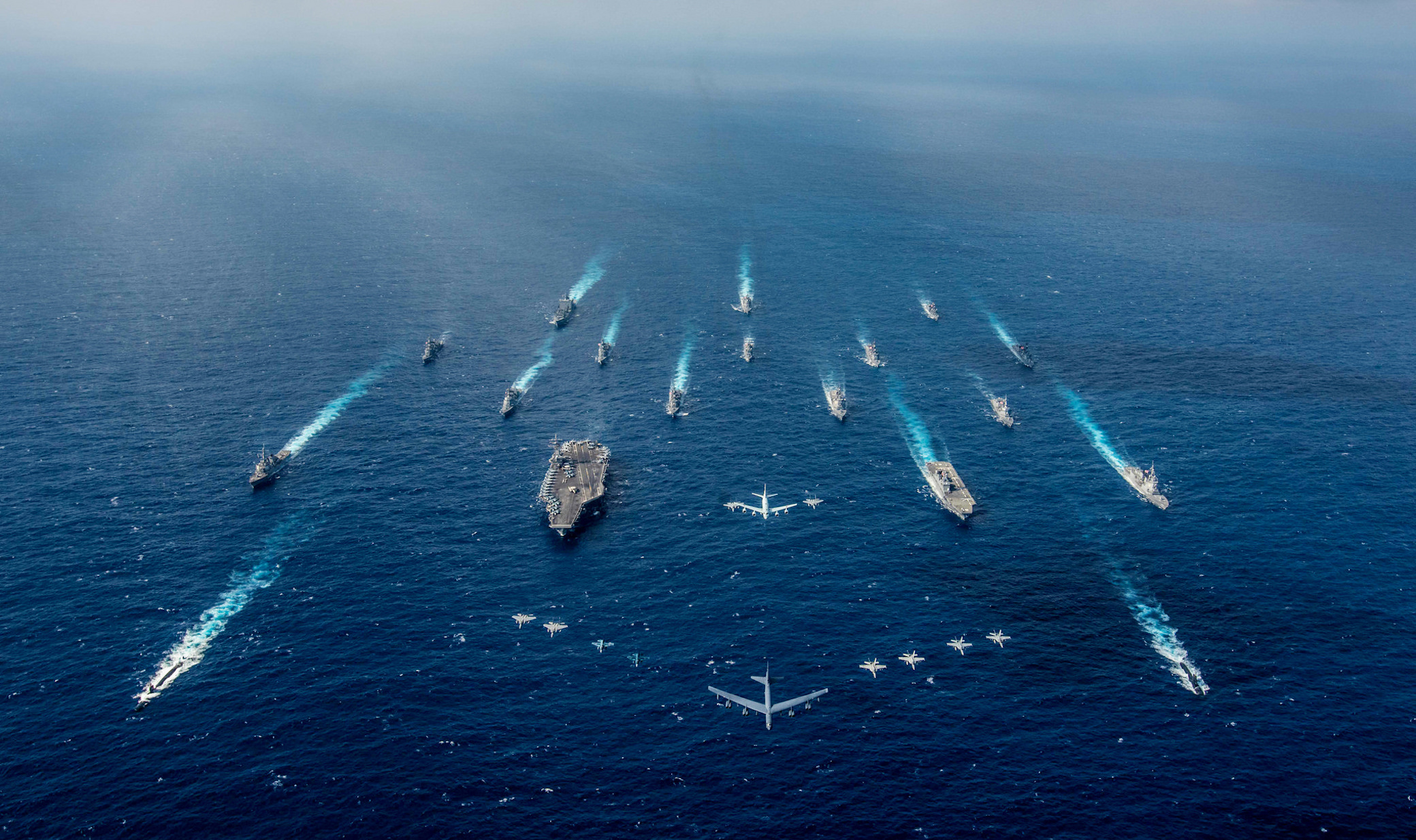
Photo: The aircraft  carrier  USS  Ronald  Reagan  (CVN  76),  center  left,  and the Japanese helicopter destroyer JS Hyuga (DDH 181), center right, sail  in  formation  with  other  ships  from  the  U.S.  Navy  and  Japan Maritime Self-Defense Force (JMSDF) as aircraft from the U.S. Air Force  and  Japan  Air  Self-Defense  Force  fly  overhead  in  formation during Keen Sword 2019 in the Philippine Sea. Keen Sword 2019 is a joint, bilateral field-training exercise involving U.S. military and JMSDF  personnel,  designed  to  increase  combat  readiness  and interoperability of the U.S.-Japan alliance. Source: U.S.  Navy  photo  by  Mass  Communication  Specialist  2nd  Class Kaila V. Peters/Public domain. 

USTR releases Annual Special 301 Report on Intellectual Property Protection

To read the full Special 301 Report, click here >>

04/30/2021 USTR

WASHINGTON – The Office of the United States Trade Representative (USTR) today released its annual Special 301 Report on the adequacy and effectiveness of U.S. trading partners’ protection and enforcement of intellectual property rights.
 
“Intellectual property rights incentivize our creators, manufacturers, and innovators to invent new products and technologies,” said Ambassador Katherine Tai. “The laws, policies and practices that protect those rights must appropriately balance the interests of creators with those seeking to use their creations. Failing to adequately and effectively protect those rights in foreign markets hurts the U.S. economy, the dynamism of American innovators and the livelihoods of our workers.”
 
This annual report details USTR’s findings of more than 100 trading partners after significant research and enhanced engagement with stakeholders. Significant elements of the 2021 Special 301 Report include:
  
•    The 2021 Special 301 review period has taken place during the COVID-19 pandemic, the largest global health crisis in more than a century.  The top priority of the United States is saving lives and ending the pandemic in the United States and around the world.  As affirmed in the Doha Declaration on the TRIPS Agreement and Public Health, the United States, while recognizing the role of intellectual property (IP) protection in the development of new medicines, respects a trading partner’s right to protect public health and, in particular, to promote access to medicines for all.
  
•    The United States has been closely monitoring China’s progress in implementing its commitments under the United States-China Economic and Trade Agreement (Phase One Agreement).  In 2020, China published several draft IP-related legal and regulatory measures and finalized over a dozen measures.  Notably, China amended the Patent Law, Copyright Law, and Criminal Law in the past year.  However, these steps toward reform require effective implementation and fall short of the full range of fundamental changes needed to improve the IP landscape in China.
  
•    Border, criminal, and online enforcement against counterfeiting remains a global concern.  This past year, countries reported significant quantities of COVID-19 testing kits, personal protective equipment (PPE) such as N-95 and equivalent masks, and sanitizers, detergents, and disinfectants from China that were determined to be counterfeit. Widespread counterfeiting in China’s e-commerce markets, the largest in the world, has also been exacerbated by the migration of infringing sales from physical to online markets, which accelerated during the COVID-19 pandemic.
  
•    Concerns with the European Union’s aggressive promotion of its exclusionary geographical indications policies persist.  The United States continues its intensive engagement in promoting and protecting access to foreign markets for U.S. exporters of products that are identified by common names or otherwise marketed under previously registered trademarks.
 
The report also highlights progress made by our trading partners to resolve and address IPR issues of concern to the United States:
  
•    The United Arab Emirates (UAE) is removed from the Watch List this year due to the Ministry of Health and Prevention resolving concerns with IP protection of pharmaceutical products.  The UAE also made progress on longstanding IP enforcement concerns, particularly through increased efforts by Dubai Customs, publication of IP enforcement procedures by multiple enforcement authorities, publication of annual IP enforcement statistics by Federal Customs, and efforts by the Ajman Department of Economic Development to significantly reduce the availability in counterfeit goods at the Ajman China Mall, a notorious market for the past several years. 
  
•    Algeria moves from the Priority Watch List to the Watch List due to steps the government has taken to engage and cooperate with stakeholders, improve enforcement efforts, and reduce IP-related market access barriers.
  
•    Brazil’s law enforcement, with support from the Department of Justice’s (DOJ) International Computer Hacking and Intellectual Property (ICHIP) Advisor for Latin America & the Caribbean and Computer Crime & Intellectual Property Section (CCIPS), the U.S. Attorney’s Office for the Eastern District of Virginia, Homeland Security Investigations (HSI), as well as United Kingdom (UK) counterparts, launched “Operation 404.2,” which seized the domain names of multiple commercial websites engaged in the illegal reproduction and distribution of copyrighted works.
  
•    In the most significant criminal case under Taiwan’s recently amended Trade Secrets Act, a court ruled that a Taiwan semiconductor company and three former employees were guilty of stealing trade secrets from a U.S. company to enable the development of semiconductor chips by a Chinese state-owned enterprise.  The court imposed a $3.4 million fine on the Taiwan company and sentenced the former employees to 5-6 years in prison.  The case involved substantial cooperation with U.S. investigators and prosecutors.
  
•    Ukraine continued to take positive steps in 2020 toward a transparent, fair, and predictable system for the collective management of copyright royalties.  In particular, pursuant to 2018 legislation that fundamentally reformed its collective management organization (CMO) system, Ukraine held open competitions and made progress toward completing accreditation of two additional CMOs in 2020.  This follows the accreditation in 2019 of six other CMOs under the 2018 law.  Some of the accredited CMOs have completed royalty negotiations and are paying royalties to right holders.  For other CMOs selected under the 2018 law, accreditation and royalty negotiation progress continues.
 
BACKGROUND
 
The “Special 301” Report is an annual review of the global state of IP protection and enforcement.  USTR conducts this review pursuant to Section 182 of the Trade Act of 1974, as amended by the Omnibus Trade and Competitiveness Act of 1988 and the Uruguay Round Agreements Act.
 
USTR reviewed more than one hundred (100) trading partners for this year’s Special 301 Report, and placed thirty-two (32) of them on the Priority Watch List or Watch List.
 
In this year’s Report, trading partners on the Priority Watch List present the most significant concerns this year regarding insufficient IP protection or enforcement or actions that otherwise limited market access for persons relying on intellectual property protection.  Nine countries — Argentina, Chile, China, India, Indonesia, Russia, Saudi Arabia, Ukraine, and Venezuela — are on the Priority Watch List.  These countries will be the subject of particularly intense bilateral engagement during the coming year.
 
Twenty-three trading partners are on the Watch List, and merit bilateral attention to address underlying IP problems:  Algeria, Barbados, Bolivia, Brazil, Canada, Colombia, Dominican Republic, Ecuador, Egypt, Guatemala, Kuwait, Lebanon, Mexico, Pakistan, Paraguay, Peru, Romania, Thailand, Trinidad & Tobago, Turkey, Turkmenistan, Uzbekistan, and Vietnam.
 
PUBLIC ENGAGEMENT
 
USTR continued its enhanced approach to public engagement activities in this year’s Special 301 process.  USTR requested written submissions from the public through a notice published in the Federal Register on December 15, 2020 (Federal Register notice).  In addition, due to COVID-19, USTR fostered public participation via written submissions rather than an in-person hearing with the interagency Special 301 Subcommittee of the Trade Policy Staff Committee (TPSC) sending written questions about issues relevant to the review to those that submitted written comments, including to representatives of foreign governments, industry, and non-governmental organizations.  USTR posted the written questions and the written responses online at >www.regulations.gov<, docket number USTR-2020-0041. 
 
The Federal Register notice drew submissions from 50 non-government stakeholders and 22 foreign governments.  The submissions filed in response to the Federal Register notice are available to the public online at http://www.regulations.gov , docket number USTR-2020-0041.

Tiếp tục đọc “USTR releases Annual Special 301 Report on Intellectual Property Protection”

From the Caribbean to South China: A Tale of Two Seas

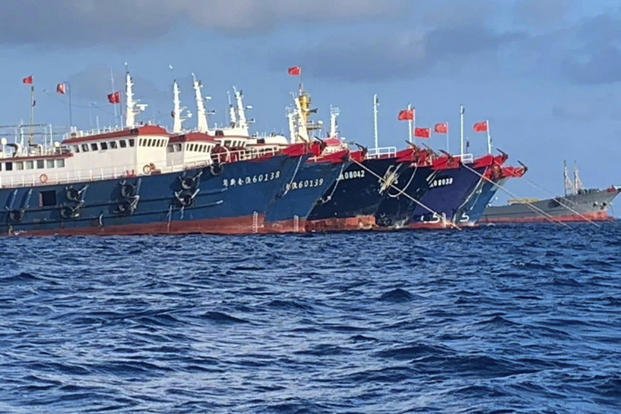
Chinese vessels are moored at Whitsun Reef, South China Sea
In this March 31, 2021, file photo provided by the National Task Force-West Philippine Sea, Chinese vessels are moored at Whitsun Reef, South China Sea. (National Task Force-West Philippine Sea via AP, File)

27 Jul 2021Military.com | By Joseph V. Micallef

Joseph V. Micallef is a best-selling military history and world affairs author, and keynote speaker. Follow him on Twitter @JosephVMicallef.

At first glance, the South and East China Seas, or China Seas, and the Caribbean Sea seem to have little in common.Advertisement

Situated on opposite ends of the Earth, they are what geographers describe as enclosed seas. To a naval strategist, that’s shorthand for an environment replete with numerous choke points from which maritime traffic can be interdicted.

Beyond this geostrategic similarity, however, these seas have another common element: the parallels and contrasts with how each region has handled the emergence of new military powers.

China in East Asia

For much of its history, China has been the predominant military power in East Asia. Historically, it was the largest country, had the largest population and the largest economy. All those factors are typically prerequisites for national power — a fact as true today as it was a millennium ago. The exceptions were periods when China was internally divided, beset by weak governments unable to assert their authority, or dominated by foreign powers.Advertisement

Tiếp tục đọc “From the Caribbean to South China: A Tale of Two Seas”

As the Taliban surges across Afghanistan al-Qaeda is poised for a swift return

July 14, 2021 6.10am AEST

The Conversation

The imminent fall of Afghanistan is more than a national disaster. It is not just that the gains made in the past two decades, at the cost of tens of thousands of lives and trillions of dollars, look certain to be reversed as the Taliban advances.

The Taliban’s victory is also al-Qaeda’s victory, and it has global implications.

Even before the US military completes the final steps of its troop withdrawal, the Taliban is surging. It is now reported to control 212 districts — more than half of Afghanistan’s 407 districts. This is triple the territory it controlled on May 1. The Taliban has seized 51 districts since the start of July alone.

Tiếp tục đọc “As the Taliban surges across Afghanistan al-Qaeda is poised for a swift return”

Bổ nhiệm thẩm phán suốt đời để độc lập tư pháp

THU NGUYỆT Thứ Hai, ngày 4/1/2021 – 06:40

(PL)- Áp lực thẩm phán phải chịu khi bổ nhiệm theo nhiệm kỳ rất lớn nên bổ nhiệm suốt đời là điều kiện để bảo đảm tính độc lập của tòa án.

LTS: Bổ nhiệm thẩm phán không có nhiệm kỳ (tức bổ nhiệm suốt đời) là vấn đề đã nhiều lần được đặt ra nhưng chưa được mổ xẻ thấu đáo. Mới đây, nhóm nghiên cứu của TAND Tối cao khi dự thảo báo cáo đánh giá năm năm thi hành Luật Tổ chức TAND 2014 tiếp tục đưa ra đề xuất này và nhận được nhiều ý kiến khác nhau. Để có cái nhìn đa chiều, Pháp Luật TP.HCM trao đổi với GS-TS Lê Hồng Hạnh, nguyên Viện trưởng Viện Khoa học pháp lý, Bộ Tư pháp, về chủ đề này.

Bổ nhiệm  thẩm phán suốt đời để độc lập  tư pháp - ảnh 1
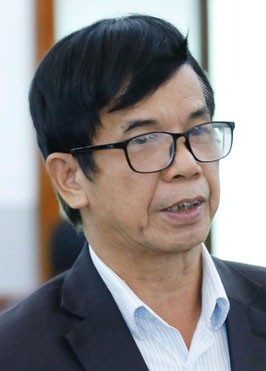
GS-TS Lê Hồng Hạnh, nguyên Viện trưởng Viện Khoa học pháp lý, Bộ Tư pháp

Tiếp tục đọc “Bổ nhiệm thẩm phán suốt đời để độc lập tư pháp”

“Tiếng Việt từ TK 17: tay mặt/hữu – tay tả/trái – tay đăm/chiêu” (phần 31)

Linh mục Alexandre de Rhodes và cuốn Phép Giảng Tám Ngày

Nguyễn Cung Thông1

Phần này bàn về các tên gọi tay mặt, tay hữu … tay tả, tay trái vào thời LM de Rhodes đến truyền đạo. Đây là lần đầu tiên các danh từ như vậy được dùng trong tiếng Việt qua dạng con chữ La Tinh (chữ quốc ngữ). Ngoài ra, khái niệm mở rộng về bên mặt (> bên phải) so với bên trái cũng cho thấy sự tương đồng giữa các nền văn hóa khác nhau

Các tài liệu tham khảo chính của bài viết này là bốn tác phẩm của LM de Rhodes soạn: (a) cuốn Phép Giảng Tám Ngày (viết tắt là PGTN), (b) Bản Báo Cáo vắn tắt về tiếng An Nam hay Đông Kinh (viết tắt là BBC), (c) Lịch Sử Vương Quốc Đàng Ngoài 1627-1646 và (d) tự điển Annam-Lusitan- Latinh (thường gọi là Việt-Bồ-La, viết tắt là VBL) có thể tra tự điển này trên mạng, như trang http://books.google.fr/books?id=uGhkAAAAMAAJ&printsec=frontcover#v=onepage&q&f=
false.

Tiếp tục đọc ““Tiếng Việt từ TK 17: tay mặt/hữu – tay tả/trái – tay đăm/chiêu” (phần 31)”

Kỷ niệm 70 năm ngân hàng Việt Nam (6-5-1951 – 6-5-2021) – Con đường thứ 5 (4 bài)

***

Kỷ niệm 70 năm ngân hàng Việt Nam (6-5-1951 – 6-5-2021) – Con đường thứ 5 – Bài 1: Ngân hàng không khóa

SGGP Thứ Hai, 3/5/2021 07:0

LTS: Trong cuộc kháng chiến chống Mỹ, cứu nước, có 5 con đường huyết mạch chi viện cho chiến trường miền Nam, đó là: Đường mòn Hồ Chí Minh, Đường ống xăng dầu Trường Sơn, Đường Hồ Chí Minh trên biển, Đường mòn Hồ Chí Minh trên không, và con đường thứ 5 không hình, không dạng với những câu chuyện gắn với “binh chủng tiền”. Kỷ niệm 70 năm Ngân hàng Việt Nam (6-5-1951 – 6-5-2021) là dịp nhắc nhớ về con đường thứ 5 này.

Đội vận chuyển tiền C100-đơn vị vận tải của đoàn 559 - Bộ Quốc phòng chuyển tiền và hàng vào Nam trên đường Trường Sơn huyền thoại. Ảnh: Ngân hàng Nhà nước cung cấp

Đội vận chuyển tiền C100-đơn vị vận tải của đoàn 559 – Bộ Quốc phòng chuyển tiền và hàng vào Nam trên đường Trường Sơn huyền thoại. Ảnh: Ngân hàng Nhà nước cung cấp

Khi có mặt ở Vụ Truyền thông, Ngân hàng Nhà nước Việt Nam tại Hà Nội vào một ngày tháng 4-2021, tôi đã nghĩ, những câu chuyện về “binh chủng tiền” ngày ấy cần được kể lại thật tỏ tường để thế hệ ngày nay hiểu và cảm nhận được. Nhưng, khi nghe một chuyên viên tại đây cho biết, phần lớn các nhân chứng lịch sử hồi ấy đều đã mất, các bác còn sống cũng già yếu lắm rồi, tôi thấy lòng mình đầy nuối tiếc…

Tiếp tục đọc “Kỷ niệm 70 năm ngân hàng Việt Nam (6-5-1951 – 6-5-2021) – Con đường thứ 5 (4 bài)”