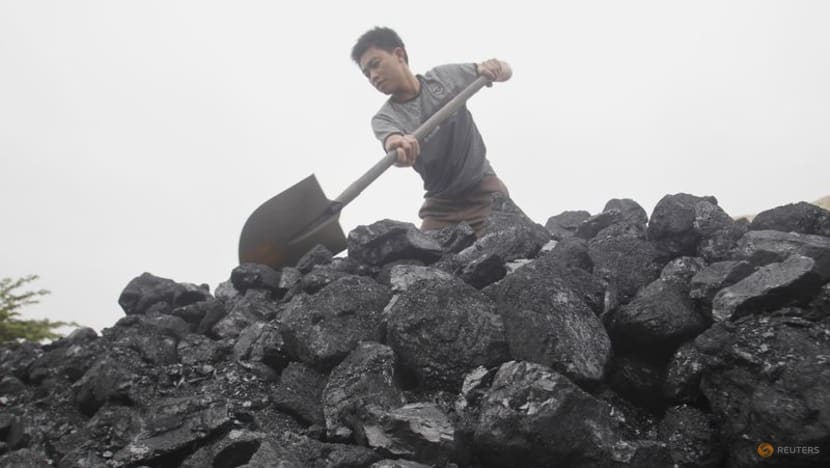
FILE PHOTO: A worker shovels coal as he loads a truck at a coal port in Hanoi February 23, 2012. REUTERS/Kham
11 May 2022 11:45AM(Updated: 11 May 2022 11:45AM)
HANOI : Vietnam’s state-owned coal miner Vinacomin will boost domestic production to meet rising demand for the fossil fuel amid surging global prices, the Ministry of Industry and Trade said on Wednesday.
The Southeast Asian country, a regional manufacturing powerhouse, earlier this year warned of electricity shortages due to tight coal supplies.
Republish our articles for free, online or in print, under Creative Commons licence.
Republish this article
A demonstrator holds a sign during a rally in support of abortion rights on May 3, 2022 in Seattle, Washington. David Ryder/Getty Images
Policies and decisions made in the United States echo around the world and often have widespread implications. Take sexual and reproductive health, for example. Decisions made in the US have caused, and could cause, severe damage to progress in access to these services in developing countries.
The first US policy with implications for healthcare in other countries is the global gag rule, first enacted by Ronald Reagan in 1984. Under this policy, non-US organisations that receive US government funding cannot provide, refer for, or promote abortion as a method of family planning. Successive US presidents have decided whether to enact or revoke the policy. President Joe Biden set it aside when he took office in 2021.
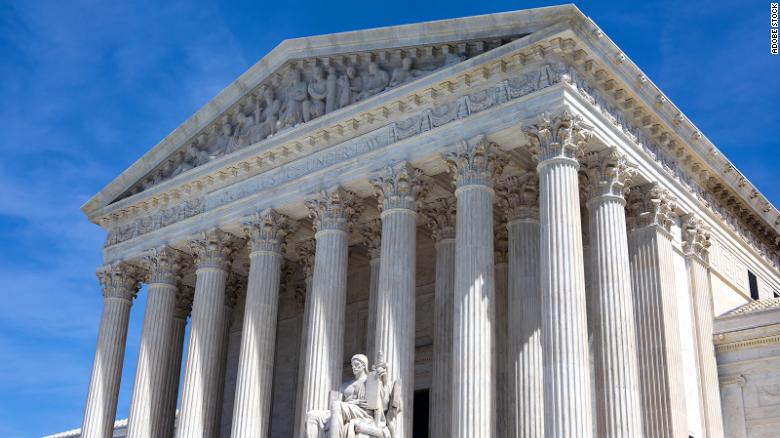
(CNN)In a stunning breach of Supreme Court confidentiality and secrecy, Politico has obtained what it calls a draft of a majority opinion written by Justice Samuel Alito that would strike down Roe v. Wade.
The world may be facing a devastating “hidden” collapse in insect species due to the twin threats of climate change and habitat loss.
UCL’s Centre for Biodiversity & Environment Research has carried out one of the largest-ever assessments of insect declines around the world – assessing three-quarters of a million samples from around 6,000 sites.
The new study, published in Nature, finds that climate-stressed farmland possesses only half the number of insects, on average, and 25% fewer insect species than areas of natural habitat.
Insect declines are greatest in high-intensity farmland areas within tropical countries – where the combined effects of climate change and habitat loss are experienced most profoundly.
The majority of the world’s estimated 5.5 million species are thought to live in these regions – meaning the planet’s greatest abundances of insect life may be suffering collapses without us even realising.
Lowering the intensity of farming by using fewer chemicals, having a greater diversity of crops and preserving some natural habitat can mitigate the negative effects of habitat loss and climate change on insects.
Considering the choices we make as consumers – such as buying shade-grown coffee or cocoa – could also help protect insects and other creatures in the world’s most climate-vulnerable regions.
The United States is committed to strengthening global resiliency and democratic renewal, and promoting peaceful, self-reliant nations that become strong economic and security partners capable of addressing shared challenges. To that end, the U.S. Government is moving forward in the spirit of partnership with Haiti, Libya, Mozambique, Papua New Guinea, and five countries in the Coastal West Africa region (Benin, Côte d’Ivoire, Ghana, Guinea, and Togo) to implement the ten-year U.S. Strategy to Prevent Conflict and Promote Stability.
Aboriginal and Torres Strait Islander readers and listeners are advised this article and podcast contain names of deceased people.
The Aboriginal Tent Embassy – a site of First Nations protest in Canberra, Australia – marks its 50th anniversary this year. In this episode of The Conversation Weekly podcast, we hear about its history and how the ongoing protest has influenced a new generation of Indigenous activism.
CỘNG HOÀ XÃ HỘI CHỦ NGHĨA VIỆT NAMĐộc lập – Tự do – Hạnh phúc______________________________Hà Nội, ngày 01 tháng 3 năm 2012
NGHỊ ĐỊNH
Về đăng ký và quản lý hoạt động của
các tổ chức phi chính phủ nước ngoài tại Việt Nam
__________
CHÍNH PHỦ
Căn cứ Luật Tổ chức Chính phủ ngày 25 tháng 12 năm 2001;
Căn cứ Luật ban hành văn bản quy phạm pháp luật ngày 03 tháng 6 năm 2008;
Căn cứ Nghị định số 15/2008/NĐ-CP ngày 04 tháng 02 năm 2008 quy định chức năng, nhiệm vụ, quyền hạn và cơ cấu tổ chức của Bộ Ngoại giao;
Xét đề nghị của Bộ trưởng Bộ Ngoại giao,
NGHỊ ĐỊNH:
Chương I
QUY ĐỊNH CHUNG
Điều 1. Phạm vi điều chỉnh và đối tượng áp dụng
1. Nghị định này quy định về đăng ký và quản lý hoạt động hỗ trợ phát triển, viện trợ nhân đạo, không vì mục đích lợi nhuận hoặc các mục đích khác, của các tổ chức phi chính phủ nước ngoài tại Việt Nam.
2. Nghị định này áp dụng đối với các tổ chức phi chính phủ, tổ chức phi lợi nhuận, các quỹ xã hội, quỹ tư nhân, hoặc các hình thức tổ chức xã hội, phi lợi nhuận khác, được thành lập theo luật pháp nước ngoài, có hoạt động hỗ trợ phát triển, viện trợ nhân đạo, không vì mục đích lợi nhuận hoặc các mục đích khác tại Việt Nam.
China’s Digital Silk Road is an ambitious vision to catalyze global digitalization. What will it mean for digital governance?
By Richard Ghiasy and Rajeshwari Krishnamurthy – April 13, 2021
China’s Digital Silk Road (DSR) was launched in 2015 as a component of Beijing’s vast vision for global connectivity, the Belt and Road Initiative (BRI). Like the BRI, the DSR is not monolithic and involves many actors at all levels across the Chinese public and private sectors. It is amorphous and the line between official and unofficial DSR projects is often blurry. Comprehensive data on DSR investments is difficult to come by. According to one estimate, by 2018, DSR-related investments in digital infrastructure projects outside of China had reached $79 billion.
Rather than allowing the private sector more space, Beijing wants a tool for the implementation of government policy.
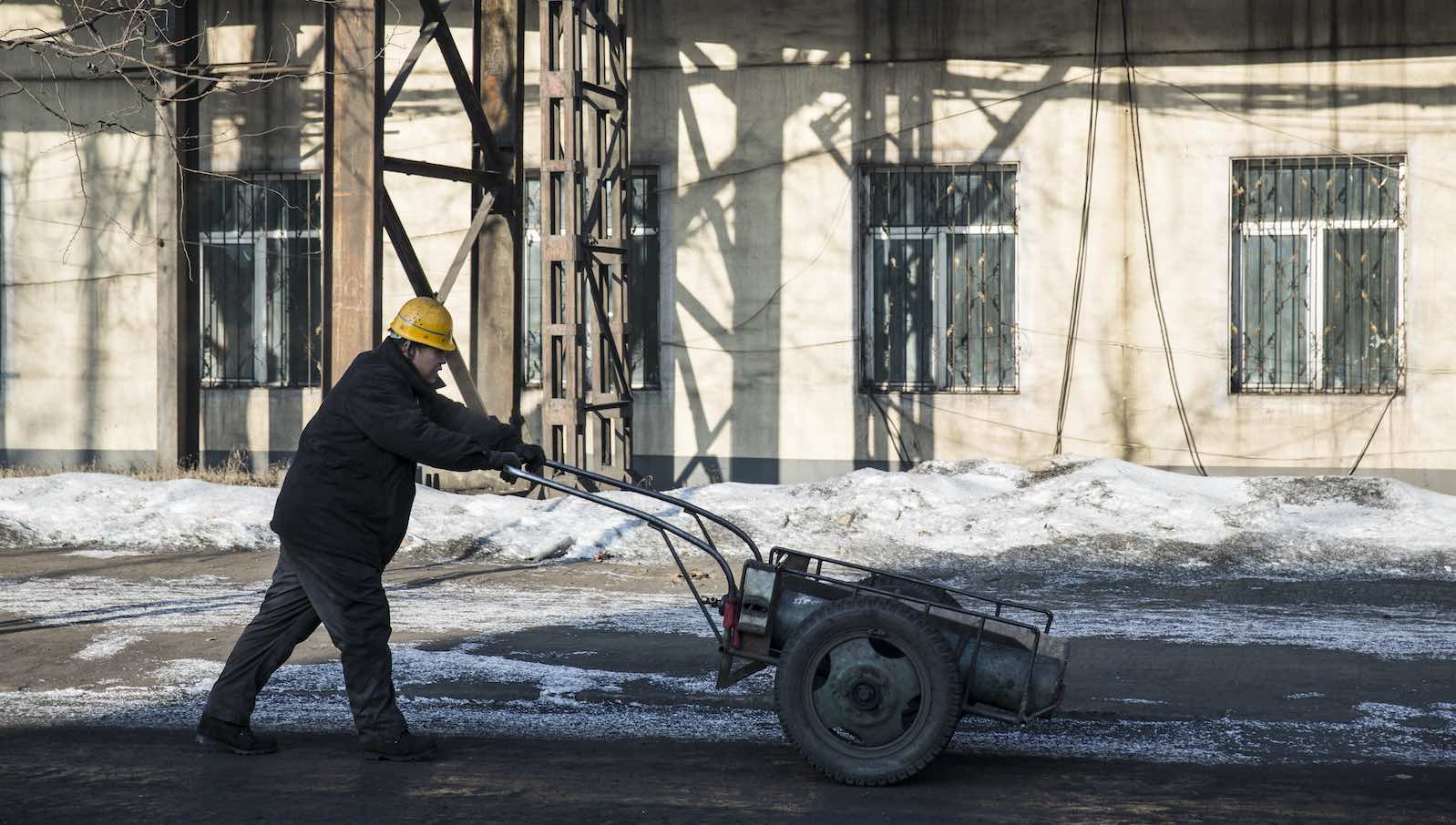
The Tonghua Iron and Steel Mill in Tonghua, Jilin province, China, in 2016, one of many state-run steel mills that struggled to modernise (Qilai Shen/In Pictures via Getty Images Images)Published 15 Apr 2021 10:00 0 Comments
Outside observers have all but given up hope that China will engage in meaningful state-owned enterprise (SOE) reform. There is a pervasive sense that rather than shrinking SOEs, China’s leaders are committed to increasing their prominence within the economy.
Kết luận 14 của Bộ chính trị (BCT) ban hành ngày 22/9/2021 đã nhắm vào một trong những vấn đề nóng bỏng của nền quản trị quốc gia hiện nay. Đó là bảo vệ cho những cán bộ năng động, sáng tạo, dám nghĩ, dám làm vì lợi ích chung, vì sự thịnh vượng của đất nước.
Trong thời gian qua, tâm lý đùn đẩy trách nhiệm, an phận thủ thường đang ngự trị ở trong không ít các cơ quan, tổ chức từ Trung ương đến địa phương. Chúng ta ai cũng thấy, tình trạng công việc bị đình trệ mà không ai dám quyết đáp. Cấp xã đùn đẩy công việc cho cấp huyện, cấp huyện-cho cấp tỉnh, cấp tỉnh- cho cấp Trung ương. Gần đây hàng ngàn tỷ đồng vốn ODA cho đầu tư công đã được phân bổ, nhưng lại bị một số bộ, ngành trả lại cho Chính phủ. Phải chăng đã không ai ở đó có đủ quyết đáp để thúc đẩy công việc và triển khai các dự án thành công? Điều đáng nói là trong lúc dịch Covid đang ảnh hưởng rất tiêu cực đến nền kinh tế. Quý ba năm 2021 GDP nước ta đã tăng trưởng âm trên 6%; hàng triệu lao động đang mất việc làm. Đầu tư công được coi là cứu cánh của nền kinh tế. Làm sao đầu tư công có thể trở thành cứu cánh được, nếu như các bộ, ngành lại trả lại các khoản đầu tư phát triển lớn như vậy?! Tiếp tục đọc “Bảo vệ cán bộ dám nghĩ, dám làm: Tư duy lập pháp”→
Nuôi hải sản trên vịnh Bái Tử Long (Quảng Ninh). Ảnh: QUANG NGỌC
Việt Nam có hơn 1 triệu km2 diện tích biển, song diện tích nuôi biển chỉ chiếm khoảng 20% trong tổng diện tích nuôi trồng thủy sản cả nước. Với việc ban hành Quyết định 1664/QÐ-TTg ngày 4/10/2021 phê duyệt Ðề án phát triển nuôi trồng thủy sản trên biển đến năm 2030, tầm nhìn đến năm 2045, nguồn lợi hải sản sẽ được nuôi dưỡng, khai thác bền vững.

 We believe in the free flow of information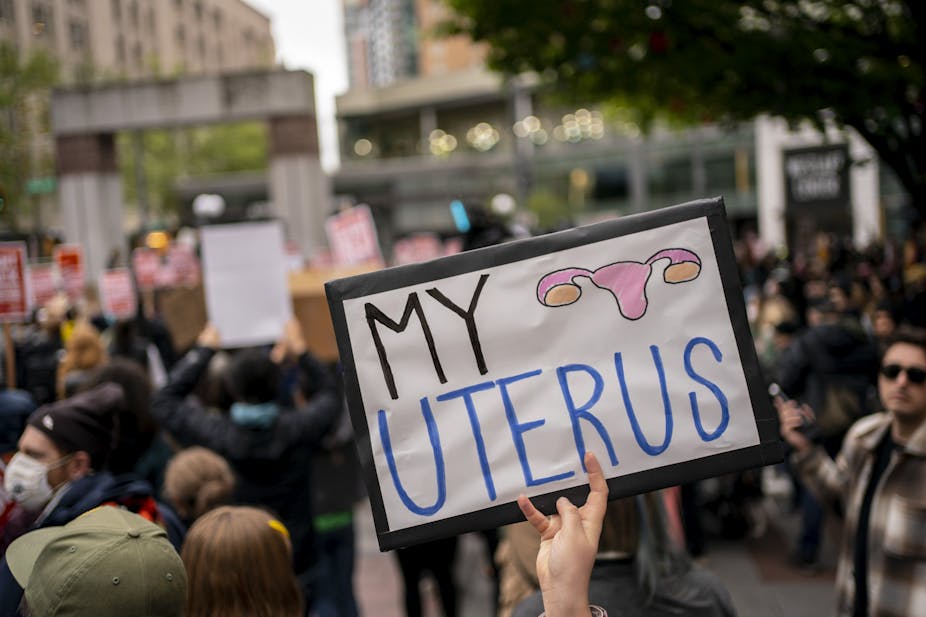

 The Tonghua Iron and Steel Mill in Tonghua, Jilin province, China, in 2016, one of many state-run steel mills that struggled to modernise (Qilai Shen/In Pictures via Getty Images Images)Published 15 Apr 2021 10:00

 CVD
CVD 