From Umbala to 360Live, Vietnam’s technology platforms have failed to compete with foreign rivals such as Tik Tok and Bigo Live.
When Facebook set foot in Vietnam, Vietnam’s social networks were already here, but then had to leave some months later. The same occurred when YouTube and Tik Tok came to Vietnam.
Da Nang has caught the attention of Japanese ICT firms thanks to its favorable investment environment.
Japan is the second largest foreign direct investor in Vietnam with total registered capital of $60 billion. Japanese investors have invested in 4,200 projects, including 700 ICT ones.
Da Nang City
Speaking at an online ceremony on promoting ICT investments from Japan held in late September, Deputy Minister of Information and Communications (MIC) Pham Anh Tuan said Vietnam is ready to receive new Japanese investments by technology firms which will come in the expected investment relocation wave. >
US federal prosecutors say the hackers worked to steal identities and video game technology, plant ransomware, and spy on Hong Kong activists. (Photo: AFP/Nicolas Asfouri)
WASHINGTON: The US Justice Department on Wednesday (Sep 16) announced charges against five Chinese nationals and two Malaysians who ran global hacking operations for at least six years to steal identities and video game technology, plant ransomware, and spy on Hong Kong activists.
What a difference two months can make. In May, Taiwan Semiconductor Manufacturing Co. (TSMC), the world’s largest chipmaker, lost the business of Huawei Technologies—its biggest Chinese customer and the source of 13% of its revenue—as a casualty of geopolitical jockeying between superpowers. But TSMC shareholders took the loss in stride. And by late July, after a stumble by rivalIntel, TSMC’s stock had risen almost 50% since May, making it one of the world’s 10 most valuable companies.
May’s low and July’s high have something in common: They both reflect TSMC’s distinctive role in the global tech economy. Although far from a household name, TSMC controls roughly half of the world’s contract chip manufacturing. Brand-name companies that design their own chips—most notably Apple—rely on TSMC’s world-class production so they don’t have to spend tens of billions to build their own factories. Crack open your iPhone and you’ll find a chip from TSMC. If you could crack open an American guided missile, you’d likely find one there too. Its prowess has elevated TSMC to No. 362 on the Global 500, with $35 billion in revenue. Today it gets 60% of sales from the U.S. and about 20% from mainland China.
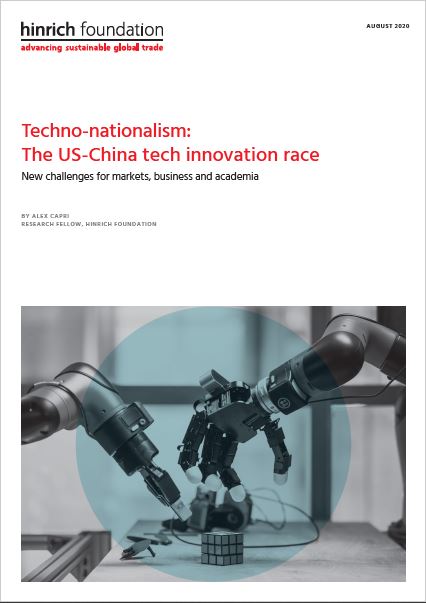
Techno-nationalism: The US-China tech innovation race New challenges for markets, business and academia BY ALEX CAPRI RESEARCH FELLOW, HINRICH FOUNDATION, 20202
The US-China tech innovation race is challenging the laissez-faire economic model. State interventionism, techno-nationalism and US tech funding initiatives are increasing. This paper outlines the implications for markets, academia, research organizations, and governments of the US-China competition to achieve innovation advantage.
A US-China tech innovation race has sparked a paradigm shift in global trade and commerce that is challenging the long-standing primacy of the world’s open trading system.
Current thinking is tilting towards increased state activism and interventionism, not only in the technology landscape but in many of the industries of the future.
Driving this change is techno-nationalism: a mercantilist-like behavior that links tech innovation and enterprise directly to the national security, economic prosperity and social stability of a nation.
In response to decades of Beijing’s innovation-mercantilism, the US has embarked on its own innovation offensive. Washington’s future tech funding initiatives could surpass the scale of the “moonshot” projects last seen during the space race with the former Soviet Union.
Download “Techno-nationalism: The US-China tech innovation race” by Alex Capri
The innovation race involves a broad range of emerging and foundational technologies that will define the industries of the future, including:
Artificial Intelligence (AI) and machine learning
Quantum computing and information systems
Robotics
Energy storage
Semiconductors
Next generation communication (including 5G and 6G)
Hypersonics.
Underlying themes: US techno-nationalism and innovation
As Washington and its allies ramp up techno-nationalist initiatives, core themes will drive the paradigm shift.
Public-private partnerships (PPP) – Technology alliances and government-funded initiatives will play an increasingly important role in advancing long-term innovation in the US, the EU and other traditionally open markets.
Avoiding the China innovation model – The US and EU innovation agendas will not seek to emulate China’s centralized, authoritarian system of techno-nationalism, but, rather, to turbo-charge markets and leverage entrepreneurial ecosystems, as well as academic and defense establishments.
Balancing tensions between MNEs, markets and techno-nationalism – Multinational enterprises (MNEs) will remain the primary drivers of R&D and innovation in free markets and play a vital role in PPP initiatives. They will be pulled into the US-China technology war in a variety of ways which will require a careful balancing of market forces, the interests of MNEs and the needs of state actors.
Multilateral technology alliances – US techno-nationalist policy will increasingly align with the security, economic and ideological objectives of the EU and other historic allies. This will produce more cooperation between the US and its partners.
Section I – The US-China innovation race: The role of the state
This section examines trends for public-spending in R&D and innovation and reviews a series of techno-nationalist funding initiatives from the US government.
It analyzes state activism in free markets and why governments are uniquely qualified to promote innovation and “blue-sky” technologies in ways that the private sector cannot.
Finally, Section I spotlights a historic example of techno-nationalism: SEMATECH and the US semiconductor public-private partnership, which led to a technological leapfrog by the US semiconductor industry, past Japan, in the 1990s.
Section II – MNEs, markets and governments: Navigating new complexities
Section II focuses on non-state actors and their increasingly complex role in public-private partnerships. It explores the tensions between open market forces, multinational companies, and techno-nationalist state activism.
To highlight these tensions, the report analyzes Facebook’s “Libra initiative and Beijing’s efforts to reduce dependency on the US dollar via the digital Yuan, and the challenges those create for MNEs. A US semiconductor sector case study illustrates how state activism can have detrimental effects on markets and backfire on the very parties it is looking to protect.
Section II concludes with an analysis of how open-sourced innovation could be a game-changer in the US-China technology war, particularly regarding future 5G wireless competition.
Section III – Academia and techno-nationalism: Open versus closed systems
Universities, research organizations and academia have become hot zones in the US-China innovation race. Human capital development is key to conducting leading-edge R&D and driving innovation.
Section III looks at how US export controls are affecting R&D activities at universities. It highlights the rules-based frameworks that universities must build to handle increasing government funding into academia.
The section showcases China’s Thousand Talents program and highlights its challenges for public-private partnerships involving academia. It also discusses why the US, in particular, should keep its human capital and innovation pipeline open as it pertains to foreign students, fundamental research programs and, ultimately, why an open system (despite China’s exploitation of it) is better than a closed one.
Finally, section III looks at how some inevitable strategic decoupling between Chinese and US entities will result in the ring-fencing of more “sensitive” R&D activities within the US defense establishment.
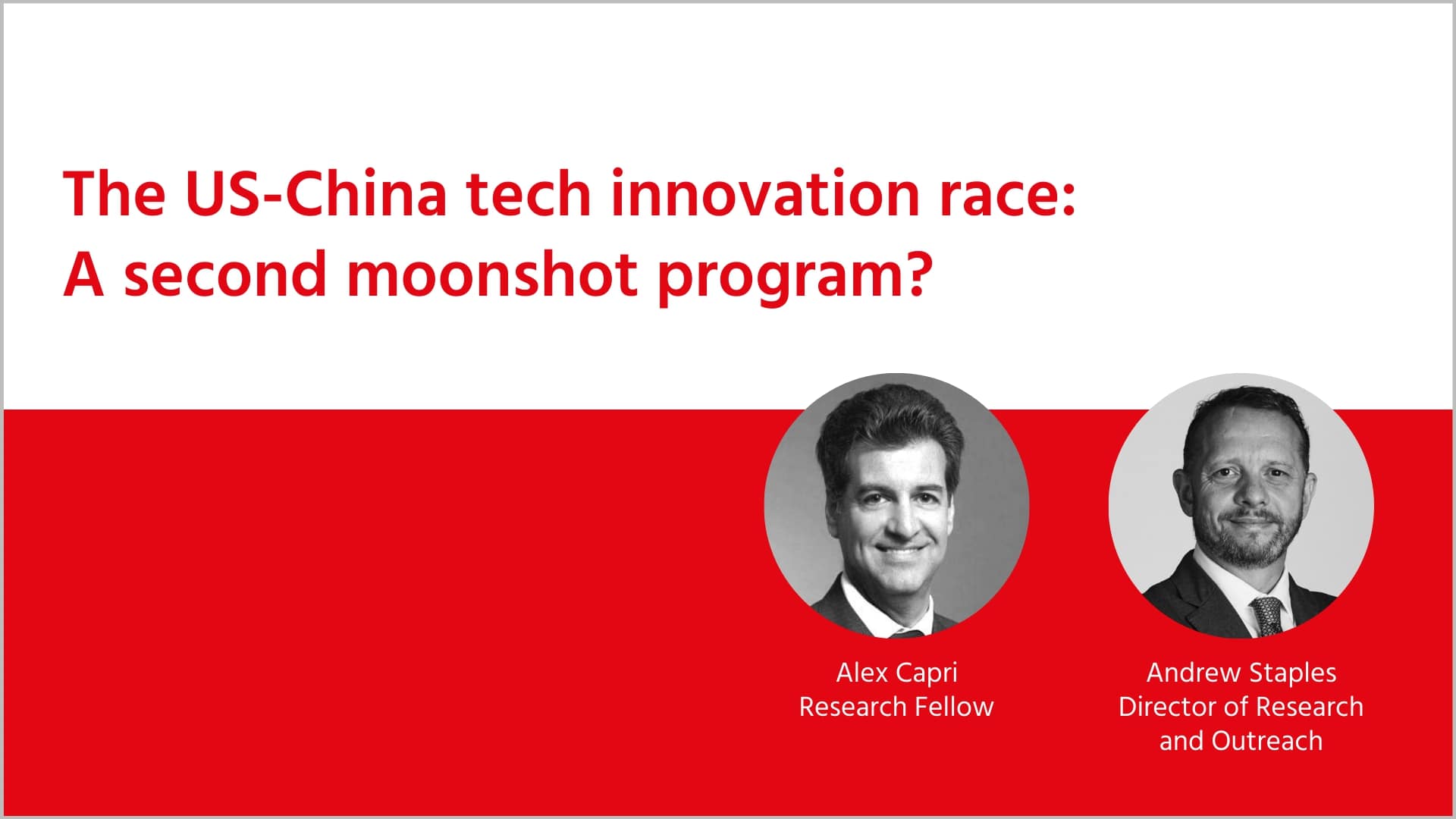
Listen to a summary of the report in this podcast featuring Alex Capri and Andrew Staples, Director of Research and Outreach.
Alex Capri is a Research Fellow at the Hinrich Foundation with over 20 years of experience in value chains, logistics and global trade management, both as an academic and a professional consultant.
The most possible favourable conditions would be created for the American Chamber of Commerce in Viet Nam (AmCham Viet Nam), especially its recently- established Da Nang Chapter, to ensure its effective operation in Da Nang, thereby facilitating its member businesses to seek investment opportunities in Da Nang’s priority aspects.
Municipal Party Committee Deputy Secretary Nguyen Van Quang (right) presenting a momento to AmCham Viet Nam Chairman Chad Ovel
SAN FRANCISCO (CN) — A 12-person jury found a trail of digital bread crumbs led to Yevgeniy Nikulin as the hacker responsible for three data breaches in 2012 at LinkedIn, Dropbox and Formspring and the theft of more than 100 million user credentials.
The trail began with Nick Berry, a LinkedIn engineer whose personal computer was hacked in March 2012. By installing a malicious software program that allowed him to gain access to Berry’s Virtual Private Network— the means by which Berry could log to log in to work remotely— the hacker infiltrated the company’s internal database of user credentials. Tiếp tục đọc “Jury Finds Russian National Guilty of High-Profile Hacks”→
The Supreme Court has agreed to hear Facebook’s defense after an appeals court determined it violated anti-robocalling rules. The court will examine whether Facebook’s automated alert texts count as an “automatic telephone dialing system,” establishing a clearer definition of illegal phone spam.
The new regulations of the Ministry of Information and Communications (MIC) may affect the policies and assets of private businesses and foreign-invested enterprises in Vietnam.
The MIC is reviewing a proposal to add the requirement that internal websites and specialised websites posting aggregated information have to obtain licenses of establishing aggregated information websites following the Article 23 4.b of the draft amendment of Decree No.72/2013/ND-CP outlining the management, provision, and the use of internet service and online information. Tiếp tục đọc “Internal websites and specialised websites of foreign-invested enterprises in Vietnam have to obtain licenses”→
(Công lý) – Phán quyết của HĐTP đưa ra tại phiên giám đốc thẩm vụ án Hồ Duy Hải vừa qua được đồng đảo người dân đồng tình, ủng hộ. Bên cạnh đó, còn một số ý kiến đã có những bình luận thiếu thiện chí, không đúng với bản chất vụ việc, gây hoang mang dư luận.
Xung quanh vấn đề này, PV Báo điện tử Công lý đã có cuộc trao đổi với Đại tá Nguyễn Minh Tâm, nguyên Giám đốc Trung tâm Thông tin Khoa học và Tư liệu giáo khoa, Học viện chính trị CAND- người đã nghiên cứu rất sâu vụ án ngay từ những ngày đầu xảy ra.
A student in Vietnam uses Zoom for online learning. Photo by VnExpress.
The Department of Information Security has warned people not to use Zoom Cloud Meetings because of its security vulnerabilities.
The video conferencing app has been making headlines recently for security breaches, leakages of personal information and unauthorized entry for people to meetings and online lessons, now dubbed zoombombing.
The Vietnam Cyber Emergency Rescue Center (VNCERT) and the Department of Information Security under the Ministry of Information and Communication said the leaked contents from Zoom include emails, passwords and URLs of meetings with chat room passwords attached.
The video chart above shows the stunning growth in both the total number of internet users between 1900 and 2019 and which countries had the largest total internet population.
In 1990, things looked rather different from today. Here are the top 10 countries and the number of users per country:









/cdn.vox-cdn.com/uploads/chorus_image/image/67042437/akrales_180614_1777_0110.0.jpg)