Đầu tư kỹ thuật số – thương vụ hay canh bạc – 4 bài

***

Đầu tư kỹ thuật số – thương vụ hay canh bạc – Bài 1: Thế giới Coin

SGGP Thứ Hai, 18/1/2021 08:39

LTS: Trong sự phát triển của công nghệ số và mạng xã hội, đầu tư tài chính online, tiền kỹ thuật số… trở thành xu hướng thu hút nhiều người. Nhưng cũng chính từ đây, không ít biến tướng, chiêu trò mà lằn ranh giữa thương vụ đầu tư hay một canh bạc rất đỗi mong manh.

Không phải đợi đến khi vượt mốc 30.000 USD đầu tháng 1-2021 thì đồng Bitcoin (BTC) mới được chú ý, mà những năm gần đây, BTC hay các loại tiền kỹ thuật số khác đang trở thành mối quan tâm của các nhà đầu tư. 

Đầu tư kỹ thuật số - thương vụ hay canh bạc - Bài 1: Thế giới Coin ảnh 1
Giao diện điện tử một sàn giao dịch tiền kỹ thuật số đang thu hút nhiều người hiện nay

Tiếp tục đọc “Đầu tư kỹ thuật số – thương vụ hay canh bạc – 4 bài”

Tiền ảo, hệ lụy thật – 5 bài

***

Tiền ảo, hệ lụy thật: Sức hút của tiền ảo với người đầu tư

Nhiều chuyên gia cảnh báo tiền kỹ thuật số vẫn khó có thể được sử dụng rộng rãi như một công cụ thanh toán bởi mức độ biến động giá của chúng quá lớn và rất dễ lợi dụng biến tướng.

Quốc Huy (TTXVN/Vietnam+) 15/06/2021 08:23

Tien ao, he luy that: Suc hut cua tien ao voi nguoi dau tu hinh anh 1
Ảnh minh họa. (Nguồn: en.cryptonomist.ch)

Sự phát triển nhanh chóng của công nghệ thông tin và internet đã kéo theo sự xuất hiện của các loại tài sản mới, hình thức giao dịch mới trong lĩnh vực tài chính-tiền tệ như tiền ảo, tiền kỹ thuật số hay tiền điện tử…

Tuy nhiên, sự phát triển quá nhanh của các hình thức này cũng tạo ra những khoảng trống về mặt pháp lý cần có sự điều chỉnh để giảm bớt hệ lụy cho các nhà đầu tư cũng như nền kinh tế.

Xoay quanh chủ đề này, phóng viên TTXVN đã thực hiện chùm 5 bài “Tiền ảo, hệ lụy thật” nhằm cung cấp cho độc giả cái nhìn rõ hơn về hình thức giao dịch mới này, cũng như cảnh báo về các hệ lụy có thể xảy ra, từ đó góp tiếng nói để hoàn thiện khung khổ pháp lý để quản lý loại tiền này.

Trong khuôn khổ của chùm bài, các bài viết đề cập đến các loại tiền ảo và một số biến tướng của tiền kỹ thuật số với khái niệm sử dụng chung là tiền ảo.

Tiếp tục đọc “Tiền ảo, hệ lụy thật – 5 bài”

Vietnam c.bank to research and pilot use of cryptocurrency

Ngoc Maihanoitime

Government agencies are working on a legal framework for the management of cryptocurrencies and assets.

The State Bank of Vietnam (SBV), the country’s central bank, will carry out research and later pilot the use of cryptocurrency based on blockchain technology during the 2021-2023 period.

 Vietnam does not see Bitcoin and other cryptocurrencies as legal payment methods. Source: File photo

The move was revealed in Prime Minister’s decision No.942 on the strategy for e-government development towards the digital government in the 2021-2025 period, in which the development and pilot use of cryptocurrency with blockchain technology is considered among key tasks to help Vietnam master core technologies.

Tiếp tục đọc “Vietnam c.bank to research and pilot use of cryptocurrency”

Lethal Autonomous Weapons Exist; They Must Be Banned

spectrum.ieee.org

It may not be too late to put the evil “Slaughterbots” genie back in the bottle, if the world acts now

By Stuart Russell, Anthony Aguirre, Emilia Javorsky and Max Tegmark

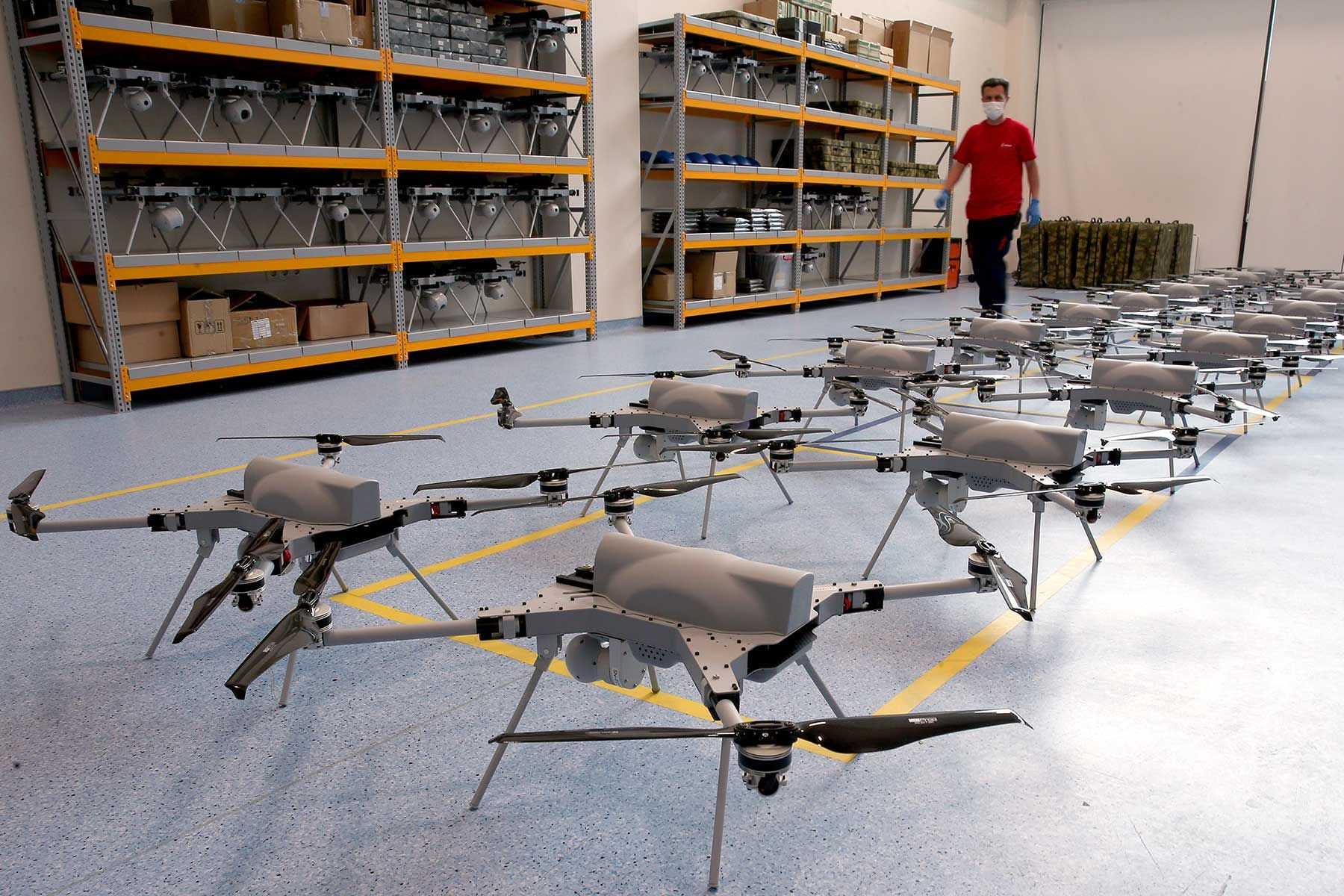
Officials of Turkish defense industry company "STM", work at Autonomous Rotary Wing Attack Drone UAV Kargu production to meet the needs of the security forces at the campus of OSTIM Technopark in Ankara, Turkey on June 11, 2020.
MEHMET KAMAN/ANADOLU AGENCY/GETTY IMAGES

This is a guest post. The views expressed here are solely those of the author and do not represent positions of IEEE Spectrum or the IEEE.

A chilling future that some had said might not arrive for many years to come is, in fact, already here. According to a recent UN report, a drone airstrike in Libya from the spring of 2020—made against Libyan National Army forces by Turkish-made STM Kargu-2 drones on behalf of Libya’s Government of National Accord—was conducted by weapons systems with no known humans “in the loop.” 

Tiếp tục đọc “Lethal Autonomous Weapons Exist; They Must Be Banned”

Big Tech’s attention economy can be reformed. Here’s how.

The business model is doing irreparable harm to society. But there is an alternative, and we don’t need to destroy the tech giants to get there.

by Tristan Harrisarchive page

technologyreview – January 10, 2021attention economy illoMS TECH | GETTY

This week a violent mob mounted the biggest attack on the Capitol, the seat of American democracy, in more than 200 years, driven by the false belief that the presidential election had been stolen. The chief author of that claim was President Donald Trump, but the mob’s readiness to believe it was in large part a product of the attention economy that modern technology has created.

News feeds on Facebook or Twitter operate on a business model of commodifying the attention of billions of people per day, sorting tweets, posts, and groups to determine which get the most engagement (clicks, views, and shares)—what gets the strongest emotional reactions. These commodifying attention platforms have warped the collective psyche. They have led to narrower and crazier views of the world.

Tiếp tục đọc “Big Tech’s attention economy can be reformed. Here’s how.”

Giáo dục dành cho học sinh dân tộc thiểu số: thách thức và cơ hội trong đại dịch COVID-19

Unicef.org – 11 Tháng 5 2020 – Rana Flowers, Trưởng Đại diện UNICEF tại Việt Nam

Khi Việt Nam sắp dần mở cửa lại trường học, tôi rất muốn tìm hiểu về công tác chuẩn bị của các nhà trường để đảm bảo an toàn cũng như sẵn sàng chào đón học sinh quay lại trường. Chặng đường lái xe lên huyện Sapa cảnh sắc thật hùng vĩ. Từ mọi góc độ, vẻ đẹp của đất nước Việt Nam hiện lên thật rực rỡ.

Khi Việt Nam sắp dần mở cửa lại trường học, tôi rất muốn tìm hiểu về công tác chuẩn bị của các nhà trường để đảm bảo an toàn cũng như sẵn sàng chào đón học sinh quay lại trường.
UNICEF Việt Nam\Trương Việt Hùng

  • Ngôn ngữ tài liệu bằng: English, Tiếng Việt

Chúng tôi dừng chân tại ngôi trường nhỏ nằm ở chân ngọn núi Phan-Xi-Păng. Cổng trường rộng mở chào đón chúng tôi, nhưng lần này thiếu vắng nụ cười, khuôn mặt rạng rỡ và tiếng hò reo của học sinh. Tôi muốn đến thăm Lào Cai vì ngành giáo dục và các thầy cô giáo nơi đây luôn mong mỏi đổi mới sáng tạo, thúc đẩy hơn nữa các tiến bộ trong công tác dạy và học trong nhà trường.
Tiếp tục đọc “Giáo dục dành cho học sinh dân tộc thiểu số: thách thức và cơ hội trong đại dịch COVID-19”

Vietnam takes drastic measures to clean up toxic content on social media: official

24/03/2021    15:28 GMT+7 vietnamnet

Popular Vietnamese TikTok user Tho Nguyen recently caused outrage online by posting videos about Kuman Thong dolls online, asking the dolls to bless her studies after “receiving many requests from children”.

Vietnam takes drastic measures to clean up toxic content on social media: official
Deputy Director of the Authority of Broadcasting and Electronic Information Le Quang Tu Do. — Photo vietnamnet.vn

The toxic content shocked the parents of young viewers. She was fined VND7.5 million (US$326) for her “superstitious” posts. The incident has thrown online content moderation into the spotlight.

In a recent interview with Liberated Sai Gon newspaper, Deputy Director of the Authority of Broadcasting and Electronic Information Le Quang Tu Do talks about measures to curb harmful content online.  

Tiếp tục đọc “Vietnam takes drastic measures to clean up toxic content on social media: official”

VNExpress: 20 năm trước

Thứ sáu, 26/2/2021, 00:00 (GMT+7) VNExpress

“Ngày thành lập ư, có thật quan trọng không?”, tôi đã nghĩ thế… Nhưng hôm nay, chợt nhớ về 20 năm trước, kỷ niệm lần lượt hiện về.

Lần đầu tiên tôi “nhìn thấy” Internet là vào năm 1998, nửa năm sau khi Việt Nam chính thức kết nối. Ấn tượng đầu tiên là hầu như không có gì bằng tiếng Việt để đọc. Đang làm biên tập viên báo Lao Động, tôi nhận ra đây sẽ là phương tiện phát hành mới, mảnh đất chưa khai phá cho báo chí. “Mình có thể là người đầu tiên làm điều đó?”, từ lâu tôi mong ước làm một tờ báo thực sự hữu ích cho người dùng.

Tiếp tục đọc “VNExpress: 20 năm trước”

The Digital Indo-Pacific: Regional Connectivity and Resilience


Read and download here  >>

Observer Research Foundation (ORF) is an independent think tank based in Delhi, India. The foundation has three centres in Mumbai, Chennai and Kolkata. ORF provides potentially viable inputs for policy and decision-makers in the Indian Government and to the political and business communities of India. ORF started out with an objective of dealing with internal issues of the economy in the wake of the 1990s reforms. However, today its mandate extends to security and strategy, governance, environment, energy and resources, economy and growth.

Origins

ORF was founded in part by the Dhirubhai Ambani family; it claims to operate independently, though.[1] According to some reports, until 2009, 95% of the foundation’s budget was provided by Reliance Industries, however, it is now estimated to be around 65% as the foundation diversified its source of finance to government, foreign foundations, and others.[2]

(Source: wikipedia)

Bans on Parler and Trump Show Big Tech’s Power Over Web Conversation

bloomberg.com

As Facebook Inc. and Twitter Inc. banished users and groups supporting the violent mobs at the U.S. Capitol last week — including President Donald Trump himself — downloads surged for a less restrictive social media app called Parler. But in an effort to prevent further riot organizing, Google Inc. and Apple Inc. booted Parler from their app stores, and Amazon.com Inc. shut off its web services.

“We will not cave to pressure from anti-competitive actors!” John Matze, Parler Inc.’s chief executive officer, said on his site Friday. “We WON’T cave to politically motivated companies and those authoritarians who hate free speech!”

In reality, Matze doesn’t have much choice. His free-speech-centric network, where some extremists turned to rally insurgents and organize future uprisings, was deemed an “ongoing and urgent public safety threat” by Google. Apple quickly rejected as insufficient a Parler plan to moderate its content. Amazon employees asked that the web giant “deny Parler services until it removes posts inciting violence, including at the Presidential inauguration.” Amazon plans to shut down the service at midnight Sunday, according to Matze.
Tiếp tục đọc “Bans on Parler and Trump Show Big Tech’s Power Over Web Conversation”

Big Tech tiếp tục bị phán xét

HOA KIM 5/1/2021 10:05 GMT+7

TTCTSự kiên nhẫn dành cho nhóm Big Tech, gồm năm công ty công nghệ Mỹ Amazon, Apple, Google, Facebook và Microsoft, rốt cuộc đã cạn.

Liên tiếp ở châu Âu và cả trên sân nhà, một loạt đơn kiện của chính quyền nhắm vào những gã khổng lồ công nghệ trong năm 2020 cho thấy những tượng đài này không hề “bất khả xâm phạm” như ta tưởng. Tiếp tục đọc “Big Tech tiếp tục bị phán xét”

Digital trade in the Asia-Pacific

HF-logo-RGB-hz - top cropped
Welcome to our final newsletter of 2020. We would like to take this opportunity to thank you for your support and interest in our work over the year. We will return in early January and in the meantime wish you an enjoyable festive break and every success in 2021. 
New white paper: Digital trade in the Asia-Pacific
Deborah ElmsDeborah Elms
22 December 2020
Digital trade in Asia-Pacific
As we move into 2021, what are the key issues facing digital trade in Asia? The Covid-19 pandemic has disrupted global trade and upended many longstanding business models. Firms are rapidly shifting to develop or expand digital capabilities to manage highly altered supply and demand pressures. Despite the growing importance of digital trade, the ability of governments to tackle a range of issues of relevance to managing the online environment still lags behind the speed of innovation for firms. Effective and efficient regulatory policies can support continuing economic growth in the digital economy. Given the overwhelming importance of small firms to every country in Asia, failure to create supportive policies will impede the region’s attempt to advance sustainable and inclusive development. This new paper from the Hinrich Foundation – the first in a series of six reports on digital trade in the Asia-Pacific authored by Dr Deborah Elms, Executive Director at the Asian Trade Centre – identifies eight issues that governments and firms across the region will need to tackle to reap the full benefits of the digital opportunity.
DOWNLOAD REPORT
Share this paper on TwitterFacebook and LinkedIn.
HEAR FROM THE AUTHOR
Podcast EDM visual
In this short podcast our Director of Research, Dr Andrew Staples, invites Dr Deborah Elms to provide an overview of paper and to highlight the importance of the RCEP agreement for digital trade in Asia.
LISTEN TO PODCAST
Share this podcast on TwitterFacebook and LinkedIn.
INTERVIEW WITH RESEARCH FELLOW Hinrich Foundation Research Fellow, Alex Capri, discusses his latest paper with Dr Staples. Released last week, Techno-nationalism and corporate governance examines how the US-China tech cold war has politicized the business environment for multinationals and the implications for corporate governance. Techno-nationalism, he observes, now requires firms to evaluate or restructure their cross-border operations to reduce risks.
Techno-nationalism and corporate governance
IN CASE YOU MISSED IT While 2020 proved to be challenging for all of us, it was also a productive year for our research fellows. Please find below a selection of our most read articles and papers on the key issues impacting global trade in 2020 including the coronavirus pandemic, geopolitical tensions and the US-China trade war, the emergence of “techno-nationalism,” the US presidential election and the signing of the Regional Comprehensive Economic Partnership (RCEP). 
STEPHEN OLSON-b&w
Stephen OlsonKeep RCEP in perspectiveThree trade issues to watch under a Biden Presidency
Alex capri b&w photo-circle-1
Alex CapriTechno-nationalism and corporate governanceTechno-nationalism and diplomacyTechno-nationalism and the US-China tech innovation raceStrategic US-China decoupling in the tech sector
alan_dupont_b&w circular
Alan Dupont New Cold War: De-risking US-China conflict
Stewart-Paterson-Headshot-2
Stewart Paterson Four trade trends post COVID-19 and how they will affect growth
The Hinrich Foundation is committed to advancing sustainable global trade. We welcome your support to share our commentaries and analyses. 

Please encourage others to subscribe to our newsletter and follow Hinrich Foundation on TwitterLinkedIn and Facebook. Contact us for any inquiries. Visit hinrichfoundation.com for more articles, reports and analysis.

Pound for Pound, Taiwan Is the Most Important Place in the World

Its excellence in the computer chip market puts it at the center of the battle for global technological supremacy.

Ruchir Sharma

By Ruchir Sharma

Mr. Sharma is the chief global strategist at Morgan Stanley Investment Management and the author of “The Ten Rules of Successful Nations.”

阅读简体中文版閱讀繁體中文版

A Taiwan Semiconductor Manufacturing Company office in Tainan, Taiwan.
A Taiwan Semiconductor Manufacturing Company office in Tainan, Taiwan.Credit…An Rong Xu for The New York Times

The Cold War between the United States and the Soviet Union perpetually threatened to spark conflict in nations all over the world, including battles over the control of a vast array of natural and industrial resources. The new Cold War, between the United States and China, is increasingly focused on access to just one industry in one place: computer chips made in Taiwan.

Tiếp tục đọc “Pound for Pound, Taiwan Is the Most Important Place in the World”

Facebook and YouTube accused of complicity in Vietnam repression

The Guardian

Amnesty report accuses sites of openly signalling they will bow to authoritarian regimes

A person using Facebook at a cafe in Hanoi, Vietnam,

A person using Facebook at a cafe in Hanoi, Vietnam, last month. Photograph: Kham/ReutersRebecca Ratcliffe South-east Asia correspondentTue 1 Dec 2020 00.01 GMT

23

Facebook and YouTube are complicit in “censorship and repression on an industrial scale” in Vietnam, according to a report by Amnesty International that accuses the platforms of openly signalling that they are willing to bow to the wishes of authoritarian regimes.

Tiếp tục đọc “Facebook and YouTube accused of complicity in Vietnam repression”