84,000 pregnant women at risk in Gaza with aid stalled at Rafah crossing, World Health Organization says

From CNN’s Kareem Khadder

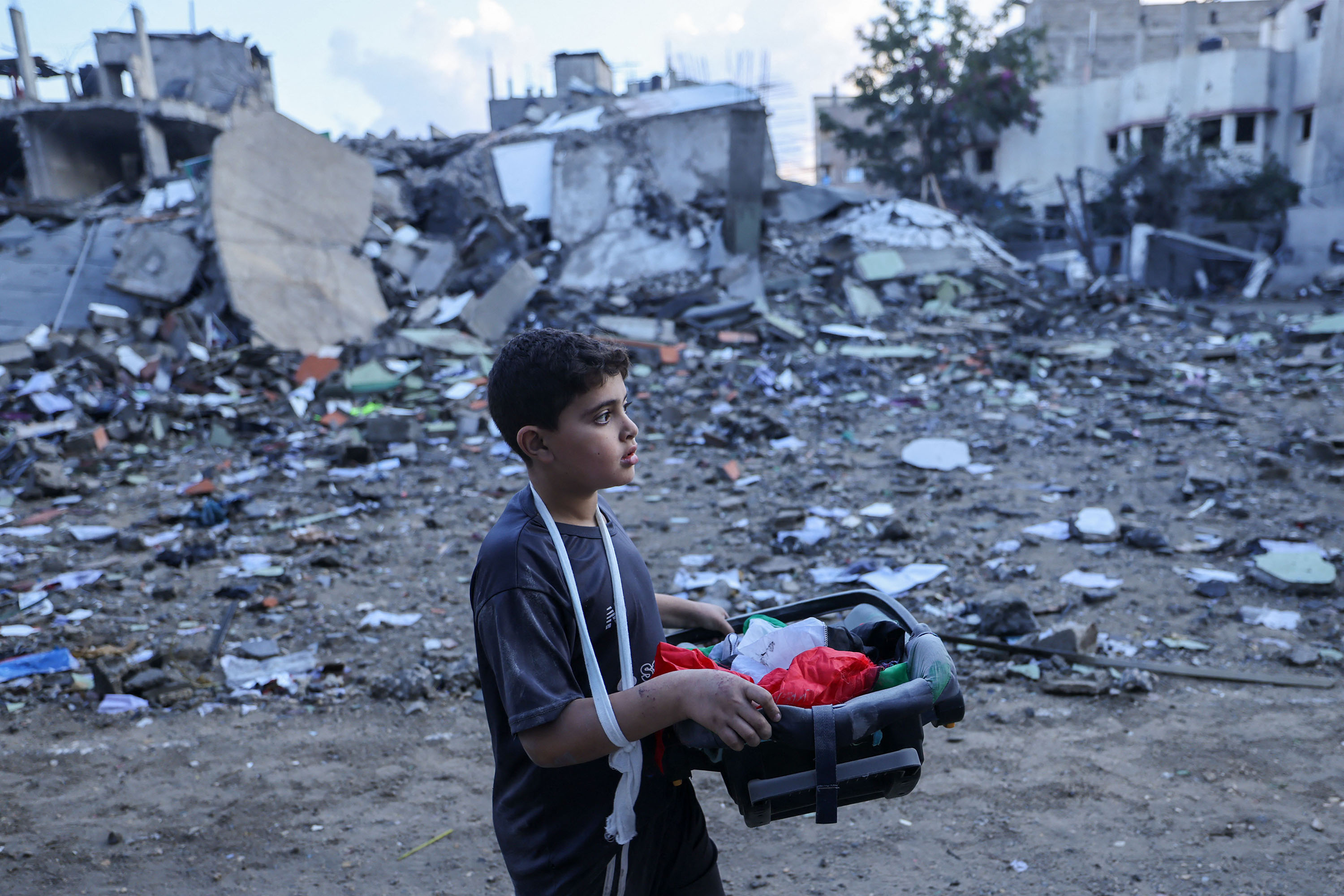
A boy carries items salvaged from the rubble of buildings destroyed during Israeli airstrikes in Gaza's Rafah refugee camp, on October 16.
A boy carries items salvaged from the rubble of buildings destroyed during Israeli airstrikes in Gaza’s Rafah refugee camp, on October 16. Mohammed Abed/AFP/Getty Images

Gaza needs international assistance urgently as it faces an “unparalleled humanitarian crisis,” according to the head of the Hamas-controlled government media office.

“The magnitude of casualties, injuries, the destruction of residential units, infrastructure, public facilities, and economic losses has given rise to an unparalleled humanitarian crisis in Gaza, unlike anything seen in previous aggressions,” Salama Marouf said in a statement Tuesday.

As the humanitarian situation worsens, “there is a noticeable decline in [the] international response,” Salama said.

Decisive action was “urgently required” from the international community to halt what he called a campaign of “ethnic cleansing perpetrated by the occupation against the Palestinian people.”  

Earlier on Tuesday, Margaret Harris, spokesperson for the World Health Organization, told CNN’s John Vause that the humanitarian corridor into Gaza remains unsafe due to Israeli bombing, with more than 44 Gaza hospitals targeted and 84,000 pregnant women in need of assistance. 

Israel has vowed to wipe out Hamas, the Islamist group that controls Gaza, in response to the October 7 terrorist attacks that killed 1,400 people. It has laid siege to the enclave and told more than 1 million people to move to southern Gaza from the north.

U.S. students are clashing over the Israel-Hamas war. What can colleges do?

npr.org October 14, 20235:00 AM ETLISTEN· 4:53

AYESHA RASCOE, HOST:

Tensions over Israel’s war with Hamas have extended all the way to college campuses in the U.S. There have been protests and strong statements and, at times, physical and verbal clashes. What are colleges supposed to do in these moments? To answer that question and tell us about what has been happening, we turn to NPR’s Elissa Nadworny. Hi, Elissa.

ELISSA NADWORNY, BYLINE: Hi, Ayesha.

RASCOE: So walk us through the week. How has this played out at colleges?

NADWORNY: Let’s first go to Harvard. So there, last weekend, a coalition of student groups issued a statement saying they, quote, “hold the Israeli regime entirely responsible for the unfolding violence.” Now, this statement was met with a lot of anger, pushback and pressure. And since then, some of the student groups have apologized or retracted their endorsements. Across the country, there have been vigils and protests on campus. At Indiana University, the student newspaper reported clashes between pro-Israeli and pro-Palestinian student groups. And even before the Hamas attack, the Israeli-Palestinian conflict has been one of the most contentious issues on campus.

RASCOE: And how are the administrations of these universities reacting to all of this turmoil?

NADWORNY: We’ve seen quite a range of responses. The University of Florida president, Ben Sasse, a former Republican senator, came out and said, quote, “we’ll protect our Jewish students from violence.” We’ve also seen other schools, like Vanderbilt and University of Virginia, issue multiple statements, you know? They just can’t quite get it right. I talked with Eboo Patel about this. He’s the president of Interfaith America, which works with campuses around conflict issues.

EBOO PATEL: I got a phone call from a college president this morning telling me that his campus would be hosting a peace vigil, and he was concerned about a disturbance at that peace vigil possibly approaching violence.

NADWORNY: Patel told that campus leader and others, keep your message super clear and simple. Say, look, people are hurting. We care and support our students, and we will be a community of cooperation.

PATEL: We’re not going to minimize the conflict. We are simply going to say that we are not going to allow the conflict to prevent us from cooperating on other things. That’s the genius of American college campuses.

RASCOE: What about schools that have remained quiet, which – I mean, that can feel like a statement in and of itself?

NADWORNY: That’s right. Yeah. You know, surprisingly, some free speech advocates actually like this approach, though they acknowledge it will come with pushback. Here’s Alex Morey, she’s the director of campus rights advocacy at FIRE, the Foundation for Individual Rights and Expression.

ALEX MOREY: The commentary is so divisive, and there’s really no right answer for a university. So what is so much better, but unpopular at the moment, for universities to do is to remove themselves from the debate entirely and instead say, we are not going to put our thumb on the scale as the university, one way or another, because that will chill the environment for free expression for scholarly inquiry.

RASCOE: Elissa, I’m guessing that many students right now are feeling like they are in the middle of all of this.

NADWORNY: Yeah. Many students are frustrated both about what student groups are saying and, in some cases, what universities aren’t saying. Here’s Caroline Yaffa. She’s a senior at the University of North Carolina in Chapel Hill.

CAROLINE YAFFA: I think it’s the university’s obligation to weigh in on this.

NADWORNY: Yaffa is Jewish, and she told NPR’s Rachel Treisman that she has had moments this week where she doesn’t feel safe on campus. She even changed her name on her Uber account from Yaffa to Smith.

RASCOE: And what about students who have organized pro-Palestine protests or are part of student groups that support Palestine?

YAFFA: Well, the National Organization of Students for Justice in Palestine told NPR that they expect universities to defend and protect a student’s right to speak, assemble and protest. Some students who are part of local chapters didn’t want to talk on the record for fear of retaliation. But I talked with Radhika Sainath, a senior staff attorney at Palestine Legal, an advocacy group that focuses on academic freedom.

RADHIKA SAINATH: So many people have been coming to us as well who just have basic questions of saying, you know, can I say that I support Palestinian rights? Can I say that I stand against Israeli military occupation or for Palestinian freedom? Am I allowed to do this at my university?

NADWORNY: She said she’s heard from professors that say their social media posts are being questioned. Students say they’re facing harassment or doxing, where their names and addresses get released online. And Sainath tells them, look, the First Amendment right in the United States protects speech, even if it’s controversial.

RASCOE: That’s Elissa Nadworny from NPR’s education team. Thank you so much for joining us.

NADWORNY: Thanks, Ayesha.

Nelson Mandela Speaking on Palestine [Extracts]

The above video is a collection of extracts from a 1990 town hall meeting, held in New York City and chaired by Ted Koppel of ABC Networks. The meeting formed part Nelson Mandela’s first visit to the USA immediately following his release from prison.

A significant part of the town hall meeting focused on Nelson Mandela’s advocating (on behalf of the African National Congress and the larger South African liberation struggle) for sanctions to be applied against Apartheid South Africa, his and the ANC’s support for the Palestine Liberation Organisation (PLO) as well as his close friendship with Yasser Arafat (of Palestine) and Fidel Castro (of Cuba).

The town hall meeting took place in 1990, long before the world had embraced Nelson Mandela as a “giant of justice”. However, even then, when it may have been unfashionable and unpopular to support the Palestinians against, what Mandela termed, Israeli “colonialism”, Mandela stood firm and resolute on his principles and the policies of the ANC – Mandela was, after all, conveying the long-standing positions held by the ANC and the larger South African liberation movement.

Nelson Mandela supported the Palestinian struggle when it was unfashionable and unpopular, he was a true leader. Hamba Kahle Tata…

Israelis Dread This Nightmare Will Never End

time.com BY EETTA PRINCE-GIBSON OCTOBER 12, 2023 2:00 AM EDT

Eetta Prince-Gibson is the Israel editor for Moment magazine, the former editor in chief of the Jerusalem Report, and a regular contributor to Haaretz, +61J, and other international publications.

Our government has abandoned us, too. The Prime Minister has not yet visited any of the victims, and few of his 33-seat government have, either. The Prime Minister has gone on television several times to promise revenge and a putative victory, but has not offered words of comfort or hope. The logistical relief that democratic caring governments are supposed to provide is being provided by civil society.

I am filled with dread because none of the leaders, on either side, have any long-term answers other than hatred and rejection. None of our supposed leaders are capable of suggesting a plan that will allow both our peoples to be safe from evil, safe in our homes, and safe to live our lives as individuals and as people.”

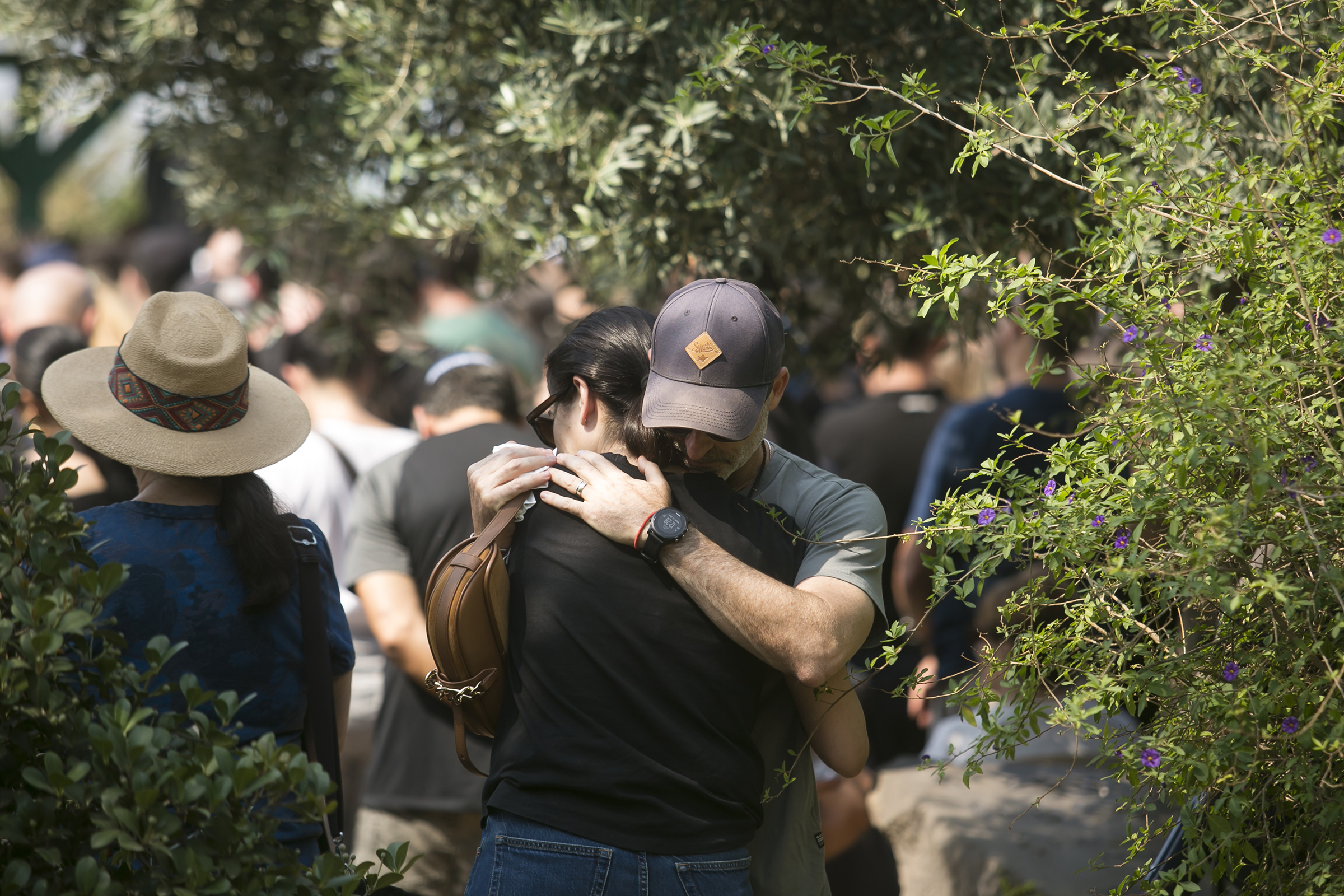
Family and friends of May Naim, 24, who was killed by Hamas, react during her funeral in Gan Haim, Israel, on Oct. 11, 2023.
Family and friends of May Naim, 24, who was killed by Hamas, react during her funeral in Gan Haim, Israel, on Oct. 11, 2023.Amir Levy—Getty Images

Blessed rains have washed away the interminable heat and dust of summer. In Jerusalem, where I live, the air is wonderfully fresh and the mornings are brisk and chilly. But the streets are unnervingly quiet. Schools have been closed all week. Most cafes and stores have been closed, too, since no one feels much like sipping artisan espresso or shopping, and many of the regulars have been called up for reserve duty.

Tiếp tục đọc “Israelis Dread This Nightmare Will Never End”

Why Egypt isn’t allowing Gaza refugees despite Israel evacuation order

As Israel pummels besieged Gaza, Egypt resists opening up to refugees

washingtonpost.com

CAIRO — With more than 1,500 people dead in Gaza and hundreds of thousands displaced by the Israeli military’s relentless bombardment of the Gaza Strip, global attention has focused on the Rafah border crossing with Egypt, the only viable way out of the densely populated enclave.

But Cairo, wary of political fallout and security risks, is determined to prevent an exodus of refugees to Egypt — warning it could be a death knell for the Palestinian dream of statehood.

The crossing point at Gaza’s southern edge has been effectively closed since Tuesday after Israeli airstrikes damaged infrastructure in the area.

Tiếp tục đọc “Why Egypt isn’t allowing Gaza refugees despite Israel evacuation order”

History of the Question of Palestine

United Nation

Historical Timeline

1917 – 1947: British mandate

Palestine was among former Ottoman territories placed under UK administration by the League of Nations in 1922. All of these territories eventually became fully independent States, except Palestine, where in addition to “the rendering of administrative assistance and advice” the British Mandate incorporated the “Balfour Declaration” of 1917, expressing support for “the establishment in Palestine of a national home for the Jewish people”. During the Mandate, from 1922 to 1947, large-scale Jewish immigration, mainly from Eastern Europe took place, the numbers swelling in the 1930s with the Nazi persecution. Arab demands for independence and resistance to immigration led to a rebellion in 1937, followed by continuing terrorism and violence from both sides. UK considered various formulas to bring independence to a land ravaged by violence. In 1947, the UK turned the Palestine problem over to the UN. Read more.

1947 – 1977: Partition plan, 1948, 1967, 1973 wars, inalienable rights

Tiếp tục đọc “History of the Question of Palestine”

Analysis: Why did Hamas attack now and what is next?

AL JAZEERA A number of factors led to Hamas’s operation in southern Israel.

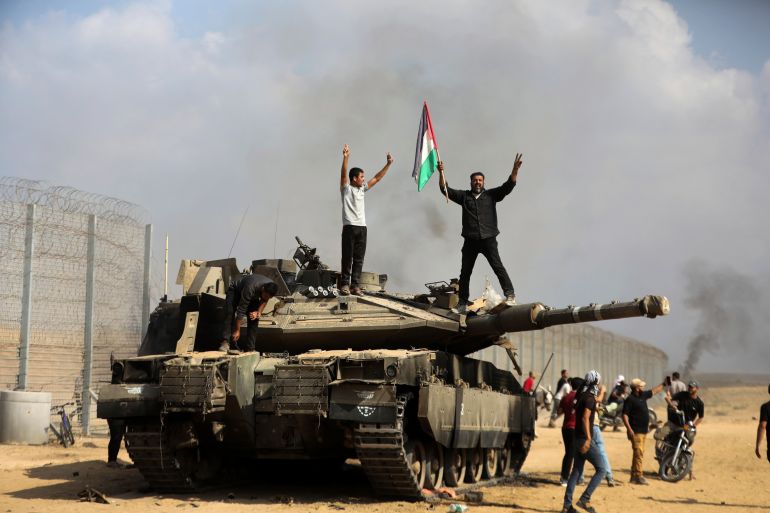
Palestinians wave their national flag and celebrate by a destroyed Israeli tank at the Gaza Strip fence east of Khan Younis southern Saturday, Oct. 7, 2023. The militant Hamas rulers of the Gaza Strip carried out an unprecedented, multi-front attack on Israel at daybreak Saturday, firing thousands of rockets as dozens of Hamas fighters infiltrated the heavily fortified border in several locations by air, land, and sea and catching the country off-guard on a major holiday. (AP Photo/Yousef Masoud)
Palestinians wave their national flag and celebrate by a destroyed Israeli tank at the Gaza Strip fence east of Khan Younis on October 7, 2023 [Yousef Masoud/AP Photo]

By Joe Macaro Published On 11 Oct 202311 Oct 2023

On October 7, Hamas launched a massive military operation into Israeli territory. The shooting of thousands of rockets into Israel was followed by an attack by land, air and sea, with fighters penetrating deep into territory under Israeli control. They attacked military installations and temporarily took over various settlements. The death toll among Israelis has exceeded 1,200, including more than 120 soldiers; dozens of Israeli hostages were also taken into the Gaza Strip.

The planning of the operation took somewhere between a few months and two years, per different accounts from Hamas leaders. The depth and magnitude of the attack were unprecedented and took Israel by surprise. It was a reaction to changing regional dynamics and growing Israeli aggression.

Tiếp tục đọc “Analysis: Why did Hamas attack now and what is next?”

What Is Hamas?

cfr.org

The Palestinian militant group has struggled to govern Gaza and remains committed to violently resisting Israel. Its surprise attack against Israel in 2023 threatens a wider conflagration in the Middle East.

WRITTEN BY Kali Robinson UPDATED Last updated October 9, 2023 1:27 pm (EST)

Summary

  • A spin-off of the Palestinian branch of the Muslim Brotherhood in the late 1980s, the Islamist militant group Hamas took over the Gaza Strip after defeating its rival political party, Fatah, in elections in 2006.
  • The United States and European Union have designated Hamas a terrorist organization because of its armed resistance against Israel, which has included suicide bombings and rocket attacks.
  • Israel has declared war on Hamas following its surprise assault on southern Israel in 2023, the deadliest attack on the country in decades.

Introduction

What are the group’s origins?

Who are its leaders?

How is Hamas funded?

How does it govern Gaza?

How do Palestinians view Hamas?

How has Hamas challenged Israel?

How is Hamas’s attack on Israel in 2023 different?

Recommended Resources

Introduction

Hamas is an Islamist militant movement and one of the Palestinian territories’ two major political parties. It governs more than two million Palestinians in the Gaza Strip, but the group is best known for its armed resistance to Israel. In October 2023, Hamas launched a massive surprise attack on southern Israel, killing hundreds of civilians and soldiers and taking dozens more as hostages. Israel has declared war on the group in response and indicated its military is planning for a long campaign to defeat it. 

Dozens of countries have designated Hamas a terrorist organization, though some apply this label only to its military wing. Iran provides it with material and financial support, and Turkey reportedly harbors some of its top leaders. Its rival party, Fatah, which dominates the Palestine Liberation Organization (PLO) and rules in the West Bank, has renounced violence. The split in Palestinian leadership and Hamas’s unwavering hostility toward Israel have diminished prospects for stability in Gaza.

Tiếp tục đọc “What Is Hamas?”

What we know: The number of foreigners killed, missing, abducted in Israel

Citizens and dual nationals from more than 20 countries were killed or remain missing following violence in Israel.

AL JAZEERA

Students hold placards demanding Nepalese government ensure the safe return of stranded students and light candles in Patan Durbar Square, Lalitpur, Nepal, as they pay tribute to Nepali nationals who lost their lives in the fighting in Israel, Monday, Oct. 9, 2023. Ten Nepali nationals have been killed in fighting in Israel and at least one more is missing, Nepal’s Foreign Ministry said. An unknown number of others were wounded in the violence, it added. (AP Photo/Niranjan Shrestha)
Students hold placards and candles in Patan Durbar Square, Lalitpur, Nepal, as they pay tribute to Nepali nationals who lost their lives in the fighting in Israel, on Monday, October 9, 2023 [Niranjan Shrestha/AP]

Published On 10 Oct 202310 Oct 2023

Dozens of foreigners have been reported killed, missing or taken hostage following the surprise attack on Israel by Hamas fighters over the weekend.

More than 900 people have been killed in Israel and over 700 killed in retaliatory attacks on Gaza by Israeli forces so far.

Many of the foreigners killed and missing were attending an electronic music festival in the southern Israeli desert on Saturday when the Hamas attack began.

This is what we know of the foreign and dual-national casualties as well as those still missing.

Argentina: Seven dead, 15 missing

Argentina’s foreign minister Santiago Cafiero said on Monday that seven Argentinians were killed during the attacks in Israel and 15 more remain missing. Approximately 625 Argentinian nationals in Israel have also requested repatriation, the minister said.

Austria: Three missing

Three Austrian-Israeli dual citizens could be among those abducted, Austria’s Foreign Ministry said in a statement on Tuesday. “Three Austrian-Israeli dual citizens who recently stayed in southern Israel independently of each other could also be among the many international abductees. There is currently no official confirmation,” the ministry said.

Tiếp tục đọc “What we know: The number of foreigners killed, missing, abducted in Israel”

The lessons from Hamas’s assault on Israel

economist.com Oct 8th 2023

Two decades of Israeli policy towards the Palestinians have gone up in flames

image: ap

It is hard to see past the shock of Hamas’s bloodthirsty assault on Israel. That is because it involved thousands of rockets, and fighters attacking the south of the country by land, sea and air. And because it was completely unforeseen despite its scale, inflicting a humiliating blow against Israel’s vaunted intelligence services. But most of all because of the killing of hundreds of innocent people and the taking of scores of hostages by Hamas. As the Israel Defence Forces (idf) ponder how to respond, the world’s attention will be caught up in their desperate plight.

Tiếp tục đọc “The lessons from Hamas’s assault on Israel”

The 1960s in the Arab World (3 episodes)

Al Jazeera English – 3 thg 8, 2022

The 1960s was a decade of change that hugely impacted the Arab world.

This first of three episodes follows the politics of the time: The rise of Arab nationalism, the newfound independence of former French colonies, and the defeat of Arab armies in the 1967 Arab-Israeli War.

The stories of the shifting sands of the 60s are told by many who were there, including former government ministers, broadcasters, activists and writers.

They recall a decade whose end was profoundly different from the beginning, where loyalties shifted and old certainties were challenged. Later episodes chart the culture and society of this transformative decade.

The 1960s in the Arab World – Episode 1: Politics | Al Jazeera World Documentary

Tiếp tục đọc “The 1960s in the Arab World (3 episodes)”

UAV – Bóng ma sát thủ từ trên không (5 kỳ)

UAV – Bóng ma sát thủ từ trên không – Kỳ 1: Máy bay ném bom thời thế chiến

03/12/2022 11:07 GMT+7

TTO – Chiến sự Nga – Ukraine đã chứng minh vai trò quan trọng của vũ khí máy bay không người lái trên chiến trường hiện đại.

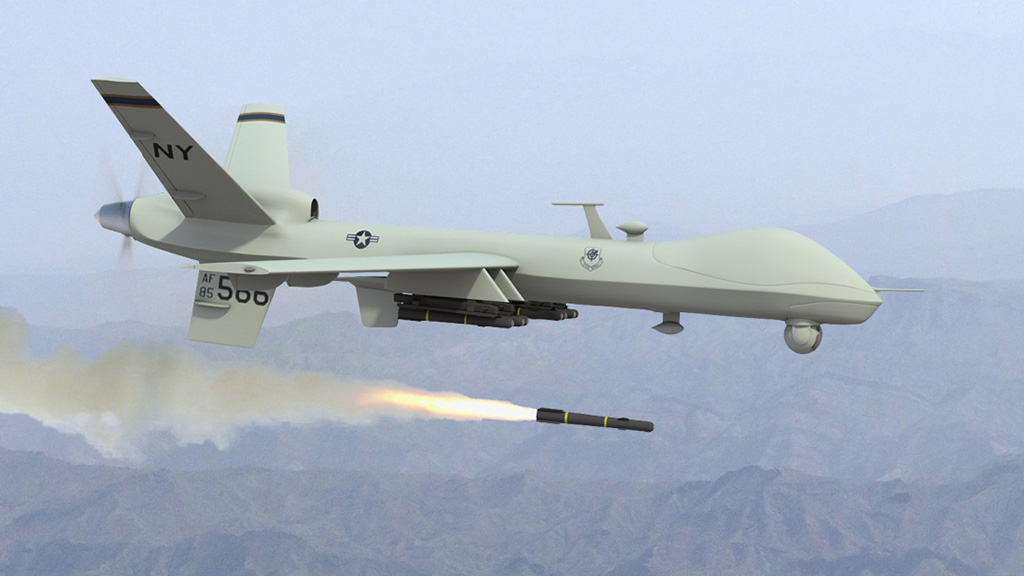
UAV - Bóng ma sát thủ từ trên không - Kỳ 1: Máy bay ném bom thời thế chiến - Ảnh 1.

Từ chức năng trinh sát ban đầu, loại máy bay này đã biến thành sát thủ tấn công từ trên không và có thể định hình cuộc chiến trong tương lai.

Tại triển lãm hàng không ở Thổ Nhĩ Kỳ vào đầu tháng 9-2022, lần đầu tiên nước chủ nhà đã giới thiệu thế hệ máy bay không người lái (UAV) siêu thanh Bayraktar Kizilelma. UAV mới có tính năng tàng hình, bay gần 980km/h với tốc độ tối đa Mach 1.

Chuyến bay đầu tiên dự kiến được thực hiện vào đầu năm 2023. Đến cuối tháng 9, báo chí Pháp đưa tin Tổng cục Vũ khí Pháp đang thử nghiệm thế hệ UAV mới AVATAR trang bị súng trường tấn công.

Chất nổ Torpex phát nổ sớm đã phá hủy máy bay BQ-8 giết chết Kennedy và Willy ngay lập tức.

DONALD L. MILLER

Tiếp tục đọc “UAV – Bóng ma sát thủ từ trên không (5 kỳ)”

‘In our teens, we dreamed of making peace between Israelis and Palestinians. Then my friend was shot’ – podcast

At a summer camp for kids from conflict zones, I met my brave, funny friend Aseel. He was Palestinian. I was Israeli. When he was killed by police, my hope for our future died with him

theguardian.com – by Roy Cohen – Thu 13 Jan 2022 06.00 GMT

Listen to podcasts here

Read the text version below:

Tiếp tục đọc “‘In our teens, we dreamed of making peace between Israelis and Palestinians. Then my friend was shot’ – podcast”

Lời giải thích đằng sau những chuyển động sâu sắc

SÁNG ÁNH 2/1/2018 9:01 GMT+7

TTCTBàn cờ địa chính trị Trung Đông trong năm 2017 đã chứng kiến nhiều chuyển biến sâu sắc, mang tính nền tảng, mà để hiểu được thì không thể không lần trở lại quá khứ.

Một thiếu niên vô danh vẫy lá cờ Palestine trước một khu định cư của Israel tại Bờ Tây. Giấc mơ về một nhà nước Ả Rập thống nhất vẫn còn sức sống ở thế kỷ 21.-Ảnh: Wikimedia

Có thể điểm qua một số diễn biến lớn bao gồm mối nguy quân sự của Nhà nước Hồi giáo tự xưng (IS) tạm bị đẩy lùi. Nhưng “thỏ chết thì bẻ cung”, ước vọng về một quốc gia độc lập của người Kurd năm 2017 cũng bất thành.

Vấn đề cố hữu và trung tâm của khu vực suốt hơn nửa thế kỷ qua là mâu thuẫn Israel/Ả Rập đã chuyển hướng rõ rệt sang mâu thuẫn giữa Hồi giáo Shia và Hồi giáo Sunni, tức giữa hai thế lực trong khu vực là Saudi Arabia và Iran.

Tiếp tục đọc “Lời giải thích đằng sau những chuyển động sâu sắc”