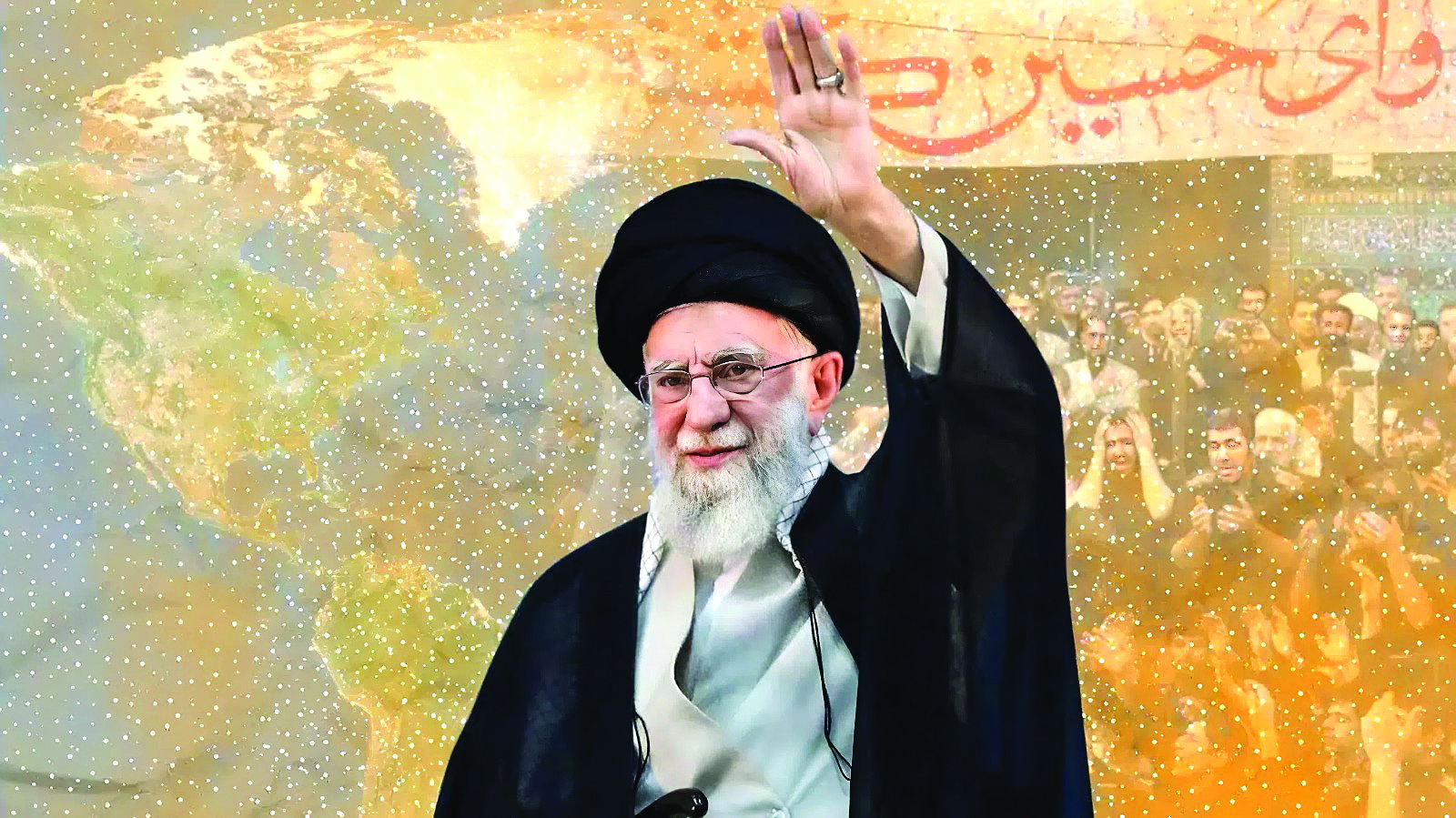
TTCT – Mối quan hệ giữa Iran và các nước láng giềng của họ ở vùng Vịnh và bán đảo A Rập là tầng tầng lớp lớp các yếu tố văn hóa, lịch sử, và tôn giáo, đã đảo lộn vì những can thiệp của phương Tây trong khoảng 150 năm qua.
Ảnh: The Siatsat Daily
Cuộc chiến do Mỹ và Israel phát động chỉ là diễn biến mới nhất trong quá trình đó mà thôi.
As other Asian economies race to conserve energy, China has huge reserves of oil and gas as well as alternative energy sources like wind and solar
Xi Jinping has been preparing for a crisis like this for years. China must secure its energy supply “in its own hands”, its president was reported to have said during a visit to one of its vast oilfields in 2021.
The US-Israel war on Iran plunged the Middle East into a deep conflict, with the strait of Hormuz – one of the most important waterways in global trade – all but closed and key energy facilities across the region under attack.
Oil exports from the Middle East have tumbled 61% over recent weeks, according to maritime tracking consultancy Kpler – roiling countries across Asia, which relied on the region for 59% of its crude imports in 2025, and have been left racing to conserve energy.
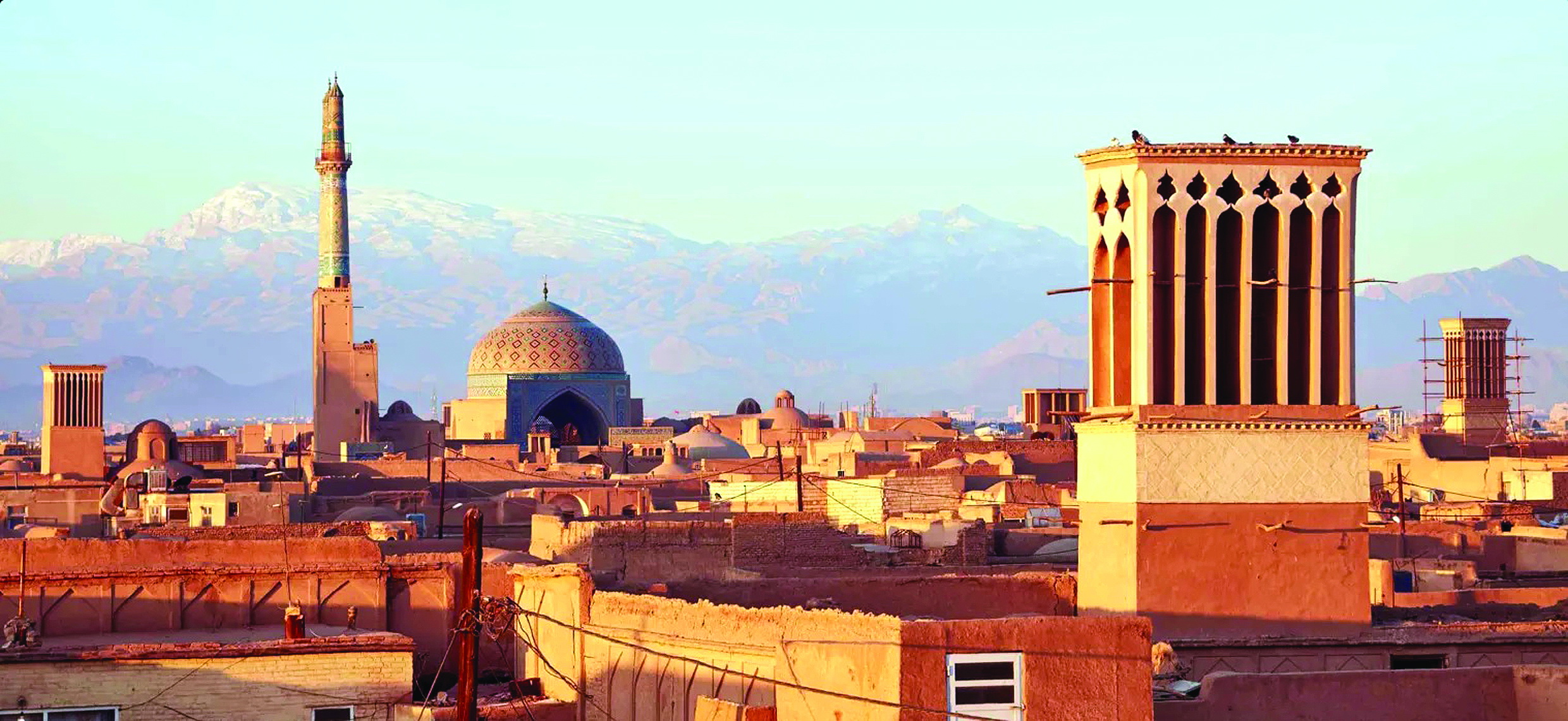
TTCT – Ba Tư xuất hiện trong sử Assyria là 3.000 năm về trước, “Vùng đất có ngựa”, do một dân tộc du mục Trung Á đến định cư.
Khung cảnh thành phố Yazd cùng các di tích. Yazd là một trong những thành phố cổ xưa nhất của Đế chế Ba Tư, ở miền trung Iran ngày nay. Ảnh: odysseytraveller
Năm 550 trước Tây lịch, Cyrus Đại đế thành lập nhà Achaemenid. Đế quốc này lớn 5,5 triệu km2, tức là tương đương về diện tích với đế quốc La Mã hay đế quốc của Alexander Đại đế sau này, trải từ Đông Âu sang đến Ấn Độ và Bắc Phi.
Văn minh và văn hóa Ba Tư trở thành mẫu mực của thành Athens ở Hy Lạp. Bản thân Cyrus được người Do Thái thờ là Đấng Cứu thế sau khi ông giải thoát họ khỏi ách nô lệ của thành Babylon và cho họ trở về đất cũ.
Trong kinh thánh Do Thái, Cyrus là Đấng Cứu thế duy nhất không phải người Do Thái. Tôn giáo Ba Tư, Hỏa giáo (Zoroastrianism) có thể coi là tôn giáo độc thần đầu tiên ảnh hưởng dòng Abraham (Do Thái, Ki-tô lẫn Hồi giáo) và từng lan ra đến Thiên Sơn, Trung Quốc.
In history, Iran has often been considered culturally connected with India. Both share a similar ancient past, and both regions experienced attempts of religious conversion during the spread of Islam. Iran eventually became fully Islamic, while India remained religiously diverse. The word “Iran” itself is believed to be derived from “Aryan.” Iran’s territory is about half the size of India’s. People living in hot, desert, and mountainous regions are often considered resilient, and Iran has a long history of wars.
13 March 2026, London: Military tensions in West Asia are beginning to disrupt maritime traffic through the Strait of Hormuz, raising serious concerns for global energy markets, fertilizer supplies and vulnerable economies. In a rapid assessment titled “Strait of Hormuz disruptions: Implications for global trade and development,” UN Trade and Development (UNCTAD) has highlighted the potential risks posed by interruptions in one of the world’s most critical trade corridors.
The Strait of Hormuz carries nearly one quarter of global seaborne oil trade, along with large volumes of liquefied natural gas and fertilizers. Any disruption in this narrow passage therefore has immediate consequences for global energy prices, maritime transport costs and agricultural input supply chains.
Jul 30, 2025 #AJStartHere #CubanMissileCrisis #IsraelIranTensions Israel and the US – both nuclear-armed states – recently attacked Iran. They said it was to prevent Iran getting a nuclear weapon, something Iran denies it’s trying to do. What determines which countries can, and can’t, have nuclear weapons? And are we seeing a new nuclear race?
Chapters: 01:09 – How the Cuban Missile Crisis led to a new nuclear order. 01:58 – The Nuclear Non-Proliferation Treaty (NPT) and the nine nuclear-armed states. 04:49 – The key factors that affect a country’s calculation on nukes. 05:47 – Security: do nuclear weapons make a country more, or less, safe? 07:22 – The US nuclear umbrella – can it still be trusted? 08:10 – Do nuclear weapons enhance a country’s status? 09:40 – What’s going on with Iran? 14:32 – Who gets to police the global nuclear order? 14:52 – How the nine nuclear-armed states are increasing their spending on nukes.
The invasion was carried out jointly by the United Kingdom and the Soviet Union, aiming primarily to secure Iranian territory against Axis influence and protect critical supply routes.
Here’s a comprehensive overview:
Lead-Up and Reasons
Strategic Importance:
Iran had a strategically critical position, particularly as a transportation corridor between the Allies and the Soviet Union.
Iranian infrastructure, notably the Trans-Iranian Railway, offered a route for delivering vital supplies from the Allies (mostly Britain and the U.S.) to the USSR following Germany’s invasion (Operation Barbarossa) in June 1941.
Iranian Position and Axis Influence:
Although officially neutral, the Iranian ruler Reza Shah Pahlavi sympathized with Germany, partially due to historical rivalry with Britain and Russia.
Germany had established substantial diplomatic and commercial influence in Iran, with many German nationals working in strategic industries, raising fears of espionage and sabotage among the Allies.
Diplomatic Tensions:
Britain and the Soviet Union demanded Iran expel German nationals perceived as threats; Iran hesitated or refused, increasing Allied suspicions and tension.
Invasion: Operation Countenance
Date and Execution:
Began on August 25, 1941, when British forces advanced from the south and west, while Soviet forces attacked from the north.
Rapid military operations overwhelmed Iran’s defenses, which were relatively weak and poorly equipped compared to the invading powers.
Key Events:
British forces captured key oil fields in Khuzestan (Abadan), securing critical petroleum resources.
Soviet troops quickly took control of northern provinces, including major cities such as Tabriz and Mashhad.
Air and naval superiority allowed quick suppression of Iranian resistance.
Iranian Response: The Iranian army, despite fighting briefly in several locations, was rapidly overwhelmed, with significant casualties but limited overall resistance.
Tehran quickly realized the futility of resistance and began negotiations.
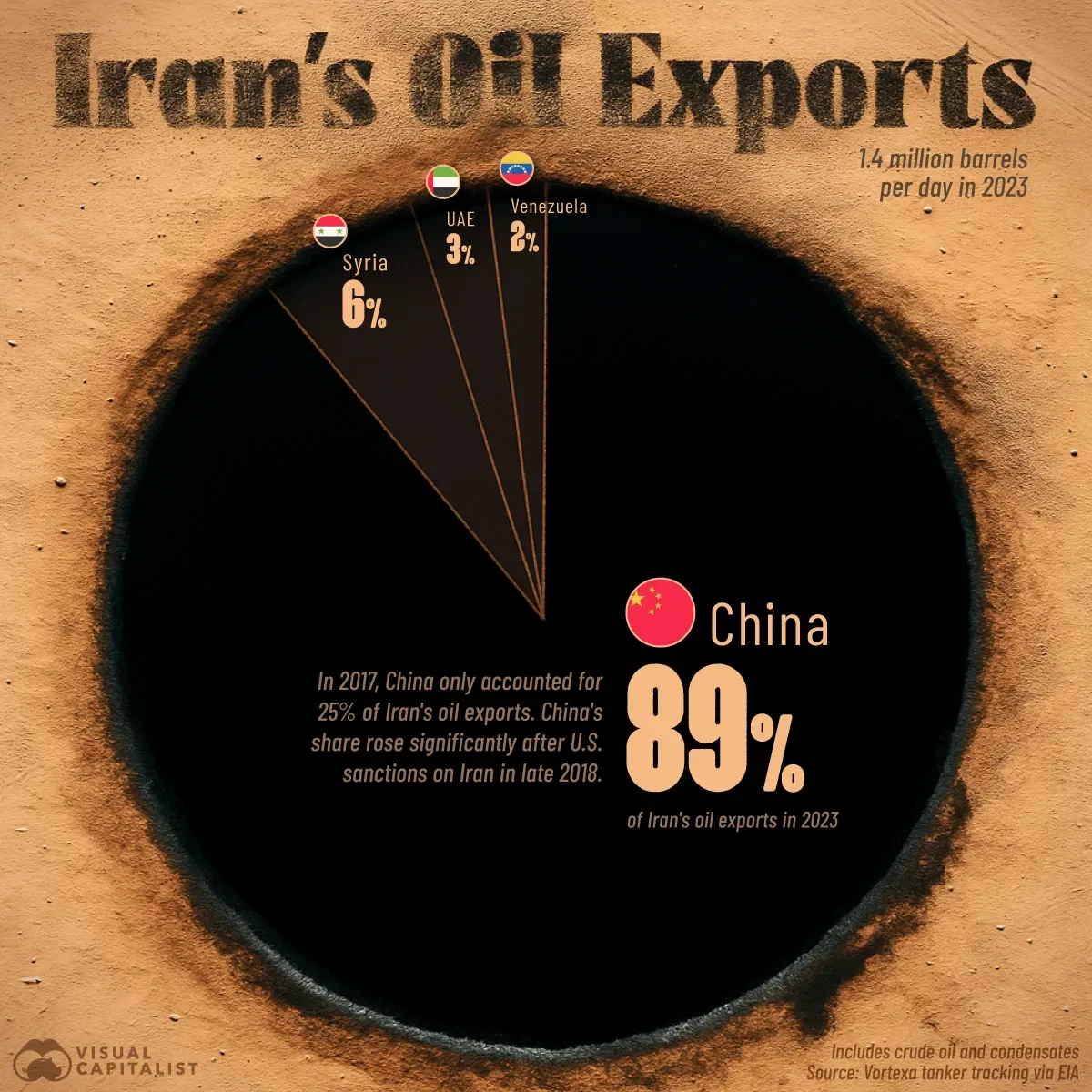
Below, we show the share of Iran’s oil exports by destination.
Country
Share of Iran’s Crude Oil Exports
🇨🇳 China
89%
🇸🇾 Syria
6%
🇦🇪 United Arab Emirates
3%
🇻🇪 Venezuela
2%
In 2023, a staggering 89% of Iran’s oil exports went to China, a sharp rise from just 25% in 2017.
This surge followed renewed U.S. sanctions in 2018, which isolated Iran from most global oil buyers.
Iran is among the world’s largest oil producers, and in recent years, China has become its most critical customer both economically and geopolitically.
As hostilities in the region intensify–marked by U.S. attacks on Iranian nuclear infrastructure and Iranian missile strikes on American bases in Qatar and Iraq—China’s access to Iranian oil is increasingly at risk.
This is because the Strait of Hormuz, a critical route for China’s oil imports, could be disrupted by further conflict or Iranian retaliation.
While Iran supplies only about 13% of China’s total oil imports, the relationship is strategically important, offering China discounted crude and reinforcing its broader regional influence amid Western pressure.
Al Jazeera English The US and Israel attacked Iran – saying it cannot have nuclear weapons – while the Islamic Republic denies trying to build one. The two are among nine countries armed with such weapons. So who decides who can have nuclear arms? And have the Israeli and US attacks increased the risks that more countries will want them?
Presenter: Adrian Finighan
Guests: Tariq Rauf, former head of verification and security policy coordination at International Atomic Energy Agency. Laicie Heeley, nuclear arms control and non-proliferation specialist, editor-in-chief of Inkstick Media in Washington DC. Tariq Ali, historian, editor at New Left Review journal in London.
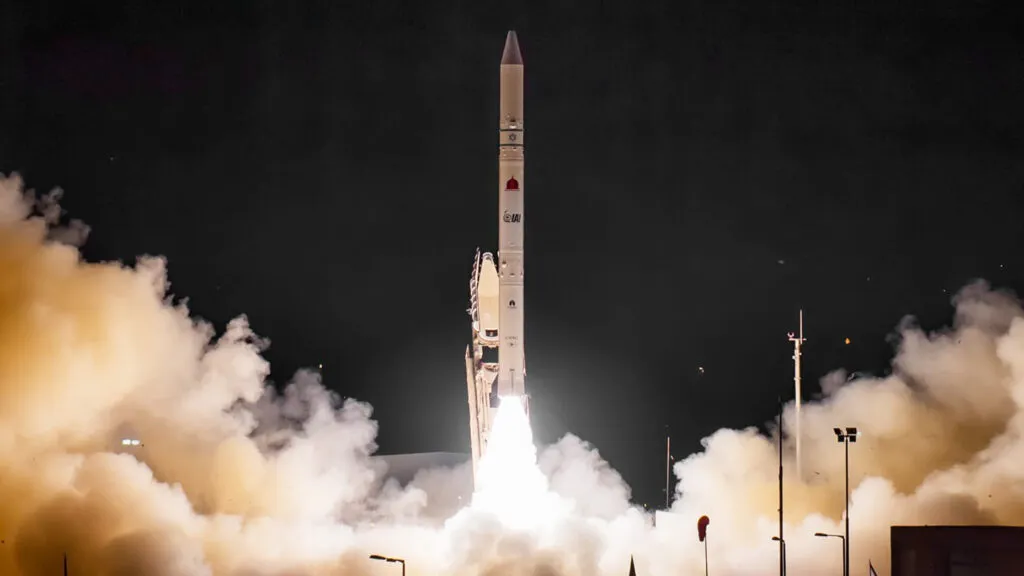
Israeli space launch vehicle Shavit sends a military intelligence satellite into space in March 2023. The same Shavit rocket can launch ballistic missiles, including the nuclear-capable, three-stage Jericho III intermediate-range ballistic missile. The Jericho III reportedly has a range exceeding 4,000 kilometers, enough to reach all of Iran, Pakistan, Europe, and western Russia. Israel has not acknowledged the existence of its nuclear weapon arsenal despite being widely known. (Credit: Israel Defense Ministry)Share
An extraordinary three-part series on Israeli television, The Atom and Me, lays out how the country got its nuclear weapons. It takes for granted what anyone who pays attention has known for years. But the series goes well beyond a general discussion about Israel’s nuclear weapons. It shows the country’s single-minded determination to get the bomb no matter what it took, including stealing nuclear explosives and bomb components from the United States and violating a major nuclear arms control treaty to which Israel is a party—and lying about it.
The Axis of Resistance is a network of groups that have been a key part of Iran’s defence strategy for years. But we’ve now seen Israel and Iran attack each other directly, while Israel has invaded Lebanon to go after the biggest group in the Axis, Hezbollah. So what does this mean for the balance of power in the region, and where does the Axis of Resistance fit into it now? #AJStartHere with Sandra Gathmann explains. Chapters:
Tổng thống Iran Raisi và Ngoại trưởng Amir-Abdollahian đã thiệt mạng trong vụ rơi trực thăng tại vùng núi hiểm trở, theo hãng thông tấn Merh News.
Người nắm quyền tổng thống thay ông RaisiSau khi Tổng thống Raisi được xác nhận thiệt mạng, Phó tổng thống Mohammad Mokhber sẽ trở thành quyền Tổng thống nếu được Lãnh tụ Tối cao Iran phê chuẩn.Ông Mokhber, 69 tuổi, là quan chức cấp cao nhất trong 12 phó tổng thống của Iran. Theo Hiến pháp Iran được thông qua năm 1989, hội đồng đặc biệt gồm lãnh đạo từ các cơ quan hành pháp, lập pháp và tư pháp sẽ có trách nhiệm tổ chức bầu cử tổng thống trong vòng 50 ngày tới.
TTCT – Ngày 14-4-2024, Iran trực tiếp đánh Israel bằng 331 tên lửa nặng nhẹ và máy bay không người lái nhanh chậm các loại. Chuyện này “chưa từng thấy”, nhưng hẳn không phải là ngày huy hoàng nhất trong lịch sử quốc gia này.
Ảnh: Spiegel
2.500 năm trước, đế triều Aechemenid của Ba Tư trị vì từ Hy Lạp đến Ubezkistan và từ Libya đến Ấn Độ, là một trong những đế chế lớn nhất lịch sử, diện tích 5,5 triệu km2, bao trùm cả… Israel ngày nay.
Trong kinh Cựu ước của Kitô, tức là sách thánh của đạo Do Thái, Đế Ba Tư Cyrus vĩ đại là ân nhân của dân tộc Do Thái và được Do Thái đưa lên hàng “thiên sứ”. Sở dĩ như vậy là vì Cyrus chiếm thành Babylon và giải phóng người Do Thái bị lưu đày và làm nô lệ ở đây, cho họ trở về quê xưa xây lại đền thờ trên Đất Hứa.
TTCT – Các suy đoán về thời gian, địa điểm và cách thức Tehran hoặc các đồng minh của họ sẽ phản ứng trước cuộc tấn công vào lãnh sự quán Iran ở Damascus đã kết thúc vào rạng sáng 14-4, khi cuối cùng, Iran tuyên bố khởi sự chiến dịch “True Promise”.
Ảnh: The Daily Beast
Trong chiến dịch Lời hứa chân thật này, Tehran đã thực hiện một cuộc không kích chưa từng có vào các mục tiêu quân sự ở Israel, với sự tham gia của hơn 350 máy bay không người lái (UAV) và tên lửa hành trình.
Lực lượng phòng không Israel, với sự hỗ trợ của không quân Mỹ, Jordan và Anh, đã chặn nhiều UAV và một số tên lửa trên bầu trời Syria, Iraq và Jordan vào khoảng 2h sáng giờ địa phương. Các UAV và tên lửa khác thì bị hệ thống phòng không Iron Dome (Vòm sắt) phá hủy trên lãnh thổ Israel.
TEL AVIV, Israel (AP) — Israeli leaders on Sunday credited an international military coalition with helping thwart a direct Iranian attack involving hundreds of drones and missiles, calling the coordinated response a starting point for a “strategic alliance” of regional opposition to Tehran.



 Israeli space launch vehicle Shavit sends a military intelligence satellite into space in March 2023. The same Shavit rocket can launch ballistic missiles, including the nuclear-capable, three-stage Jericho III intermediate-range ballistic missile. The Jericho III reportedly has a range exceeding 4,000 kilometers, enough to reach all of Iran, Pakistan, Europe, and western Russia. Israel has not acknowledged the existence of its nuclear weapon arsenal despite being widely known. (Credit: Israel Defense Ministry)Share


