TƯỜNG ANH 04/12/2022 09:37 GMT+7
TTCT – Trên mạng Internet những ngày này lan truyền hình ảnh vệ tinh cho thấy hầu hết các thành phố lớn của Ukraine chìm trong bóng tối. Các cuộc tấn công của Matxcơva vào hạ tầng năng lượng Kiev đang ảnh hưởng thế nào tới cục diện chiến sự?
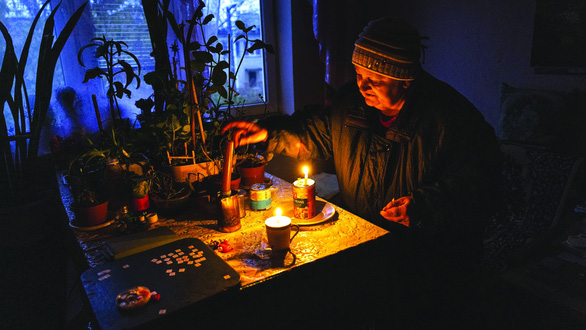
Ekaterina Martynyuk thắp nến trong căn hộ của bà ở Kherson, Ukraine, ngày 15-11, cả thành phố đã cúp điện và nước từ khi quân Nga rút đi năm ngày trước. Ảnh: Getty Images
Từ 23-11, lần đầu tiên trong lịch sử Ukraine, ba nhà máy điện hạt nhân còn lại của nước này (Rivne, Khmelnytsky và Nam Ukraine) được đặt ở chế độ khẩn cấp, hầu hết các nhà máy nhiệt điện tạm thời cúp điện, 11 khu vực chìm trong bóng tối, bao gồm Kiev, Lvov và Odessa.
Hệ thống nước và sưởi ấm đã ngừng hoạt động ở nhiều thành phố. Kiev mất điện 70%. Thông tin liên lạc và giao thông một số nơi cũng gián đoạn. Thị trưởng Kiev Vitaly Klitschko kêu gọi người dân, những ai có thể, tạm thời sơ tán về vùng quê để trụ qua mùa đông 2022 này.