channelnewsasia China’s moves to adopt clean energy and continued strong backing of the Paris Agreement are laudable but the country still has some way to go, says one observer.
Workers walk past solar panels in Jimo, Shandong Province, China, April 21, 2016. (Photo: REUTERS)
It began on the international stage at Davos, when the Chinese leader, in sober suit and tie, assured his nervous audience that China was a steady ally that stood by its treaty commitments, including the Paris Agreement, and was firm in its commitment to globalisation.
The contrast with the US president was too obvious to need stating.
As the year draws to a close, Xi, in his domestic capacity as chairman of everything, appears to have consolidated his leadership of party, army and state into an unassailable, long-term dominance.
TS. Phạm Sỹ Thành (*)Thứ Bảy, 2/12/2017, 09:06 Để giải quyết gánh nặng dư thừa sản lượng và tỷ lệ nợ gia tăng của các doanh nghiệp trong nước, Trung Quốc đã đẩy mạnh các sáng kiến kinh tế đối ngoại, thúc giục các nước phối hợp với Trung Quốc để xây dựng các mô hình hợp tác kinh tế chưa từng có tiền lệ. Ảnh: Internet
(TBKTSG) – Theo một báo cáo của J.P. Morgan tháng 9-2017, tổng nợ của Trung Quốc tương đương 289% GDP, tức là khoảng 30.000 tỉ đô la Mỹ, tăng gần 30 điểm phần trăm so với năm 2015 (260% GDP). Điều đáng nói là sau các chính sách kích thích kinh tế để chống chọi với khủng hoảng tài chính toàn cầu, tỷ lệ này đã tăng gấp đôi chỉ trong vòng chín năm (năm 2008 là 141,3% GDP), bằng với mức tăng trưởng kinh tế. Ngân hàng đầu tư đa quốc gia Goldman Sachs cho rằng sẽ mất khoảng nửa thập kỷ để ổn định tỷ lệ này. Hãng S&P Global Ratings hôm 29-9-2017 cảnh báo tổng nợ Trung Quốc có thể tăng đến 46.000 tỉ đô la Mỹ vào năm 2021.
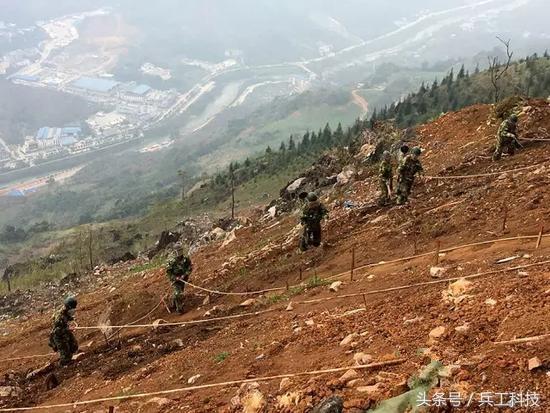
Ngày 27/11 vừa qua, Trung Quốc bắt đầu tiến hành một đợt rà phá bom mìn ở vùng biên giới Việt-Trung thuộc tỉnh Quảng Tây.
Chiến tranh kết thúc đã mấy chục năm, trong thời chiến, Việt Nam cũng không sử dụng không quân để tấn công Trung Quốc, vậy vì sao đến hôm nay Trung Quốc vẫn phải tiếp tục dò mìn. Câu trả lời là họ đang phải đi rà phá những bãi mìn do chính họ bố trí ngày trước. Tiếp tục đọc “Tại sao TQ vẫn phải dò mìn ở biên giới Việt-Trung?”→
A new Chinese-built bridge, on the right, spans the Tonle Sap River in Phnom Penh, running parallel to the bridge Japan helped construct in the 1960s. (Photo by Ken Kobayashi)
HONG KONG/PHNOM PENH Just a few blocks from the Royal Palace, in the traditional heart of downtown Phnom Penh, sits one of Cambodia’s most renowned Chinese schools. Over the past century, the Tuan Hoa School has witnessed the many ups and downs of the capital. Today, it has front-row seats to an unprecedented boom.
Run by a local ethnic Chinese organization, the school is one of the largest Mandarin-speaking elementary and junior high schools outside China and Taiwan. It currently has more than 11,000 students, including those at its branch campus. Tiếp tục đọc “The ‘Chinazation’ of Cambodia”→
VietNamNet Bridge – The proposed Long Thanh Airport as well as many other huge infrastructure projects are attracting many Chinese investors.
Vietnam considers the upgrading of infrastructure as one of its top priorities. An ADB report shows that investment in infrastructure in Vietnam has been 5.7 percent of GDP in recent years, the highest level in SE Asia and second highest in Asia. Tiếp tục đọc “Chinese capital flows to Vietnam’s infrastructure projects”→
Vietnam Railway (VNR) has announced that the first container block train connecting Vietnam with China arrived at Yen Vien Station, Hanoi, on November 25.
The first container block train connecting Vietnam with China
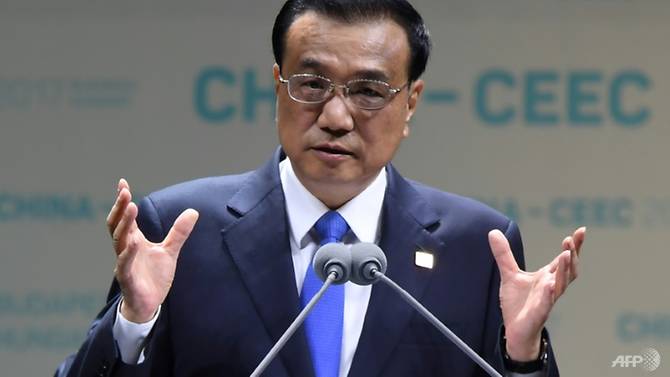
Premier Li Keqiang told eastern Europeans on Monday that China would continue to invest billions in the region. AFP/ATTILA KISBENEDEK
BUDAPEST: Chinese Premier Li Keqiang made clear Monday (Nov 27) that China would keep pouring billions of euros into central and eastern Europe despite EU concerns, as he attended a regional summit in Hungary.
Li said that China’s Development Bank would make available the equivalent of two billion euros (US$2.4 billion) to a new interbank association between the region and China to be inaugurated later in the day. Tiếp tục đọc “Chinese premier offers billions more to Europe”→
channelnewsasia Beijing is determined to shape a global order in which its interests are respected because of its disproportionate power relative to its neighbours, says James R Keith.
What will a new global order look like, from China’s perspective? (Photo: AFP/Karim Jaafar)
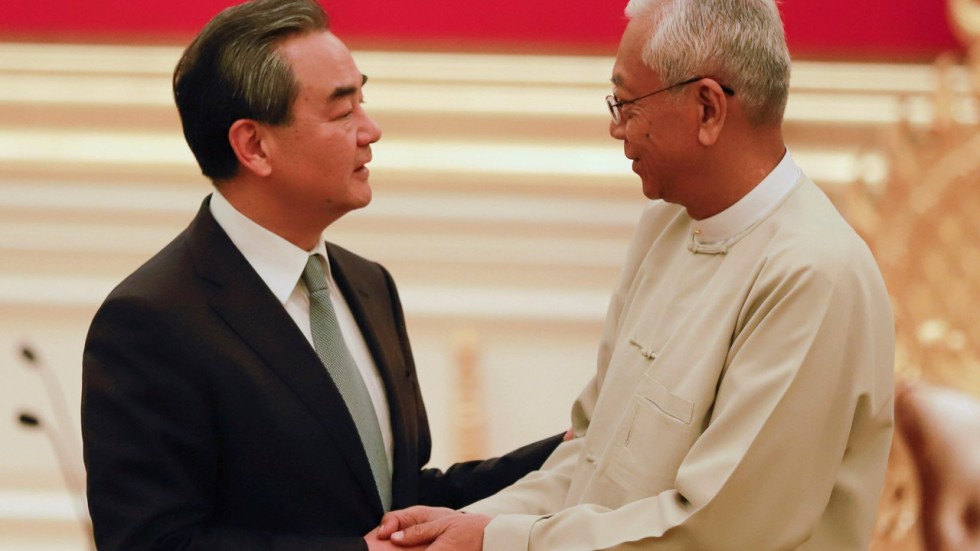
China has offered to help Bangladesh and Myanmar resolve the Rohingya crisis, a move Chinese analysts said reflected Beijing’s more proactive and conciliatory tack on regional affairs.
Arriving in Myanmar’s capital Naypyidaw on Sunday after a stop in Bangladesh, Chinese Foreign Minister Wang Yi also said the international community must help fight poverty and promote development in Myanmar’s Rakhine State.
Prime Minister Nguyễn Xuân Phúc (right) receives General Secretary of the Communist Party of China (CPC) and President Xi Jinping in the central city of Đà Nẵng on November 11. — VNA/VNS Photo
Viet Nam News ĐÀ NẴNG — The Communist Party of Việt Nam (CPV) and the Vietnamese Government treasure the comprehensive strategic partnership with China, considering it a consistent policy, a strategic choice and a top priority in Việt Nam’s foreign policy, said Prime Minister Nguyễn Xuân Phúc.
During a meeting with General Secretary of the Communist Party of China (CPC) and President Xi Jinping in Đà Nẵng on November 11, PM Phúc applauded the Chinese leader’s State visit to Việt Nam and his attendance at the APEC Economic Leaders’ Meeting in the central city. Tiếp tục đọc “PM: Việt Nam attaches importance to relations with China”→
Trong quan hệ Việt Trung, chúng ta thường nghe các “câu vè” và khẩu hiệu tóm tắt các chiến lược và dự án kinh tế chính trị. Hiểu các câu vè và khẩu hiệu này sẽ giúp ta hiểu hơn về liên hệ Việt Trung.
16 Chữ Vàng, 4 Tốt
16 Chữ Vàng
Phương châm 16 chữ (tiếng Trung: 十六字方针) (thập lục tự phương châm) là đoạn văn:
General Secretary of the Communist Party of China and President Xi Jinping and Chairwoman of the Việt Nam National Assembly Nguyễn Thị Kim Ngân perform the symbolic ’handing over of the key’ ceremony to inaugurate the Việt Nam – China Friendship Palace yesterday in Hà Nội. — VNA/VNS Photo Trọng Đức
Viet Nam News HÀ NỘI — General Secretary of the Communist Party of China and President Xi Jinping and Chairwoman of the Việt Nam National Assembly Nguyễn Thị Kim Ngân attended an inaugural ceremony for the Việt Nam – China Friendship Palace in Hà Nội on Sunday.
Questions are being asked about how, and whether, China can deliver the benefits of its multi-trillion-dollar initiative to connect a region with 62 per cent of the world’s population. Between The Lines debates the issue.
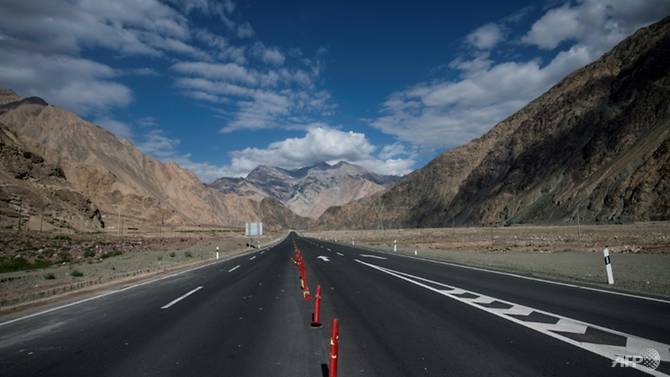
The China-Pakistan Friendship Highway is a crown jewel of China’s One Belt, One Road (OBOR) initiative, a massive global infrastructure programme to revive the ancient Silk Road and connect Chinese companies to new markets around the world. AFP/Johannes EISELE
HONG KONG: In Myanmar, first a China-led dam project was suspended because of environmental and social problems. Then local protests about environmental damage have made the joint development of a copper mine a stop-start affair.
In Pakistan, there are internal differences over where the China Pakistan Economic Corridor projects should take place, with poorer provinces petitioning for more projects to be directed towards them instead of Punjab.
Such snags on the ground, among other things, are raising questions about how, and whether, Beijing can deliver on the grand vision of its Belt and Road initiative ushering in a new era of globalisation in Asia, Europe and Africa.
That was an issue debated in a recent Between the Lines episode looking at the implementation of China’s multi-trillion-dollar push to connect a region with 62 per cent of the world’s population. (Watch the episode here)
One thing is clear: Lessons have to be learnt. “The Chinese authorities as well as the business community have to go through a soul-searching process,” said commentator Professor Joseph Cheng, one of four discussants on the programme.
CULTIVATE PEOPLE, NOT JUST GOVERNMENTS
Their suggestions included taking care of local communities, doing good work, such as community projects to build good relations – and not only good public relations – as well as learning the local culture.
“Certainly, some Chinese corporations working in Myanmar were or have been perceived as looking down on the local people, not showing adequate respect for the local people,” said Prof Cheng. “It isn’t enough just to deal with the government.”
Myanmar activists protest against The Chinese Copper Mine Wanbao Company, in front of the Chinese
Other characteristics of Chinese investment and participation in infrastructure projects have also led to complaints.
“China has a lot of manpower, so when it takes part in projects, it not only brings along engineers, it also brings along skilful technicians, skilled labour and so on,” noted Prof Cheng.
So this means very little employment opportunities for local labour.
This contrasts with, say, the American viewpoint that bringing engineers to developing countries is costly, he added.
Philippine President Rodrigo Duterte, in an apparent policy shift, said on Wednesday he planned to ask China to make clear its intentions in the disputed South China Sea during Asia-Pacific Economic Cooperation (APEC) meetings in Vietnam.
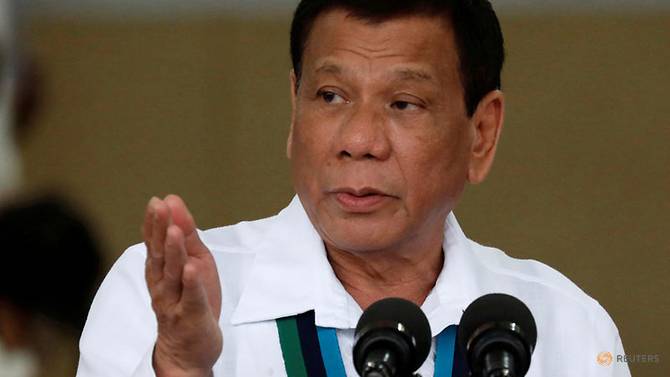
Philippines President Rodrigo Duterte gestures during Change of Command ceremonies of the Armed Forces of the Philippines (AFP) at Camp Aguinaldo in Quezon City, metro Manila, Philippines October 26, 2017. REUTERS/Dondi Tawatao
Share this content
Bookmark
MANILA: Philippine President Rodrigo Duterte, in an apparent policy shift, said on Wednesday he planned to ask China to make clear its intentions in the disputed South China Sea during Asia-Pacific Economic Cooperation (APEC) meetings in Vietnam. Tiếp tục đọc “Philippines to ask China to clarify its intentions in disputed sea”→


 Để giải quyết gánh nặng dư thừa sản lượng và tỷ lệ nợ gia tăng của các doanh nghiệp trong nước, Trung Quốc đã đẩy mạnh các sáng kiến kinh tế đối ngoại, thúc giục các nước phối hợp với Trung Quốc để xây dựng các mô hình hợp tác kinh tế chưa từng có tiền lệ. Ảnh: Internet