“Giải pháp lắm chân” cho cái đói

CHỦNG HẠNH 14/10/2021 9:05 GMT+7

TTCTBánh mì kẹp sâu cho bữa sáng, sữa gián và sữa ruồi đen luôn sẵn có ở căngtin, và món cháo dế sẽ sưởi ấm những đêm mưa rét. Đây là những loại thực phẩm thân thiện với môi trường, hứa hẹn sẽ cách tân chế độ ăn uống “xấu xí” của loài người trong tương lai.

 Ảnh: Shutterstock

Tiếp tục đọc ““Giải pháp lắm chân” cho cái đói”

Security Challenges of Climate Change in Southeast Asia

Photo: REZAS/AFP/Getty Images
by Murray Hiebert (Senior Associate, Southeast Asia Program) and Danielle Fallin (Program Coordinator and Research Assistant, Southeast Asia Program)

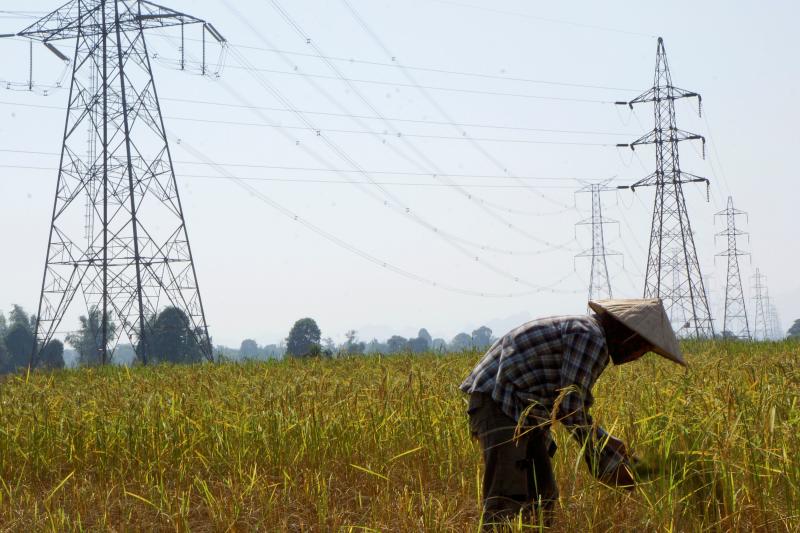
A 1.5-degree Celsius increase in global warming poses an immediate threat to Southeast Asia’s economic, political, and health security. Mitigating the effects of climate change is key to the United States’ goal to secure a free, open, and prosperous Indo-Pacific.

Southeast Asia will be one of the world’s most vulnerable regions to climate change unless countries make dramatic cuts in greenhouse gas pollution. According to a 2018 report from the Intergovernmental Panel on Climate Change, a global warming increase of 1.5 degrees Celsius (2.4 degrees Fahrenheit) will cause rising seas, dangerous flooding, and changing rain patterns leading to violent typhoons and drought. Global warming poses a threat to food security, hobbles economic growth, prompts political instability, and catalyzes pandemics. In extreme cases, it can create an environment conducive to terrorist activities.

Tiếp tục đọc “Security Challenges of Climate Change in Southeast Asia”

Bất an vì lo mất an ninh nguồn nước

NN – Thứ Tư 15/09/2021 , 07:42

Trong bối cảnh biến đổi khí hậu ngày càng diễn biến bất thường, khô hạn thường xuyên xảy ra, ngành chức năng Bình Định cảm thấy bất an vì lo mất an ninh nguồn nước.

Không kiểm soát được nguồn nước

Bình Định là tỉnh nằm trong vùng Duyên hải Nam Trung bộ, khu vực bị ảnh hưởng trực tiếp bởi ảnh hưởng khí hậu. Nhiều năm liên tiếp gần đây, trên địa bàn Bình Định hạn hán thường xuyên xảy ra, đáng quan ngại là có nhiều năm suốt 6 – 7 tháng liền Bình Định không có mưa, người thì bị thiếu nước sinh hoạt đến héo hắt, cây trồng thì thiếu nước tưới ảnh hưởng đến năng suất, sản lượng. Thêm vào đó, rừng nguyên sinh trên địa bàn mất dần do nhiều lý do khiến nguồn nước thượng nguồn ngày càng suy kiệt.

Sông Kôn, 1 trong 3 con sông lớn ở Bình Định trơ đáy trong mùa khô. Ảnh: Vũ Đình Thung.

Tiếp tục đọc “Bất an vì lo mất an ninh nguồn nước”

China’s Commitment to Stop Overseas Financing of New Coal Plants in Perspective

CSIS.org

September 24, 2021

On September 21, 2021, Chinese president Xi Jinping announced at the United Nations General Assembly debate that China would not build any new coal-fired power plants abroad and would step up its support for developing green and low-carbon energy in developing countries. He also reiterated the country’s goal to become carbon neutral by 2060 and peak carbon emissions by 2030, targets which he had first announced last year. This new announcement sets the tone for the upcoming UN climate change conference, COP26, which will be held in Glasgow in early November.

Q1: Why does this new climate commitment matter?

A1: Xi Jinping’s speech at last year’s UN General Assembly was noteworthy because it set a timeline for China’s decarbonization. However, in addition to not specifying a peak level of emissions, it also left unanswered the question of whether the country would shoulder the responsibility for climate action outside its borders. China’s role as the largest public financier of coal projects globally has come into particular focus this past year as other governments, such as the G7 members, have pledged to slash their public financing of such projects. There were multiple calls from the international community, including U.S. special envoy for climate John Kerry, for China to end its support for coal projects globally.

Tiếp tục đọc “China’s Commitment to Stop Overseas Financing of New Coal Plants in Perspective”

Is Europe’s gas and electricity price surge a one-off?

bruegel.org

Surging natural gas prices in Europe, driven by rising demand and tight supply, are pushing up electricity prices; to prevent volatility, governments need to commit more clearly to a low-carbon future.

Since January 2021, natural gas prices have soared by more than 170% in Europe (Figure 1), sparking concerns about the potential macroeconomic implications.https://e.infogram.com/1p761ygy79gngyhz5yydwzln9lanq3km1rm?parent_url=https%3A%2F%2Fwww.bruegel.org%2F2021%2F09%2Fis-europes-gas-and-electricity-price-surge-a-one-off%2F&src=embed#async_embed

Both demand and supply factors have contributed to a tightening of the European gas market.

European gas demand is increasing in residential heating, industry and power generation. Higher demand for residential heating due to a cold winter and widespread remote working pushed up overall European gas demand by 7.6% in the first quarter of 2021. Also, a combination of continued industrial output rebound, summer heatwaves with increased use of air conditioning and rallying EU carbon prices fostering a switch from coal to gas, kept European gas demand high throughout the second quarter of the year.

Tiếp tục đọc “Is Europe’s gas and electricity price surge a one-off?”

What’s Behind Europe’s Skyrocketing Power Prices

bloomberg.com

Europe’s energy ambitions are clear: to shift to a low-carbon future by remaking its power generating and distribution systems. But the present situation is an expensive mess. A global supply crunch for natural gas, bottlenecks for renewable energy and wind speeds in the North Sea among the slowest in 20 years, idling turbines, have contributed to soaring electricity prices. As winter approaches, governments are preparing to intervene if needed in volatile energy markets to keep homes warm and factories running.

1. What’s the problem here?

Energy prices skyrocketed as economies emerge from the pandemic — boosting demand just as supplies are falling short. Coal plants have been shuttered, gas stockpiles are low and the continent’s increasing reliance on renewable sources of energy is exposing its vulnerability. Even with mild weather in September, gas and electricity prices were breaking records across the continent and in the U.K. Italy’s Ecological Transition Minister Roberto Cingolani said he expected power prices to increase by 40% in the third quarter. In the U.K., CF Industries Holdings Inc., a major fertilizer producer, shut two plants, and Norwegian ammonia manufacturer Yara International ASA curbed its European production because of high fuel costs, as the crunch started to hit industrial companies.

Tiếp tục đọc “What’s Behind Europe’s Skyrocketing Power Prices”

Thiệt hại hàng nghìn tỷ do suy giảm nguồn nước sông Mê Công

Thứ Ba, 07-09-2021, 18:53Lưu vực sông Mekong. (Ảnh: Duy Khương/TTXVN)

NDSố lượng nước sông Mê Công từ thượng nguồn về đồng bằng sông Cửu Long năm 2020 giảm 157 tỷ m3 so với năm 2011. Lượng phù sa bùn cát năm cũng giảm tương ứng 14 triệu tấn so với năm 2017…

Trong khuôn khổ Đại hội Tổ chức các cơ quan Kiểm toán tối cao châu Á (ASOSAI) 15 diễn ra ngày từ ngày 6 đến 8/9 theo hình thức trực tuyến, Kiểm toán Nhà nước Việt Nam đã trình bày, chia sẻ báo cáo kết quả kiểm toán việc quản lý nguồn nước lưu vực sông Mê Công gắn với việc thực hiện mục tiêu phát triển bền vững.

Đây là một trong những nội dung quan trọng của Tuyên bố Hà Nội – sáng kiến được Việt Nam đề xuất với vai trò Chủ tịch Tổ chức các cơ quan Kiểm toán tối cao châu Á (ASOSAI) nhiệm kỳ 2018-2021 (Đại hội ASOSAI 14).

Tiếp tục đọc “Thiệt hại hàng nghìn tỷ do suy giảm nguồn nước sông Mê Công”

Geopolitical standoff in South China Sea leads to environmental fallout

mongabay.com

by Leilani Chavez on 12 August 2021

  • Satellite images show significant growth in the occurrence of algal blooms in contested areas in the South China Sea.
  • Images suggest that these algal blooms or phytoplankton overgrowth are linked to the presence of vessels anchored in the area and to island-building activities in the region.
  • While satellite images help give a preview of the ecological state of the South China Sea, on-site observations are necessary to validate the findings, experts say.
  • Decades of territorial and maritime disputes, however, have limited the conduct of studies and dissuaded the establishment of conservation zones in the South China Sea.

Tiếp tục đọc “Geopolitical standoff in South China Sea leads to environmental fallout”

If your coffee’s going downhill, blame climate change

by Reuters

Monday, 16 August 2021 10:00 GMT

Brazil is turning to stronger and more bitter robusta coffee beans, which are hardier in the heat than the delicate arabica, in a sign of how climate change is affecting global markets

* Robusta coffee more heat tolerant than arabica

* It can be grown at lower altitudes than rival variety

* Top roasters ramping up use of Brazilian robusta

* Yields in Brazil now match top robusta grower Vietnam

By Maytaal Angel, Marcelo Teixeira and Roberto Samora

LONDON/NEW YORK/SAO PAULO, Aug 16 (Reuters) – Coffee leader Brazil is turning to stronger and more bitter robusta beans, which are hardier in the heat than the delicate arabica, in a sign of how climate change is affecting global markets – and shaping our favourite flavours.

Brazil is the world’s biggest producer of arabica, yet its production has stayed largely flat over the last five years. Meanwhile its output of cheaper robusta – generally grown at lower altitudes and viewed as of inferior quality – has leapt and is attracting more and more international buyers, new data shows.

The expansion is challenging Vietnam’s longstanding robusta dominance, while squeezing smaller players, increasingly leaving output concentrated in fewer regions and more vulnerable to price spikes if extreme weather occurs.

It also promises to gradually alter the flavour of the world’s coffee over the coming years as more of the harsher and more caffeine-charged robusta variety, widely used to make instant coffee, makes its way into the pricier ground blends currently dominated by arabica.

Whatever your taste, Enrique Alves, a scientist specialising in coffee seed cultivation at Brazilian state agritech research centre Embrapa, said that it might ultimately be thanks to robusta that “our daily coffee will never be missing” as the globe warms.

Tiếp tục đọc “If your coffee’s going downhill, blame climate change”

Actions Large Energy Buyers Can Take to Transform and Decarbonize the Grid: Procurement Practices for Achieving 100% Carbon Free Electricity

WRI.org

EXECUTIVE SUMMARY

▪ Large energy buyers—including corporates, cities, and institutional customers—have played and will continue to play an important role in driving clean energy in the near term, particularly renewables. However, to ensure that the power sector achieves deep decarbonization over the next two to three decades, large energy buyers will need to take additional actions to play a leading role in accelerating the transition to a carbon-free grid.

▪ Large energy buyers can implement approaches that help transform the grid such as matching clean energy purchasing with the timing of their energy use, incorporating demand flexibility, purchasing dispatchable clean electricity, adopting enabling technologies (e.g., energy storage), maximizing emissions reductions, and driving an an equitable transition to clean energy.

▪ There is no single strategy for implementing transformative procurement practices, which is why we have
highlighted a variety of approaches in this issue brief. Optimal procurement approaches can vary based on differences in customer electricity usage, market context, available product offerings, staff and resources, and differences across grids.

▪ To enable large energy buyers to implement transformative procurement practices, new products and solutions will be needed. Metrics and recognition programs will also need to be revised to incentivize and encourage more customers to take actions that can facilitate a carbon-free grid.

Download full paper here

“Giá” của dự án thủy điện TQ xây ở Campuchia: Người mất nhà, sông mất cá, cộng đồng tan vỡ

sohaMinh Khôi | 11/08/2021 20:00

"Giá" của dự án thủy điện TQ xây ở Campuchia: Người mất nhà, sông mất cá, cộng đồng tan vỡ

Đập thủy điện Lower Sesan 2 ở phía Bắc Campuchia năm 2018. Ảnh: Nikkei Asia Review.

“Chúng tôi đã mất ngôi nhà nơi tổ tiên chúng tôi sinh sống, những ngôi mộ chìm dưới nước. Chúng tôi mất nông trại, lúa gạo, rau, xoài và cây dừa”, Sran Lanj nói.

Người dân mất nhà, sông mất cá

Bốn năm trước, các cửa của đập thủy điện Lower Sesan 2 lần đầu tiên đóng lại, dồn nước vào nơi sẽ trở thành một hồ chứa rộng 300 km vuông bao phủ vùng đất từng là nơi sinh sống của gần 5.000 người.

Sran Lanj chứng kiến ​​mực nước sông dâng cao và vùng đất – nơi sinh sống của cộng đồng người Bunong bản địa của cô qua nhiều thế hệ – biến mất.

Tiếp tục đọc ““Giá” của dự án thủy điện TQ xây ở Campuchia: Người mất nhà, sông mất cá, cộng đồng tan vỡ”

Hạt Phù Sa không khóc

PN – Ở xã Ðất Mũi này, lớp cố cựu chứng kiến thuở nổi nênh con nước, cọp khỉ vào nhà tìm thức ăn, người ta nói sót lại mình ông. Tám mươi bảy tuổi rồi, vẫn dáng ngồi như cây đước đã qua thuở trai tráng giờ chỉ còn ròng lũa bóng màu thời gian. Hai bàn tay ông, những ngón đen, trầy y chang đước, trong lúc nói cứ cắm quặp xuống ván đước như bộ rễ sinh từ giấc mơ của đất và cây.

Tiếp tục đọc “Hạt Phù Sa không khóc”

Khát nước giữa bốn bề sông nước

Khát nước giữa bốn bề sông nước
Cây lúa bị thiệt hại

Một ngày cuối tháng 2, bà Phan Thị Lan (xã Tân Hiệp, huyện Trà Cú, tỉnh Trà Vinh) ra đứng giữa đồng trong tâm trạng bấn loạn. Gần 1ha lúa đông xuân của bà đã chết khô tự lúc nào. Nhà bà Lan có 1,7ha trồng lúa, nhưng đã bị mất trắng 1ha do không đủ nước tưới. Giờ chỉ biết tìm mọi cách để cứu 0,7ha lúa 45 ngày tuổi còn lại.

Tiếp tục đọc “Khát nước giữa bốn bề sông nước”

The latest UN report is clear: Climate change is here, it’s a crisis, and it’s caused by fossil fuels.

The Attlantic.com

By Robinson Meyer

People board a ferry prior to an evacuation as a wildfire approaches the seaside village of Limni, on the island of Evia, Greece, on August 6, 2021.
NurPhoto / Getty

AUGUST 10, 2021SHARE

A new United Nations–led report from hundreds of climate scientists around the world makes it clear: The human-driven climate crisis is now well under way. Earth is likely hotter now than it has been at any moment since the beginning of the last Ice Age, 125,000 years ago, and the world has warmed 1.1 degrees Celsius, or nearly 2 degrees Fahrenheit, since the Industrial Revolution began—an “unprecedented” and “rapid” change with no parallel in the Common Era. What’s more, the recent spate of horrific heat waves, fire-fueling droughts, and flood-inducing storms that have imperiled the inhabited world are not only typical of global warming, but directly caused by it.

Tiếp tục đọc “The latest UN report is clear: Climate change is here, it’s a crisis, and it’s caused by fossil fuels.”