Infrastructure as Strategy: How Vietnam Rewires Indochina through Ports and Roads

fulcrum.sg Published 13 Feb 2026 Hoang Thi Ha

Vietnam is often portrayed as losing influence in Laos and Cambodia to China. But the construction of key infrastructure gives Hanoi some measure of agency.

Vietnam is often portrayed as steadily losing its traditional influence in neighbouring Laos and Cambodia to China. Such assessments overlook an emerging dimension of Hanoi’s statecraft: by building critical infrastructure along its southwestern coast and granting Laos maritime access, Hanoi is transforming its coastline into strategic leverage to counter regional power shifts and consolidate its geopolitical footprint.

Laos – the only country having “special relations” with Vietnam, rooted in shared revolutionary history and deep political trust – has long relied on overland routes to Thailand and the Chinese-built Kunming-Vientiane high-speed train. This has improved connectivity across its mountainous terrain and boosted trade with China, but saddled Vientiane with heavy debts.

Vietnam offers a cheaper alternative: providing direct maritime access to help Laos overcome its landlocked geography. Since 2001, Vung Ang Port in Ha Tinh province — the nearest major port to the Vietnam-Laos border — has been developed with three berths, granting Laos not just access but substantive control. Through the Lao-Viet International Port Company, the Lao government has expanded its stake from 20 per cent to 60 per cent, securing management rights and development priority over the port.

With a designed throughput exceeding 6.5 million tonnes per year, Vung Ang is becoming an important maritime outlet for Laos, handling its minerals exports and other bulk commodities, as well as cargo from northeastern Thailand. The 585km Vientiane-Vung Ang corridor is approximately 200km shorter than the route via Bangkok to Thailand’s Laem Chabang port, saving transport time and logistics costs. Both countries are discussing upgrades to rail and road connectivity along this axis, including the proposed Vientiane-Vung Ang railway and Vientiane-Hanoi expressway.

Tiếp tục đọc “Infrastructure as Strategy: How Vietnam Rewires Indochina through Ports and Roads”

Vietnam 2023 economic growth slows to 5.05% as exports fall

By Khanh Vu

December 29, 20237:59 AM GMT Updated 7 days ago

A man paints steel structures of a new factory in Hanoi

HANOI, Dec 29 (Reuters) – Vietnam’s economic growth slowed to 5.05% this year from an expansion of 8.02% last year, official data showed on Friday, weighed by weak global demand while public investment stalled amid an intensified anti-graft crackdown.

This year’s gross domestic product (GDP) growth was below a government target of 6.5% and lower than average growth of 5.87% during the previous decade, according to data released by the government’s General Statistics Office (GSO).

Vietnam is a regional manufacturing hub that relies heavily on trade. Exports in 2023 fell 4.4% from last year to $355.5 billion, with shipments of smartphones, its largest foreign currency earner, dropping 8.3%, the GSO said in its report.

Tiếp tục đọc “Vietnam 2023 economic growth slows to 5.05% as exports fall”

Australia in plans to export colossal amounts of wind and solar energy to Southeast Asia

Climateactionprogramme.org

An international consortium of energy companies has presented its plans to develop a 6 gigawatt (GW) solar and wind hybrid project in Western Australia, designed to export clean energy to Indonesia through subsea cables.

Western Australia is set to take advantage of its significant solar and wind resources to export renewable energy to Indonesia, contributing significantly to the country’s clean energy future and energy security through reducing reliance on imported fossil fuels.

The proposed project is called Asian Renewable Energy Hub (AREH) and is another mega energy project which underlines the significant opportunities that domestic renewable resources can provide for countries to become the ‘new’ energy exporters.

The hybrid power plant would be spread over 14,000 square km in flat desert land on the north-west coast of Australia.

It would comprise approximately 1,200 wind turbines supplied by Vestas, and 10 million solar panels with an aggregated capacity of 6GW – enough electricity to power more than 7 million households. Tiếp tục đọc “Australia in plans to export colossal amounts of wind and solar energy to Southeast Asia”

Commentary: A golden opportunity to boost travel and tourism within Southeast Asia

channelnewsasia
Adopting an open skies policy will boost tourism, travel and economic growth in the region, argues Institute for Democracy and Economic Affairs’ Wan Saiful Wan Jan.

 
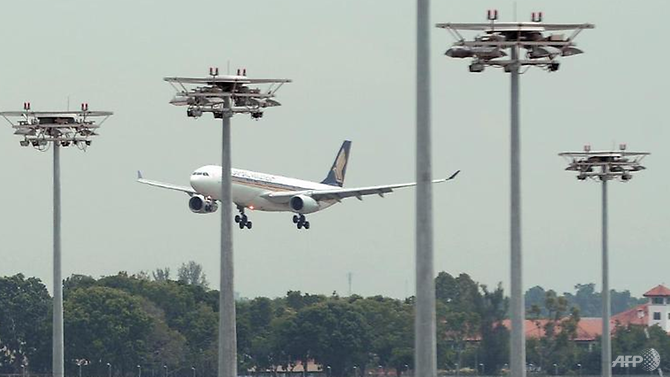
File photo of a Singapore Airlines plane at Changi Airport. (Photo: AFP/Roslan Rahman)

SINGAPORE: Southeast Asia has a lot to offer to global tourists.

The rich cultural diversity, affordable lifestyle and beautiful geography, all make countries in the ASEAN region attractive to tourists from around the world. Growing connectivity also makes it easier for tourists to experience multiple cities and countries within the same trip. Tiếp tục đọc “Commentary: A golden opportunity to boost travel and tourism within Southeast Asia”

Biển Đông-Cuộc chiến quyền lực ở châu Á – Chương 5: Dầu khí ở Biển Đông

SP – [Trích] Bill Hayton- BIỂN ĐÔNG – Cuộc chiến quyền lực ở châu Á

Chương 5

Được miếng và tay không
Dầu khí ở Biển Đông

Something and Nothing
Oil and Gas in the South China Sea

Tháng 8 năm 1990, Đông Nam Á đã trở nên rất phấn khởi về việc ‘Trung Quốc trở lại’. Đã một năm kể từ khi vụ thảm sát tại quảng trường Thiên An Môn và nhiều nhân vật có ảnh hưởng nghĩ rằng đã tới lúc quay trở lại với công việc [bang giao]. Phô trương ầm ĩ, Thủ tướng Lí Bằng, một trong những người đằng sau vụ thảm sát, đã bắt tay vào một chuyến thăm khu vực 9 ngày. Tiếp tục đọc “Biển Đông-Cuộc chiến quyền lực ở châu Á – Chương 5: Dầu khí ở Biển Đông”

Peak oil in the South China Sea (part 1)

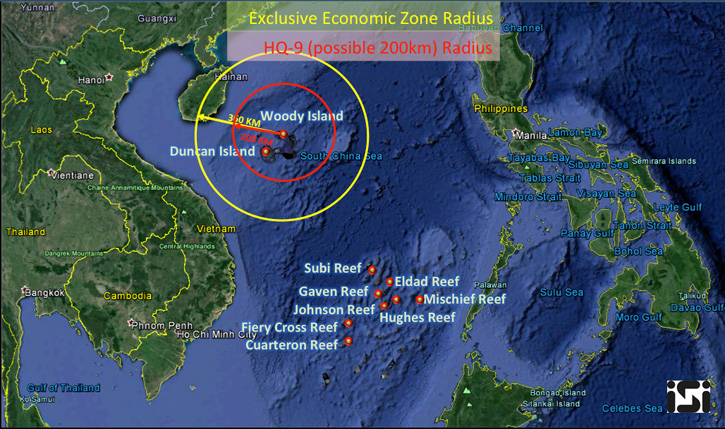
The recent deployment of missile launchers and jet fighters on Woody Island of the Paracel islands have put the spotlight on the South China Sea (SCS).

Fig 1: The 200 mile Economic Exclusion Zone claimed by China around Woody Island and the overlapping 108 nm range of the HQ-9 SAM system. Image via ISI. [Image Sat International]   http://defense-update.com/20160218_woody_island_hq9.html

In this post, we focus on oil production around the SCS. Tiếp tục đọc “Peak oil in the South China Sea (part 1)”

Child refugees held in ‘harrowing’ conditions across south-east Asia

Report reveals young people detained in cells 24 hours a day without enough food or proper access to healthcare, often forced to sleep on the floor

A young Rohingya refugee from Myanmar is held at a detention centre in Medan, Indonesia.
A young Rohingya refugee from Myanmar is held at a detention centre in Medan, Indonesia. Photograph: Romeo Gacad/AFP/Getty Images

Thousands of children are languishing in “dangerous and harrowing” conditions in detention centres across south-east Asia, a report has revealed. Children, including babies, are being held in cells 24 hours a day, alongside dozens of unrelated adults, and are frequently separated from family members. Tiếp tục đọc “Child refugees held in ‘harrowing’ conditions across south-east Asia”

Đông Nam Á cần tái thiết lập các thỏa thuận thương mại

English: South-east Asia needs a reset on trade deals

Singapore đã ký Hiệp định Thương mại tự do (FTA) song phương với New Zealand vào năm 2000. Sau đó không lâu, các quốc gia khác như Malaysia và Thái Lan đã bắt đầu vào cuộc.

Năm 2003, ASEAN 10 quyết định biến các hiệp định thương mại của mình về hàng hóa, dịch vụ và đầu tư trong những năm 1990 thành Cộng đồng Kinh tế ASEAN (AEC), một bước tiến lớn trong hội nhập kinh tế khu vực.

Trong khi Singapore tăng số lượng thỏa thuận thương mại song phương qua các năm, những quốc gia kém phát triển hơn trong khu vực, như Lào và Campuchia, trở thành một phần của các Hiệp định Thương mại tự do thông qua các thể chế của khu vực của Asean thực hiện các thỏa thuận thương mại với Trung Quốc, Nhật Bản, Hàn Quốc, Ấn Độ, Australia và New Zealand. Tiếp tục đọc “Đông Nam Á cần tái thiết lập các thỏa thuận thương mại”

Cạnh tranh tầm nhìn (toàn cầu)

English: Competing Visions

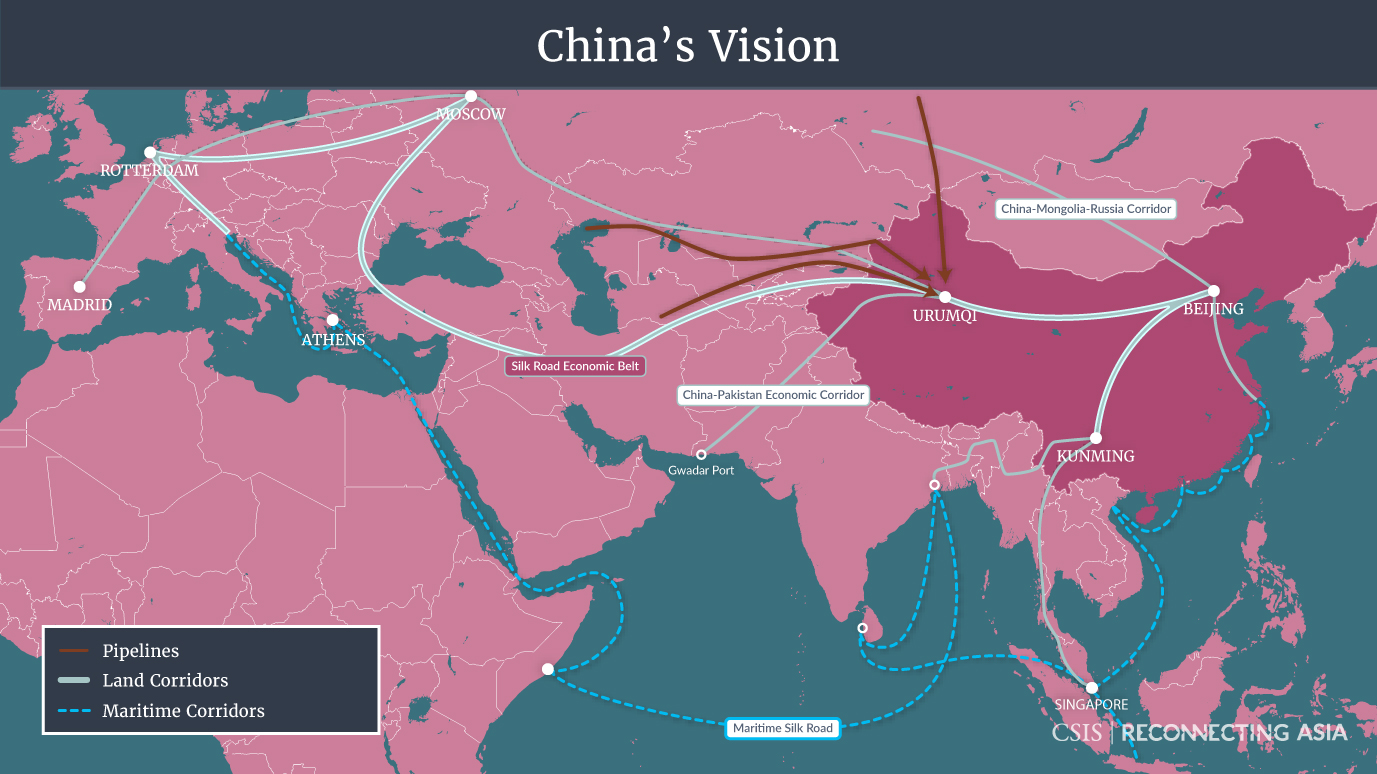
Một cuộc đua địa kinh tế đang diễn ra để định hình tương lai Châu Á. Các cường quốc khu vực đang thúc đẩy các kế hoạch tham vọng về xây dựng các tuyến đường bộ, đường tàu, đường ống dẫn và các cơ sở hạ tầng cứng khác trên khắp khu vực. Dựa các nguồn tin chính thức, các chuyên gia CSIS đã xây dựng các bản đồ dưới đây để minh hoạ cho một số các tầm nhìn cạnh tranh này. Mỗi bản đồ tóm lược một cách chung nhất những ưu tiên chính về cơ sở hạ tầng của các nước lớn trong cuộc đua. Tổng thể, các bản đồ này cho thấy trước một cuộc cạnh tranh rộng khắp như chính khu vực này. Và khi cuộc cạnh tranh diễn ra, các bản đồ dưới đây sẽ được mở rộng và cập nhập.

chinas_vision_10212016

(Bản đồ tầm nhìn Trung Quốc-ảnh) Tiếp tục đọc “Cạnh tranh tầm nhìn (toàn cầu)”

South-east Asia needs a reset on trade deals

Since the early 2000s, countries in South-east Asia have seen a plethora of trade pacts.

Singapore signed a bilateral Free Trade Agreement (FTA) with New Zealand in 2000. Soon, others like Malaysia and Thailand got in on the act.

In 2003, the Asean 10 resolved to turn their trade agreements of the 1990s on goods, services and investments into the Asean Economic Community (AEC), a major advance in regional economic integration. Tiếp tục đọc “South-east Asia needs a reset on trade deals”

CSIS – Southeast Asia Sit-Rep – September 22, 2016

CSIS Southeast Asia SIT-REP

This issue brings you insight into the role of diplomacy and security in U.S. policy following the arbitral tribunal ruling on the South China Sea, an overview of Cambodia’s deteriorating political situation, analysis on the challenges in Myanmar’s peace process awaiting Aung San Suu Kyi, discussions with Philippine foreign secretary Perfecto Yasay and Japanese defense minister Tomomi Inada, and much more. Links will take you to the full publications, multimedia, or to registration for upcoming programs when available. To jump to a section, select one of the following:

Tiếp tục đọc “CSIS – Southeast Asia Sit-Rep – September 22, 2016”

CSIS – Southeast Asia Sit-Rep – September 8, 2016

CSIS Southeast Asia SIT-REP

This issue features analyses on U.S.-Myanmar relations in coming years in light of State Counselor Aung San Suu Kyi’s visit to Washington and U.S.-Laos cooperation on the Agent Orange war legacy as the two countries expand ties; and includes upcoming CSIS events on Myanmar and the Philippines. Links will take you to the full publications, multimedia, or to registration for upcoming programs when available. To jump to a section, select one of the following: Tiếp tục đọc “CSIS – Southeast Asia Sit-Rep – September 8, 2016”

CSIS – Southeast Asia from Scott Circle – September 1, 2016

Cementing a New Normal in U.S.-Myanmar Relations

By Murray Hiebert (@MurrayHiebert1), Senior Adviser and Deputy Director, and Phuong Nguyen (@PNguyen_DC), Associate Fellow, Southeast Asia Program (@SoutheastAsiaDC), CSIS

September 1, 2016

Aung San Suu Kyi’s visit to the United States on September 13-14 as state counselor and de facto leader of Myanmar will be one of the highlights in U.S.-Myanmar relations since the two countries normalized diplomatic ties in 2012, after the military began political reforms. Now that a democratically elected government has taken office, the next five years will allow the two countries to lay the foundation for a new chapter in their bilateral relations. Tiếp tục đọc “CSIS – Southeast Asia from Scott Circle – September 1, 2016”

Chính sách Hướng Đông của Nga và tác động đối với Đông Nam Á và Biển Đông

NCBĐ – Thứ sáu, 29 Tháng 1 2016 07:45

Một năm trước khi Chính quyền Obama công bố chiến lược tái cân bằng sang châu Á, thì Tổng thống Vladimir Putin đã tuyên bố Nga sẽ “hướng Đông”. Điều gì thúc đẩy chính sách Hướng Đông của Putin và liệu kết quả có như mong đợi? Lập trường của Nga và tác động như thế nào đến tình hình Biển Đông?

Tiếp tục đọc “Chính sách Hướng Đông của Nga và tác động đối với Đông Nam Á và Biển Đông”