CSIS – Southeast Asia from Scott Circle – June 10, 2016

Aung San Suu Kyi Sets Out to Find “Practical Solutions” in Rakhine State, and the World Should Help

By Murray Hiebert (@MurrayHiebert1), Senior Adviser and Deputy Director, and Phuong Nguyen (@PNguyen_DC), Associate Fellow, Southeast Asia Program (@SoutheastAsiaDC), CSIS

June 10, 2016

Two months after the National League for Democracy (NLD) government took office, State Counselor and Foreign Minister Aung San Suu Kyi embarked on a process to start addressing the plight of stateless Muslims in Rakhine State, one of the most intractable—and internationally contentious—challenges facing Myanmar. In a joint press conference with U.S. secretary of state John Kerry on May 22, Aung San Suu Kyi asked that she be given “enough space” to tackle the problem. Tiếp tục đọc “CSIS – Southeast Asia from Scott Circle – June 10, 2016”

Boom times lead to record pollution levels in Vietnam and beyond

https://cdn.asiancorrespondent.com/wp-content/uploads/2016/03/5208232321_a44fb4474e_b-940x580.jpg

The hazy smog of Hanoi and the Red River via Flickr (Addison Berry)

asiancorrespondent – ON March 5, the U.S. Embassy in Hanoi issued a startling report on local pollution levels that caused considerable alarm for a city not used to Beijing-style waves of smog. Tiếp tục đọc “Boom times lead to record pollution levels in Vietnam and beyond”

EU free trade deal will trap Vietnam in low-wage, low-skill cycle

CSIS Southeast Asia Sit-Rep – May 19, 2016

CSIS Southeast Asia SIT-REP

This issue includes the case for fully lifting the U.S. ban on lethal arms sales to Vietnam, analyses on the Philippine presidential elections and issues facing the incoming administration of president-elect Rodrigo Duterte, an overview of the challenges facing President Barack Obama on issues related to the Trans-Pacific Partnership when he visits Vietnam, and much more. Links will take you to the full publications, multimedia, or to registration for upcoming programs when available. To jump to a section, select one of the following: Tiếp tục đọc “CSIS Southeast Asia Sit-Rep – May 19, 2016”

CSIS – Southeast Asia from Scott Circle – May 12, 2016

Fully Lifting the U.S. Lethal Arms Ban Will Add Momentum to U.S.-Vietnam Relations

By Murray Hiebert (@MurrayHiebert1), Senior Adviser and Deputy Director, and Phuong Nguyen, Associate Fellow (@PNguyenDC), Southeast Asia Program (@SoutheastAsiaDC), CSIS

May 12, 2016

Ahead of President Barack Obama’s visit to Vietnam in late May, officials and analysts in both Washington and Hanoi have been talking about whether the United States should fully lift the ban on the sale of lethal weapons to Vietnam that was imposed when the Vietnam War ended in 1975. The issue has been given added urgency as bilateral relations have increasingly warmed and in light of shared U.S. and Vietnamese interests in preserving maritime security in the South China Sea. Tiếp tục đọc “CSIS – Southeast Asia from Scott Circle – May 12, 2016”

Asian LNG Demand: Key Drivers and Outlook

Oxfordenergy

The LNG Industry has long regarded the Asian markets of Japan, South Korea, Taiwan, China and India as high growth importing markets, willing to sign long term contracts with price terms linked to crude oil prices.  The rebound in Asian LNG demand in 2010, following the post-financial crisis year of 2009, re-affirmed this paradigm with LNG markets further tightening following the Fukushima tragedy. The signal for new LNG supply projects could not have been clearer in 2010 and 2011.

While the LNG supply projects triggered by such high demand growth and price signals were being constructed however, Asian demand for LNG began to wane.  This appeared to be partly a consequence of mild winters but also LNG import prices and a general regional economic slowdown, perhaps led by China, also contributed.  This paper seeks to provide a ‘ground level’ understanding of the existing, emerging and potential Asian LNG markets and highlights data sources from in-country government departments, often overlooked from a European or North American perspective.

The picture presented in this paper is one of LNG having to shed its mantle of a premium fuel whose import price is linked to that of oil and ‘re-market’ itself as fuel which can contribute to a lower carbon future, by displacing coal in national energy mixes, and equally importantly reducing particulate emissions. This however calls for a radical renaissance in marketing by upstream LNG producers and strenuous efforts in cost reduction through competition in the liquefaction equipment sector.

The paper provides a framework for analysing and monitoring these markets which, if not currently deemed to offer the high levels of future LNG demand anticipated from the standpoint of the early 2010s, will nevertheless constitute a key element of the global LNG balance for the foreseeable future. As such they will significantly impact the fundamentals and pricing dynamics of the increasingly ‘connected’ global regional gas markets.

Executive Summary

CSIS – Southeast Asia from Scott Circle – April 28 2016

The Overlooked Gap in the Southeast Asia Maritime Security Initiative

By Conor Cronin (@ConorCroninDC ), Research Associate, Southeast Asia Program (@SoutheastAsiaDC), CSIS

April 28, 2016

Secretary of Defense Ashton Carter’s trip to the Philippines on April 13-15 was an affirmation of U.S. support for its treaty ally amid the simmering South China Sea maritime disputes. The timing of his visit—at the end of the annual Balikatan U.S.-Philippine joint exercises and just weeks before an expected decision by the Permanent Court of Arbitration in The Hague in the Philippines’ arbitration case against China’s nine-dash- line claim—was a clear message to Beijing and Manila that Philippine maritime security is a priority for the United States. Tiếp tục đọc “CSIS – Southeast Asia from Scott Circle – April 28 2016”

CSIS – Southeast Asia SIT-REP – April 20, 2016

CSIS Southeast Asia SIT-REP

This issue includes an update on the situation facing minority groups in Indonesia, an overview of the strategic case for the Trans-Pacific Partnership trade agreement, and analyses on the Philippines’ security environment and U.S. Secretary of Defense Ashton Carter’s visit to India, and much more. Links will take you to the full publications, multimedia, or to registration for upcoming programs when available. To jump to a section, select one of the following:

Tiếp tục đọc “CSIS – Southeast Asia SIT-REP – April 20, 2016”

ASEAN should choose CUES for the South China Sea

8 April 2016 East Asia Forum

Author: Lee YingHui, RSIS

Recent developments in the South China Sea are a serious cause for concern for Southeast Asian states, which have a huge interest in ensuring the safety and security of these waters given their importance for international shipping. Ongoing militarisation in the disputed waters increases the risks of unintended military confrontations, threatening regional stability.

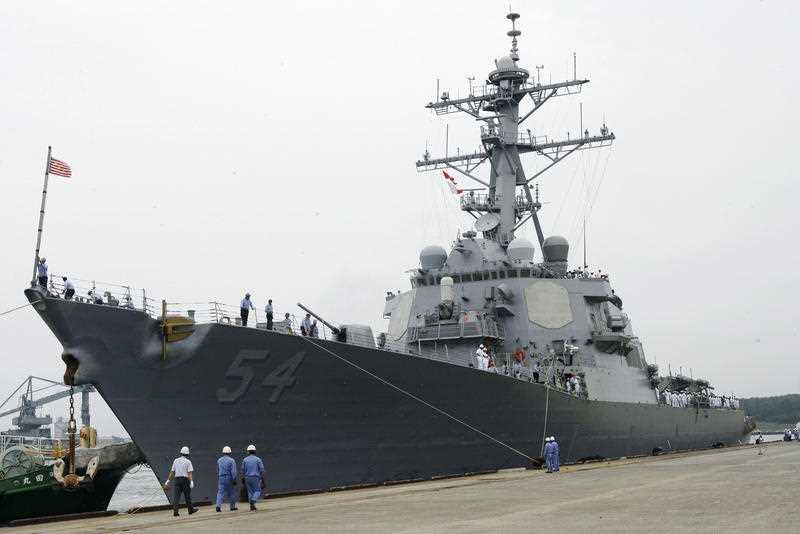
A U.S. Navy destroyer. (Photo: AAP)

China’s extensive land reclamation and installation of military facilities on the disputed islands, together with the United States’ increasingly high-profile naval operations in the region, further increase the complexity and volatility of the situation in the South China Sea. Tiếp tục đọc “ASEAN should choose CUES for the South China Sea”

CSIS Southeast Asia SIT-REP, April 9, 2016

CSIS Southeast Asia SIT-REP

This issue includes an analysis of Myanmar’s foreign policy outlook under the National League for Democracy government, an explainer on the Philippine presidential elections, and analyses on Vietnam’s challenges in dealing with China and the ASEAN Economic Community 2025’s blueprint, and much more. Links will take you to the full publications, multimedia, or to registration for upcoming programs when available. To jump to a section, select one of the following: Tiếp tục đọc “CSIS Southeast Asia SIT-REP, April 9, 2016”

CSIS – Southeast Asia from Scott Circle – March 31, 2016


Foreign Minister Aung San Suu Kyi Has China, Myanmar’s Military Watching

By Phuong Nguyen (@PNguyen_DC), Associate Fellow, Chair for Southeast Asia Studies (@SoutheastAsiaDC), CSIS

March 31, 2016

Myanmar experienced a number of firsts over the past week. The Union Parliament—which now counts former political prisoners, doctors, businesspeople, and poets among its ranks—on March 24 approved a new cabinet to serve under the incoming National League for Democracy (NLD) government, the first civilian government to rule the country in over 50 years. In a speech on Armed Forces Day on March 27, Commander-in-chief General Min Aung Hlaing urged Myanmar’s military to cooperate with the incoming government to help fulfill “the country’s fundamental needs of stability, solidarity, and development.” Tiếp tục đọc “CSIS – Southeast Asia from Scott Circle – March 31, 2016”

CSIS Southeast Asia Sit-Rep – March 24, 2016

CSIS Southeast Asia SIT-REP

This issue includes a survey of Japan’s energized agenda in Southeast Asia, and analyses on Indonesia’s turning point in its South China Sea policy, prospects for Myanmar’s peace process under the new government, and the reemerging debate on reviving a quadrilateral strategic dialogue between Australia, India, Japan, and the United States. Links will take you to the full publications, multimedia, or to registration for upcoming programs when available. To jump to a section, select one of the following:

Tiếp tục đọc “CSIS Southeast Asia Sit-Rep – March 24, 2016”

CSIS: Southeast Asia from Scott Circle – March 17, 2016

Southeast Asia Dances to the Tune of Japan’s Abe Doctrine

By Phuong Nguyen (@PNguyen_DC), Associate Fellow, Chair for Southeast Asia Studies (@SoutheastAsiaDC), CSIS

March 17, 2016

In Southeast Asia, Japan can be said to enjoy unrivaled popularity. According to the 2015 Pew Global Attitudes survey, an average of about 80 percent of respondents surveyed across four Southeast Asian countries said they hold a favorable view of Japan. While China’s expanding military footprint in the disputed South China Sea has a headline-grabbing impact, Japan’s influence in this critical region is felt more steadfastly, but increasingly so, in recent years. Tiếp tục đọc “CSIS: Southeast Asia from Scott Circle – March 17, 2016”

CSIS Southeast Asia SIT-REP, March 10, 2016

This issue includes an overview of U.S. policy toward Myanmar as the National League for Democracy government prepares to take power, and analyses on Australia’s 2016 Defence White Paper, Prime Minister Malcolm Turnbull’s shift on the South China Sea, and the role of ASEAN in defending rules and norms in the South China Sea. Links will take you to the full publications, multimedia, or to registration for upcoming programs when available. To jump to a section, select one of the following:


Commentaries

Deep insight into developments that move the dial

Aung San Suu Kyi Is Key to Further Unlocking of U.S. Sanctions against Myanmar,” by Murray Hiebert (@MurrayHiebert1) Tiếp tục đọc “CSIS Southeast Asia SIT-REP, March 10, 2016”

Consumer goods giants under fire for poor palm oil record

Italian confectionery maker Ferrero is leading the consumer goods industry on sustainable palm oil procurement while household names Colgate-Palmolive, Johnson&Johnson, and PepsiCo are the biggest laggards, according to a new scorecard by Greenpeace International.

The scorecard ranked the 14 global companies which have made no-deforestation promises in recent years on their performance in three key areas: responsible sourcing of palm oil; transparency about their supply chain; and their support for wider industry reform. 

The 14 corporations were: Colgate-Palmolive, Danone, Ferrero, General Mills, Ikea, Johnson & Johnson, Kellogg, Mars, Mondelez, Nestle, Orkla, PepsiCo, P&G and Unilever. Tiếp tục đọc “Consumer goods giants under fire for poor palm oil record”