I am an attorney in the Washington DC area, with a Doctor of Law in the US, attended the master program at the National School of Administration of Việt Nam, and graduated from Sài Gòn University Law School. I aso studied philosophy at the School of Letters in Sài Gòn.
.
I have worked as an anti-trust attorney for Federal Trade Commission and a litigator for a fortune-100 telecom company in Washington DC.
I have taught law courses for legal professionals in Việt Nam and still counsel VN government agencies on legal matters.
I have founded and managed businesses for me and my family, both law and non-law.
I have published many articles on national newspapers and radio stations in Việt Nam.
In 1989 I was one of the founding members of US-VN Trade Council, working to re-establish US-VN relationship.
Since the early 90's, I have established and managed VNFORUM and VNBIZ forum on VN-related matters; these forums are the subject of a PhD thesis by Dr. Caroline Valverde at UC-Berkeley and her book Transnationalizing Viet Nam.
I translate poetry and my translation of "A Request at Đồng Lộc Cemetery" is now engraved on a stone memorial at Đồng Lộc National Shrine in VN.
I study and teach the Bible and Buddhism. In 2009 I founded and still manage dotchuoinon.com on positive thinking and two other blogs on Buddhism.
In 2015 a group of friends and I founded website CVD - Conversations on Vietnam Development (cvdvn.net).
I study the art of leadership with many friends who are religious, business and government leaders from many countries.
I have written these books, published by Phu Nu Publishing House in Hanoi:
"Positive Thinking to Change Your Life", in Vietnamese (TƯ DUY TÍCH CỰC Thay Đổi Cuộc Sống) (Oct. 2011)
"10 Core Values for Success" (10 Giá trị cốt lõi của thành công) (Dec. 2013)
"Live a Life Worth Living" (Sống Một Cuộc Đời Đáng Sống) (Oct. 2023)
I practice Jiu Jitsu and Tai Chi for health, and play guitar as a hobby, usually accompanying my wife Trần Lê Túy Phượng, aka singer Linh Phượng.
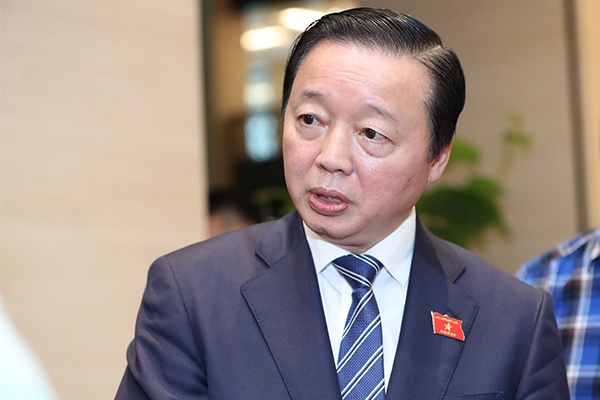
Answering the local press on the sidelines of the National Assembly session, Minister of Natural Resources and the Environment Tran Hong Ha said the principle of his ministry is ‘not to develop small-scale hydropower at any cost’.
Many experts believe that the historic floods in the central region some days ago were the results of climate change. How does the draft of the amended law on environmental protection address the issue?
Minister of Natural Resources and the Environment Tran Hong Ha
The issues related to climate change, natural disasters and floods are mentioned in many laws. The reason behind recent floods is extreme climate change. All the indicators exceed the indicators of the floods in history.
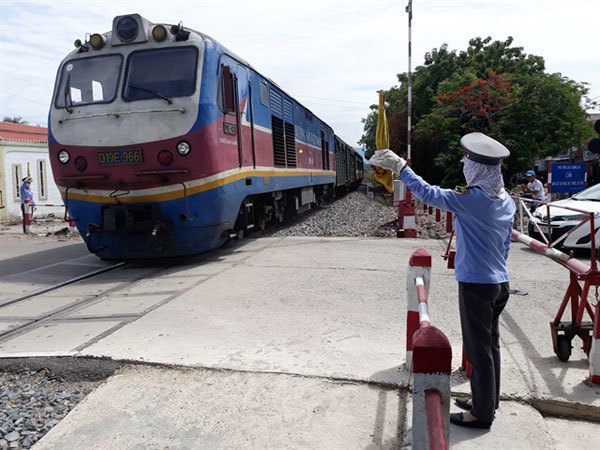
Prime Minister Nguyen Xuan Phuc asked the Ministry of Transport to propose a feasible plan for the North-South high-speed railway, considering this the backbone of the national strategy on railway development by 2050.
A train in Ninh Phuoc District, Ninh Thuan Province. — VNA/VNS Photo
The high-speed line, inter-provincial, inter-regional and urban railway networks must also be added to the strategy, he said.
He was speaking at a Government meeting on Wednesday on the development strategy for Vietnam’s railway towards 2050.
PRESIDENT TRUMP: (In progress) …on the phone, we have some terrific people: Chairman Abdel al-Burhan and Prime Minister Abdalla Hamdok of Sudan — a beautiful part of the world; and Prime Minister Benjamin Netanyahu — I think you mostly know him. You perhaps heard of him somewhere. We have the very highly sophisticated press. I think they may have heard of him, of Israel. So I want to just congratulate all of you.
The State of Israel and the Republic of Sudan have agreed to make peace. This is for many, many years they’ve been at odds, to put it nicely, and to normalize their relations. This will be the third country where we’re doing this. And we have many, many more coming. We have — they’re coming at us hot and heavy. In the coming weeks, they will meet to negotiate cooperation agreements. You saw that happen with UAE and Bahrain recently in agriculture, technology, aviation, migration, and other critical areas.
“Over the last quarter century, our two countries have built a partnership and friendship founded on shared interests, mutual respect, and people-to-people ties. Our everyday interactions are highlighted by increasing trade and investment ties, strategic cooperation, and collaboration on humanitarian and legacy of war issues, including the solemn duty of accounting for our wartime missing. In recent years, we have strengthened and expanded our Comprehensive Partnership, based on a shared vision of a stable and peaceful Indo-Pacific region, as well as respect for each other’s independence, sovereignty, territorial integrity, and political systems.”
– U.S. Secretary of State Michael R. Pompeo, July 10, 2020
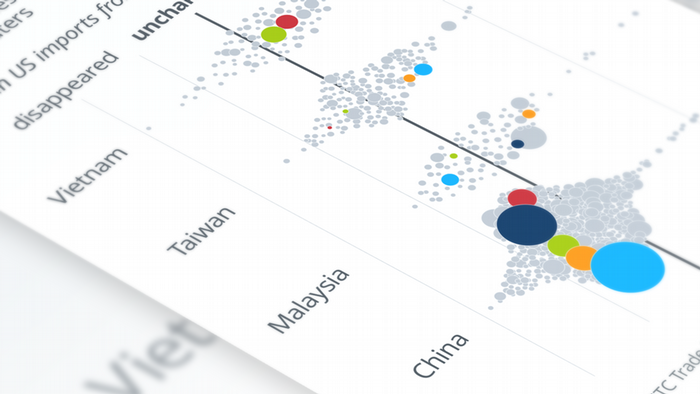
With tariffs on Chinese products high, US importers are turning to other countries. A DW analysis shows where Americans are now buying their cell phones, computers, furniture and clothing from instead.
Dung Trans’ business is booming: “Last year, we added a second floor to our factory. And now I’m looking at a new site four times larger than the current one.” For his company, the ongoing trade dispute between China and the United States has been a boon. And he is not alone.
(CNN)The Unites States has charged eight people, including six Chinese citizens, over a three-year plot to intimidate a US resident into returning to China to face criminal charges.The case is believed to be part of the ruling Communist Party’s Operation Fox Hunt, an international anti-corruption campaign targeting Chinese fugitives — often former officials or rich individuals suspected of economic crimes.The US Department of Justice said Wednesday the charges included “conspiring to act in the US as illegal agents of the People’s Republic of China.” Five people have been arrested, while three are believed to be at large in China.In 2016, the group — which includes an American-licensed private investigator — is alleged to have embarked on an illegal campaign targeting a former Chinese government official, who has lived in the US since 2010. They are accused of recording and harassing his daughter, taping a threatening note to his front door and flying his elderly father from China — allegedly against his will — in 2017 to pressure his son to return to China.The note on the target’s New Jersey home said in Chinese: “If you are willing to go back to the mainland and spend 10 years in prison, your wife and children will be all right. That’s the end of this matter!”Speaking at a press conference Wednesday, US Assistant Attorney General John C. Demers said the arrests sent a message that the US “will not tolerate this type of flagrant conduct on our shores.”close dialog
Get daily analysis on the historic 2020 US election delivered to your inbox.Sign Me UpNo ThanksBy subscribing you agree to ourprivacy policy.“Without coordination with our government, China’s repatriation squads enter the United States, surveil and locate the alleged fugitives, and deploy intimidation and other tactics to force them back into China where they would face certain imprisonment or worse following illegitimate trials,” he said.Speaking at a press conference Thursday, Chinese Foreign Ministry spokesman Wang Wenbin said that Chinese law enforcement agencies “conduct foreign cooperation in strict accordance with international law, fully respect foreign laws and judicial sovereignty.””The United States ignores the basic facts and uses ulterior motives to smear China’s work in pursuit of escaped and stolen goods. China firmly opposes this. We urge the US to immediately correct its mistakes,” he said.
Operation Fox Hunt
The Chinese government launched Operation Fox Hunt in 2014 to target wealthy citizens who were accused of corruption and had fled the country with large amounts of money.Beijing authorities said at least 150 corrupt officials had fled to the US, and provided American counterparts with a list of “priority cases.”Demers said such operations — regardless of whether the targets were guilty or not — were “a clear violation of the rule of law and international norms.””Rather than work with US authorities for assistance with recognized criminal cases as responsible nations do, China resorts to extralegal means and unauthorized, often covert, law enforcement activity,” he said.FBI Director Christopher Wray said at a news conference Wednesday that in a different Operation Fox Hunt case, the Chinese government had sent an “emissary” to the target’s US-based family warning that the person should “return to China promptly or commit suicide.”Wray said that when Operation Fox Hunt targets refuse to return to China, family members in their home country “have even been arrested for leverage.””These are not the actions we would expect from a responsible nation state. Instead they’re more like something we would expect from an organized criminal syndicate,” Wray said.
Wednesday, October 28, 2020, 16:44 GMT+7 Tuoitrenews
The logo of the multinational electric power company AES is seen at an office in Santiago, Chile June 4, 2019. Photo: Reuters
HANOI — AES Corp. will sign a deal with PetroVietnam Gas GAS.HM to develop a $2.8 billion liquefied natural gas (LNG) import terminal and a power plant in Vietnam, U.S. Secretary of State Mike Pompeo said on Wednesday.
China says decision was ‘necessary’ after the US declared several more Chinese media outlets to be ‘foreign missions’
The US media firms affected are the American Broadcasting Corporation (ABC), the Los Angeles Times, Newsweek, Feature Story News, the Bureau of National Affairs and Minnesota Public Radio Photograph: Richard Vogel/APStaff and agencies
Mon 26 Oct 2020 16.42 GMT
China has tightened the rules on a number of US media outlets, in a move it said was “necessary and reciprocal” after Chinese journalists in America were hit with restrictions last week.
The US media firms affected are the American Broadcasting Corporation (ABC), the Los Angeles Times, Newsweek, Feature Story News, the Bureau of National Affairs and Minnesota Public Radio.
A foreign ministry spokesman, Zhao Lijian, said in a statement that the requirements were “legitimate and justified self-defense in every sense”.
“What the United States has done is exclusively targeting Chinese media organizations driven by the cold war mentality and ideological basis,” Zhao added.
The moves are the latest in a series of tit-for-tat measures between Beijing and Washington.
Last week the US designated a further six Chinese media organisations as propaganda outlets that answer to the state.
The department earlier imposed rules on nine outlets including the official Xinhua news agency and China Global Television Network.
China has denounced the regulations and retaliated by expelling US citizens who work for major news organisations, including the New York Times, the Washington Post and the Wall Street Journal.
In May the US shortened the visa for Chinese journalists in America to 90 days, and last month the Foreign Correspondents’ Club of China said Beijing was no longer renewing press credentials for US media employees in the country.
This week, the U.S. government for the first time imposed economic penalties on Chinese businesses for their behavior in the South China Sea. The Commerce Department placed 24 Chinese companies on the Entity List. The list restricts exports of certain goods to companies and individuals that threaten U.S. national security or foreign policy priorities. According to Commerce Secretary Wilbur Ross, the 24 companies (22 of which are state-owned enterprises) were selected because they “played a significant role” in China’s construction of artificial bases in the Spratly Islands. The State Department, meanwhile, announced that it would not issue visas to Chinese nationals “responsible for, or complicit in, either the large-scale reclamation, construction, or militarization of disputed outposts in the South China Sea, or the PRC’s use of coercion against Southeast Asian claimants to inhibit their access to offshore resources.”
Updated 0946 GMT (1746 HKT) October 27, 2020US Secretary of State Mike Pompeo (right) is greeted by US Ambassador to India Kenneth Juster upon his arrival at an airport in New Delhi on October 26, 2020.
Hong Kong (CNN)The United States and India have reaffirmed their defensive and security relationship, as Washington continues to rally allies in Asia amid concerns over increased Chinese military activity in the region.During a press conference Tuesday in the Indian capital, US Secretary of Defense Mark Esper and his Indian counterpart Rajnath Singh announced the signing of the Basic Exchange and Cooperation Agreement (BECA), enabling greater information-sharing and further defense cooperation between the two countries.”The defense ties between our two nations remains a key pillar of our overall bilateral relationship,” said Esper. “Based on our shared values and common interests, we stand shoulder to shoulder in support of a free and open Indo-Pacific for all, particularly in light of increasing aggression and destabilizing activities by China.”The agreement, said Singh furthered the two sides ongoing commitment to the “law and freedom of navigation in the international seas” while “upholding the territorial integrity and sovereignty of all states.”Both India and the US are due to participate in the upcoming Malabar naval exercises which will be held in the Indian Ocean next month. The drills will feature all members of the so-called Quad, an informal alliance of the US, India, Japan and Australia, which has been proposed by some as a potential “Asian NATO,” intended to counterbalance Chinese military strength in the region. Tiếp tục đọc “India signs defensive agreement with US following Himalayan standoff with China”→
Hong Kong (CNN)Tens of thousands of US and Japanese troops will begin a massive island-landing exercise in the Pacific this week as part of joint military operations seen as a warning to China that Washington backs Tokyo over Beijing’s claim to Japanese-controlled islands.Speaking aboard a Japanese warship Monday, Lt. Gen. Kevin Schneider, commander of US Forces Japan, said the exercises would demonstrate the ability of the US-Japan alliance “to deliver combat troops to defend the Senkakus or respond to other crises or contingencies.”Both Tokyo and Beijing claim the Senkaku Islands, known as the Diaoyus in China, as their own, but Japan has administered them since 1972.Tensions over the uninhabited rocky chain, 1,200 miles (1,900 kilometers) southwest of Tokyo, have simmered for years, and with claims over them dating back centuries, neither Japan nor China is likely to back down.Chinese vessels have been spending record amounts of time in the waters around the islands this year, drawing condemnation from Tokyo.The US-Japan exercises, named Keen Sword 21, have been held biennially for more than 30 years. This year’s exercises run through to November 5.
The United States has made the global fight against human trafficking a policy priority and employs a whole-of-government approach to stop human traffickers, protect victims, and prevent this crime.
Combating human trafficking requires a comprehensive, multidisciplinary effort. Within government, this means the participation and coordination among agencies with a range of responsibilities, including criminal enforcement, labor enforcement, victim outreach and services, public awareness, education, trade policy and promotion, international development and programs, customs and immigration, intelligence, and diplomacy. Coordinated federal efforts that incorporate state, local, and tribal entities; the private sector; civil society; survivors; religious communities; and academia are essential to an integrated response to human trafficking that leverages resources and amplifies results.
By Nike ChingUpdated October 25, 2020 01:41 PM VOA
STATE DEPARTMENT – U.S. Secretary of State Mike Pompeo and Defense Secretary Mark Esper departed for India Sunday to strengthen bilateral security cooperation as Washington looks to confront Chinese geopolitical and economic challenges in the Indo-Pacific region.
On December 12, 2019, Malaysia made a partial submission to the UN Commission on the Limits of the Continental Shelf (CLCS) outlining the northern part of its purported extended continental shelf in the South China Sea. It set off a flurry of diplomatic notes from other claimants and interested parties. China lodged its objections the very same day. A few months later, the Philippines weighed in. Then China again followed by Vietnam and so on. The salvos have continued for nearly a year. To date, 12 countries have joined this back and forth via notes to the CLCS. This also coincided with a general review by Washington of the U.S. position on South China Sea claims. Secretary of State Mike Pompeo on July 13 clarified that the United States agrees with the merits of the 2016 decision in the Philippines’ arbitration case against China.



 US Secretary of State Mike Pompeo (right) is greeted by US Ambassador to India Kenneth Juster upon his arrival at an airport in New Delhi on October 26, 2020.


