46 Vietnamese tourists disappear from Jeju Island: S.Korea media

TUOI TRE NEWS

UPDATED : 01/16/2016 09:50 GMT + 7

A group of Vietnamese tourists have ‘vanished’ into thin air when they were visiting the South Korean resort island of Jeju, local media reported on Friday.

The 46 disappeared people are among 155 Vietnamese vacationers who started visiting the island for a six-day trip on Tuesday, according to South Korea’s Yonhap news agency.

These visitors from Vietnam, as well as other countries that are not linked to terrorism, are allowed to enter and stay on Jeju without a visa for up to 30 days on tourism purpose, according to a special act applicable for the island.

Vietnam’s ‘Putin’ Steers Country Away From China, Toward U.S.

nbcnews.com

BEIJING — Vietnam’s prime minister, a former child messenger for the Viet Cong, has spent his 10 years in power standing up to the Chinese and steering his country closer to the U.S.

Tipped as a strong candidate to become the head of Vietnam’s Communist Party at next week’s National Congress, Nguyen Tan Dung has already been dubbed his country’s “Putin.”

Image: Folks singers and dancers perform
Folks singers and dancers perform at a reception commemorating 60 years diplomatic relations between China and Vietnam in a hotel in Beijing on Tuesday. Eric Baculinao / NBC News

“No one in Vietnam has done a Vladimir Putin, who has served as prime minister and then president,” said Professor Carl Thayer, an expert on Vietnam affairs at the University of New South Wales at the Australian Defense Force Academy. Tiếp tục đọc “Vietnam’s ‘Putin’ Steers Country Away From China, Toward U.S.”

Đặt đá xây Khu tưởng niệm Nghĩa sĩ Hoàng Sa

17/01/2016 11:48 GMT+7

TTO – Công trình như sự nhắc nhớ bao thế hệ người dân Việt Nam về những người đã ngã xuống để cắm mốc khẳng định chủ quyền của Việt Nam với Hoàng Sa và Trường Sa.

Ngư dân, nhà nghiên cứu... chia sẻ những câu chuyện của mình trong việc bảo vệ chủ quyền Hoàng Sa - Trường Sa - Ảnh: Trần Mai
Ngư dân, nhà nghiên cứu… chia sẻ những câu chuyện của mình trong việc bảo vệ chủ quyền Hoàng Sa – Trường Sa – Ảnh: Trần Mai

Sáng 17-1, tại huyện đảo Lý Sơn tỉnh Quảng Ngãi, Tổng Liên đoàn Lao Động Việt Nam, phối hợp với Tỉnh uỷ, UBND tỉnh Quảng Ngãi đã tổ chức buổi lễ đặt viên đá, khởi công xây dựng Khu tưởng niệm “Nghĩa sĩ Hoàng Sa”.

Toàn bộ khu tưởng niệm được đặt trên diện tích khoảng 1,5-2 ha trên đỉnh núi Thới Lới, phía Đông Bắc đảo. Công trình có tổng vốn đầu tư khoảng 70 tỉ đồng. Tiếp tục đọc “Đặt đá xây Khu tưởng niệm Nghĩa sĩ Hoàng Sa”

Thời mạt pháp là đây

Các bạn muốn biết thời mạt pháp hiện nay thế nào?

Hãy xem 2 videos dưới đây:

1. Sư mang cà sa, hát nhạc tình (10 Năm Tình Cũ) trong chánh điện của chùa, trước các tượng Phật và Phật bà Quan âm.

2. Một đoàn phụ nữ mặc áo tràng (là áo chỉ mặc trong đạo tràng) nhảy múa như điên trong đại điện của Chùa, có 3 sư ngồi đó.

Nam mô A di đà Phật, xin chư Phật chư Bồ tát cứu khổ cứu nạn chúng con.

Phần1

Phần2

Biên Giới Việt Nam và Trung Quốc qua Các Triều Đại Quân Chủ Việt Nam

“BÁO VĂN HÓA-CALIFORNIA” THỨ HAI 04 JAN 2016

 LỜI TÒA SOẠN:

Trong cuộc bảo vệ sự toàn vẹn – chủ quyền lãnh thổ lãnh hải sinh tử hiện nay đối với người láng giềng khổng lồ phương Bắc; nhận lời mời của Nhật báo Văn Hóa Online, Giáo sư Phạm Cao Dương đã gởi cho Văn Hóa bài viết về vấn đề hệ trọng này nhân ngày đầu năm Dương lịch 2016.

Xin gởi đến quý bạn đọc vài hàng tiểu sử Giáo sư Phạm Cao Dương:

Giáo Sư Phạm Cao Dương, Tiến Sĩ Sử Học Đại Học Paris- Sorbonne, trước năm 1975 giảng dạy tại Đại Học Sư Phạm và Đại Học Văn Khoa Saigon, đồng thời là Giáo Sư Thỉnh Giảng tại các Đại Học Huế, Cần Thơ, Vạn Hạnh, Đà-Lạt, Cao Đài…Ngoài việc dạy học, GS Phạm Cao Dương còn là Hội Viên của các Hội Đồng Văn Hóa Giáo Dục, Hội Đồng Quốc Gia Khảo Cứu Khoa Học và Ủy Ban Điển Chế Văn Tự của Chính Phủ Việt Nam Cộng Hòa.

Trong phạm vi khảo cứu, Giáo Sư Phạm Cao Dương là tác giả của nhiều sách và bài nghiên cứu về lịch sử và văn hóa Việt Nam xuất bản bằng tiếng Việt, tiếng Pháp và tiếng Anh trong đó có các tác phẩm Vietnamese Peasants Under French Domination, do Trung Tâm Nam và Đông Nam Á, Đại Học Berkeley và University Press of America cùng ấn hành năm 1985 và nhiều sách hay tài liệu giáo khoa khác. Giáo Sư Dương cũng từng là cộng tác viên của Trung Tâm Nghiên Cứu Nam và Đông Nam Á của Đại Học Berkeley Hoa Kỳ và Trung Tâm Quốc Gia Khảo Cứu Khoa Học Pháp.

Sau năm 1975, ông định cư tại Hoa Kỳ và tiếp tục hoạt động trong các ngành giáo dục và nghiên cứu. Ông đã từng giảng dạy các môn về lịch sử, văn hóa và ngôn ngữ Việt  Nam Học tại các Đại Học UCI, UCLA, CSU Long Beach, CSU Fullerton…

Biên Giới Việt Nam và Trung Quốc qua Các Triều Đại Quân Chủ Việt Nam

image003

Phạm Cao Dương

“Một thước núi, một tấc sông của ta, lẽ nào lại nên vứt bỏ?                                     

Ngươi phải kiên quyết tranh biện, chớ cho họ lấn dần.  Nếu họ                                           

không nghe, còn có thể sai sứ sang phương bắc trình bày cho rõ                                         

điều ngay, lẽ gian. Nếu ngươi dám đem một thước, một tấc đất của                        

Thái Tổ làm mồi cho giặc thì tội phải tru di”.

Vua Lê Thánh Tông (1473)


”image001

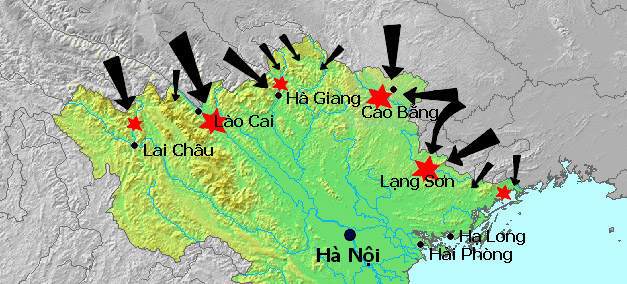
            Do thực tại địa lý, do hoàn cảnh nhân văn và lịch sử và do những quan niệm về chính trị, vấn đề biên giới giữa Việt Nam và Trung Quốc là một vấn đề vô cùng  phức tạp và tế nhị.  Vấn đề này đã được đặt ra ngay từ những ngày đầu của lịch sử dân tộc Việt Nam và tồn tại cho đến tận ngày nay.  Trong bài này người viết trình bày một  cách tổng quát vấn đề biên giới  Việt – Trung qua các triều đại quân chủ trong lịch sử Việt Nam, với nội dung gồm có ba phần: phần thứ nhất nói về tính cách phức tạp của  biên giới giữa Việt Nam và Trung Quốc phần thứ hai  nói về chủ trương và sách lược bảo vệ lãnh thổ của các triều đại Việt Nam ở miền biên giới này và phần thứ ba dành cho một số những cuộc tranh chấp điển hình. Tiếp tục đọc “Biên Giới Việt Nam và Trung Quốc qua Các Triều Đại Quân Chủ Việt Nam”

Liberal Professors Outnumber Conservative Faculty 5 to 1. Academics Explain Why This Matters

The Daily Signal

Students “might tend to think that conservatism is not an intellectual tradition because they don’t see any professors who hold to it,” Carson Holloway, a professor at the University of Nebraska Omaha, said. (Photo: David Trotman-Wilkins/KRT/Newscom)

Professors in higher education have become notably more liberal during the past 25 years, according to a recent study, and academics predict that the trend isn’t likely to slow any time soon.

During the past quarter-century, academia has seen a nearly 20-percent jump in the number of professors who identify as liberal. That increase has created a lopsided ideological spread in higher education, with liberal professors now outpacing their conservative counterparts by a ratio of roughly 5 to 1. Tiếp tục đọc “Liberal Professors Outnumber Conservative Faculty 5 to 1. Academics Explain Why This Matters”

CSIS: AMTI Brief – January 15, 2016

Airstrips Near Completion

In early September 2015, AMTI released images showing that China had effectively completed construction of its first Spratly Islands airstrip on Fiery Cross Reef, was continuing work on its second at Subi Reef, and was preparing to begin work on a third at Mischief Reef. Four months later, China has not only landed three civilian test flights on Fiery Cross, but is progressing even faster than expected with its work at Subi and especially Mischief. Construction of the Fiery Cross airstrip took at least seven months from the start of grading, which was visible by February 2015. Tiếp tục đọc “CSIS: AMTI Brief – January 15, 2016”

Meet China’s Killer Drones

FP

Meet China’s Killer Drones

Meet China’s Killer Drones

Iraqi officials revealed last weekend that one of their armed drones carried out an airstrike which mistakenly killed nine members of a Shiite militia near Tikrit in a friendly fire incident. The news came as a surprise, mostly because many people didn’t know Iraq had armed drones.

Iraq, for the record, very much does. And so do a number of countries, especially in the Middle East, thanks to the rise of China as a prolific developer and no-questions-asked exporter of armed unmanned aerial vehicles (UAVs). Chinese exports are now helping to loosen the door policy of the once-exclusive club of countries with drones capable of destroying targets on the ground. Unmanned Chinese aircraft like the armed Caihong, or “Rainbow,” series of drones are fast becoming the Kalashnikovs of the drone world — entry-level alternatives for countries eager to achieve a basic unmanned strike capability quickly and cheaply. Tiếp tục đọc “Meet China’s Killer Drones”

Joseph Stiglitz: The Trans-Pacific Partnership may turn out to be the worst trade agreement in decades

​​

English & Vietnamese

The Guardian
Sunday 10 January 2016

In 2016, let’s hope for better trade agreements – and the death of TPP

​​

Joseph Stiglitz
The Trans-Pacific Partnership may turn out to be the worst trade agreement in decades

Last year was a memorable one for the global economy. Not only was overall performance disappointing, but profound changes – both for better and for worse – occurred in the global economic system.

Most notable was the Paris climate agreement reached last month. By itself, the agreement is far from enough to limit the increase in global warming to the target of 2ºC above the pre-industrial level. But it did put everyone on notice: the world is moving, inexorably, toward a green economy. One day not too far off, fossil fuels will be largely a thing of the past. So anyone who invests in coal now does so at his or her peril. With more green investments coming to the fore, those financing them will, we should hope, counterbalance powerful lobbying by the coal industry, which is willing to put the world at risk to advance its shortsighted interests. Tiếp tục đọc “Joseph Stiglitz: The Trans-Pacific Partnership may turn out to be the worst trade agreement in decades”

CSIS Southeast Asia Sit-Rep – Jan 14, 2016

CSIS Southeast Asia Sit-Rep – Jan 14

A five-minute read on our best updates and programs

Email not displaying correctly?
View it in your browser.

CSIS SOUTHEAST ASIA SIT-REP

This issue brings you a preview of the Sunnylands summit between President Barack Obama and ASEAN heads of state in February, an explainer on the Jakarta terrorist attacks, analysis on the timing of the Philippines’ arbitration case against China, and much more. Links will take you to the full publications, multimedia, or to registration for upcoming programs when available. To jump to a section, select one of the following:


Tiếp tục đọc “CSIS Southeast Asia Sit-Rep – Jan 14, 2016”

6 Shocking Reasons Why You Can Never Trust “Organic” from China

althealthworks.com
by | January 8, 2016

Lu-Guang-Pollution-in-China-07

Polluted water is a growing problem in China, where it may be used to water crops.

Multiple recent reports exposed conventional foods manufactured in China as fake and even toxic: scams involving rice that contains plastic, fake eggs made from chemicals and many food items containing high levels of arsenic.Now that country-of-origin labeling has been removed by Congress (for meat), and companies are struggling to find new sources of food to meet the growing demand for organics in the United States, it’s becoming more likely that your organic food could come from China or other countries rather than U.S. farmers. Tiếp tục đọc “6 Shocking Reasons Why You Can Never Trust “Organic” from China”

Here’s How Chinese Stocks Short-Circuited

TEA LEAF NATION

Here’s How Chinese Stocks Short-Circuited

Here’s How Chinese Stocks Short-Circuited

It was an embarrassing about-face for Chinese securities regulators. Just days after introducing “circuit breaker” policies on Jan. 4 — which paused stock markets for 15 minutes on a five percent drop and shut them down for the day on a seven percent drop — Beijing announced Jan. 7 that it would suspend the new rules, effective immediately. Tiếp tục đọc “Here’s How Chinese Stocks Short-Circuited”

CSIS: Southeast Asia from Scott Circle – Jan 7, 2016

Sunnylands Summit Provides Opportunity To Bolster U.S.-Southeast Asia Ties

By Murray Hiebert (@MurrayHiebert1), Senior Fellow and Deputy Director, Chair for Southeast Asia Studies (@SoutheastAsiaDC), CSIS

January 7, 2015

President Barack Obama will host leaders from the 10 ASEAN countries for a summit at the lush Sunnylands retreat in southern California on February 15 and 16 in a gesture aimed at deepening U.S. ties to this dynamic region. The president raised the idea of the meeting with Southeast Asian leaders at the U.S.-ASEAN Summit in Kuala Lumpur in November 2015, during which he and his ASEAN counterparts announced the upgrading of U.S.-ASEAN relations to a strategic partnership. The leaders will look to flesh out the ASEAN-U.S. Plan of Action 2016–2020 that they endorsed at the summit in Kuala Lumpur. Tiếp tục đọc “CSIS: Southeast Asia from Scott Circle – Jan 7, 2016”

CSIS Energy Publication | Assessing the Final Clean Power Plan: Emissions Outcomes

FROM THE CSIS ENERGY AND NATIONAL SECURITY PROGRAM

Assessing the Final Clean Power Plan:
Emissions Outcomes

The U.S. Environmental Protection Agency’s (EPA) Clean Power Plan (CPP) is the most significant greenhouse gas (GHG) policy ever undertaken in the United States, and is expected to achieve significant emission reductions by the time it is fully implemented in 2030. However, calculating the ultimate emissions-abatement potential is more difficult than simply adding up the state reduction targets. While the EPA has set a floor on cumulative emissions from existing fossil-fuel-fired power plants, it has not set a ceiling, and projecting the actual emissions outcome on a national level is not straightforward due to the flexibility states have in implementation.

Our analysis deepens the understanding of the potential emissions outcomes of the CPP and what factors could influence that outcome. We start by explaining the primary factor that has the potential to undermine EPA’s emissions floor—leakage—and how EPA is attempting to address this issue. We then turn to a quantitative analysis of two potential pathways for state implementation plans (SIPs) under optimal implementation conditions. Bearing in mind that optimal implementation is unlikely, we also explore key drivers and decisions that could result in emissions that are higher or lower than our initial projections.

To read the full report, click here

By: John Larsen, Director, Rhodium Group, and Non-Resident Senior Associate, Energy and National Security Program, CSIS; Sarah Ladislaw, Director and Senior Fellow, Energy and National Security Program, CSIS; Michelle Melton, Associate Fellow, Energy and National Security Program, CSIS; and Whitney Herndon, Research Analyst, Rhodium Group

RECENT PUBLICATIONS

Adjusting to Low Prices:
Prospects for Fossil Fuel Subsidy Reform

By: Sarah Ladislaw, Director and Senior Fellow, Energy and National Security Program, CSIS and Zachary Cuyler, Research Associate, Energy and National Security Program, CSIS

Is India the Next China? An Energy-Related Comparison

By: Jane Nakano, Senior Fellow, Energy and National Security Program, CSIS and Michelle Melton, Associate Fellow, Energy and National Security Program, CSIS

Renewed Solar Subsidies – A Missed Opportunity

By: Francis O’Sullivan, Director of Research and Analysis, MIT Energy Initiative; Senior Associate, Energy and National Security Program, CSIS

CSIS: NEW PERSPECTIVES IN FOREIGN POLICY | VOLUME 9

New Perspectives in Foreign Policy | Volume 9 Email not displaying correctly?
View it in your browser.

THE EDITORIAL BOARD OF NEW PERSPECTIVES IN FOREIGN POLICY IS PLEASED TO PRESENT:

NEW PERSPECTIVES IN FOREIGN POLICY | VOLUME 9

Included in this issue:
 
  • Hayley Elszasz, “Marikana and ANC Regeneration: The Final Straw?”
  • Caroline Rohloff, “Cracks in the Ice: Russia’s Strategic Posturing in the Arctic”
  • Renzo Falla, “Violence, Corruption, and Impunity in Central America’s Northern Triangle”
  • James Mina, “Europe’s Fading Legacy in the Western Balkans”
  • Andrew Chapman, “Japan’s Proactive Pacifism in Action: Supporting International Law and Stability in the South China Sea”

New Perspectives, the CSIS journal for young professionals, seeks to bring new voices into the foreign policy conversation. The journal does not endorse specific opinions or policies. The views expressed herein are solely those of the authors and contributors and do not necessarily reflect the views of the Editorial Board, CSIS, or the CSIS Board of Trustees.

The editorial board welcomes your feedback. Please send any questions or comments tonewperspectives@csis.org.

      
Copyright © 2016 Center for Strategic & International Studies, All rights reserved.
202-887-0200 | www.CSIS.org

Center for Strategic & International Studies

1616 Rhode Island Avenue, NW

Washington, DC 20036

Add us to your address book