
|
Tác giả: Trần Đình Hoành
I am an attorney in the Washington DC area, with a Doctor of Law in the US, attended the master program at the National School of Administration of Việt Nam, and graduated from Sài Gòn University Law School. I aso studied philosophy at the School of Letters in Sài Gòn.
.
I have worked as an anti-trust attorney for Federal Trade Commission and a litigator for a fortune-100 telecom company in Washington DC.
I have taught law courses for legal professionals in Việt Nam and still counsel VN government agencies on legal matters.
I have founded and managed businesses for me and my family, both law and non-law.
I have published many articles on national newspapers and radio stations in Việt Nam.
In 1989 I was one of the founding members of US-VN Trade Council, working to re-establish US-VN relationship.
Since the early 90's, I have established and managed VNFORUM and VNBIZ forum on VN-related matters; these forums are the subject of a PhD thesis by Dr. Caroline Valverde at UC-Berkeley and her book Transnationalizing Viet Nam.
I translate poetry and my translation of "A Request at Đồng Lộc Cemetery" is now engraved on a stone memorial at Đồng Lộc National Shrine in VN.
I study and teach the Bible and Buddhism. In 2009 I founded and still manage dotchuoinon.com on positive thinking and two other blogs on Buddhism.
In 2015 a group of friends and I founded website CVD - Conversations on Vietnam Development (cvdvn.net).
I study the art of leadership with many friends who are religious, business and government leaders from many countries.
I have written these books, published by Phu Nu Publishing House in Hanoi:
"Positive Thinking to Change Your Life", in Vietnamese (TƯ DUY TÍCH CỰC Thay Đổi Cuộc Sống) (Oct. 2011)
"10 Core Values for Success" (10 Giá trị cốt lõi của thành công) (Dec. 2013)
"Live a Life Worth Living" (Sống Một Cuộc Đời Đáng Sống) (Oct. 2023)
I practice Jiu Jitsu and Tai Chi for health, and play guitar as a hobby, usually accompanying my wife Trần Lê Túy Phượng, aka singer Linh Phượng.

Is There Drinkable Water and Topsoil on Itu Aba?
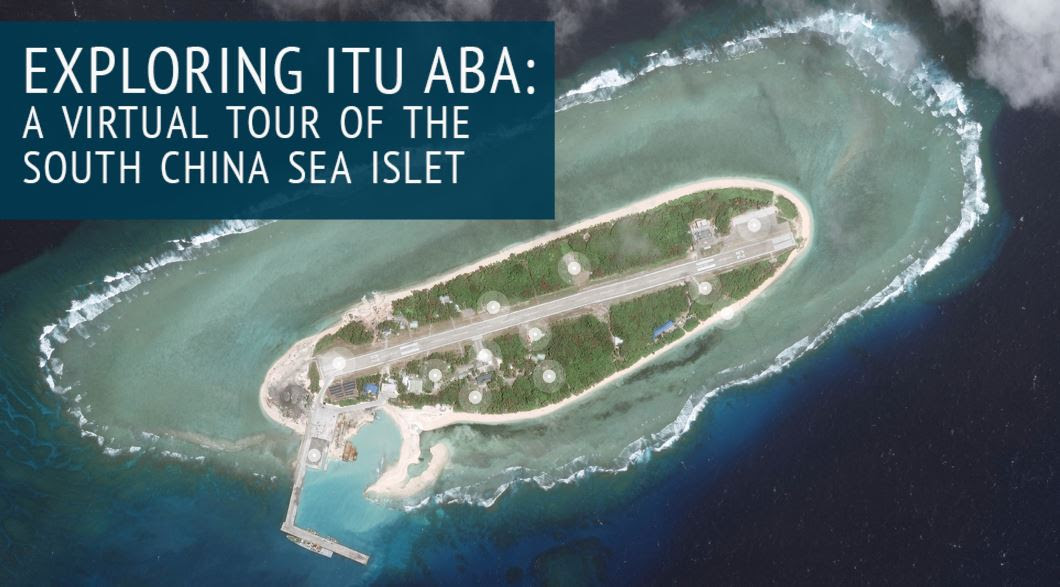
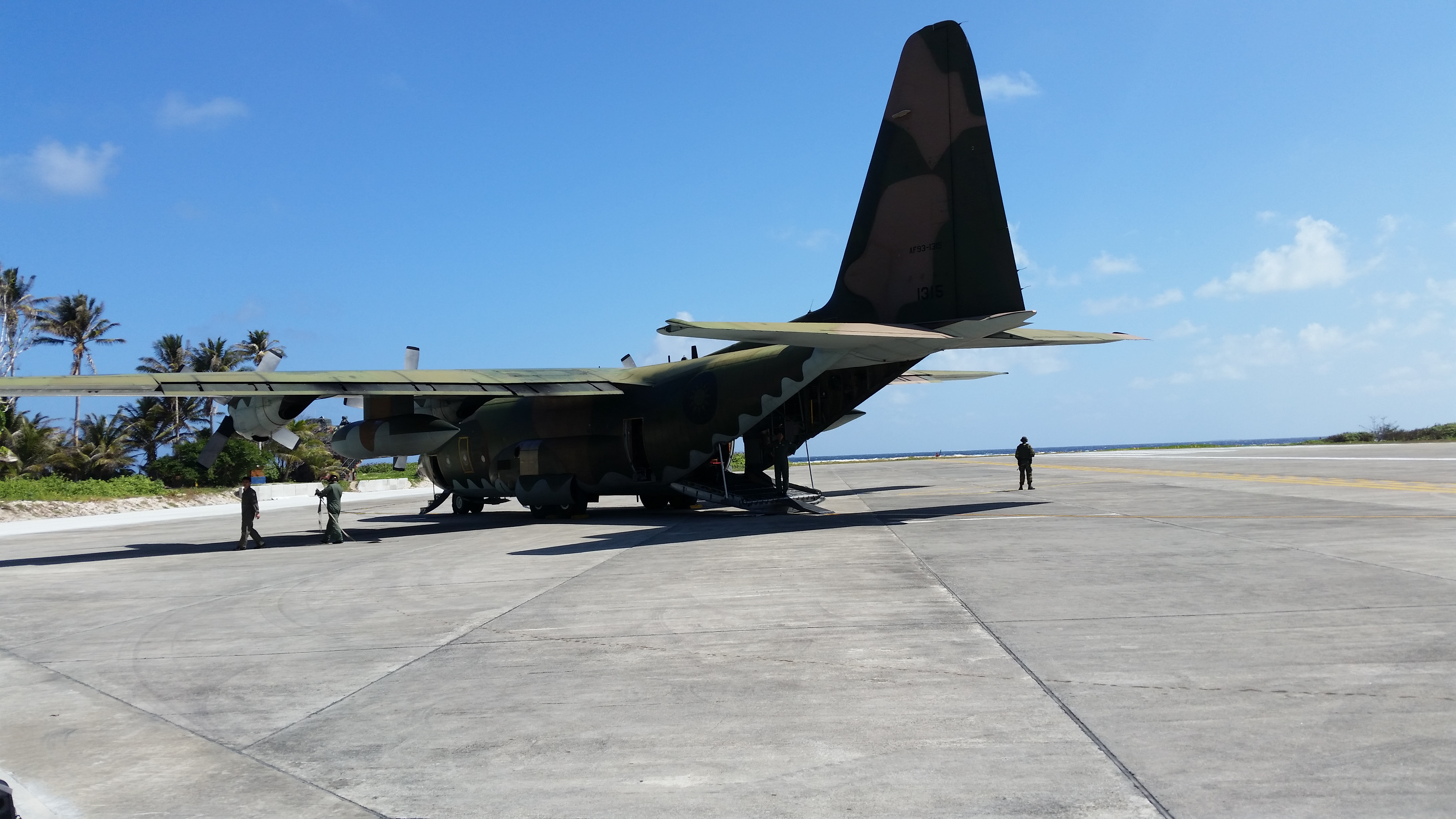
Tiếp tục đọc “Is There Drinkable Water and Topsoil on Itu Aba?”
Will Indonesia, Provoked, Now Choose to Lead on the South China Sea?
A confrontation between Indonesian and Chinese law enforcement vessels in the South China Sea over the weekend could mark a turning point in Indonesian foreign policy under President Joko “Jokowi” Widodo, forcing him to choose between two of his top priorities: attracting foreign investment – particularly Chinese investment – to fund his ambitious infrastructure agenda; and a more assertive defense of Indonesian territorial integrity and sovereignty over its natural resources. That, in turn, could herald a significant shift in diplomacy over the South China Sea. Tiếp tục đọc “Will Indonesia, Provoked, Now Choose to Lead on the South China Sea?”
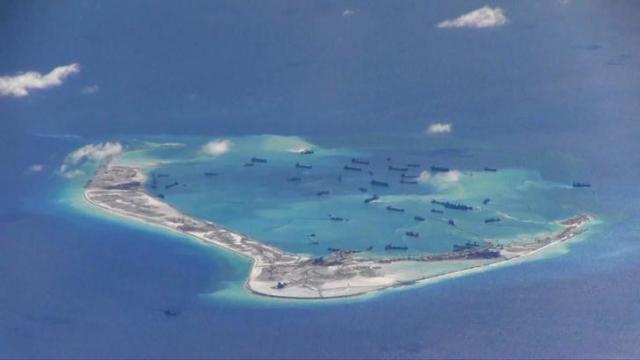
Exclusive: U.S. sees new Chinese activity around South China Sea shoal
CSIS: Southeast Asia from Scott Circle – March 17, 2016
Southeast Asia Dances to the Tune of Japan’s Abe DoctrineBy Phuong Nguyen (@PNguyen_DC), Associate Fellow, Chair for Southeast Asia Studies (@SoutheastAsiaDC), CSIS March 17, 2016 In Southeast Asia, Japan can be said to enjoy unrivaled popularity. According to the 2015 Pew Global Attitudes survey, an average of about 80 percent of respondents surveyed across four Southeast Asian countries said they hold a favorable view of Japan. While China’s expanding military footprint in the disputed South China Sea has a headline-grabbing impact, Japan’s influence in this critical region is felt more steadfastly, but increasingly so, in recent years. Tiếp tục đọc “CSIS: Southeast Asia from Scott Circle – March 17, 2016” |
CSIS Southeast Asia SIT-REP, March 10, 2016
This issue includes an overview of U.S. policy toward Myanmar as the National League for Democracy government prepares to take power, and analyses on Australia’s 2016 Defence White Paper, Prime Minister Malcolm Turnbull’s shift on the South China Sea, and the role of ASEAN in defending rules and norms in the South China Sea. Links will take you to the full publications, multimedia, or to registration for upcoming programs when available. To jump to a section, select one of the following:
- Commentaries on Myanmar
- CogitAsia articles covering Australia, the South China Sea, and China
Commentaries
Deep insight into developments that move the dial
 “Aung San Suu Kyi Is Key to Further Unlocking of U.S. Sanctions against Myanmar,” by Murray Hiebert (@MurrayHiebert1) Tiếp tục đọc “CSIS Southeast Asia SIT-REP, March 10, 2016”
These 25 Companies Are More Powerful Than Many Countries
Going stateless to maximize profits, multinational companies are vying with governments for power. Who is winning?
FP
By Parag Khanna
Top 25 by David Francis
Illustration by Edel Rodriguez
At first glance, the story of Accenture reads like the archetype of the American dream. One of the world’s biggest consulting companies, which commands tens of billions of dollars in annual revenues, was born in the 1950s as a small division of accounting firm Arthur Andersen. Its first major project was advising General Electric to install a computer at a Kentucky facility in order to automate payment processing. Several decades of growth followed, and by 1989, the division was successful enough to become its own organization: Andersen Consulting.
Tiếp tục đọc “These 25 Companies Are More Powerful Than Many Countries”
The U.S. just sent a carrier strike group to confront China
This article first appeared March 3 at 4:15 p.m. and has been updated
The U.S. Navy has dispatched a small armada to the South China Sea.
The carrier John C. Stennis, two destroyers, two cruisers and the 7th Fleet flagship have sailed into the disputed waters in recent days, according to military officials. The carrier strike group is the latest show of force in the tense region, with the U.S. asserting that China is militarizing the region to guard its excessive territorial claims. Tiếp tục đọc “The U.S. just sent a carrier strike group to confront China”
Điểm sách: Can Trường Trong Chiến Bại
- Đối với mọi đọc giả ngày nay, dù quan tâm hay không đến lịch sử miền Nam, chương quan trọng nhất trong quyển sách là Chương 16: Trận Hải Chiến Tại Hoàng Sa. Đây là trận chiến giữa các chiến hạm Hải quân VNCH dưới quyền của tác giả, tư lệnh hải quân vùng 1 duyên hải, và các chiến hạm Trung quốc, tháng 1 năm 1974.

Chào các bạn,
Anh Hồ Văn Kỳ Thoại là bạn vong niên của mình. Lúc anh Thoại còn làm việc tại Council for Advancement and Support of Education (CASE) ở Washington DC, hai anh em thường gặp nhau ăn trưa và hàn huyên. Quyển “Can Trường Trong Chiến Bại” là hồi ký anh Thoại viết về cuộc đời hải quân của anh, ghi lại “hành trình của một thủy thủ” từ lúc gia nhập Hải quân Việt Nam Cộng Hòa (tức miền Nam trước 1975) cho đến cuối cuộc chiến tranh Việt Nam ngày 30.4.1975, lúc anh Thoại đang là phó đề đốc hải quân (tương đương chuẩn tướng bên lục quân).
Quyển sách này liên hệ đến một số biến cố lớn của Nam Việt Nam, và trong bài điểm sách này chúng ta chỉ điểm qua vài biến cố, như cuộc đảo chánh tổng thống Ngô Đình Diệm năm 1963 (5 năm sau khi tác giả rời chức vụ tùy viên cho tổng thống Diệm), các cuộc đảo chánh và chỉnh lý liên tục của các tướng lãnh sau 1963, và cuộc triệt thoái quân đội miền Nam ra khỏi quân khu 1(Quảng trị đến Đà Nẵng) đưa đến sự sụp đổ của toàn miền Nam.
CSIS Southeast Asia Sit-Rep – Feb 25, 2016
CSIS Southeast Asia Sit-Rep
This issue includes a preview of key developments related to the South China Sea this year, analyses on the path forward for the peace process in southern Philippines and the recent U.S.-ASEAN Special Leaders’ Summit in Sunnylands, and much more. Links will take you to the full publications, multimedia, or to registration for upcoming programs when available. To jump to a section, select one of the following:
- Commentaries on South China Sea
- CogitAsia articles covering the Philippines, the South China Sea,China, and ASEAN
- Recent Programs on China, and the Asia-Pacific
- Upcoming Programs on ASEAN, Vietnam, and Laos
Vietnam’s Corruption Problem
The country struggles to fight corruption as the public is kept in the dark about officials’ wealth.
By Dien Luong
February 29, 2016
The stony-faced corruption czar of Vietnam might not have expected that his political rhetoric aimed at defending the country’s anti-graft efforts would become the subject of such widespread ridicule and social satire over the past year.
In December 2014, Huynh Phong Tranh, chief of the Government Inspectorate, tried to put a positive spin on Vietnam’s poor ranking in an international standard gauge of government malfeasance by saying, “Corruption in Vietnam has reached a level of stability.” He was referring to the 2014 Transparency International’s Corruption Perceptions Index, which ranked Vietnam 119 out of 175 countries and territories; the country was ranked 116 in 2013 and 123 a year earlier. Its position has barely budged, moving to just 112 in 2015. Tiếp tục đọc “Vietnam’s Corruption Problem”
CSIS: U.S. Shale Gas Sets Sail…Now What?
-
 FEB 25, 2016
On February 24, a tanker carrying liquefied natural gas (LNG) left the Sabine Pass LNG terminal off the coast of Louisiana. The first LNG cargo from Cheniere Energy Inc.’s Sabine Pass LNG Project is a significant milestone for the U.S. energy industry, marking the dawn of shale-based LNG exports by the United States. What other implications does the Sabine Pass export have for the United States? Does the shipment foretell the economic viability of U.S. LNG projects or the competitiveness of U.S. LNG exports? This Critical Question illustrates the significance of the Sabine Pass LNG shipment and considers the opportunities and challenges for the U.S LNG export business in the period of low energy prices. Tiếp tục đọc “CSIS: U.S. Shale Gas Sets Sail…Now What?”
Việt Nam cảnh báo tình trạng quân sự hoá Biển Đông đặc biệt lo ngại
Thứ năm, 25/2/2016 | 17:06 GMT+7
Việt Nam hôm nay phản đối mạnh mẽ Trung Quốc xâm phạm chủ quyền của Việt Nam, đồng thời khẳng định tình trạng quân sự hoá Biển Đông đặc biệt đáng lo ngại.
 |
|
Hai khẩu đội tên lửa HQ-9 bố trí trên bờ biển đảo Phú Lâm được vệ tinh phát hiện vào tuần trước. Ảnh: Fox News |
Tiếp tục đọc “Việt Nam cảnh báo tình trạng quân sự hoá Biển Đông đặc biệt lo ngại”
CSIS: AMTI Brief – February 22, 2016

Another Piece of the Puzzle: China Builds New Radar Facilities in the Spratly Islands
China’s airstrip construction at Fiery Cross, Mischief, and Subi reefs, and more recently developments in the Paracel Islands, have dominated the South China Sea discussion. But capabilities being developed at its smaller Spratly Island outposts—Gaven, Hughes, Johnson South, and especially Cuarteron reefs—will prove equally important to Beijing’s long-term strategy. Tiếp tục đọc “CSIS: AMTI Brief – February 22, 2016”
Phi hành đoàn toàn nữ của hàng không Việt Nam
VNExpress, Thứ năm, 18/2/2016 | 11:35 GMT+7
Lần đầu tiên Hãng hàng không Vietnam Airlines tình cờ sắp xếp một phi hành đoàn toàn nữ gồm 2 phi công và các tiếp viên, thực hiện 4 chuyến bay quốc nội trong ngày 16/2.
 |
|
Cơ trưởng Đông Phương (trái) và cơ phó Ngọc Bích. Ảnh: NVCC |
Tiếp tục đọc “Phi hành đoàn toàn nữ của hàng không Việt Nam”

