
Tác giả: Đào Thu Hằng
I'm from Hanoi, Viet Nam.
I'm an author of Dot Chuoi Non (dotchuoinon.com/author/hangbelu/), a blog on Positive thinking, founded by Dr. Tran Dinh Hoanh, an attorney in Washington DC.
I'm a co-founder of Conversations on Vietnam Development - cvdvn.net, a virtual think tank. I am a co-founder of two companies in Viet Nam working on children education services. I advise companies on STEAM education, English language education for children and students in Vietnam.
I'm studying the Buddha's teaching and the teaching of Jesus. I practice mindful living including meditation.
I hold a PhD on Sustainable Energy Systems from University of Lisbon and Aalto University.
I graduated from Hanoi University of Technology on Environmental Engineering. I obtained a Master degree of the same major from Stanford University and Nanyang Technological University.
My English-language blog at: hangbelu.wordpress/.
I play table tennis as a hobby.
Alarm as Arctic sea ice not yet freezing at latest date on record
Delayed freeze in Laptev Sea could have knock-on effects across polar region, scientists say

For the first time since records began, the main nursery of Arctic sea ice in Siberia has yet to start freezing in late October.
The delayed annual freeze in the Laptev Sea has been caused by freakishly protracted warmth in northern Russia and the intrusion of Atlantic waters, say climate scientists who warn of possible knock-on effects across the polar region.
Ocean temperatures in the area recently climbed to more than 5C above average, following a record breaking heatwave and the unusually early decline of last winter’s sea ice.
The trapped heat takes a long time to dissipate into the atmosphere, even at this time of the year when the sun creeps above the horizon for little more than an hour or two each day.
Graphs of sea-ice extent in the Laptev Sea, which usually show a healthy seasonal pulse, appear to have flat-lined. As a result, there is a record amount of open sea in the Arctic.
“The lack of freeze-up so far this fall is unprecedented in the Siberian Arctic region,” said Zachary Labe, a postdoctoral researcher at Colorado State University. He says this is in line with the expected impact of human-driven climate change.
“2020 is another year that is consistent with a rapidly changing Arctic. Without a systematic reduction in greenhouse gases, the likelihood of our first ‘ice-free’ summer will continue to increase by the mid-21st century,’ he wrote in an email to the Guardian. Tiếp tục đọc “Alarm as Arctic sea ice not yet freezing at latest date on record”
Building a Climate Resilient Future for Costa Rica’s Coffee Farming Communities
How Can Governments Attract Private Investment for the Green Energy Transition?
October 27, 2020
10:00 AM – 11:00 AM EDTOnline
10:00 AM – 11:00 AM EDTOnline

The world is not on track to avoid the catastrophic impacts of climate change. With 2030 just a decade away, and governments are under pressure to speed up the clean energy transition.
The good news is that: a) the technologies and the capital are available to accelerate the green energy transition, and b) the private sector is ready to invest billions of green dollars into decarbonization and clean energy.
But how can governments provide the institutional and regulatory frameworks that make it attractive for private companies and investors to invest in and deploy the needed solutions and technologies to accelerate the clean energy transition?
Tiếp tục đọc “How Can Governments Attract Private Investment for the Green Energy Transition?”
Linking Air Pollution To Higher Coronavirus Death Rates
A recent Harvard analysis led by Professor Francesca Dominici along with Doctoral student Xiao Wu and Assistant Professor Rachel Nethery is the first nationwide study to show a statistical link between COVID-19 deaths and other diseases associated with long-term exposure to fine particulate matter. The paper has been submitted for peer review and publication in the New England Journal of Medicine.
Tiếp tục đọc “Linking Air Pollution To Higher Coronavirus Death Rates”
Dành cho sinh viên: CHUỖI SEMINAR: GIẢI MÃ CÁC GIẢI PHÁP NĂNG LƯỢNG BỀN VỮNG

Bạn muốn kiến tạo các giải pháp bền vững cho môi trường nhưng không biết bắt đầu từ đâu?
Hãy đến với chuỗi Seminar trực tuyến “Giải mã các giải pháp Năng lượng bền vững” – nơi bạn sẽ có cơ hội:
 Được cung cấp các hiểu biết nền tảng về các giải pháp cho môi trường ứng dụng năng lượng tái tạo Làm quen và giải đáp các thắc mắc về các Thử thách trong vòng Online Hackathon (đối với các bạn đã đăng ký cuộc thi) Làm quen với các diễn giả, đồng thời sẽ là các Cố vấn cho các đội thi trong vòng Online Hackathon
Tiếp tục đọc “Dành cho sinh viên: CHUỖI SEMINAR: GIẢI MÃ CÁC GIẢI PHÁP NĂNG LƯỢNG BỀN VỮNG”
Build a spiritually healthy capital, Party leader exhorts Hanoi

Vietnam’s Party Secretary and President Nguyen Phu Trong speaks at the 17th Party Congress of Hanoi, October 12, 2020. Photo by VnExpress/Ngoc Thanh.
Party General Secretary Nguyen Phu Trong on Monday called for Hanoi to become a “peaceful, beautiful capital that is healthy physically and spiritually.”
Addressing the opening session of the 17th Hanoi Party Congress for the 2020-2025 tenure, Trong acclaimed the results achieved by the city’s Party Committee for the 2016-2020 term, describing them as “great and important.”
Hanoi currently contributes over 16 percent of the nation’s economic growth, 18.5 percent of national budget collection, 20 percent of domestic revenue and 8.6 percent of the country’s total import and export turnover.
Tiếp tục đọc “Build a spiritually healthy capital, Party leader exhorts Hanoi”
Infographics: Urban Development in Viet Nam
By URBANET| May 2nd 2019|
URBANET’s latest infographic series with interesting facts and figures about urbanisation and urban development in Viet Nam.
Urbanisation in Viet Nam – Urban and Rural Population in Viet Nam | Viet Nam Infographics © GIZ
The graphic displays the steady growth of Viet Nam’s urban population since 1950. The growth of the rural population stagnated in the early 2000s and is projected to decrease over the next decades. Prospects suggest that by 2040 more people will live in urban than in rural areas.
Urbanisation in Viet Nam – Size of Settlements in Viet Nam | Viet Nam Infographics © GIZ
Tiếp tục đọc “Infographics: Urban Development in Viet Nam”
Japan backs ISDS in fierce debate at Energy Charter Treaty review
AFTINET | 17 September 2020
Japan backs ISDS in fierce debate at Energy Charter Treaty review
Reports on the Energy Charter Treaty process to ‘modernise’ continue to demonstrate entrenched opposition to efforts to make it support the Paris Climate Agreement to limit global warming to less than 2°C.
The European Union has proposed amendments that reinforce governments’ “right to regulate” on issues like public health and the environment. But any change requires unanimous agreement by the ECT’s 53 signatories.
On September 8, 2020, 97 European Parliament MPs and another 49 MPs from national parliaments in Europe content/uploads/sites/2/2020/09/Statement-on-Energy-Charter-Treaty-ENG_080920.pdf” target=”_blank” rel=”external noopener”>called for the “EU negotiators to ensure that the provisions in the ECT that protect foreign investment in fossil fuels are deleted and thus removed from the ECT. Similarly, ISDS provisions need to be scrapped or fundamentally reformed and limited. If this is not achieved at the end of the 3rd negotiation round planned for the autumn, we ask EU Member States to explore pathways to jointly withdraw from the ECT by the end of 2020”.
Tiếp tục đọc “Japan backs ISDS in fierce debate at Energy Charter Treaty review”Nuclear ‘not an effective low carbon option’
Researchers in the UK have analyzed 25 years of electricity-production and carbon emissions data from 123 countries. Their findings show renewables are considerably more effective than nuclear in reducing carbon emissions from energy generation and that the two technologies tend to get in each other’s way when considered in a joint approach. OCTOBER 5, 2020 MARK HUTCHINS

Renewables offer a surer course to low carbon energy than nuclear, according to a new study.
A study led by the University of Sussex (UoS), in the U.K., has found renewables up to seven times more effective at reducing carbon emissions than nuclear power. The paper concluded nuclear could no longer be considered an effective low carbon energy technology, and suggests that countries aiming to rapidly and cost-effectively reduce their energy emissions should prioritize renewables.
The study, published today in Nature Energy, considers three hypotheses: Firstly, that emissions decline the more a country adopts nuclear; secondly, that emissions decline the more a country adopts renewables; and thirdly, that nuclear and renewables are ‘mutually exclusive’ options that tend to crowd each other out at an energy system level. The hypotheses were tested against 25 years’ worth of electricity-production and emissions data from 123 countries.
The UoS study found little correlation between relative nuclear electricity production and CO2 emissions per capita but did observe a linkage with the per-capita GDP of the nations studied. Countries with high per-capita GDP saw some emissions reduction with increased use of nuclear power, said the researchers, but regions with lower GDP saw CO2 emissions rise with the use of nuclear.
FOUR THINGS GOVERNMENTS CAN DO TO ATTRACT MORE RENEWABLE ENERGY INVESTMENT
By Jakob Askou Bøss, Senior Vice President for Corporate Strategy and Stakeholder Relations, Ørsted and Jennifer Layke, Director of Global Energy Program, World Resources Institute
The technologies and the capital are available to accelerate the green energy transition, but the global transformation from fossil fuels to clean energy is not moving forward quickly enough. Governments need to adjust their institutional and regulatory framework to pave the way for the necessary private investments to get the job done.
Tiếp tục đọc “FOUR THINGS GOVERNMENTS CAN DO TO ATTRACT MORE RENEWABLE ENERGY INVESTMENT”4 Questions About China’s New Climate Commitments

In his speech to the UN General Assembly on September 22, 2020, President Xi Jinping of China announced that China will scale up its Nationally Determined Contribution (NDC) to tackling climate change by adopting more vigorous policies and measures in an effort to peak carbon dioxide emissions before 2030 and reach carbon neutrality before 2060.
The announcement is among the most significant signs of progress concerning countries’ efforts to mitigate climate change since agreeing to the Paris Agreement in 2015. Further clarifications on the exact commitment will be needed, and it is likely that even more ambition will be needed in future. Here are four key questions and answers about this important development.
1. What Exactly Is New?
The announcement marks the first time that China has set a concrete long-term target of carbon neutrality. This means that by 2060, the country will either stop carbon dioxide emissions altogether, or — more likely — use various means to remove an equivalent amount of any remaining emissions.
Tiếp tục đọc “4 Questions About China’s New Climate Commitments”
COVID-vaccine results are on the way — and scientists’ concerns are growing
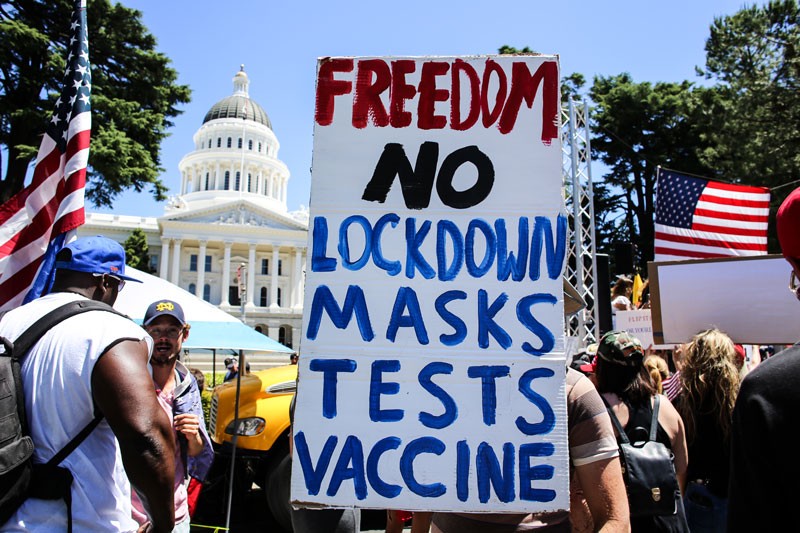
Protesters call for an end to COVID-19-based restrictions in Sacramento, California.Credit: Stanton Sharpe/SOPA Images/LightRocket/Getty
Several ongoing coronavirus-vaccine trials could announce game-changing results next month. But as anticipation grows, concerns are growing about whether the vaccines will clear safety trials, what they will achieve if they do and the risk that the approval process will be influenced by politics, or at least seem to be. Tiếp tục đọc “COVID-vaccine results are on the way — and scientists’ concerns are growing”
Professors need to know What Students Want from online learning during the pandemic
In recent months there’s been no shortage of surveys in which students describe the challenges they faced during the pivot to remote education in the spring and summer. Many struggled to secure consistent Wi-Fi access and a quiet place to learn. They felt overwhelmed, not just by the pandemic, but in trying to keep track of assignments, deadlines, and communication with their professors. They missed the routines and relationships of campus life. Motivation was a real challenge.
So what do they want their professors to know, in order to make the experience better this fall? I put that question to a panel of experts — students and faculty members — this week in a Chronicle webinar. I encourage you to watch it here because they had many great ideas and insights. But if you’re short on time, here are a few key takeaways.
Connections are crucial to learning. To prime students to learn, ensure that they feel connected to you and to the class. That’s not easy to do online, but consistent outreach, regular office hours, and a wise use of synchronous class time will help.
One panelist in the webinar, Vikki Katz, an associate professor in Rutgers University’s School of Communication and Information, surveyed 3,000 undergraduates across the country about their remote-learning experiences last spring. A crucial factor in students’ developing a sense of confidence and competence in a remote-learning environment, she and her co-author found, was whether they felt faculty members were accessible to them. Tiếp tục đọc “Professors need to know What Students Want from online learning during the pandemic”
China Aims For Carbon Neutrality By 2060
WRI.org
STATEMENT –

WASHINGTON (September 22, 2020)— Today in remarks delivered before the United Nations General Assembly, President Xi Jinping made a surprise announcement that China aims to achieve carbon neutrality before 2060 and to peak carbon emissions before 2030. This is the first time Chinese leadership has made a commitment about reaching net zero emissions.
Following is a statement from Helen Mountford, Vice President, Climate and Economics, World Resources Institute:
“President Xi sent an extremely important signal today with his unexpected announcement that China will strive for carbon neutrality by 2060 and strengthen its national climate commitment including peaking emissions before 2030. The devil will be in the details and China should set more specific near-term targets and an earlier peaking date, but China’s direction of travel toward a zero-carbon future is coming into focus. Tiếp tục đọc “China Aims For Carbon Neutrality By 2060”

