Why are Tropical Forests Being Lost, and How to Protect Them

WRI.org

By Frances Seymour

There’s good news and bad news for forests. Over the last 10 years, satellite imagery and other remote sensing technologies have revolutionized our ability to monitor and understand the causes of forest loss.

The bad news is that deforestation data spanning the last two decades reveals a persistent hemorrhaging of the world’s most valuable terrestrial ecosystems — and we’re not doing enough to stop the bleeding.

What do trends in forest loss tell us?

Global tree cover loss trends show that in the 21st century, by far the most deforestation — meaning when forests are permanently converted to other land uses — is occurring in the tropics. We now have two decades of data on the loss of primary tropical forests, and it paints a sobering picture: stubbornly persistent annual losses hovering between 3 and 4 million hectares each year, punctuated by spikes associated with major fires.

The main direct cause of tropical forest loss is expansion of commercial agriculture, augmented in different regions to varying degree by clearing for small-scale agriculture, extractive activities, and roads and other infrastructure, with complex linkages among them. Even lockdowns associated with the coronavirus pandemic didn’t appear to disrupt those patterns in any consistent way; in fact, losses ticked up in 2020 compared to the previous year.

Tiếp tục đọc “Why are Tropical Forests Being Lost, and How to Protect Them”
Đồng Nai không muốn làm tuyến quốc lộ 13 C đi qua khu dự trữ sinh quyển thế giới

tuoitre.vn

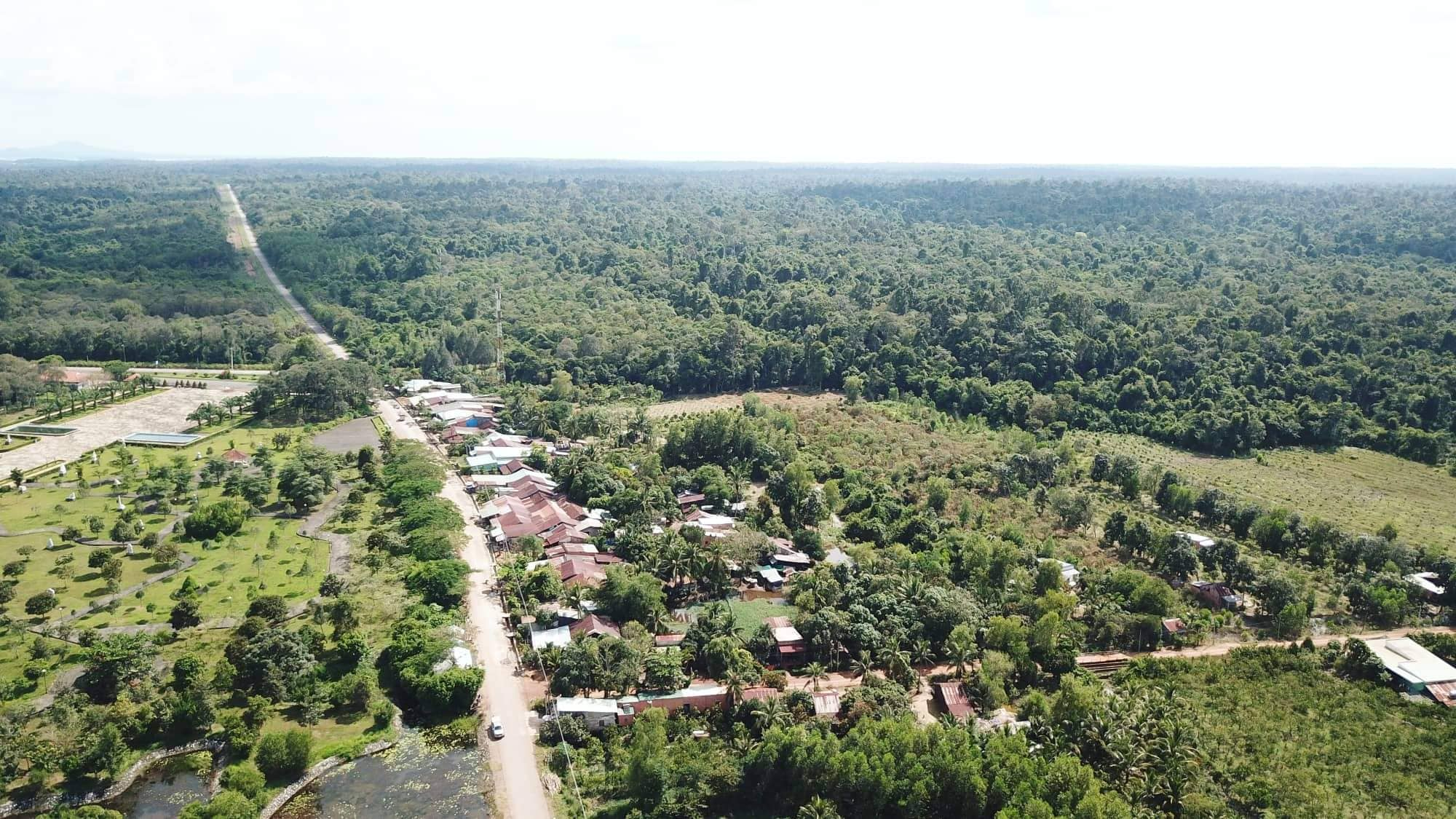
TTO – Sau khi tỉnh Bình Phước có ý kiến làm cầu Mã Đà nối vào tuyến quốc lộ 13C đã quy hoạch, tỉnh Đồng Nai đã họp bàn và yêu cầu có giải pháp để bảo vệ Khu bảo tồn thiên nhiên – văn hóa Đồng Nai vì đây là khu dự trữ sinh quyển thế giới.
Đồng Nai không muốn làm tuyến quốc lộ 13 C đi qua khu dự trữ sinh quyển thế giới - Ảnh 1.

Khu bảo tồn thiên nhiên – văn hóa Đồng Nai nhìn từ trên cao – Ảnh: NGỌC KHẢI

Thời tôi còn công tác, tỉnh Bình Phước muốn làm cầu Mã Đà qua Đồng Nai. Hai tỉnh họp bàn, lo ngại kết nối tuyến đường với 2 tỉnh sẽ ảnh hưởng đến việc bảo vệ rừng ở khu bảo tồn nên dừng lại không làm. Tỉnh Bình Phước cũng đình chỉ bến đò tự phát ngang sông Mã Đà.
Nay lại có kiến nghị muốn làm cầu Mã Đà để kết nối với tuyến quốc lộ 13C đi xuyên qua khu bảo tồn. Làm đường có nhiều vị trí và phương án khác không đụng đến rừng sao không lựa chọn, lại muốn làm đường xuyên rừng thì liệu có động cơ khác không?
Đồng Nai đã đổ bao mồ hôi, nước mắt để bảo vệ rừng mấy chục năm nay, không thể chỉ vì tuyến đường được rút ngắn hơn mà để rừng tự nhiên biến mất vĩnh viễn.
Dứt khoát không đụng đến rừng và không nên làm đường qua khu bảo tồn. Nếu cho làm tức là chấp nhận phá bỏ khu dự trữ sinh quyển thế giới. Bởi đường đi vào rừng sẽ chia cắt đa dạng sinh học, làm thú nhát, không sinh sản được, mất dần, tuyệt chủng và chúng ta sẽ trả giá rất đắt..
Ông Trần Văn Mùi, nguyên giám đốc Khu bảo tồn thiên nhiên – văn hóa Đồng Nai

Tiếp tục đọc “Đồng Nai không muốn làm tuyến quốc lộ 13 C đi qua khu dự trữ sinh quyển thế giới”

The Impacts of US Wholesale Electricity Market Rules and Policies on Clean Energy Goals: A Primer for Local Governments

WRI.org

This paper discusses the evolving rules and policies of wholesale markets that can create barriers to local governments’ achievement of an effective and rapid clean energy transition. The report reviews the current barriers associated with transmission, market rules, and stakeholder processes across these markets while considering how these barriers affect local government clean energy and decarbonization goals, and the role of effective engagement in addressing these barriers.

Download

Cover image

DOI https://doi.org/10.46830/wriwp.21.00097

 ENERGY

RegionNorth AmericaMarch 30, 2022

This Working Paper is part of Electricity Market Design within our Energy Program. Reach out to Zach Greene for more information.

Authors

Elise Caplan, Zach GreeneJoseph WombleKatrina McLaughlin and Lori Bird

Tiếp tục đọc “The Impacts of US Wholesale Electricity Market Rules and Policies on Clean Energy Goals: A Primer for Local Governments”

Russia’s Brutality in Ukraine Has Roots in Earlier Conflicts

Its experience in a string of wars led to the conclusion that attacking civilian populations was not only acceptable but militarily sound.

nytimes.com

Ukrainian emergency workers at a maternity hospital damaged by shelling in Mariupol last week.
Ukrainian emergency workers at a maternity hospital damaged by shelling in Mariupol last week.Credit…Evgeniy Maloletka/Associated Press
Max Fisher

By Max Fisher

Published March 18, 2022Updated March 22, 2022

As Russian artillery and rockets land on Ukrainian hospitals and apartment blocksdevastating residential districts with no military value, the world is watching with horror what is, for Russia, an increasingly standard practice.

Its forces conducted similar attacks in Syria, bombing hospitals and other civilian structures as part of Russia’s intervention to prop up that country’s government.

Moscow went even further in Chechnya, a border region that had sought independence in the Soviet Union’s 1991 breakup. During two formative wars there, Russia’s artillery and air forces turned city blocks to rubble and its ground troops massacred civilians in what was widely seen as a deliberate campaign to terrorize the population into submission.

Now, Vladimir V. Putin, whose rise to Russia’s presidency paralleled and was in some ways cemented by the Chechen wars, appears to be deploying a similar playbook in Ukraine, albeit so far only by increments.

Tiếp tục đọc “Russia’s Brutality in Ukraine Has Roots in Earlier Conflicts”

The Ukraine Crisis Threatens a Sustainable Food Future

WRI.org

Russia’s invasion of Ukraine has already driven millions of people from their homes and left many without water, power and food. As hostilities continue, the humanitarian and economic consequences will expand far beyond the region, putting potentially millions of people around the world at risk of hunger.  

And these aren’t just short-term threats. The decisions that farmers and policymakers make over the next few weeks and months will have long-term consequences for the future of the world’s food systems. The right responses can keep the world on track for a sustainable food future. The wrong ones will worsen food insecurity and fuel climate change.

Ukrainian refugees at the Poland border.
Ukrainian refugees escape to the border town of Medyka, Poland. Millions of Ukrainian residents have fled their homes in recent weeks, due to the Russian invasion. Photo by Damian Pankowiec/Shutterstock

Emerging Food Implications of the Ukraine Crisis

Tiếp tục đọc “The Ukraine Crisis Threatens a Sustainable Food Future”

Tropical forests have big climate benefits beyond carbon storage

Study finds that trees cool the planet by one-third of a degree through biophysical mechanisms such as humidifying the air.

nature.com

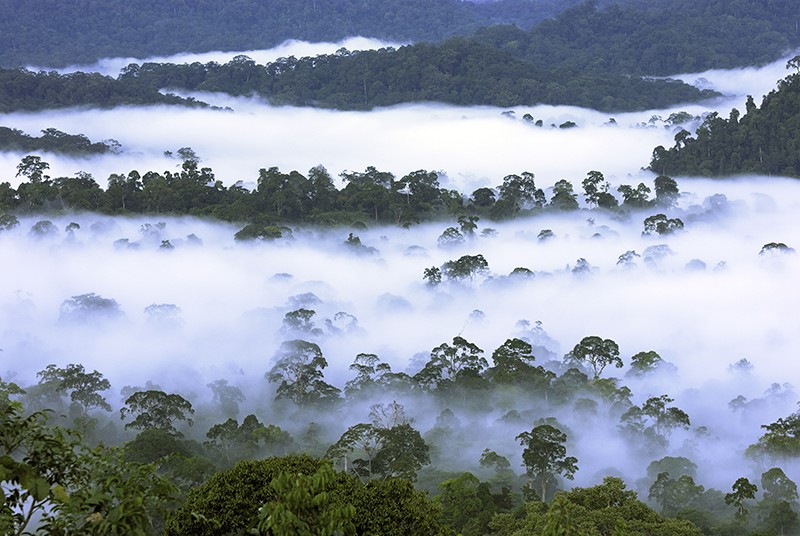
Canopy of lowland rainforest at dawn with dense fog.
Tropical forests create cloud cover that reflects sunlight and cools the air.Credit: Thomas Marent/Minden Pictures

Tropical forests have a crucial role in cooling Earth’s surface by extracting carbon dioxide from the air. But only two-thirds of their cooling power comes from their ability to suck in CO2 and store it, according to a study1. The other one-third comes from their ability to create clouds, humidify the air and release cooling chemicals.

How much can forests fight climate change?

This is a larger contribution than expected for these ‘biophysical effects’ says Bronson Griscom, a forest climate scientist at the non-profit environmental organization Conservation International, headquartered in Arlington, Virginia. “For a while now, we’ve assumed that carbon dioxide alone is telling us essentially all we need to know about forest–climate interactions,” he says. But this study confirms that tropical forests have other significant ways of plugging into the climate system, he says.

Tiếp tục đọc “Tropical forests have big climate benefits beyond carbon storage”

From Russia, with trepidation: will China sign a new gas deal to feed its energy needs?

  • The Ukraine war is complicating the calculus of China’s energy security and the prospect of a new energy deal with Russia
  • Can Beijing afford to be close to a Moscow that is increasingly politically and economically isolated?
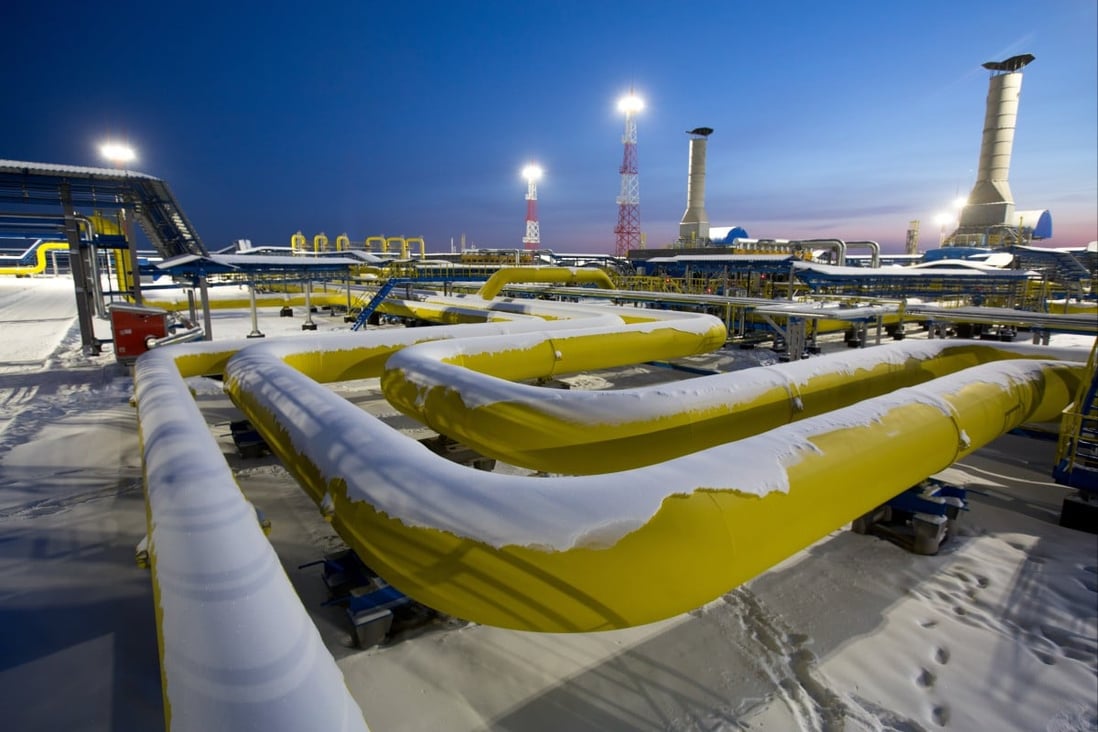
Snow covers sections of connected pipework at the Gazprom PJSC Atamanskaya compressor station, part of the Power Of Siberia gas pipeline extending to China, near Svobodny, in the Amur region, Russia, in 2019. Photo: Bloomberg

Snow covers sections of connected pipework at the Gazprom PJSC Atamanskaya compressor station, part of the Power Of Siberia gas pipeline extending to China, near Svobodny, in the Amur region, Russia, in 2019. Photo: Bloomberg

scmp.com

Two recent developments reveal the possibility of a new energy agreement between China and Russia. First, Russian gas giant Gazprom PJSC announced a contract to design the Soyuz Vostok pipeline across Mongolia towards China. Second, Beijing is reported to be discussing with its state-owned companies opportunities to buy stakes in Russian energy companies, and is also looking at a Power of Siberia 2 pipeline to China.

With the exit of international energy companies from Russia following its invasion of Ukraine, Germany’s decision to halt the certification process of the Kremlin-backed Nord Stream 2 pipeline, and rounds of sanctions on Russia, there are certainly new opportunities for the Chinese government and companies to strengthen their position in the Russian market.

However, even as domestic, regional and global factors may push China towards a new energy deal with Russia, Beijing could also face a range of challenges.

Firstly, Beijing’s ambition to be carbon-neutral by 2060 and replace much coal with gas is one of the most important domestic factors prompting China to further improve its relations with Russia.

Russian gas exports – whether liquefied natural gas or pipeline gas delivered through the original Power of Siberia, for example – would help China reduce greenhouse gas emissions as the country makes a green transition.

Secondly, the withdrawal of Western energy companies such as BP and Shell from Russia due to the Ukraine war creates opportunities for Chinese energy companies, especially state-owned ones, to invest in Russia and diversify their portfolio.

Thirdly, while China also imports gas from Turkmenistan, Russian gas is one of the cheapest options for Chinese consumers, making a new energy deal with Russia that much more attractive.

However, there could also be obstacles to such a deal. One problem could be the political and economic uncertainties now looming over Russia; the deterioration of the Russian business environment under current sanctions might discourage Chinese companies from investing in Russia.

Particularly, sanctions led by Washington seem to inspire caution in Beijing and Chinese companies. For example, the state-run Sinopec Group recently suspended talks about a major petrochemical investment and a gas marketing venture in Russia, apparently heeding a government call to tread carefully with Russian assets.

Tiếp tục đọc “From Russia, with trepidation: will China sign a new gas deal to feed its energy needs?”

Russia’s war has chilling effect on climate science as Arctic temperatures soar

And yet, just when the climate scientists and governments across the eight Arctic states should be working together to understand and address the climate crisis, Russia’s war on Ukraine has forced the Arctic Council, an intergovernmental group of Arctic states and Arctic Indigenous Peoples, to suspend their joint activities in protest of Russia’s unprovoked aggression.

thebulletin.org

By Jessica McKenzie | March 29, 2022

ice melting on a siberian lake Lake Baikal, Siberia, Russia (Photo by Daniel Born on Unsplash)

Earlier in March, temperatures around the North Pole approached the melting point, right around the time of year that Arctic sea ice is usually most extensive. In some places, the Arctic was more than 50 degrees Fahrenheit warmer than average. It’s part of an alarming trend; over the past 30 years the region has warmed four times faster than the rest of the globe. The shift is transforming the Arctic land- and seascape, causing sea ice to melt, glaciers and ice sheets to retreat, and permafrost to thaw. And while the Arctic is particularly vulnerable to climate change, it also has an outsized potential to contribute to global warming, as melting permafrost releases carbon dioxide and methane into the atmosphere.

Tiếp tục đọc “Russia’s war has chilling effect on climate science as Arctic temperatures soar”

EU leaders seek escape route from Russian fossil fuels, weigh energy investment plan

EURACTIV.com with Reuters

 10 Mar 2022

Europe’s energy independence from Russia, including in its financial aspects, will be a key topic of discussion at a two-day summit in Versailles hosted by the French EU presidency. [France Diplomatie – MEAE]

Comments Print     

European Union leaders will tackle ways to wean themselves off Russian fossil fuels on Thursday (10 March) and debate how quickly to ditch their key supplier, with countries split over whether to sanction oil and gas imports as Moscow wages war in Ukraine.

Tiếp tục đọc “EU leaders seek escape route from Russian fossil fuels, weigh energy investment plan”

Ukraine sees risk of radiation leak at Chernobyl, IAEA sees ‘no critical impact’ on safety

EURACTIV.com with Reuters 

10 Mar 2022

A still image taken from a handout video made available by the Russian Defence Ministry press service shows a general view of the Chernobyl Nuclear Power Plant in Pripyat, Ukraine, 7 March 2022. Russian President Putin on 24 February 2022 announced a “special military operation against Ukraine”. Martial law has been introduced in Ukraine, and explosions are heard in many cities including Kyiv. [Handout photo/EPA/EFE]

Comments Print     

Ukraine said on Wednesday (9 March) there was a danger of a radiation leak at the Chernobyl nuclear power station after electricity was cut off to the plant, but the UN nuclear watchdog saw “no critical impact on security”.

Tiếp tục đọc “Ukraine sees risk of radiation leak at Chernobyl, IAEA sees ‘no critical impact’ on safety”

These are the most international universities in the world in 2022

weforum.org

Knowledge diplomacy among interconnected international universities can solve many of the world's challenges

Better by degrees … a 2022 survey ranks the world’s most international universitie

  • Times Higher Education’s (THE) survey of over 10,000 academics features internationally oriented universities leading global academic collaboration efforts through knowledge diplomacy.
  • Knowledge diplomacy values scientific exchange and diverse, international student bodies and research teams
  • Universities in politically insular countries are increasingly working with research partners from around the world.

While the diplomatic world faces many challenges on the political front, knowledge diplomacy, led by many top international universities, “may be our last and best tool for rebuilding a broken world”.

This was the stirring message of Safwan Masri, Executive Vice-President for global development at Columbia University at a keynote speech at Times Higher Education’s MENA Universities Summit in 2021.

Masri lamented that much of the world is grappling with misunderstanding, division, polarization and cynicism. He adds that “We are living in profoundly undiplomatic times. The inability to understand and comprehend one another is turning neighbor against neighbor. Everything seems broken.”

Have you read?

For Masri and other delegates at the THE summit, global research universities are a shining light in difficult times, with Masri stating that: “Universities exist to increase our comprehension of the world and to enhance mutual understanding”.

Tiếp tục đọc “These are the most international universities in the world in 2022”

How international law applies to attacks on nuclear and associated facilities in Ukraine

thebulletin.org

By George M. Moore | March 6, 2022

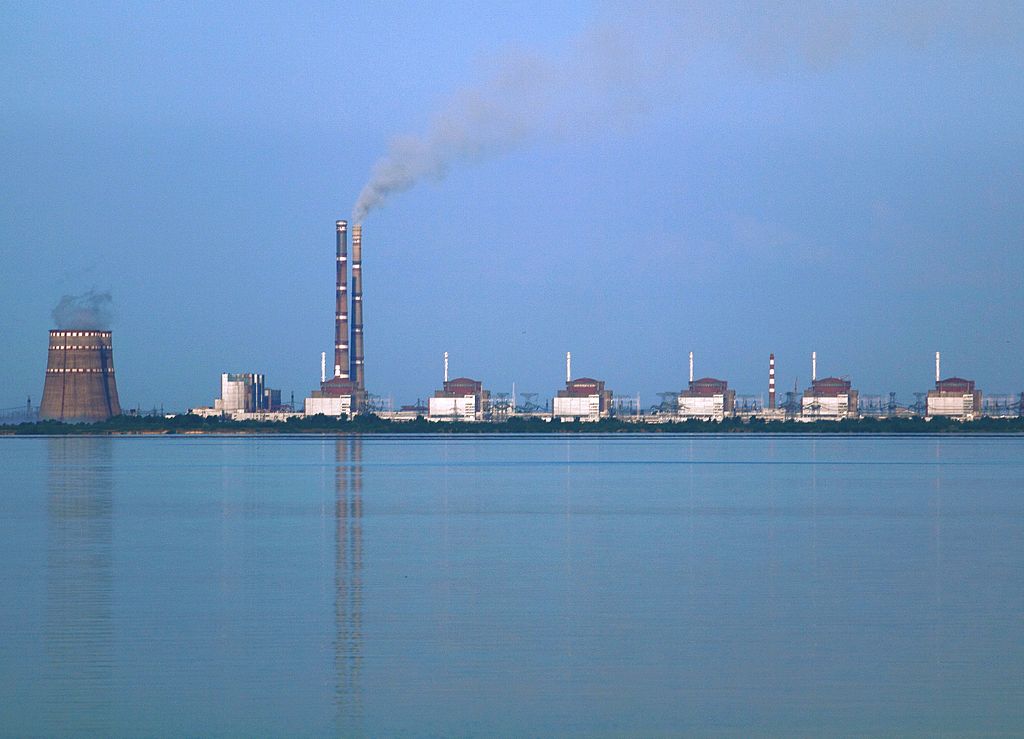
 Zaporizhzhia nuclear power plant in southern Ukraine. The two tall smokestacks are at a coal-fired generating station about 3km beyond the nuclear plant. Photo credit: Ralf1969 via Wikimedia Commons.
As the Russian invasion of Ukraine began to unfold, Russia’s swift occupation of the Chernobyl reactor complex and the surrounding exclusion zone sparked widespread speculation and concern.[1] The concern was not limited to whether the occupation would cause further radioactive release from Chernobyl;[2] it also included possible Russian military action against other Ukrainian nuclear facilities. These fears were further accelerated when Russian forces shelled and apparently occupied the Zaporizhzhia nuclear power complex near Enerhodar, Ukraine.[3] There have also been reports of attacks on a former Radon disposal site near Kyiv.[4]

World leaders have expressed concerns, and the UN Security Council held an emergency meeting on Friday to discuss the issue. At the meeting, the US ambassador told the emergency session that the assault on the Zaporizhzhia nuclear power plant “represents a dire threat to the world.” [5] The IAEA’s Board of Governors passed a resolution that deplored the Russian invasion and urged Russia to allow Ukraine to continue to control its nuclear facilities. The board’s resolution was similar to a UN General Assembly resolution passed on March 3rd.[6] Despite the high levels of concern the reactors at Zaporizhzhia do not appear to have been damaged and there has been no reported radiation release from the facility.

Tiếp tục đọc “How international law applies to attacks on nuclear and associated facilities in Ukraine”

Drugs pollute rivers, add to resistance crisis

farmacos rios

The Río de la Plata and the city of Buenos Aires, Argentina. A report has warned of the contamination of the world’s rivers by active pharmaceutical ingredients (APIs), especially in developing countries. Copyright: Dan DeLuca/Flickr(CC BY 2.0).

sciendev.net

Speed read

  • Pharmaceutical pollution could contribute to antimicrobial resistance and affect human health
  • Rivers study finds highest concentrations in Africa, South Asia and South America
  • Mismanaged pharma waste puts UN goals on water quality at risk

By: Pablo Corso


Pharmaceutical pollution in the world’s rivers is threatening environmental and human health and the attainment of UN goals on water quality, with developing countries the worst affected, a global study warns.

Active pharmaceutical ingredients (APIs) could be contributing to antimicrobial resistance in microorganisms, and may have unknown long-term effects on human health, as well as harming aquatic life, according to the report published in Proceedings of the National Academy of Sciences.

APIs – the chemicals used to make pharmaceutical drugs – can reach the natural environment during their manufacture, use and disposal, according to the study.

“Early results suggest that some of the more polluted mixes are extremely toxic to plants and invertebrates.”

Alistair Boxall, Department of Environment and Geography, University of York, UK

Researchers say they monitored 1,052 sampling sites along 258 rivers in 104 countries, representing the “pharmaceutical fingerprint” of 471 million people linked to these areas.

The highest cumulative concentrations of APIs were seen in Sub-Saharan Africa, South Asia and South America, with the most contaminated sites found in low-to-middle income countries where waste water management infrastructure is often poor, the report says.

Tiếp tục đọc “Drugs pollute rivers, add to resistance crisis”

6 Big Findings from the IPCC 2022 Report on Climate Impacts, Adaptation and Vulnerability

February 27, 2022 By Kelly LevinSophie Boehm and Rebecca Carter Cover Image by: Roop_Dey/iStock

WRI.org

The newest report from the Intergovernmental Panel on Climate Change (IPCC) paints a troubling picture: Climate change is already impacting every corner of the world, and much more severe impacts are in store if we fail to halve greenhouse gas emissions this decade and immediately scale up adaptation.     

Following on the first installment of the IPCC’s Sixth Assessment Report, Working Group II’s contribution, released on February 28, 2022, draws from 34,000 studies and involved 270 authors from 67 countries. It provides one of the most comprehensive examinations of the intensifying impacts of climate change and future risks, particularly for resource-poor countries and marginalized communities. The 2022 IPCC report also details which climate adaptation approaches are most effective and feasible, as well as which groups of people and ecosystems are most vulnerable.

UN Secretary-General Antonio Guterres called the report “an atlas of human suffering and a damning indictment of failed climate leadership. 

Here are six takeaways from the report:

1. Climate impacts are already more widespread and severe than expected.

Climate change is already causing widespread disruption in every region in the world with just 1.1 degrees C (2 degrees F) of warming.

Tiếp tục đọc “6 Big Findings from the IPCC 2022 Report on Climate Impacts, Adaptation and Vulnerability”

Russian troops seize Europe’s largest nuclear power plant in southeastern Ukraine

Ukraine nuclear power plant attack: All you need to know

aljazeera.com

Russian troops seize Europe’s largest nuclear power plant in southeastern Ukraine, after attack sparks fire.

Published On 4 Mar 20224 Mar 2022

Russian forces have captured Ukraine’s Zaporizhzhia nuclear power plant, the largest in Europe, according to regional officials.

Ukrainian authorities said on Friday Russian shelling had caused a fire at a building in the plant complex that was later put out. The blaze raised alarm from leaders worldwide of a potential massive disaster. Russia blamed the attack on Ukrainian saboteurs, calling it a “monstrous provocation”.

Here is what we know so far:

INTERACTIVE - Zaporizhzhia

Where is it located?

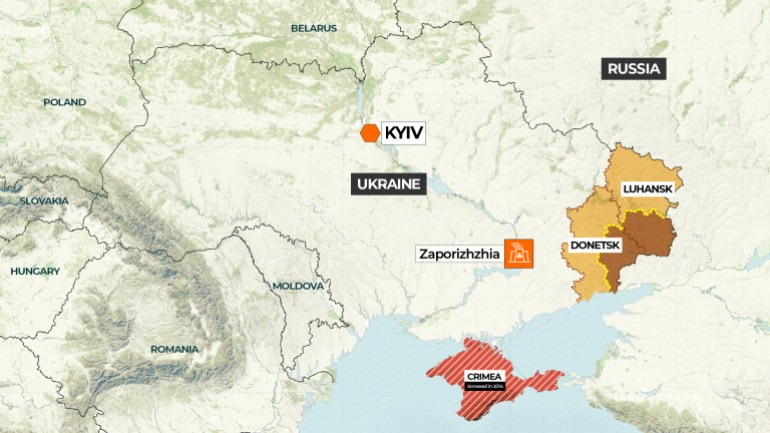
The Zaporizhzhia nuclear power plant is located in the southern Ukraine steppe on the Dnieper River, some 550 kilometres (342 miles) southeast of Ukraine’s capital, Kyiv, and about 525km (325 miles) south of Chernobyl, the site of the world’s worst nuclear power plant accident in 1986, which has also now been seized by Russian forces.

The plant has a total capacity of about 6,000 megawatts, enough to power about roughly four million homes.

On Wednesday, residents carrying Ukrainian flags had blocked the road to the plant, in an apparent standoff with Russian forces.

What happened?

But on Friday Russian troops were accused of attacking the plant, in an assault Ukraine’s President Volodymyr Zelenskyy branded “nuclear terror” and said could endanger the continent.

A video feed from the plant showed shelling and smoke rising near a building at the plant compound.

Tiếp tục đọc “Russian troops seize Europe’s largest nuclear power plant in southeastern Ukraine”