I'm from Hanoi, Viet Nam.
I'm an author of Dot Chuoi Non (dotchuoinon.com/author/hangbelu/), a blog on Positive thinking, founded by Dr. Tran Dinh Hoanh, an attorney in Washington DC.
I'm a co-founder of Conversations on Vietnam Development - cvdvn.net, a virtual think tank. I am a co-founder of two companies in Viet Nam working on children education services. I advise companies on STEAM education, English language education for children and students in Vietnam.
I'm studying the Buddha's teaching and the teaching of Jesus. I practice mindful living including meditation.
I hold a PhD on Sustainable Energy Systems from University of Lisbon and Aalto University.
I graduated from Hanoi University of Technology on Environmental Engineering. I obtained a Master degree of the same major from Stanford University and Nanyang Technological University.
My English-language blog at: hangbelu.wordpress/.
I play table tennis as a hobby.
Sugar contraband illicitly brought into Vietnam from Thailand is increasing, adding an additional burden to the country’s struggling sugarcane enterprises:
Cross-border smuggling of sugar into Vietnam is muddying the sector and could support other illicit trafficking and trade. Artwork: Emilie Languedoc for Southeast Asia Globe
On any given day, smugglers pile bags of sugar near the banks of the Mekong River in Cambodia.
After piling it into boats, they then ferry the sweetener into Vietnam’s southwestern provinces, awaited by motorbike drivers who evade custom officials to drop off the commodity at storehouses.
In other cases, smuggling outfits mix the illicit sweetener with sugar produced in Vietnam, or change labels to prevent detection of the bootlegged good. Smugglers have also been known to send Vietnamese packaging to Cambodia to disguise sugar before the contraband is taken across the border.
It’s a Wild West out there for artificial intelligence. AI applications are increasingly used to make important decisions about humans’ lives with little to no oversight or accountability. This can have devastating consequences: wrongful arrests, incorrect grades for students, and even financial ruin. Women, marginalized groups, and people of color often bear the brunt of AI’s propensity for error and overreach.
The European Union thinks it has a solution: the mother of all AI laws, called the AI Act. It is the first law that aims to curb these harms by regulating the whole sector. If the EU succeeds, it could set a new global standard for AI oversight around the world.
But the world of EU legislation can be complicated and opaque. Here’s a quick guide to everything you need to know about the EU’s AI Act. The bill is currently being amended by members of the European Parliament and EU countries.
What’s the big deal?
The AI Act is hugely ambitious. It would require extra checks for “high risk” uses of AI that have the most potential to harm people. This could include systems used for grading exams, recruiting employees, or helping judges make decisions about law and justice. The first draft of the bill also includes bans on uses of AI deemed “unacceptable,” such as scoring people on the basis of their perceived trustworthiness.
China and Russia have grown increasingly close in recent years, including as trading partners, in a relationship that brings both opportunities and risks as Russia reels from tough new sanctions led by the West in response to its invasion of Ukraine. Total trade between China and Russia jumped 35.9% in 2021 last year to a record US$147.9 billion, according to Chinese customs data, with Russia serving as a major source of oil, gas, coal and agriculture commodities, and running a trade surplus with China.
Since sanctions were imposed in 2014 after Russia annexed Ukraine’s Crimea, bilateral trade has expanded by more than 50% and China has become Russia’s biggest export destination The two were aiming to boost total trade to US$200 billion by 2024, but according to a new target unveiled last month during Russian President Vladimir Putin’s visit to Beijing for the Winter Olympics, the two sides want bilateral trade to grow to US$250 billion.
When vladimir putin was first elected president of Russia in 2000, he changed little in the office he inherited from Boris Yeltsin. Yet in place of a pen on the desk, Mr Putin put a television remote control, one visitor noted. The new president would obsess over the media, spending the end of his days watching coverage of himself. One of his first moves was to bring under Kremlin control the country’s television networks, including ntv, an independent oligarch-owned channel, which had needled the new president with unflattering depictions of him as a dwarf in a satirical show called Kukly, or Puppets.
After more than two decades in power, today Mr Putin is the puppet master. The state controls the country’s television channels, newspapers and radio stations. The Kremlin gives editors and producers metodichki, or guidance on what to cover and how. As young audiences shift online, the Kremlin seeks to control the conversation there, leaning on social networks and news aggregators, blocking or undermining unco-operative digital media and flooding popular platforms, such as the messaging app Telegram, with state-approved content. Propaganda has long propped up Mr Putin’s regime. Now it fuels his war machine.
Since the president announced a “special military operation” in Ukraine on February 24th, control over information has become even tighter. Censorship laws bar reporting that cites unofficial sources. Calling the war a “war” is a crime. Protesters are detained for holding signs that contain eight asterisks, the number of letters in the Russian for “no to war”. Many Western social networks and platforms, including Facebook, Twitter and Instagram, have been banned or blocked. The last remaining influential independent media bastions have been pushed off air. Dozhd, an online tv station, has suspended its streams; Novaya Gazeta, a liberal newspaper whose editor recently won the Nobel Peace Prize, has halted publication; Echo Moskvy, a popular liberal radio station, no longer broadcasts from its longtime Moscow home on 91.2FM.
“Zelenskyy quoted Chaplin’s final speech in “The Great Dictator,” which was released in 1940, in the early days of World War II: “The hate of men will pass, and dictators die, and the power they took from the people will return to the people.”
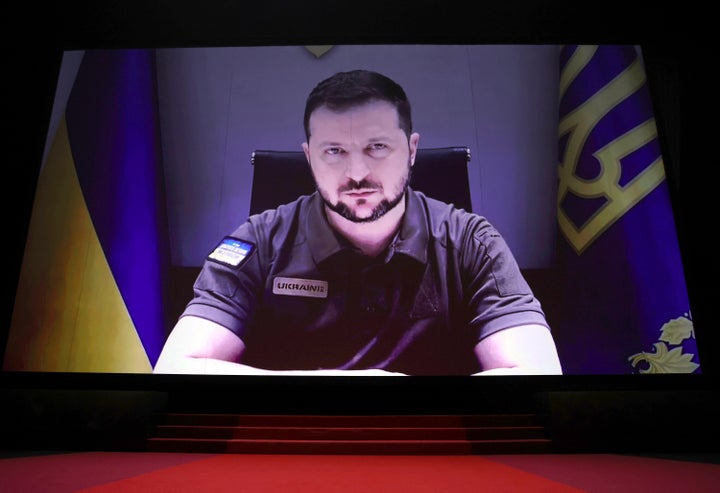
The 75th Cannes Film Festival kicked off Tuesday with a live satellite video address from Ukrainian President Volodymyr Zelenskyy.
May. 17, 2022, 04:09 PM EDT
President of Ukraine Volodymyr Zelenskyy appears via remote during the opening ceremony of the 75th international film festival, Cannes, southern France, Tuesday, May 17, 2022. (Photo by Vianney Le Caer/Invision/AP)
BY JORDAN WILLIAMS AND LAURA KELLY – 04/18/22 6:20 PM ET
Russia has been accused of using everything from so-called vacuum bombs to chemical weapons as it fights to overtake Ukraine.
Some of the worst weapons that Moscow has allegedly used are indiscriminate in their nature, prompting concerns about their impact on civilian populations from Ukrainian officials, the West, and human rights groups monitoring the war.
“There is deliberate targeting of civilian populations and noncombatants, which is against international law,” said John Erath, senior policy adviser for the Center for Arms Control and Nonproliferation. “And it really does not matter what type of weapon is being used. That is really bad.”
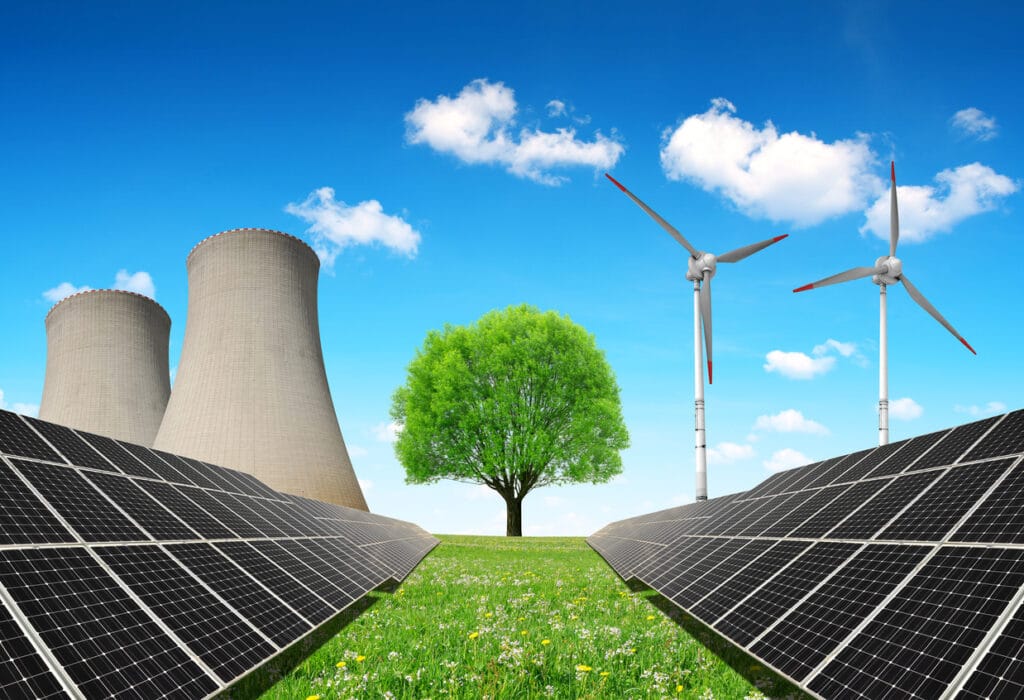
Hydrogen gas has long been recognised as an alternative to fossil fuels and a potentially valuable tool for tackling climate change.
Now, as nations come forward with net-zero strategies to align with their international climate targets, hydrogen has once again risen up the agenda from Australia and the UK through to Germany and Japan.
In the most optimistic outlooks, hydrogen could soon power trucks, planes and ships. It could heat homes, balance electricity grids and help heavy industry to make everything from steel to cement.
But doing all these things with hydrogen would require staggering quantities of the fuel, which is only as clean as the methods used to produce it. Moreover, for every potentially transformative application of hydrogen, there are unique challenges that must be overcome.
In this in-depth Q&A – which includes a range of infographics, maps and interactive charts, as well as the views of dozens of experts – Carbon Brief examines the big questions around the “hydrogen economy” and looks at the extent to which it could help the world avoid dangerous climate change.
What is hydrogen and how could it help tackle climate change?
Hydrogen is the lightest and most abundant element in the universe. It is also an explosive and clean-burning gas that contains more energy per unit of weight than fossil fuels.
One of my favorite quotes is from Sherlock Holmes: “Once you have eliminated the impossible, whatever remains, however implausible, must be the truth.”[1] This motto implicitly guides the ambitious plan to decarbonize all energy envisioned by most renewable energy enthusiasts. The only problem is that, not only is the alternative they dismiss not impossible, it could be much less implausible than the one they advocate.
The renewables army. A huge number of extremely earnest and bright people are working on trying to make the renewable energy future come true. They work at, or have passed through, the most elite institutions of our time, the top universities, the top financial firms, the most innovative corporations and startups. At the center of much of their effort is the Rocky Mountain Institute, the nonprofit research think-tank whose board I chaired more than 20 years ago. (They call it a “think-and-do” tank, which is more fitting.) RMI coordinates meetings (recently mostly Zoom meetings) with very smart participants from some of the foremost companies working on decarbonizing their businesses, companies like Google, Apple, Microsoft. It’s a pleasure to watch them think, discuss, and work out problems. It was an enormous pleasure to be on RMI’s board, especially to interact intellectually with the most brilliant individual I have ever met, RMI’s co-founder Amory Lovins.
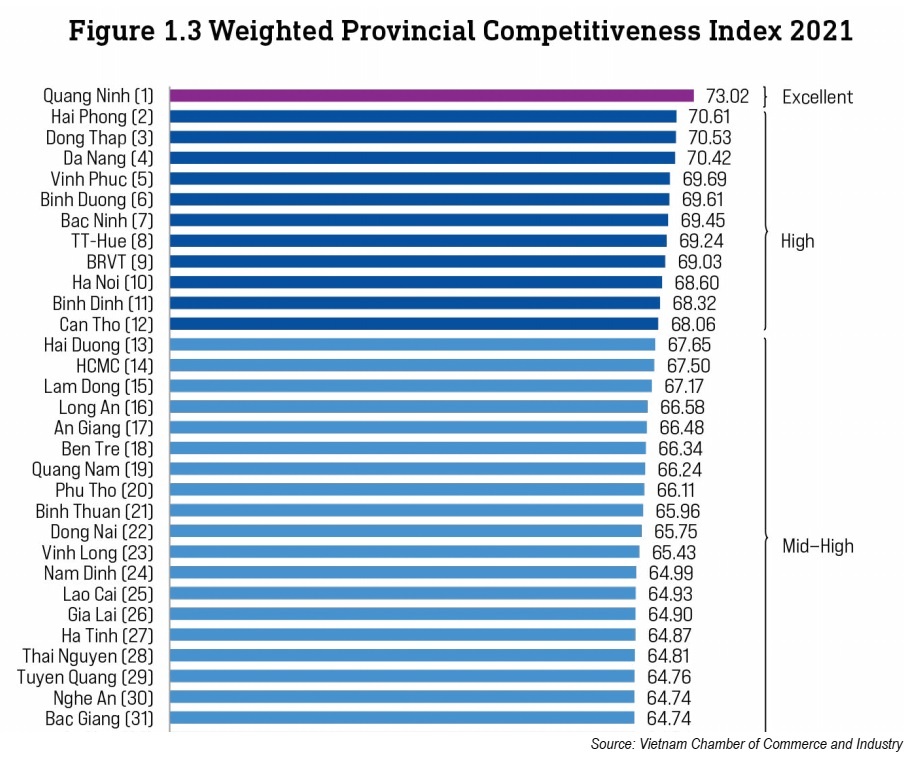
Despite the remarkable improvement of Vietnam’s cities and provinces to enhance competitiveness, many issues are remaining for them to lure in more investment.
Source: Vietnam Chamber of Commerce and Industry
Last week’s 2021 Provincial Competitiveness Index (PCI) report, released by the Vietnam Chamber of Commerce and Industry (VCCI), revealed that Quang Ninh, Haiphong, and Dong Thap were the most improved localities last year.
All three have facilitated business performance and boosted administrative reform in favour of private sector development.
In Quang Ninh, Viet Hung Industrial Park Development JSC was, for the first time, granted an investment certificate within only 24 hours.
“We are impressed by the administrative procedure reform of Quang Ninh and the strong direction of the provincial People’s Committee and relevant authorities to support investors,” said CEO Dao Phong Truc Dai.
The province has provided 1,600 online public services at levels three and four, and 555 procedures have been integrated into the national public services portal. The time for administrative procedures has been shortened, so the satisfaction of people and businesses improved significantly, reaching 99.7 per cent at the provincial level and 99.9 per cent at the district level.
Meanwhile, second-placed Haiphong was the leading city in attracting foreign direct investment (FDI) in 2021 with a total of $5.26 billion.
Chiều 10/5, sau 6 ngày làm việc khẩn trương, nghiêm túc với tinh thần trách nhiệm cao, Hội nghị lần thứ năm, Ban Chấp hành Trung ương Đảng khóa XIII đã hoàn thành toàn bộ nội dung, chương trình đề ra.
Thông tấn xã Việt Nam trân trọng giới thiệu toàn văn bài Phát biểu bế mạc Hội nghị của Tổng Bí thư Nguyễn Phú Trọng: “Ra sức phấn đấu, thực hiện thắng lợi Nghị quyết Hội nghị lần thứ năm, Ban Chấp hành Trung ương Đảng khóa XIII”:
“Kính thưa Trung ương, Thưa các đồng chí tham dự Hội nghị,
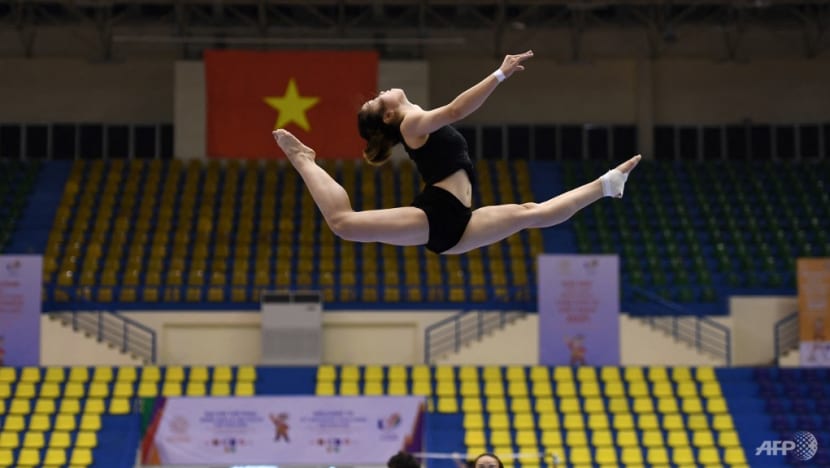
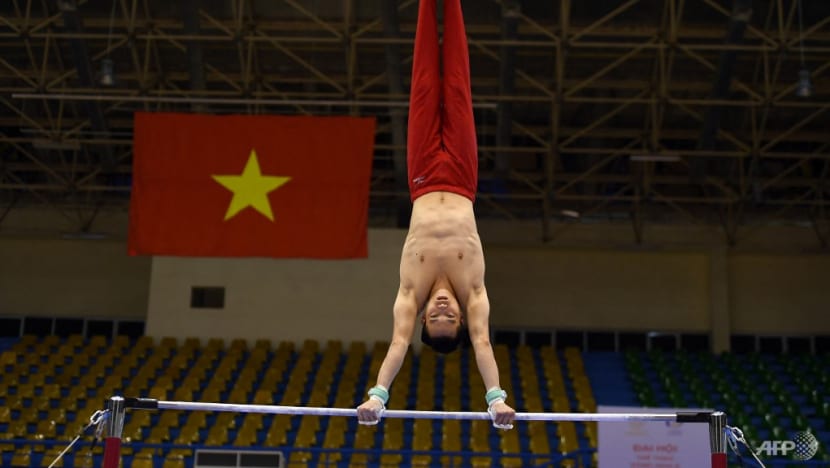
A Vietnamese gymnast takes part in a training session ahead of the 31st Southeast Asian Games (SEA Games) at Quan Ngua gymnasium in Hanoi on May 5, 2022. (Photo: AFP/Nhac Nguyen)A Vietnamese gymnast takes part in a training session ahead of the 31st Southeast Asian Games (SEA Games) at Quan Ngua gymnasium in Hanoi on May 5, 2022. (Photo: AFP/Nhac Nguyen)Malaysia’s Nur Dhabitah Sabri won the first gold at the SEA Games in Hanoi. (Photo: AFP/Nhac Nguyen)The SEA Games will officially begin on May 12, 2022 in Hanoi. (Photo: AFP/Nhac Nguyen)
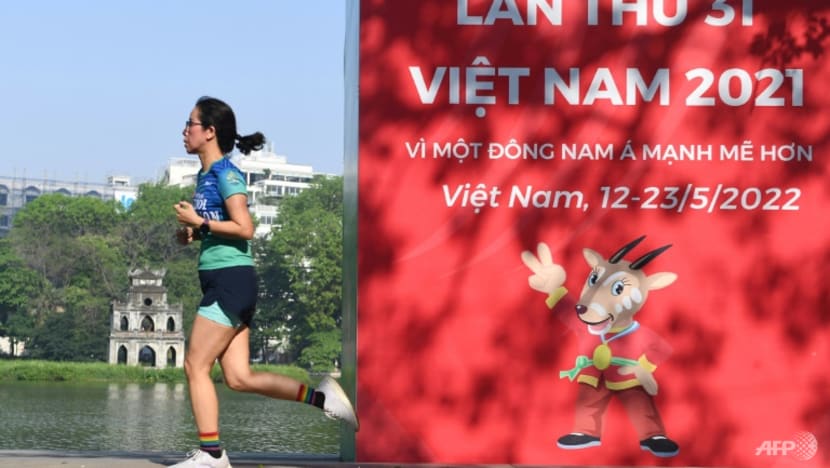
HANOI: The Southeast Asian Games open in the Vietnamese capital Hanoi on Thursday (May 12) after a six-month COVID-19 delay with Southeast Asian pride at stake in everything from football to bodybuilding and e-sports.
More than 5,000 athletes including Olympic champions are vying for more than 500 gold medals in the event, which is staged every two years, in what should be packed arenas.
The 11-nation Games include traditional Olympic sports such as athletics, swimming and boxing, but also regional ones like sepak takraw, an eye-catching volleyball-style game where teams kick a rattan ball.
Briefing the Security Council on his shuttle diplomacy last week in Russia and Ukraine, Secretary-General António Guterres declared that he “did not mince words” during meetings with Presidents Putin and Zelenskyy, on the need to end the brutal conflict.
“I said the same thing in Moscow as I did in Kyiv…Russia’s invasion of Ukraine is a violation of its territorial integrity and of the Charter of the United Nations,” he told the Ambassadors.
“It must end for the sake of the people of Ukraine, Russia, and the entire world…the cycle of death, destruction, dislocation and disruption must stop.”
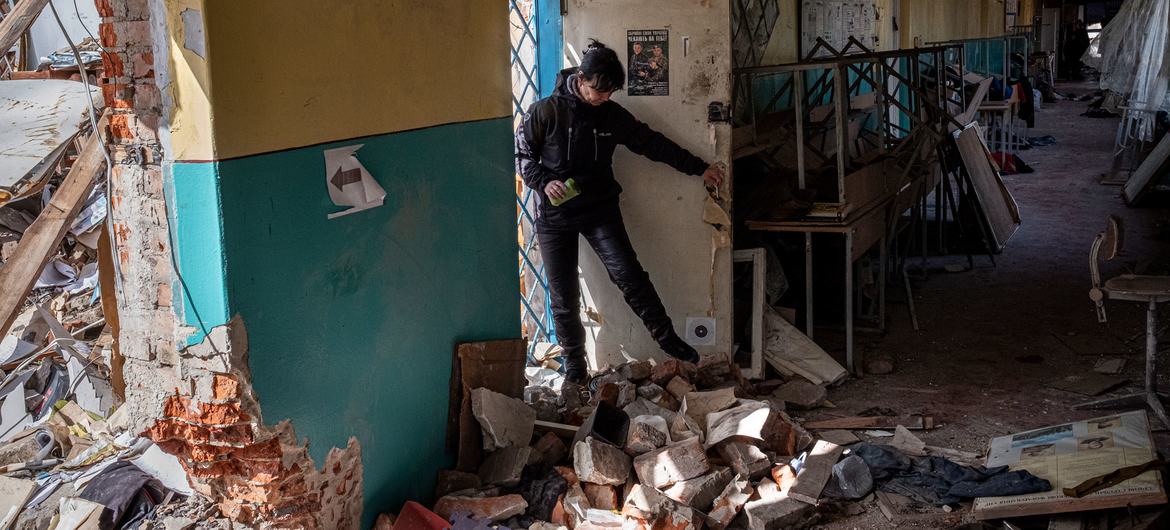
The UN chief said he had gone into an active war zone in Ukraine, after first travelling to Moscow, without much prospect of any ceasefire – as the east of the country continues to face “a full-scale ongoing attack”.
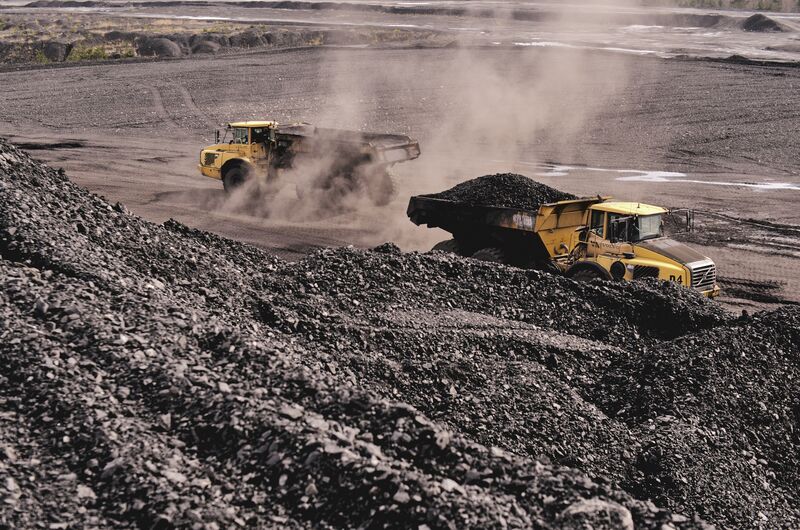
The first phase of the global energy crunch was driven by the natural gas shortage, now comes the coal crisis.
Russia’s invasion of Ukraine set off a chain reaction in the global energy markets that further thrusts coal into the spotlight. Photographer: Bartek Sadowski/Bloomberg
In Germany and Italy, coal-fired power plants that were once decommissioned are now being considered for a second life. In South Africa, more coal-laden ships are embarking on what’s typically a quiet route around the Cape of Good Hope toward Europe. Coal burning in the U.S. is in the midst of its biggest revival in a decade, while China is reopening shuttered mines and planning new ones
A crowd gathers outside the Supreme Court early on May 3 after a draft opinion was leaked, appearing to show that a majority of justices were ready to overturn the 1973 decision in Roe v. Wade. (Alex Brandon/AP)
Roe v. Wade, the historic 1973 Supreme Court decision that made abortion legal in the first trimester of a woman’s pregnancy, is in danger of being struck down by the conservative majority, according to news reports published Monday night.
According to this Washington Post article, a draft opinion published by Politico said that a majority of justices are ready to reverse the ruling — though until a decision has been formally announced, any vote that has been taken can be reconsidered. In any case, the leak itself was big news — an unprecedented breach of court protocol in modern times.








 CVD
CVD 
