U.S. students are clashing over the Israel-Hamas war. What can colleges do?

npr.org October 14, 20235:00 AM ETLISTEN· 4:53

AYESHA RASCOE, HOST:

Tensions over Israel’s war with Hamas have extended all the way to college campuses in the U.S. There have been protests and strong statements and, at times, physical and verbal clashes. What are colleges supposed to do in these moments? To answer that question and tell us about what has been happening, we turn to NPR’s Elissa Nadworny. Hi, Elissa.

ELISSA NADWORNY, BYLINE: Hi, Ayesha.

RASCOE: So walk us through the week. How has this played out at colleges?

NADWORNY: Let’s first go to Harvard. So there, last weekend, a coalition of student groups issued a statement saying they, quote, “hold the Israeli regime entirely responsible for the unfolding violence.” Now, this statement was met with a lot of anger, pushback and pressure. And since then, some of the student groups have apologized or retracted their endorsements. Across the country, there have been vigils and protests on campus. At Indiana University, the student newspaper reported clashes between pro-Israeli and pro-Palestinian student groups. And even before the Hamas attack, the Israeli-Palestinian conflict has been one of the most contentious issues on campus.

RASCOE: And how are the administrations of these universities reacting to all of this turmoil?

NADWORNY: We’ve seen quite a range of responses. The University of Florida president, Ben Sasse, a former Republican senator, came out and said, quote, “we’ll protect our Jewish students from violence.” We’ve also seen other schools, like Vanderbilt and University of Virginia, issue multiple statements, you know? They just can’t quite get it right. I talked with Eboo Patel about this. He’s the president of Interfaith America, which works with campuses around conflict issues.

EBOO PATEL: I got a phone call from a college president this morning telling me that his campus would be hosting a peace vigil, and he was concerned about a disturbance at that peace vigil possibly approaching violence.

NADWORNY: Patel told that campus leader and others, keep your message super clear and simple. Say, look, people are hurting. We care and support our students, and we will be a community of cooperation.

PATEL: We’re not going to minimize the conflict. We are simply going to say that we are not going to allow the conflict to prevent us from cooperating on other things. That’s the genius of American college campuses.

RASCOE: What about schools that have remained quiet, which – I mean, that can feel like a statement in and of itself?

NADWORNY: That’s right. Yeah. You know, surprisingly, some free speech advocates actually like this approach, though they acknowledge it will come with pushback. Here’s Alex Morey, she’s the director of campus rights advocacy at FIRE, the Foundation for Individual Rights and Expression.

ALEX MOREY: The commentary is so divisive, and there’s really no right answer for a university. So what is so much better, but unpopular at the moment, for universities to do is to remove themselves from the debate entirely and instead say, we are not going to put our thumb on the scale as the university, one way or another, because that will chill the environment for free expression for scholarly inquiry.

RASCOE: Elissa, I’m guessing that many students right now are feeling like they are in the middle of all of this.

NADWORNY: Yeah. Many students are frustrated both about what student groups are saying and, in some cases, what universities aren’t saying. Here’s Caroline Yaffa. She’s a senior at the University of North Carolina in Chapel Hill.

CAROLINE YAFFA: I think it’s the university’s obligation to weigh in on this.

NADWORNY: Yaffa is Jewish, and she told NPR’s Rachel Treisman that she has had moments this week where she doesn’t feel safe on campus. She even changed her name on her Uber account from Yaffa to Smith.

RASCOE: And what about students who have organized pro-Palestine protests or are part of student groups that support Palestine?

YAFFA: Well, the National Organization of Students for Justice in Palestine told NPR that they expect universities to defend and protect a student’s right to speak, assemble and protest. Some students who are part of local chapters didn’t want to talk on the record for fear of retaliation. But I talked with Radhika Sainath, a senior staff attorney at Palestine Legal, an advocacy group that focuses on academic freedom.

RADHIKA SAINATH: So many people have been coming to us as well who just have basic questions of saying, you know, can I say that I support Palestinian rights? Can I say that I stand against Israeli military occupation or for Palestinian freedom? Am I allowed to do this at my university?

NADWORNY: She said she’s heard from professors that say their social media posts are being questioned. Students say they’re facing harassment or doxing, where their names and addresses get released online. And Sainath tells them, look, the First Amendment right in the United States protects speech, even if it’s controversial.

RASCOE: That’s Elissa Nadworny from NPR’s education team. Thank you so much for joining us.

NADWORNY: Thanks, Ayesha.

Nelson Mandela Speaking on Palestine [Extracts]

The above video is a collection of extracts from a 1990 town hall meeting, held in New York City and chaired by Ted Koppel of ABC Networks. The meeting formed part Nelson Mandela’s first visit to the USA immediately following his release from prison.

A significant part of the town hall meeting focused on Nelson Mandela’s advocating (on behalf of the African National Congress and the larger South African liberation struggle) for sanctions to be applied against Apartheid South Africa, his and the ANC’s support for the Palestine Liberation Organisation (PLO) as well as his close friendship with Yasser Arafat (of Palestine) and Fidel Castro (of Cuba).

The town hall meeting took place in 1990, long before the world had embraced Nelson Mandela as a “giant of justice”. However, even then, when it may have been unfashionable and unpopular to support the Palestinians against, what Mandela termed, Israeli “colonialism”, Mandela stood firm and resolute on his principles and the policies of the ANC – Mandela was, after all, conveying the long-standing positions held by the ANC and the larger South African liberation movement.

Nelson Mandela supported the Palestinian struggle when it was unfashionable and unpopular, he was a true leader. Hamba Kahle Tata…

Sạt lở đất – Thiên tai hay nhân tai?

Phóng sự VTV24 năm 2020

[VOV2] – Các hoạt động nhân sinh đang làm trầm trọng thêm các hình thái bất thường của thời tiết và đã đến lúc không thể chỉ nói rằng thảm hoạ xảy ra là do thiên tai, mà trong nhiều trường hợp cần phải nói đến là do cả nhân tai.

Chỉ trong vòng hơn 2 tháng qua, cả nước đã xảy ra 47 trận sạt lở đất, đá gây thiệt hại nghiêm trọng về người và tài sản. Điều đáng nói, không chỉ khu vực Tây Nguyên, Nam Bộ, Tây Bắc, mà ngay cả Hà Nội cũng đã xuất hiện những trận sạt lở lớn. Vậy đâu là nguyên nhân gây ra tình trạng này? Cần có những giải pháp hữu hiệu nào để phòng tránh những vụ sạt lở tương tự?

Trong cuộc trao đổi với phóng viên VOV2, PGS.TS Trần Tân Văn, nguyên Viện trưởng Viện Khoa học địa chất và khoáng sản Việt Nam, Bộ Tài nguyên và Môi trường đã có những nhận định và phân tích khá thẳng thắn xung quanh vấn đề này.

PGS.TS Trần Tân Văn, nguyên Viện trưởng Viện Khoa học địa chất và khoáng sản Việt Nam, Bộ Tài nguyên và Môi trường
Tiếp tục đọc “Sạt lở đất – Thiên tai hay nhân tai?”

Miền Trung đứng trước nguy cơ “đại hồng thuỷ” sau gần 25 năm

Kinh tế đô thị  Trọng Tùng 14:37 15/10/2023

Kinhtedothi – Miền Trung đang ở hình thế kinh điển (điển hình) của mùa mưa, rất giống với hình thái thời tiết từng gây ra trận lũ lụt lịch sử vào tháng 11/1999. Liệu một trận đại hồng thuỷ có lặp lại sau gần 25 năm?

TIN LIÊN QUAN

Gần 1.600 ngôi nhà bị ngập, sơ tán hơn 3.900 người dân tránh mưa lũ

Miền Trung chìm trong mưa lũ

Ký ức khó phai mờ

Đợt lũ lụt xảy ra tại miền Trung vào tháng 11/1999 (hay còn được biết đến với tên gọi là đại hồng thủy 1999) được xem là một trong những trận lũ lụt lớn nhất từng xảy ra. Nguyên nhân của trận lũ lụt lịch sử là do tác động của không khí lạnh mạnh kết hợp với dải áp thấp xích đạo, các nhiễu động trên cao và cuối cùng là áp thấp nhiệt đới.

Các tỉnh miền Trung nước ta đã phải hứng chịu những trận mưa rất lớn từ ngày 1 – 6/11/1999, gây ra lũ lụt nghiêm trọng, nhấn chìm nhiều huyện, thị xã, làm thiệt hại tài sản lên đến gần 3.800 tỷ đồng (giá thời điểm năm 1999, tương đương 21.203 tỷ đồng ở năm 2023).

Gia cố bờ sông phòng, chống lũ lên do mưa lớn kéo dài tại tỉnh Hà Tĩnh.
Tiếp tục đọc “Miền Trung đứng trước nguy cơ “đại hồng thuỷ” sau gần 25 năm”

Australia rejects Indigenous referendum in setback for reconciliation

Reuters.com By Praveen Menon, Lewis Jackson, Wayne Cole

https://www.reuters.com/video/?videoId=RW001014102023RP1&jwsource=em

SYDNEY (Reuters) -Australia on Saturday decisively rejected a proposal to recognise Indigenous people in the constitution, in a major setback to the country’s efforts for reconciliation with its First Peoples.

Australians had to vote “Yes” or “No” in the referendum, the first in almost a quarter of a century, on the question of whether to alter the constitution to recognise Aboriginal and Torres Strait Island people through the creation of an Indigenous advisory body, the “Voice to Parliament”.

Nationwide, with almost 70% of the vote counted, the “No” vote led “Yes” 60% to 40%. Australian broadcaster ABC and other TV networks have projected that a majority of voters in all six of Australia’s states would vote against altering the 122-year-old constitution.

Tiếp tục đọc “Australia rejects Indigenous referendum in setback for reconciliation”

Timeline: Indigenous Voice, treaty and truth in Australia

Aljazeera.com

Indigenous people’s 60,000 years of connection to their country should be recognised, leaders say.

An Aboriginal protester runs past a fire and make-shift shelter with an Aboriginal flag outside the old parliament House building in Canberra
The Aboriginal Tent Embassy has been a continued site of protest outside old Parliament House in Australia’s Canberra since 1972 [File: David Gray/Reuters]

By Al Jazeera Staff

Published On 13 Oct 202313 Oct 2023

The Australian referendum on an Indigenous Voice to Parliament is part of a long history of Aboriginal people fighting for their voice to be heard.

The referendum was called after Aboriginal and Torres Strait Islander leaders issued the Uluru Statement from the Heart, a petition calling for a First Nations Voice to be enshrined in the Australian constitution.

Tiếp tục đọc “Timeline: Indigenous Voice, treaty and truth in Australia”

Explainer: Australia has voted against an Indigenous Voice to Parliament. Here’s what happened

theconversation.com

A majority of Australian voters have rejected the proposal to establish an Aboriginal and Torres Strait Islander Voice to Parliament, with the final results likely to be about 40% voting “yes” and 60% voting “no”.

What was the referendum about?

In this referendum, Australians were asked to vote on whether to establish an Aboriginal and Torres Strait Islander Voice to Parliament. The Voice was proposed as a means of recognising Aboriginal and Torres Strait Islander peoples as the First Peoples of Australia in the Constitution.

The Voice proposal was a modest one. It was to be an advisory body for the national parliament and government. Had the referendum succeeded, Australia’s Constitution would have been amended with a new section 129:

In recognition of Aboriginal and Torres Strait Islander peoples as the First Peoples of Australia:

i. there shall be a body, to be called the Aboriginal and Torres Strait Islander Voice

Tiếp tục đọc “Explainer: Australia has voted against an Indigenous Voice to Parliament. Here’s what happened”

Israelis Dread This Nightmare Will Never End

time.com BY EETTA PRINCE-GIBSON OCTOBER 12, 2023 2:00 AM EDT

Eetta Prince-Gibson is the Israel editor for Moment magazine, the former editor in chief of the Jerusalem Report, and a regular contributor to Haaretz, +61J, and other international publications.

Our government has abandoned us, too. The Prime Minister has not yet visited any of the victims, and few of his 33-seat government have, either. The Prime Minister has gone on television several times to promise revenge and a putative victory, but has not offered words of comfort or hope. The logistical relief that democratic caring governments are supposed to provide is being provided by civil society.

I am filled with dread because none of the leaders, on either side, have any long-term answers other than hatred and rejection. None of our supposed leaders are capable of suggesting a plan that will allow both our peoples to be safe from evil, safe in our homes, and safe to live our lives as individuals and as people.”

Family and friends of May Naim, 24, who was killed by Hamas, react during her funeral in Gan Haim, Israel, on Oct. 11, 2023.
Family and friends of May Naim, 24, who was killed by Hamas, react during her funeral in Gan Haim, Israel, on Oct. 11, 2023.Amir Levy—Getty Images

Blessed rains have washed away the interminable heat and dust of summer. In Jerusalem, where I live, the air is wonderfully fresh and the mornings are brisk and chilly. But the streets are unnervingly quiet. Schools have been closed all week. Most cafes and stores have been closed, too, since no one feels much like sipping artisan espresso or shopping, and many of the regulars have been called up for reserve duty.

Tiếp tục đọc “Israelis Dread This Nightmare Will Never End”

Why Egypt isn’t allowing Gaza refugees despite Israel evacuation order

As Israel pummels besieged Gaza, Egypt resists opening up to refugees

washingtonpost.com

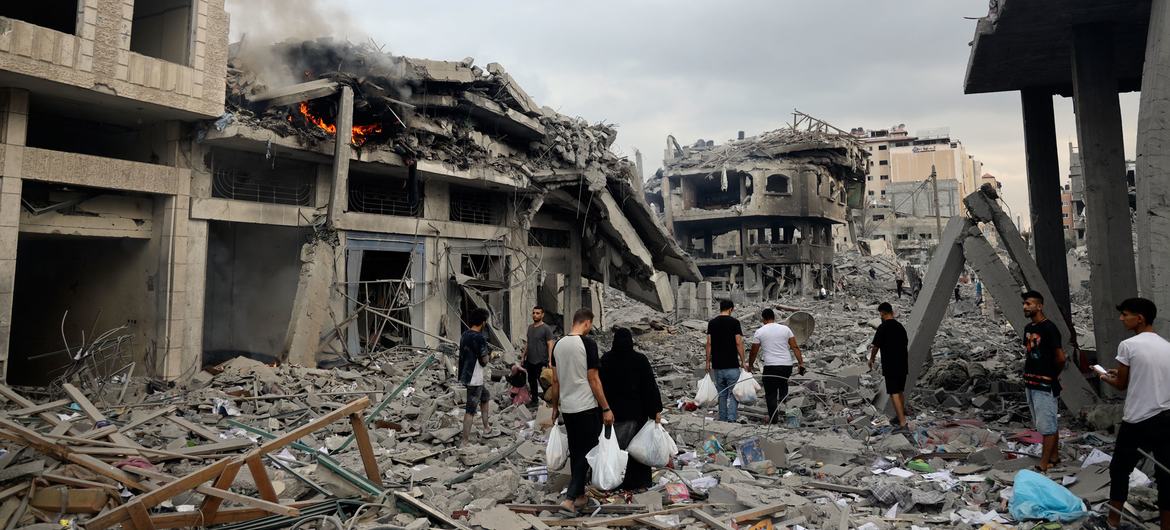
CAIRO — With more than 1,500 people dead in Gaza and hundreds of thousands displaced by the Israeli military’s relentless bombardment of the Gaza Strip, global attention has focused on the Rafah border crossing with Egypt, the only viable way out of the densely populated enclave.

But Cairo, wary of political fallout and security risks, is determined to prevent an exodus of refugees to Egypt — warning it could be a death knell for the Palestinian dream of statehood.

The crossing point at Gaza’s southern edge has been effectively closed since Tuesday after Israeli airstrikes damaged infrastructure in the area.

Tiếp tục đọc “Why Egypt isn’t allowing Gaza refugees despite Israel evacuation order”

History of the Question of Palestine

United Nation

Historical Timeline

1917 – 1947: British mandate

Palestine was among former Ottoman territories placed under UK administration by the League of Nations in 1922. All of these territories eventually became fully independent States, except Palestine, where in addition to “the rendering of administrative assistance and advice” the British Mandate incorporated the “Balfour Declaration” of 1917, expressing support for “the establishment in Palestine of a national home for the Jewish people”. During the Mandate, from 1922 to 1947, large-scale Jewish immigration, mainly from Eastern Europe took place, the numbers swelling in the 1930s with the Nazi persecution. Arab demands for independence and resistance to immigration led to a rebellion in 1937, followed by continuing terrorism and violence from both sides. UK considered various formulas to bring independence to a land ravaged by violence. In 1947, the UK turned the Palestine problem over to the UN. Read more.

1947 – 1977: Partition plan, 1948, 1967, 1973 wars, inalienable rights

Tiếp tục đọc “History of the Question of Palestine”

Miền Trung mưa lớn đến 700mm, kéo dài và rất phức tạp

vietnamnet.vn

Mưa lớn ở miền Trung liên tục được dự báo cực đoan khi tổng lượng mưa các ngày 13-15/10 có nơi lên đến 700mm. Người dân từ Hà Tĩnh đến Quảng Nam cần chủ động ứng phó với thiên tai phức tạp.

Theo Trung tâm dự báo khí tượng thủy văn quốc gia, đêm qua và sáng sớm nay (13/10), ở khu vực từ Hà Tĩnh đến Quảng Ngãi có mưa vừa, mưa to, cục bộ có mưa rất to. Lượng mưa tính từ 19h tối qua đến 8h sáng nay có nơi trên 170mm như: Hồ Kim Sơn (Hà Tĩnh) 216.6mm, Tân Lâm (Quảng Bình) 201.4mm, Thuận An (Thừa Thiên Huế) 171mm.

Tiếp tục đọc “Miền Trung mưa lớn đến 700mm, kéo dài và rất phức tạp”

Heavy rains batter Central Vietnam, cut off roads, shut down schools

SGGP October 13, 2023 at 15:27:32

Heavy rains have continuously drenched the Central region of Vietnam, unleashed floods and landslides, marooned vast areas, cut off roads and shut down schools. 

Related News

Central region to continue to suffer from widespread flooding
Mekong Delta facing increasingly serious flooding

This afternoon, the Department of Education and Training of Da Nang City announced that students should not go to school because many roads in the city were flooded due to heavy rains.

After the Steering Committee for Natural Disaster Prevention and Control, Search and Rescue and Civil Defense of Da Nang City announced heavy rain will pummel the city from 9 a.m. to 4 p.m. today, the Department of Education and Training of Da Nang City requested heads of schools to let students stay at home for their safety as some roads are deeply flooded.

Tiếp tục đọc “Heavy rains batter Central Vietnam, cut off roads, shut down schools”