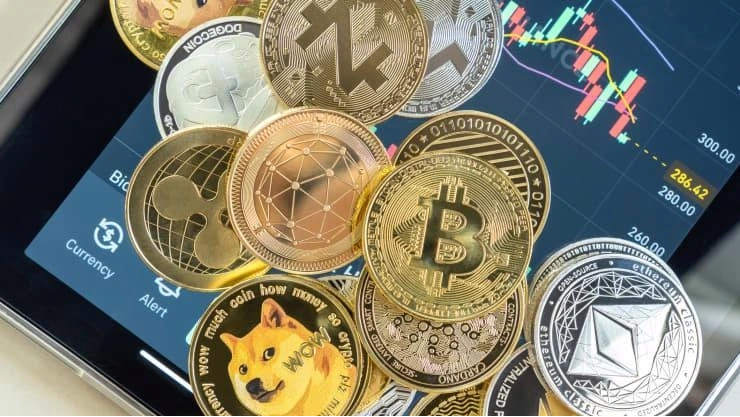
Báo cáo tội phạm Crypto 2025 – The 2025 Crypto Crime Report

How crypto is scaling traditional crime types, like drug trafficking, money laundering, and fraud.

Download repport https://go.chainalysis.com/2025-Crypto-Crime-Report.html

Ransomware 

Darknet Markets 

Market Manipulation 

Scams 

Stolen Funds 

Extremism 

Organized Crime

Báo cáo tội phạm mạng hoạt động ở Đông Nam Á – Compound crime: Cyber scam operations in Southeast Asia

Repurposed hotels, casinos, and private compounds across Cambodia, Laos, Myanmar and the Philippines have become centres of global fraud. These compounds are operated by organized criminal networks that exploit hundreds of thousands of people, many of whom are trafficked and forced to perpetrate online scams. Victims include not only those defrauded online but also the scam workers themselves, subjected to threats, violence, sexual exploitation and extreme working conditions. 

The report details how cyber scams —including ‘pig-butchering’ romance-investment scams, crypto fraud, impersonation and sextortion— now generate tens of billions of dollars annually.  

Download report https://globalinitiative.net/analysis/compound-crime-cyber-scam-operations-in-southeast-asia/

Thống kê và xu hướng tội pham Crypto 2025 – Crypto Crime Report: 2025 Statistics & Trends

Crypto crime is escalating fast and shifting in form. In 2024 alone, $51 billion flowed into illicit wallets, with $40 billion laundered and over $2 billion stolen outright. Bitcoin is no longer king in the shadows; stablecoins now dominate criminal crypto flows. This report breaks down who’s losing money, how it’s being funneled, and why tracking these shifts is critical. The insights ahead reveal patterns that can help spot emerging threats and shape stronger policy.

How much cryptocurrency has been stolen in the world

How many Bitcoins have been stolen?
How much Ethereum was stolen?
How much Solana has been stolen?
The biggest crypto rug pulls
Cryptocurrency money laundering statistics
The biggest crypto scams in history
Insights & Implications:
Methodology:
References:

Download report https://coinledger.io/research/crypto-crime-report

Lừa đảo ngày càng tinh vi trên thị trường tài sản mã hóa

Việt Nam đứng thứ 3 thế giới về giao dịch tiền ảo

tapchitaichinh.vn Thanh Hằng 17:35 25/05/2025

Thị trường tài sản mã hóa mang đến cơ hội, nhưng cũng đầy rẫy cạm bẫy. Trong bối cảnh các thủ đoạn lừa đảo ngày càng tinh vi, các nhà đầu tư cần học cách nhận diện, phòng tránh các mô hình lừa đảo để tự bảo vệ mình.

Trong những năm gần đây, thị trường tài sản mã hóa (crypto) đã bùng nổ tại Việt Nam, thu hút một lượng lớn nhà đầu tư, đặc biệt là giới trẻ. Với tiềm năng lợi nhuận cao và tốc độ tăng trưởng ấn tượng của các đồng tiền như Bitcoin, Ethereum, hay các mô hình tài chính phi tập trung (DeFi), không ít người đã kỳ vọng đây sẽ là cơ hội đổi đời.

Cạm bẫy lừa đảo ngày càng tinh vi trên thị trường tài sản mã hóa.

Theo số liệu từ Triple-A, năm 2024 có hơn 17 triệu người Việt Nam đang sở hữu tài sản mã hóa, chiếm gần 17% dân số. Tuy nhiên, sự phát triển nhanh chóng này cũng đi kèm một lỗ hổng lớn: phần lớn nhà đầu tư là người mới, tiếp cận thị trường thông qua mạng xã hội hoặc lời rỉ tai, không có nền tảng về công nghệ blockchain, pháp lý tài sản số hay các phương thức lừa đảo phổ biến hiện nay.

Mới đây, thông tin về “Madam Ngo” bị Interpol truy nã vì tội lừa đảo đầu tư tiền điện tử và ngoại hối, lừa đảo hơn 2.000 nạn nhân người Việt Nam số tiền khoảng 300 triệu USD đã gióng lên hồi chuông cảnh báo về những rủi ro tiềm ẩn trong thị trường này.

Tiếp tục đọc “Lừa đảo ngày càng tinh vi trên thị trường tài sản mã hóa”

Vì sao băng nhóm tội phạm Crypto ở Đông Nam Á nở rộ –  Why scam gangs in Southeast Asia are a growing global threat

Griffith.edu.au May 19, 2025 By Dr Hai Thanh Luong

From fake job offers to cryptocurrency fraud and online romance scams, Southeast Asia has become a global hub for transnational scam operations. 

These aren’t isolated crimes, they are organised, cross-border and industrial-scale criminal enterprises that exploit vulnerable people and expose the limits of international law enforcement.

New research shows this surge in scams represents more than just a regional issue. It’s a transnational emergency, and it demands an urgent, coordinated response.

Why Southeast Asia?

Several factors have turned Southeast Asia into a hotbed for scam syndicates. 

The collapse of rule of law in parts of Myanmar has created ungoverned spaces where criminal operations flourish. 

Meanwhile, countries like Cambodia, Laos and the Philippines offer a fertile environment for transnational crime due to weak governance, corruption, and limited oversight.

These scam centres don’t just target foreign victims. They also lure and trap workers—many of them young people from poorer nations—under the false promise of legitimate employment. Once inside, many are subjected to forced labour, abuse and trafficking.

This has become a humanitarian crisis as scam compounds across Southeast Asia have held thousands of people against their will, forcing them to commit fraud under threat of violence.

The rise of digital technologies has only made these operations harder to trace and easier to scale. From encrypted messaging to unregulated cryptocurrency, scam networks have globalised rapidly, while enforcement efforts remain stuck behind borders.

Why national responses aren’t working

One of the key challenges in confronting this crisis is the fragmented nature of law enforcement. 

Scams that begin in one country can target victims in another, while using platforms, payment systems, and communication tools hosted across multiple jurisdictions.

But many national police forces are not equipped to act beyond their borders. And transnational criminal syndicates have exploited the lack of international coordination to operate with relative impunity.

Even where political will exists, legal mismatches and diplomatic bottlenecks prevent timely investigations, arrests or prosecutions. 

Countries tend to focus inward, launching isolated crackdowns that fail to dismantle the broader networks.

This mismatch between the global nature of the threat and the localised nature of responses is precisely what allows these scams to thrive.

What needs to happen

To seriously confront this growing criminal economy, regional governments must prioritise coordinated responses, cross-border investigations, and robust intelligence sharing.

This includes:

  • Building shared databases and real-time intelligence channels to track trends, suspects and operations;
  • Developing harmonised legal tools to enable prosecutions and asset recovery across jurisdictions;
  • Working with tech and financial platforms to shut down scam infrastructure;
  • Protecting and rehabilitating victims, particularly those trafficked into scam compounds.

ASEAN, Interpol, and UNODC all have a role to play. But meaningful cooperation remains patchy, slow and overly politicised. Tackling scams as a global crisis, not just a regional one, will require serious investment and political leadership.

A crisis we can’t ignore

Scams are often dismissed as digital annoyances or consumer issues. 

The response to this crisis cannot be local, slow or siloed. The fight against transnational scams cannot be won in isolation. 

Only by working together can states dismantle the criminal networks exploiting the region’s vulnerabilities.

But what we are seeing in Southeast Asia is a complex ecosystem of transnational organised crime, often underpinned by exploitation and violence.

Billions of dollars are being stolen. Thousands of people are being trafficked and abused. And public trust in digital systems is eroding as scams become more sophisticated.

“Một loại ung thư” – UN cảnh báo tập đoàn tội phạm mạng Châu Á mở rộng khắp thế giới – ‘A cancer’: UN warns Asia-based cybercrime syndicates expanding worldwide

Al Jazeera

Agency says gangs caused $37bn in losses in Asia as they gain new footholds in Africa, South America, and Middle East.

Tiếp tục đọc “Vì sao băng nhóm tội phạm Crypto ở Đông Nam Á nở rộ –  Why scam gangs in Southeast Asia are a growing global threat”

Crypto Crime – Tội phạm crypto, tài sản mã hoá, tiền ảo

Thị Trường Crypto Đen toàn cầu – Global Crypto Black Market – National Geographic

Đế chế tội phạm mạng tỉ đô được xây ở Cambodia như thế nào?- How a Billion Dollar Cambodian Cybercrime Empire Was Built  – Bloomberg 

Vì sao băng nhóm tội phạm Crypto ở Đông Nam Á nở rộ –  Why scam gangs in Southeast Asia are a growing global threat

Griffith.edu.au May 19, 2025 By Dr Hai Thanh Luong

From fake job offers to cryptocurrency fraud and online romance scams, Southeast Asia has become a global hub for transnational scam operations. 

Tiếp tục đọc “Crypto Crime – Tội phạm crypto, tài sản mã hoá, tiền ảo”

Nhận diện các thủ đoạn rửa tiền thông qua tiền mã hóa – crypto currency

a. Thông qua các sàn giao dịch tiền mã hóa tập trung (Centralised exchanges). 
b. Thông qua hệ thống tài chính phi tập trung (Decentralised Finance – DeFi)
c. Thông qua Máy trộn tiền mã hóa (Mixers hoặc Tumblers) và Cầu nối chuỗi (cross-chain bridge)
d. Thông qua thị trường mua bán trao tay OTC (Over the counter market)
e. Thông qua tiền mã hóa ẩn danh (Privacy coins)
f. Thông qua các sàn đánh bạc trực tuyến
g. Sử dụng tiền mã hóa mua bất động sản, tác phẩm nghệ thuật và hàng hóa bán lẻ

Tạp chí pháp lý 19:10 07/04/2025

(Pháp lý). Bài viết nghiên cứu về thực trạng lợi dụng các đồng tiền mã hóa để phục vụ các hoạt động phạm tội nói chung và tội phạm rửa tiền nói riêng tại Việt Nam và trên thế giới. Trên cơ sở đó, tác giả đề xuất các giải pháp mà các lực lượng chức năng nghiên cứu áp dụng để chủ động phòng, chống tội phạm rửa tiền thông qua các giao dịch tiền mã hóa.

image001-1729504752.png
 

1. Tiền mã hóa – công cụ mới được “ưa chuộng” của tội phạm và rửa tiền 

Trong những năm gần đây, các đồng tiền mã hóa (CryptoCurrency) đã và đang phát triển mạnh mẽ, với hàng loạt các đồng tiền mới được ra đời, dựa trên các công nghệ tiên tiến, và độ phổ biến không ngừng được mở rộng với số lượng người sử dụng và tổng giá trị giao dịch ngày một tăng. 

Tiếp tục đọc “Nhận diện các thủ đoạn rửa tiền thông qua tiền mã hóa – crypto currency”

Công bố Đồ án điều chỉnh Quy hoạch chung Thành phố Hồ Chí Minh đến năm 2040, tầm nhìn đến năm 2060

qhkt.hochiminh.gov


1. Quyết định số 1125/QĐ-TTg ngày 11 tháng 6 năm 2025 về phê duyệt đồ án quy hoạch chung Thành phố Hồ Chí Minh đến năm 2040, tầm nhìn đến năm 2060

2. Quyết định số 1528/QĐ-TTg ngày 14 tháng 9 năm 2021 của Thủ tướng Chính phủ về việc phê duyệt Nhiệm vụ điều chỉnh Quy hoạch chung Thành phố Hồ Chí Minh đến năm 2040, tầm nhìn đến năm 2060

3. Slide Báo cáo tại Hội nghị

4. Link clip báo cáo

Why China is finally starting to acknowledge its overcapacity problem

channelnewsasia.com

Where Beijing once celebrated its manufacturing and export prowess, it now openly discusses the need to curb “involution”. This is a dramatic departure from its previous stance, says Enodo Economics’ Diana Choyleva.

Commentary: Why China is finally starting to acknowledge its overcapacity problem
People browse in electric car showrooms located on the 5th floor in a popular shopping mall in Beijing on Jul 21, 2025. (Photo: CNA/Hu Chushi)

LONDON: For years, Beijing dismissed Western concerns about Chinese overcapacity as protectionist rhetoric. When the United States and European Union complained about cheap Chinese exports flooding global markets, China’s response was predictable: These were simply competitive advantages in a free market economy.

That narrative has now fundamentally shifted. In a remarkable policy U-turn, China has not only started acknowledging the overcapacity problem but is treating it as a national priority that requires urgent intervention.

While there have been signs of this narrative change for a while, the clearest signal of this messaging transformation came through recently on China’s own policy channels.

In July, the Communist Party’s leading journal Qiushi warned that “disorderly competition has destroyed entire industry ecology”. This wasn’t diplomatic language about market dynamics – it was an admission that destructive competition had reached crisis proportions.

Tiếp tục đọc “Why China is finally starting to acknowledge its overcapacity problem”

UN report: (Almost) no one is reading UN reports

UN report finds United Nations reports are not widely read 

reuters.com By Michelle Nichols August 2, 2025

UN Secretary-General Antonio Guterres

UNITED NATIONS, Aug 1 (Reuters) – A United Nations report seeking ways to improve efficiency and cut costs has revealed: U.N. reports are not widely read.

U.N. Secretary-General Antonio Guterres briefed countries on Friday on the report, produced by his UN80 reform that focused on how U.N. staff implement thousands of mandates given to them by bodies like the General Assembly or Security Council.

The Reuters Daily Briefing newsletter provides all the news you need to start your day. Sign up here.

He said last year that the U.N. system supported 27,000 meetings involving 240 bodies, and the U.N. secretariat produced 1,100 reports, a 20% increase since 1990.

Advertisement · Scroll to continueReport This Ad

“The sheer number of meetings and reports is pushing the system – and all of us – to the breaking point,” Guterres said.

“Many of these reports are not widely read,” he said. “The top 5% of reports are downloaded over 5,500 times, while one in five reports receives fewer than 1,000 downloads. And downloading doesn’t necessarily mean reading.”

Guterres launched the UN80 taskforce in March as the U.N. – which turns 80 this year – faces a liquidity crisis for at least the seventh year in a row because not all 193 U.N. member states pay their mandatory regular dues in full or on time.

The report issued by the taskforce late on Thursday covers just one of several reform angles being pursued.

Advertisement · Scroll to continueReport This Ad

Among the suggestions Guterres put forward on Friday: “Fewer meetings. Fewer reports, but ones that are able to fully meet the requirements of all mandates.”

(This story has been corrected to clarify that not all countries pay in full or on time, in paragraph 6)

Reporting by Michelle Nichols; editing by Diane Craft

Our Standards: The Thomson Reuters Trust Principles.

The mathematics of starvation: how Israel caused a famine in Gaza

theguardian.com

Israel controls the flow of food into Gaza. It has calculated how many calories Palestinians need to stay alive. Its data shows only a fraction has been allowed in

Emma Graham-Harrison Chief Middle East correspondentThu 31 Jul 2025 15.49 BSTShare

The mathematics of famine are simple in Gaza. Palestinians cannot leave, war has ended farming and Israel has banned fishing, so practically every calorie its population eats must be brought in from outside.

Israel knows how much food is needed. It has been calibrating hunger in Gaza for decades, initially calculating shipments to exert pressure while avoiding starvation.

Palestinians crowd at a lentil soup distribution point in Gaza City, among them children and women holding pot and pans

“The idea is to put the Palestinians on a diet, but not to make them die of hunger,” a senior adviser to the then prime minister, Ehud Olmert, said in 2006. An Israeli court ordered the release of documents showing the details of those macabre sums two years later.

Cogat, the Israeli agency that still controls aid shipments to Gaza, calculated then that Palestinians needed an average minimum 2,279 calories per person per day, which could be provided through 1.836kg of food.

Today, humanitarian organisations are asking for an even smaller minimum ration: 62,000 metric tonnes of dry and canned food to meet basic needs for 2.1 million people each month, or around 1kg of food per person per day.

Tiếp tục đọc “The mathematics of starvation: how Israel caused a famine in Gaza”

Nạn mua bán người ở Việt Nam: Từ tuyến đường truyền thống đến lừa đảo số

1. Giới thiệu

Nạn mua bán người là một trong những hành vi vi phạm nghiêm trọng quyền con người, đồng thời là mối đe dọa thường trực đối với an ninh toàn cầu, ổn định xã hội và sự phát triển kinh tế. Trên toàn thế giới, mỗi năm có hàng triệu người bị cưỡng ép, lừa gạt hoặc bị buộc rơi vào các tình huống bị bóc lột. Theo Báo cáo của Văn phòng Liên Hợp Quốc về Ma túy và Tội phạm (UNODC), trong giai đoạn đại dịch COVID-19, số nạn nhân bị mua bán có xu hướng giảm nhẹ, tuy nhiên đến năm 2022 con số này đã tăng vọt 25% so với thời điểm trước đại dịch, trong đó phụ nữ và trẻ em chiếm đa số.1 Sự gia tăng này là hệ quả của nhiều yếu tố đan xen, bao gồm khó khăn kinh tế, xung đột kéo dài, biến đổi khí hậu, và sự phát triển nhanh chóng của các tổ chức tội phạm có tổ chức.

Tiếp tục đọc “Nạn mua bán người ở Việt Nam: Từ tuyến đường truyền thống đến lừa đảo số”

Nghệ An: Lũ ồ ạt đổ về, gần mức 5.000 năm xảy ra 1 lần. Phải chăng vì rừng nguyên sinh đã bị đốn quá nhiều?

*Một tuần sau lũ quét xảy ra ở Nghệ An, các địa phương khác tiếp tục bị ảnh hưởng nặng nề bởi lũ quét, và đều xảy ra tại các tỉnh có tỷ lệ rừng tự nhiên bị chặt phá trên diện rộng*

Khánh Hoan,Thanh Niên 23/07/2025 07:38 GMT+7

Nghệ An: Lũ ồ ạt đổ về, gần mức 5.000 năm xảy ra 1 lần.

Lũ đổ về quá quá lớn khiến nhiều xã miền núi ở Nghệ An ngập sâu trong nước, người dân tất tả chạy lũ trong đêm. Lưu lượng nước về hồ thủy điện Bản Vẽ gần mức 5.000 năm xảy ra 1 lần.

Đêm 22.7, UBND tỉnh Nghệ An phát thông báo khẩn cho biết lúc 21 giờ cùng ngày, lưu lượng nước thượng lưu về hồ thủy điện Bản Vẽ đạt 9.543 m3/giây, gần đạt lưu lượng đỉnh lũ kiểm tra là 10.500 m3/giây (tần suất 0.02%, tức là 5.000 năm xảy ra 1 lần).

Tiếp tục đọc “Nghệ An: Lũ ồ ạt đổ về, gần mức 5.000 năm xảy ra 1 lần. Phải chăng vì rừng nguyên sinh đã bị đốn quá nhiều?”

Singapore’s regreening is a model for cities everywhere

Supertree grove is part of the Gardens by the Bay (GBTB) urban park in Singapore, covering 105 hectares (260 acres). Image by Tien Tran (tientran0019) via Pixabay (Pixabay Content License).

Mongabay.com

Singapore has come a long way since the 1880s, when only roughly 7% of its native forests remained. Since the 1960s, when the city-state gained independence, it has implemented a number of urban regreening initiatives, and today, nearly 47% of the city is considered green space, providing numerous benefits to human residents and wildlife, like heat mitigation, freshwater conservation and cleanliness, carbon sequestration, coastal climate adaptation, biodiversity protection, and public enjoyment.

To discuss his city’s regreening efforts — from the philosophical to the practical applications of methods and mindset shifts that have allowed the city to revitalize its urban wildlife interface — Anuj Jain, director and principal ecologist at the biomimicry consultancy bioSEA and an adviser to BirdLife International, joins Mongabay’s latest podcast.

Tiếp tục đọc “Singapore’s regreening is a model for cities everywhere”

Rừng biển ngã xuống – tiền chảy về tài khoản lãnh đạo?

VTC News | Khi một cánh rừng ngã xuống, người ta thường nghĩ đến thiên tai. Nhưng ở Phong Quảng, rừng đã ngã – vì con người.

Một vụ bán rừng trước ngày hợp nhất, với cái giá chỉ bằng vài cây vàng – lại được thống nhất bởi chính quyền xã.
Chính quyền xã, cán bộ xã là người thực hiện nhiệm vụ thi hành chính sách lại trở thành lâm tặc, chặt phá rừng trái phép đem đi bán.

Người mua không phải người địa phương. Người chặt rừng cũng không phải dân trong vùng. Nhưng người gật đầu đồng ý – lại chính là những người từng tuyên thệ “phục vụ nhân dân”.

Rừng phòng hộ có vai trò như thế nào trong hệ sinh thái?


Rừng phòng hộ là loại rừng được sử dụng chủ yếu bảo vệ nguồn nước, bảo vệ đất, chống xói mòn, chống sa mạc hóa, hạn chế thiên tai, điều hòa khí hậu, bảo vệ môi trường, hạn chế xâm nhập mặn, chắn cát, chống nạn cát bay, hạn chế thiên tai, điều hòa khí hậu, góp phần bảo vệ môi trường sinh thái.


Mỗi công dân đều phải có trách nhiệm trước pháp luật về bảo vệ rừng, trồng rừng và giữ gìn lá phổi xanh của đất nước, thế mà nay lại bị chặt phá bởi lãnh đạo địa phương, vẫn thường xuyên mời nhân dân lên xã nghe tuyên truyền về bảo vệ rừng, trồng rừng phủ xanh đất trống đồi trọc.


Hôm nay, chúng ta sẽ đi sâu vào vụ việc đang khiến nhiều người dân ở Thừa Thiên Huế không khỏi bức xúc:
Vì sao rừng phòng hộ – tài sản công – lại bị bán chỉ 85 triệu đồng?
Ai đứng sau những chữ ký “trên giấy” nhưng lại gây hệ lụy thật ngoài đời?

Watch The British-Soviet Invasion of Iran (1941)

briliantmap.com

The Anglo-Soviet invasion of Iran (Operation Countenance) occurred in August 1941, during World War II.

The invasion was carried out jointly by the United Kingdom and the Soviet Union, aiming primarily to secure Iranian territory against Axis influence and protect critical supply routes.

Here’s a comprehensive overview:

Lead-Up and Reasons

Strategic Importance:

  • Iran had a strategically critical position, particularly as a transportation corridor between the Allies and the Soviet Union.
  • Iranian infrastructure, notably the Trans-Iranian Railway, offered a route for delivering vital supplies from the Allies (mostly Britain and the U.S.) to the USSR following Germany’s invasion (Operation Barbarossa) in June 1941.

Iranian Position and Axis Influence:

  • Although officially neutral, the Iranian ruler Reza Shah Pahlavi sympathized with Germany, partially due to historical rivalry with Britain and Russia.
  • Germany had established substantial diplomatic and commercial influence in Iran, with many German nationals working in strategic industries, raising fears of espionage and sabotage among the Allies.

Diplomatic Tensions:

  • Britain and the Soviet Union demanded Iran expel German nationals perceived as threats; Iran hesitated or refused, increasing Allied suspicions and tension.

Invasion: Operation Countenance

Date and Execution:

Began on August 25, 1941, when British forces advanced from the south and west, while Soviet forces attacked from the north.

Rapid military operations overwhelmed Iran’s defenses, which were relatively weak and poorly equipped compared to the invading powers.

Key Events:

  • British forces captured key oil fields in Khuzestan (Abadan), securing critical petroleum resources.
  • Soviet troops quickly took control of northern provinces, including major cities such as Tabriz and Mashhad.
  • Air and naval superiority allowed quick suppression of Iranian resistance.

Iranian Response: The Iranian army, despite fighting briefly in several locations, was rapidly overwhelmed, with significant casualties but limited overall resistance.

Tehran quickly realized the futility of resistance and began negotiations.

Tiếp tục đọc “Watch The British-Soviet Invasion of Iran (1941)”

Kêu gọi đình chỉ buôn bán khỉ đuôi dài Campuchia – từ Ban thư ký Công ước về buôn bán quốc tế các loài động vật, thực vật hoang dã

thiennhien.net

03/02/2025

Công ước về buôn bán quốc tế các loài động vật, thực vật hoang dã nguy cấp (CITES) đang xem xét lệnh cấm hoàn toàn việc bán loài khỉ đuôi dài (Macaca fascicularis) có nguy cơ tuyệt chủng tại Campuchia, và Ban thư ký CITES khuyến nghị đình chỉ hoạt động buôn bán loài này cho đến khi chính quyền Campuchia đề ra các biện pháp ngăn chặn tình trạng “rửa tiền” qua các cơ sở nhân giống khỉ hoang dã.

Riêng việc buôn bán khỉ đuôi dài từ các nước khác, bao gồm Lào, Việt Nam và Philippines thì cần được cân nhắc thêm.

Tiếp tục đọc “Kêu gọi đình chỉ buôn bán khỉ đuôi dài Campuchia – từ Ban thư ký Công ước về buôn bán quốc tế các loài động vật, thực vật hoang dã”