I'm from Hanoi, Viet Nam.
I'm an author of Dot Chuoi Non (dotchuoinon.com/author/hangbelu/), a blog on Positive thinking, founded by Dr. Tran Dinh Hoanh, an attorney in Washington DC.
I'm a co-founder of Conversations on Vietnam Development - cvdvn.net, a virtual think tank. I am a co-founder of two companies in Viet Nam working on children education services. I advise companies on STEAM education, English language education for children and students in Vietnam.
I'm studying the Buddha's teaching and the teaching of Jesus. I practice mindful living including meditation.
I hold a PhD on Sustainable Energy Systems from University of Lisbon and Aalto University.
I graduated from Hanoi University of Technology on Environmental Engineering. I obtained a Master degree of the same major from Stanford University and Nanyang Technological University.
My English-language blog at: hangbelu.wordpress/.
I play table tennis as a hobby.
(Chinhphu.vn) – Người đầu tiên ở Việt Nam nhiễm HIV vào 30 năm trước là một phụ nữ sống tại TPHCM. Hiện người phụ nữ này vẫn được theo dõi, điều trị tại Bệnh viện Bệnh nhiệt đới TPHCM và sống khỏe mạnh nhờ tuân thủ điều trị.
vnexpress.net Thứ hai, 18/11/2024, 20:26 (GMT+7) Dịch HIV/AIDS đang diễn biến phức tạp, hình thái lây nhiễm thay đổi từ đường máu ở nhóm nghiện chích ma túy sang lây truyền qua đường tình dục.
Thông tin được bà Phan Thị Thu Hương, Cục trưởng Cục Phòng, chống HIV/AIDS, Bộ Y tế, cho biết tại buổi họp báo nhân Ngày Thế giới phòng, chống AIDS, chiều 18/11. Tại Việt Nam, kể từ ca nhiễm đầu tiên được phát hiện năm 1990 tại TP HCM, ước tính hiện nay có khoảng 267.000 người đang sống chung với HIV. Đến nay, 100% số tỉnh, thành phố có người nhiễm.
9 tháng đầu năm nay, cả nước ghi nhận 11.421 trường hợp phát hiện mới HIV dương tính, 1.263 trường hợp tử vong. Trong số người mới phát hiện nhiễm HIV, 83% là nam giới, độ tuổi chủ yếu từ 15 – 29 (40%) và 30 – 39 (27%), nhóm chiếm tỷ lệ cao nhất là nam quan hệ tình dục đồng giới (42%).
The Nuclear Waste Management Organization of Japan recently backed the further survey of two potential disposal sites for high-level radioactive waste in Hokkaidō. The government has struggled to convince municipalities to participate in review procedures, with a growing list of stakeholders calling for a new approach to the selection process.
A Three-Step Process
The Japanese government and nuclear power plant operators have long grappled with how to dispose of spent fuel and other high-level radioactive waste. Authorities finally settled on the approach of burying waste deep underground at facilities 300 or more meters below the surface. In 2002, NUMO, the Nuclear Waste Management Organization of Japan, began hunting for a storage location by inviting municipalities to put themselves forward as candidate sites. To date, this “volunteer” policy has netted only three participants, the towns of Suttsu and Kamoenai in Hokkaidō and Genkai in Saga.
– Văn phòng Ban Chấp hành Trung ương Đảng vừa có Thông báo số 321-TB/VPTW, ngày 13/9/2025, về Kết luận của Tổng Bí thư Tô Lâm tại buổi làm việc với Viện Năng lượng Nguyên tử Việt Nam (ngày 4/9/2025). Dưới đây là nguyên văn Thông báo Kết luận của Tổng Bí thư.
Ngày 4/9/2025, Tổng Bí thư Tô Lâm đã làm việc với Viện Năng lượng Nguyên tử Việt Nam (VINATOM) tại trụ sở của Viện.
Tham dự buổi làm việc có Thủ tướng Chính phủ Phạm Minh Chính; các Uỷ viên Bộ Chính trị: Nguyễn Duy Ngọc – Chủ nhiệm Uỷ ban Kiểm tra Trung ương, Phó Trưởng Ban Chỉ đạo Trung ương về phát triển khoa học, công nghệ, đổi mới sáng tạo và chuyển đổi số; Lương Tam Quang – Bộ trưởng Bộ Công an; Lê Minh Hoan – Uỷ viên Trung ương Đảng, Phó Chủ tịch Quốc hội.
An array of containers storing nuclear waste sit at the decommissioned Indian Point nuclear power plant in Buchanan, New York. Brian Vangor/HoltecBUCHANAN, New YorkCNN —
The Indian Point nuclear power plant was an energy juggernaut for 50 years, generating a quarter of the electricity that powered New York City’s iconic, glowing skyline.
It is well into its decommissioning process after shutting down in 2021: The remaining waste of the radioactive fuel that once generated all of that power has been sealed inside more than 120 hulking metal and concrete canisters.
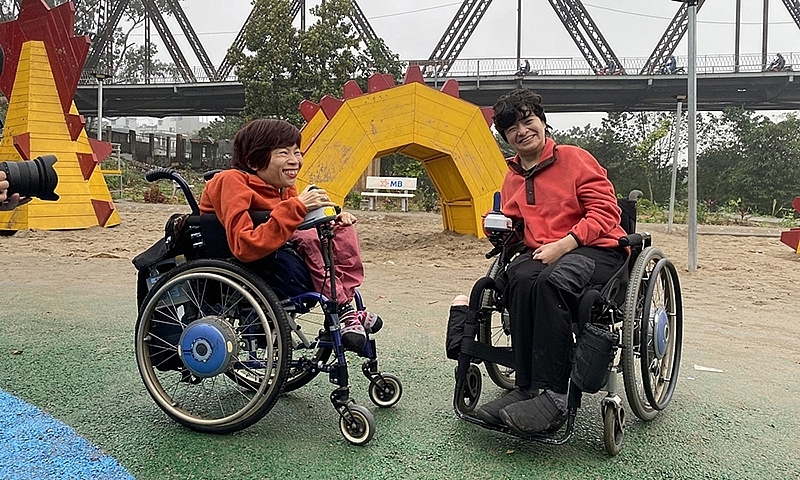
Các không gian công cộng sẽ mang đến lợi ích rất lớn cho người khuyết tật, nhưng thực tế là nhóm đối tượng yếu thế này vẫn đang gặp rất nhiều khó khăn để tiếp cận và sử dụng những không gian được làm ra cho tất cả mọi người.
Người khuyết tật có nhu cầu rất lớn về việc tiếp cận và sử dụng các không gian công cộng. (TPG)
Quy định pháp lý cơ bản đầy đủ…
Hiện nay, Việt Nam có hơn 7 triệu người khuyết tật và họ cũng có nhu cầu được giao lưu, sinh hoạt như người khỏe mạnh, lành lặn. Hiểu rõ nhu cầu của nhóm người yếu thế này, Đảng và Nhà nước đã ban hành nhiều cơ chế, chính sách để hỗ trợ, giúp đỡ người khuyết tật dễ dàng hòa nhập với xã hội hơn, có một cuộc sống tốt đẹp hơn, hạnh phúc hơn. Một trong những vấn được dư luận xã hội quan tâm là xây dựng các không gian công cộng hòa nhập, đảm bảo người khuyết tật có thể tiếp cận và sử dụng.
Curfews, soldiers in the streets, and a prime minister’s resignation. After a social media blackout and years of corruption claims, Nepal erupted. Security forces fired live rounds, killing at least 19. With demands for mass resignations and new elections, what’s next for Nepal?
Al JazeeraSeveral delegates express dismay at the failure to break a deadlock at the sixth round of talks in under three years.
Piles of plastic waste at a recycling plant in Erftstadt, Germany [File: Jana Rodenbusch/Reuters]
Published On 15 Aug 2025
Global talks to develop a landmark treaty to tackle plastic pollution have once again failed to reach an agreement, despite efforts late into the night to strike a deal.
Delegates at a closing meeting of the Intergovernmental Negotiating Committee (INC) in Geneva on Friday spoke of their dismay at the failure to break a deadlock at the sixth round of talks in under three years, as countries remained deeply divided over the scope of any treaty.
“South Africa is disappointed that it was not possible for this session to agree a legally binding treaty and positions remain far apart,” its delegate told a closing meeting.
Cuba’s delegate said that negotiators had “missed a historic opportunity but we have to keep going and act urgently”, the AFP news agency reported.
Nuôi trồng thủy sản biển (Marine aquaculture hay mariculture) là hình thức nuôi dưỡng và khai thác sinh vật thủy sinh trong môi trường nước mặn tự nhiên, bao gồm các khu vực như vùng ven bờ, eo vịnh, biển mở, vùng triều, trên triều và khu vực quanh các hải đảo
Hoạt động này không chỉ nhằm cung cấp sản phẩm thủy sản phục vụ nhu cầu tiêu dùng trong nước và xuất khẩu, mà còn góp phần giảm áp lực lên nguồn lợi khai thác tự nhiên, cải thiện sinh kế và tăng cường sự hiện diện, thực thi chủ quyền quốc gia trên biển.
Việt Nam, với đường bờ biển dài hơn 3.260 km và vùng đặc quyền kinh tế rộng khoảng 1 triệu km², với tài nguyên nước dồi dào, sở hữu diện tích lớn các bãi triều, vùng ngập mặn tại cửa sông, khu vực ven đảo, các eo vụng kín gió và vùng biển xa bờ, phân bố đa dạng trên nhiều vùng và tiểu vùng sinh thái đặc thù thuận lợi cho phát triển nuôi biển. Ngoài ra, nguồn gen thủy sản bản địa phong phú với nhiều nhóm loài có giá trị kinh tế cao là một lợi thế chiến lược để phát triển ngành nuôi trồng thủy sản biển theo hướng công nghiệp, bền vững và hội nhập quốc tế.
Some fear the world is fast approaching temperature levels where professional risk managers will no longer be able to offer cover for financial services.
Günther Thallinger, a board member at Allianz, one of the world’s biggest insurers, says the climate crisis could make adaptation economically unviable.
Zurich Insurance Group, meanwhile, said alongside a recent research paper assessing climate resilience that the outlook looks “alarmingly bleak.”
A firefighting helicopter flies near as a home burns from the Mountain Fire on November 6, 2024 in Camarillo, California.
David Mcnew | Getty Images News | Getty Images
Top insurers fear the climate crisis could soon outpace industry solutions, effectively threatening to make entire regions around the world uninsurable.
Günther Thallinger, a board member at Allianz, one of the world’s biggest insurers, recently outlined how the world is fast approaching temperature levels where insurers will no longer be able to offer cover for financial services, such as mortgages and investments.
In practice, this scenario implies some may face difficulty being able to afford home insurance cover, which is typically a prerequisite for getting a mortgage.
In a LinkedIn post published in late March, Thallinger made the case for rapid decarbonization, pointing out that entire asset classes were “degrading in real time” as extreme weather events take their toll. Perhaps most strikingly of all, he warned the worsening climate crisis appears to be on track to destroy capitalism.
Insurance, which is regarded as the invisible lubricant of the global economy, has a unique role to play in addressing climate-related risks. As professional risk managers, insurers routinely allow investors to take on calculated risks, protecting individuals and businesses against financial losses.
Thallinger, who is responsible for investment management and sustainability at Allianz, told CNBC that approximately two-thirds of economic losses from natural catastrophes are currently uninsured, indicating a “major societal problem.”
Bộ Nông nghiệp và Môi trường vừa ban hành quyết định về việc ban hành quy trình nội bộ giải quyết thủ tục hành chính lĩnh vực biển và hải đảo của Bộ.
Thứ trưởng Bộ Nông nghiệp và Môi trường Lê Minh Ngân vừa ký Quyết định 3091/QĐ-BNNMT ban hành quy trình nội bộ giải quyết thủ tục hành chính lĩnh vực biển và hải đảo.
Theo quyết định, có 15 quy trình nội bộ giải quyết thủ tục hành chính thuộc thẩm quyền tiếp nhận và giải quyết trong lĩnh vực biển và hải đảo của Bộ Nông nghiệp và Môi trường.
Ảnh minh họa
Cụ thể gồm các quy trình: Công nhận khu vực biển; giao khu vực biển; gia hạn quyết định giao khu vực biển; trả lại khu vực biển; sửa đổi, bổ sung quyết định giao khu vực biển; cấp giấy phép nhận chìm ở biển; gia hạn giấy phép nhận chìm ở biển; sửa đổi, bổ sung giấy phép nhận chìm ở biển; trả lại giấy phép nhận chìm; cấp lại giấy phép nhận chìm; cấp phép nghiên cứu khoa học trong vùng biển quản lý hành chính trên biển; sửa đổi, bổ sung quyết định cấp phép nghiên cứu khoa học trong vùng biển quản lý hành chính trên biển; gia hạn quyết định cấp phép nghiên cứu khoa học; cấp lại quyết định cấp phép nghiên cứu khoa học; khai thác và sử dụng cơ sở dữ liệu tài nguyên, môi trường biển và hải đảo thông qua mạng điện tử hoặc thông qua phiếu yêu cầu hoặc văn bản yêu cầu.
Trong đó về quy trình giao khu vực biển gồm 3 bước. Bước 1, tiếp nhận và kiểm tra hồ sơ:bộ phận một cửa tiếp nhận hồ sơ trực tiếp, qua bưu chính, ủy quyền hợp pháp hoặc dịch vụ công trực tuyến; kiểm tra thành phần, số lượng, tính hợp lệ và chuyển Cục Biển và Hải đảo Việt Nam xử lý. Trường hợp hồ sơ thiếu, đơn vị lập phiếu tiếp nhận, thông báo bổ sung hoặc trả lại theo quy định.
Bước 2, xử lý hồ sơ: chuyên viên được phân công kiểm tra, đánh giá tính hợp lệ, lấy ý kiến các bộ, ngành, địa phương; trường hợp cần thiết, tổ chức kiểm tra thực địa hoặc họp thẩm định. Quy trình quy định rõ thời gian xử lý cho từng khâu, bảo đảm đúng tiến độ. Hồ sơ không đạt yêu cầu sẽ được thông báo để bổ sung, hoàn thiện.
Bước 3 trả kết quả, sau khi hoàn tất thẩm định, Bộ Nông nghiệp và Môi trường ban hành văn bản giao hoặc công nhận khu vực biển, đồng thời công khai kết quả theo quy định. Hồ sơ được bàn giao về Trung tâm Thông tin, dữ liệu biển và hải đảo quốc gia lưu trữ, khai thác.
Quy trình cũng nêu rõ nguyên tắc thực hiện, trách nhiệm của từng đơn vị, yêu cầu phối hợp chặt chẽ giữa các bộ phận liên quan nhằm nâng cao hiệu quả cải cách thủ tục hành chính, phục vụ tốt người dân và doanh nghiệp
VTV.vn – Nữ đạo diễn chia sẻ về quá trình làm phim “Mưa đỏ” và khát vọng truyền tải giá trị hòa bình cho thế hệ hôm nay.
Trong cuộc trò chuyện với Thời báo VTV, NSƯT, Thượng tá Đặng Thái Huyền – Phó Giám đốc Điện ảnh Quân đội nhân dân và ekip đã khẳng định: Sáng tạo điện ảnh không có giới hạn giới tính, chỉ có sự tận hiến và trách nhiệm với lịch sử. Bộ phim không chỉ tái hiện chiến tranh, mà còn truyền tải giá trị hòa bình, tình yêu và niềm tin cho thế hệ hôm nay.
PV: Sau khi phim Địa đạo: Mặt trời trong bóng tối đạt thành tích khá tốt dịp A50, chị có cảm thấy áp lực doanh thu khi ra mắt Mưa đỏ dịp A80 không?
Đạo diễn Đặng Thái Huyền: Tôi nghĩ rằng việc xuất hiện nhiều phim đề tài lịch sử – chiến tranh là tín hiệu đáng mừng để khích lệ những người làm phim như chúng tôi, và cả thế hệ trẻ có thể tiếp tục xông pha vào dòng phim được xem là “khó, khổ và khô” này. Với tôi, đó không phải áp lực, mà là niềm hạnh phúc và động lực.
Đạo diễn và những nhân viên đoàn phim tại bối cảnh quay.
Robert Calabretta holds his baby photo from before he was adopted out of South Korea to a family in the United States, Thursday, Feb. 15, 2024, at his apartment in New York. (AP Photo/David Goldman)
SEOUL, South Korea (AP) — As the plane descended into Seoul, Robert Calabretta swaddled himself in a blanket, his knees tucked into his chest like a baby in the womb. A single tear ran down his cheek.
The 34-year-old felt like a newborn — he was about to meet his parents for the first time since he was 3 days old.
Most of his life, he thought they’d abandoned him for adoption to the United States. When he finally found them, he learned the truth: The origin story on his adoption paperwork was a lie. Instead, he said, his parents were told in 1986 that their infant was very sick and they thought he had died.
“I am so sorry,” his birth father had written when they found each other, his words interrupted by fits of weeping. “I miss you. How did you endure this cruel world?”
Robert Calabretta sits for a portrait at the restaurant where he works, Feb. 15, 2024, in New York. (AP Photo/David Goldman)
Calabretta is among a growing and vocal community of victims of an adoption system they accuse of searching out children for would-be parents, rather than finding parents for vulnerable children — sometimes with devastating consequences only surfacing today.
South Korea’s government, Western countries and adoption agencies worked in tandem to supply some 200,000 Korean children to parents overseas, despite years of evidence they were being procured through questionable or downright unscrupulous means, an investigation led by The Associated Press found. Those children grew up and searched for their roots — and some realized they are not who they were told.
Their stories have sparked a reckoning that is rocking the international adoption industry, which was built in South Korea and spread around the world. European countries have launched investigations and halted international adoption. The South Korean government has accepted a fact-finding commission under pressure from adoptees, and hundreds have submitted their cases for review.
Nearly 250,000 South Korean children were adopted to the West as “orphans” in the 60 years following the Korean War. Some to loving homes. Others to tragic ends. Raised in places where they looked like nobody else, many were told to forget their past and be grateful.
But the innate desire to understand where you came from has led many Korean adoptees to search for their roots. In the process, they discover lies in their past and families they never knew existed. In this documentary, correspondent Wei Du travels around the world to meet Korean adoptees and accompany a few on their journey to reclaim who they are. Together, they reveal how an “orphan rescue” mission separated families and erased the roots of hundreds of thousands.
00:00 Meet the adoptees 01:44 The lie of Korea’s “orphans” 03:04 A song I no longer recognise 05:15 Why 10,000 Korean children were sent to Sweden 07:11 How Sweden became a hub for Korean adoptions 10:29 Why the US took in so many Korean children 15:06 GI babies: Korea’s children of US soldiers 19:54 Cult leader’s adopted Korean children 24:13 “Saved from prostitution”? The truth of my adoption 27:55 Why this US couple adopted in 2005 32:03 Lies in our adoption stories 38:22 How Sweden pressured Korea to give up more children 42:49 Chase’s biological sister visits for his 20th birthday 46:15 Anna’s life in Sweden: Always different 48:54 Phil’s search for his birth family 52:46 Rebuilding siblinghood: Mary & Chase’s struggle 58:17 Catherine’s complex relationship with her adoptive mother 1:00:47 Catherine and Anna reunite after 50 years 1:06:58 Phil returns to Korea after 50 years 1:08:58 Koroot: NGO supporting Korean adoptees 1:10:15 Were adoption agencies in it for the money? 1:11:53 “A child supply market”: Moses Farrow 1:17:24 Korea investigates human rights violations in adoption 1:19:26 Confronting the orphanage manager who sent him abroad 1:23:41 Adoptees find comfort in each other 1:26:25 Han Tae-soon’s hunt for her kidnapped daughter 1:29:28 The fight for truth continues
NOAA Fisheries announced its Marine Mammal Protection Act comparability determinations in the Federal Register, covering about 2,500 fisheries across 135 nations. Of these, 240 fisheries from 46 nations were denied comparability findings, restricting their ability to export to the United States.
In August 2025, NOAA Fisheries announced its 2025 Marine Mammal Protection Act comparability finding determinations in the Federal Register. These determinations cover approximately 2,500 fisheries in 135 nations seeking to export fish and fish products to the United States. Comparability finding determinations are made for each nation on a fishery-by-fishery basis. A total of 240 fisheries from 46 nations were denied comparability findings.
NOAA Fisheries conducted a detailed analysis of each comparability finding application submitted by harvesting nations. Details regarding each nation’s comparability finding determination are categorized in the lists below. Each harvesting nation’s Comparability Finding Application Final Report can be accessed by clicking on the nation under Lists 1, 2, and 3 below. Additional documents detailing NOAA Fisheries’ evaluation process, the fisheries denied and granted comparability findings for each nation, and the trade information associated with fishery denials (including Harmonized Tariff Codes) can be found at the bottom of this page.
Nations whose fisheries were denied comparability findings are prohibited from importing fish and fish product from those fisheries into the United States beginning January 1, 2026, and may reapply for a comparability finding for the affected fisheries at any time after January 1, 2026. More information on seafood import restrictions and how they will be implemented under this program, is available here.





.png)
.png)


