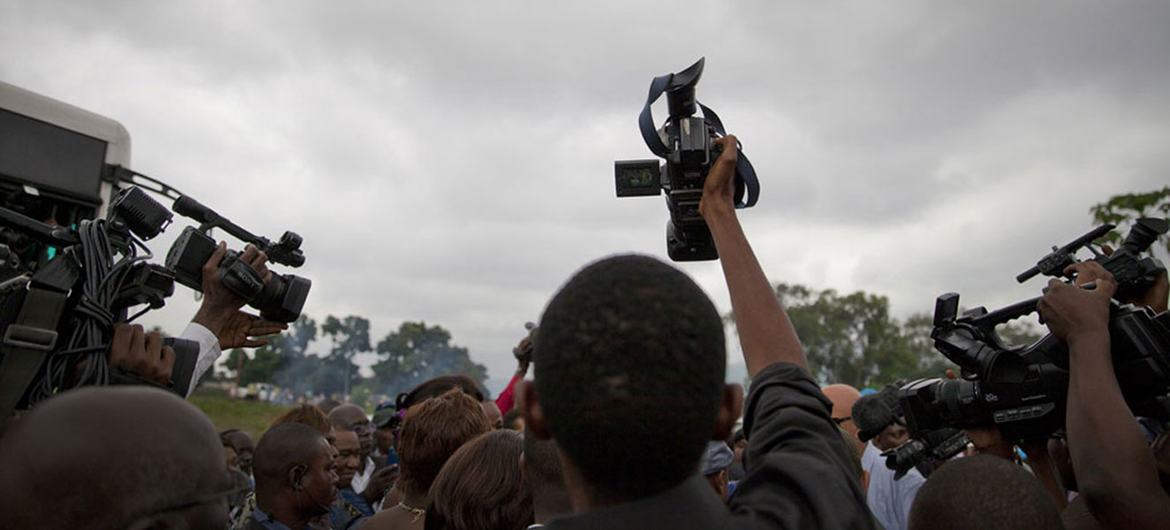
Foreign bribery rages unchecked in over half of global trade

There are many losers and few winners when companies bribe foreign public officials to win lucrative overseas contracts. In prioritising profits over principles, governments in most major exporting countries fail to prosecute companies flouting laws criminalising foreign bribery.

What is missing is active enforcement. Transparency International’s new report, Exporting Corruption, finds that only 11 major exporting countries – accounting for about a third of world exports – have active or moderate law enforcement against companies bribing abroad in order to gain mining rights, contracts for major construction projects, purchases of planes and other deals.
Tiếp tục đọc “Foreign bribery rages unchecked in over half of global trade”

Từ “hội chứng tâm thần tham nhũng” đến giang hồ… “chạy bệnh điên”!

(Dân trí) – Thế nhưng giờ đây, không chỉ “hàng hóa giả, buôn bán giả, học hành giả, chứng chỉ giả” mà còn xuất hiện thương binh giả, người có công giả… và cả bệnh nhân tâm thần giả. Không biết rồi còn xuất hiện những gì “giả” nữa đây, khi mà đến bệnh tâm thần cũng trở thành… hàng hóa để một số người “bán chác”?

Cùng với cô đơn, con hư thì bệnh tật là một trong ba nỗi bất hạnh lớn nhất của một kiếp người. Trong đó, bệnh tâm thần (dân gian còn gọi là bệnh điên) là một trong số những loại bệnh mang đến nhiều bi kịch nhất.

Lý do, tuy không chết ngay nhưng nó không chỉ là sự đau đớn về tinh thần và nhiều khi cả thể xác của bệnh nhân mà còn là nỗi đau của người thân và không ít trường hợp, còn gieo rắc nỗi kinh hoàng cho cả cộng đồng xã hội.
Tiếp tục đọc “Từ “hội chứng tâm thần tham nhũng” đến giang hồ… “chạy bệnh điên”!”

Rainwater harvesting practices and attitudes in the Mekong Delta of Vietnam

Access to safe drinking water is limited in the Mekong Delta region of Vietnam. Rainwater harvesting (RWH) at household level is among the primary sources of drinking water in the region and is widely
practiced throughout Southeast Asia. It has recently been increasingly advocated as an alternative or supplemental approach to household water supply. However, relatively little research has been done on current RWH practices and attitudes. We interviewed residents of 619 households in three provinces to understand the current practice of and preferences for rainwater harvesting. We found that rainwater was the most common water source for all domestic activities in the rainy season; however, it was reserved for high-value uses in the dry season. Residents ranked color, perceived safety, smell, taste and reliability of rainwater very highly compared to other water sources. Most households practice daily first-flush and/or boil water before drinking. Storage capacity seems to be a major barrier to RWH providing an adequate supply of domestic water year-round. Because other improved water supplies are not widely available in the rural delta, rainwater harvesting seems to be a promising way to expand access to improved water sources for the residents

Read full article here http://se.ueh.edu.vn/wp-content/uploads/nghien-cuu/8-Pham-Khanh-Nam-Rainwater-harvesting-practices-and-attitudes-in-the-Mekong-Delta-of-Vietnam.pdf

The ancient ingenuity of water harvesting – Kỹ thuật thu nước mưa tài tình từ thời cổ đại


Nghèo đa chiều ở trẻ em vùng dân tộc thiểu số tại Việt Nam

Theo các báo cáo về phát triển ở Việt Nam, người Kinh chiếm hơn 86% dân số Việt Nam, nhưng tỷ lệ nghèo chỉ là 8,5%. Trong khi đó, các dân tộc thiểu số chỉ chiếm chưa đầy 15% tổng dân số, nhưng gần một nửa phải sống trong cảnh nghèo. Cứ 10 trẻ em dân tộc thiểu số thì có tới 8 em thiếu thốn các nhu cầu cơ bản; và hầu hết đang phải sống tại các vùng có điều kiện kinh tế – xã hội đặc biệt khó khăn, được biết đến là những “túi nghèo”. Hãy cùng UNICEF tìm hiểu về cuộc sống của một số trẻ em dân tộc thiểu số để hiểu được thực trạng nghèo đa chiều ở trẻ em ở Việt Nam và cùng kêu gọi những nỗ lực về chính sách nhằm giải quyết vấn đề này.

Ethnic minority children in pockets of poverty According to development reports, Kinh people account for over 86% of Viet Nam’s population with poverty rate recorded at 8.5%. People of Ethnic Minorities account for less than 15% of the total population, but half of them are living in poverty. For every 10 children of ethnic minorities, eight are deprived of basic needs, and most of them are living in areas of difficult socio-economic conditions, which are also known as “pockets of poverty”. Let’s join UNICEF in getting to know more about the lives of ethnic minority children and the situation of multi-dimensional child poverty in order to call for more actions and policy efforts in addressing the issue

UNESCO Hackathon in Vietnam on 13 – 14 October, 2018 on Climate Change and Sustainable Development – Cuộc thi lập trình của UNESCO tại Việt Nam, về Biến Đổi Khí hậu và Phát triển bền vững

[English Below]

Mời tham dự Cuộc thi lập trình của UNESCO tại Việt Nam, chủ đề Biến Đổi Khí hậu và Phát triển bền vững

Bạn đam mê lập trình và muốn thử thách bản thân? Bạn muốn tìm cho mình những cộng sự tiềm năng và gặp gỡ các chuyên gia trong lĩnh vực IT và mã nguồn mở? Bạn muốn góp phần vào giải quyết các vấn đề “nóng” hiện nay như biến đổi khí hậu, ô nhiễm môi trường và hướng đến mục tiêu phát triển bền vững thông qua ứng dụng nguồn mở?

Cùng tham gia UNESCO Hackathon để có cơ hội dành giải thưởng lên đến 2,400 USD từ chương trình và biến ý tưởng sáng tạo của bạn thành hiện thực. Ngoài ra, những phần quà hấp dẫn sẽ được dành tặng cho tất cả các bạn tham gia cuộc thi.

Thể lệ: Mỗi đội gồm 2-4 thành viên sẽ tham gia thử thách sáng tạo app và game với chủ đề “Biến đổi khí hậu và phát triển bền vững” trong thời gian 24h. Đừng lo lắng nếu bạn vẫn chưa tìm được đồng đội của mình. Các bạn sẽ có thời gian để trao đổi và lập đội vào ngày sự kiện diễn ra.

Thời gian: 13.10.2018 – 14.10.2018 Tiếp tục đọc “UNESCO Hackathon in Vietnam on 13 – 14 October, 2018 on Climate Change and Sustainable Development – Cuộc thi lập trình của UNESCO tại Việt Nam, về Biến Đổi Khí hậu và Phát triển bền vững”

Arctic stronghold of world’s seeds flooded after permafrost melts

No seeds were lost but the ability of the rock vault to provide failsafe protection against all disasters is now threatened by climate change

The Svalbard ‘doomsday’ seed vault was built to protect millions of food crops from climate change, wars and natural disasters
 The Svalbard ‘doomsday’ seed vault was built to protect millions of food crops from climate change, wars and natural disasters. Photograph: John Mcconnico/AP

https://embed.theguardian.com/embed/video/environment/video/2015/may/20/svalbard-seed-vault-world-crop-varieties-video
Tiếp tục đọc “Arctic stronghold of world’s seeds flooded after permafrost melts”

How many people can share a toilet?

blogs.worldbank.org
An Introduction to Shared Sanitation

Co-authors:
Rachel Cardone

Martin Gambrill

How many people can share a toilet? This question might sound like the start of a joke but it’s actually a serious issue for many across the world. That’s because an estimated 20 percent of the global population do not have their own toilets.

In urban areas, almost one person in ten uses a shared household toilet, i.e., a toilet shared with at least one neighboring household. But sometimes no one in the neighborhood owns a private toilet, so some of these families instead have no choice but to use community toilets – that are locally available and used by anyone who lives nearby. In such cases, hundreds of people might be using the same block of community toilets. Now let’s think about the other toilets we all use – when we’re out shopping or running errands, when we’re at work or school, or when we’re in transit. These public toilets might be used by hundreds or thousands of different people at different times of day. Tiếp tục đọc “How many people can share a toilet?”

Bên trong ngôi nhà Xanh Liên Hợp Quốc tại Việt Nam được giải thưởng công trình xanh thế giới

 09:40 | 12/09/2018

Tiêu Dùng + Ngôi nhà Xanh LHQ (GOUNH) tại Việt Nam vừa được nhận Giải thưởng Công trình Xanh khu vực Châu Á-Thái Bình Dương. Vậy ngôi nhà này có gì đặc biệt?

Ngôi nhà Xanh LHQ (GOUNH) tại Việt Nam đã được nhận giải thưởng Lãnh đạo trong Thiết kế và Vận hành Bền vững, hạng mục dành cho trụ sở của tổ chức, do Hội đồng Công trình Xanh Thế giới (WorldGBC) trao tặng trong Lễ trao Giải thưởng Công trình Xanh khu vực Châu Á-Thái Bình Dương diễn ra tại Singapore hôm 6/9 vừa qua.

Tiếp tục đọc “Bên trong ngôi nhà Xanh Liên Hợp Quốc tại Việt Nam được giải thưởng công trình xanh thế giới”

Solar Farms Without Subsidy Sprout From Gloomy Britain to Italy

bloomberg.com
Green Energy Is Finally Standing on Its Own Feet

Next to a wheat field north of London, banks of solar panels in 35 neat rows are generating electricity without any support from the government.

Despite Britain’s reputation for grey skies, the closely-held developer Anesco Ltd. is building the hybrid solar and battery facility in Milton Keynes with its own capital. It’s just one of about 15 photovoltaic projects underway from Italy to the U.K. that aren’t relying on subsidies to make a profit, according to Bloomberg NEF, which anticipates many more to come. Tiếp tục đọc “Solar Farms Without Subsidy Sprout From Gloomy Britain to Italy”

Typhoon Mangkhut: Philippines braces for one of the strongest in its history

theguardian

Five million could be hit by super storm as gusts of up to 255km/h are expected

Philippines is braced for one of the strongest typhoons in its history, as authorities evacuate families in their thousands, close schools and put rescuers and troops on full alert in the country’s north.

Five million people are expected to be affected by Typhoon Mangkhut, which experts have categorised as a super typhoon with powerful winds and gusts equivalent to a category-5 Atlantic hurricane.

By Friday morning, almost 10,000 people across three regions had been evacuated and 22 domestic flights cancelled. By the evening, strong winds had already downed trees in Tuguegarao, a city in the main northern island of Luzon, where almost all businesses had been shuttered and police were patrolling otherwise quiet streets. Tiếp tục đọc “Typhoon Mangkhut: Philippines braces for one of the strongest in its history”

Valuing Ecosystem Services

James Salzman, Valuing Ecosystem Services, 24 Ecology L. Q. 887 (1997).

Beneath the Arizona desert sun on September 26, 1991, amid reporters
and flashing cameras, eight men and women entered a huge
glass-enclosed structure and sealed shut the outer door. Their 3.15
acre miniature world, called Biosphere II, was designed to re-create
the conditions of the earth (modestly named Biosphere I). Built at a
cost of over $200 million, Biosphere II boasted a self-sustaining environment
complete with rain forest, ocean, marsh, savanna, and desert
habitats. The eight “Bionauts” intended to remain inside for two
years. Within sixteen months, however, oxygen levels had plummeted
thirty-three percent, nitrous oxide levels had increased 160-fold, ants
and vines had overrun the vegetation, and nineteen of the twenty-five
vertebrate species and all the pollinators had gone extinct. Eden did
not last long.1

What went wrong? With a multi-million dollar budget, the designers
of Biosphere II had sought to re-create the level of basic services
that support life itself-services such as purification of air and
water, pest control, renewal of soil fertility, climate regulation, pollination of crops and vegetation, and waste detoxification and decomposition.
Together, these are known as “ecosystem services,” taken
for granted yet absolutely essential to our existence, as the inhabitants
of Biosphere II ruefully learned. 2 Created by the interactions of living
organisms with their environment, ecosystem services provide both
the conditions and processes that sustain human life. Despite their
obvious importance to our well-being, recognition of ecosystem services
and the roles they play rarely enters policy debates or public
discussion.
Tiếp tục đọc “Valuing Ecosystem Services”

Dạy trẻ em tranh luận với tinh thần tương kính

English: Teaching Kids to Argue—Respectfully

>>  Giảng dạy các chủ đề gây tranh cãi – Hướng dẫn dành cho giáo viên

Khi các vấn đề nóng hổi đang tràn ngập các phương tiện truyền thông xã hội, trong tin tức hàng đêm và trong cả lớp học, là giáo viên bạn nên làm gì cho đúng? Bạn sẽ bỏ qua, vùi dập tất cả các lý lẽ, tranh luận vì sợ mất kiểm soát trong cuộc thảo luận? Hay bạn tìm kiếm cơ hội để học hỏi giữa những ồn ào đang diễn ra?

Tạo điều kiện tốt cho những cuộc thảo luận về các vấn đề gây tranh cãi đưa ra “những cơ hội mang tính đòn bẩy cao để giúp học sinh mài giũa kỹ năng tư duy phản biện “, ông Sperry Sox từ dự án Project Look Sharp, một dự án phi lợi nhuận tại Ithaca College, New York đang đẩy mạnh các nhận thức trong truyền thông.

Tuy nhiên, nhiều giáo viên không chắc phải làm thế nào để tạo ra không gian an toàn cho các tranh luận một cách công bằng và có tinh thần tương kính. Trong một cuộc khảo sát của Tuần Giáo dục – Education Week survey, gần đây, hơn một nửa giáo viên cho biết trong quá trình đào tạo họ không được chuẩn bị cho việc xử lý các cuộc thảo luận có khả năng gây tranh cãi.

“Câu hỏi đặt ra không phải là Có nên hay không nên dạy học sinh trở thành người tư duy tốt và công dân tốt hơn”, mà là “chúng ta làm điều đó như thế nào?” ông Chris Sperry, người lãnh đạo chương trình đào tạo và phát triển nghề nghiệp cho Look Sharp dự án cho biết.

Nhiệt huyết nhưng không mang tính cá nhân Tiếp tục đọc “Dạy trẻ em tranh luận với tinh thần tương kính”

The Future Cries Beneath Our Soil – Phim Mùa Cát Vọng

The future cries beneath our soil. Trailer from Pham Thu Hang on Vimeo.

Film Mùa Cát Vọng / THE FUTURE CRIES BENEATH OUR SOIL directed by Pham Thu Hang and produced by Jewel Maranan will have its premiere tomorrow at DMZ 국제다큐영화제 DMZ International Documentary Film Festival in South Korea! We’re at the Asian Competition together with other beautiful documentaries. Wish us luck!

Surrounded by the surreal landscape of Quang Tri province, four men live their lives inseparably from each other. Their rhythm is defined by moments of togetherness in a house with no doors where they all come to drink, smoke, play guitar and sing songs about love and the revolution of the past. Feelings of hatred interweave with compassion, swelling amidst the stagnation of time and space, seemingly awaiting for an unknown. One day, the unknown comes and takes one of them away, leaving the others to go on slipping through an undesired life. Meanwhile, the landscape, located in the border between North and South Vietnam, is what lives on, revealing traces of a war that has outlived its conclusion.

Tiếp tục đọc “The Future Cries Beneath Our Soil – Phim Mùa Cát Vọng”

US lawyers confident to win more Glyphosate-related legal cases against Monsanto – Luật sư Mỹ tự tin sẽ thắng thêm nhiều vụ kiện chống lại Monsanto liên quan đến chất Glyphosate trong thuốc diệt cỏ

euractiv.com

In its quarterly report released on today, German agrochemical giant Bayer, that now owns its American counterpart, said that the number of Monsanto-related ligitations in the US has reached 8700. [EPA]