renewableenergymagazine.com
Electric vehicle (EV) charging stations will better serve EV owners if lawmakers and regulators enable a level playing field for competitive providers, concludes a new report entitled “Serving Customers Best: The Benefits of Competitive Electric Vehicle Charging Stations.”
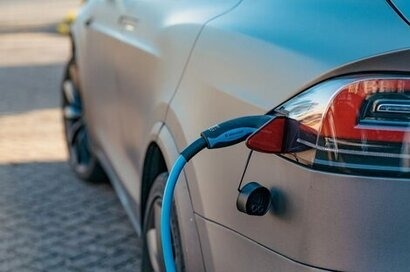
Courtesy of Ernest Ojeh, Unsplash.
The 52-page report addresses a key aspect of the clean energy transition, finding that utility ownership of EV charging stations is generally not in the public interest and that allowing monopoly utilities to own charging stations will deliver less efficient, lower-quality service and choice to EV owners. This will result in unfair cost shifting to other electricity consumers.
“Regulators and legislators will serve the EV charging public best if they provide for a competitive and nondiscriminatory environment for public charging stations” said Rob Gramlich, President of Grid Strategies and one of the four co-authors of the study. “We should enable the market to work if we want to build-out EV charging infrastructure and give drivers the best prices and services possible along the way.”
The report stresses that extending the monopoly position of utilities into the EV charging sector would hurt the EV charging public and, by extension, the overall effort to electrify transportation.
Frank Lacey, a co-author, emphasises a key finding in the study: “Regulators should proclaim EV charging to be a competitive service and then focus on policies to support the development of the charging network. Competition in charging will lead to the best results for the build-out of EV charging, for consumer pricing of electricity, and for service of EV drivers. The time to make these policy choices is now, before charging becomes monopolised.”
The report makes the following recommendations:
Regulated Rate Policies – Regulators need to consider the impact of regulated rates and rate design on EV charging stations and station owners.
Utility Ownership – Regulators should ban or disfavor utility ownership of charging stations.
Distribution Planning – Regulators should support an increased focus on planning using state-of-the-art tools and should allow for proactive, rather than reactive, development of the distribution systems.
Interconnection Policies – Regulators should support the development of dedicated interconnection personnel, work with utilities to standardise and streamline timelines and processes, allow more flexible policies with respect to inventory and supply chain issues, and ensure that nonutility owners of charging stations receive fair and equal service from the utility when developing charging stations.
Private Sector Access – Regulators should work with utilities to develop, train, and certify third parties to work with private investors to build out the distribution network, where feasible.
Cost Allocation – Regulators should create cost-allocation policies fair to all parties to recover the costs of developing the infrastructure required for robust EV charging.
Meeting Public Need at the Lowest Cost – If a public need arises, regulators should look for solutions other than a utility to meet the need.
Divestiture of utility-owned charging stations – Regulators should have utilities sell any utility-owned EV charging stations to nonutility entities.
The report was sponsored by the National Association of Convenience Stores (NACS), which represents a business sector with considerable investment in robust distribution and service networks designed to meet the motoring public’s needs. Convenience stores sell an estimated 80 percent of the fuels purchased by drivers.
For additional information:
Grid Strategies
Report: “Serving Customers Best: The Benefits of Competitive Electric Vehicle Charging Stations.”


 CVD
CVD 