Over the past year, the Asia Maritime Transparency Initiative and the Center for Advanced Defense Studies conducted a study of China’s maritime militia using remote sensing data and open-source Chinese language research. The resulting report, Pulling Back the Curtain on China’s Maritime Militia, features the most comprehensive study to-date of the structure, subsidies, and ownership networks of China’s maritime militia in the South China Sea, as well as a methodology for identifying Chinese maritime militia vessels and a list of over 120 militia vessels thus identified.
Since completing the construction of its artificial island outposts in the Spratly Islands in 2016, China has shifted its focus toward asserting control over peacetime activity across the South China Sea. A key component of this shift has been the expansion of China’s maritime militia—a force of vessels ostensibly engaged in commercial fishing but which in fact operate alongside Chinese law enforcement and military to achieve Chinese political objectives in disputed waters.
VietTimes – Sáng 23/3, Liên đoàn Thương mại và Công nghiệp Việt Nam đã tổ chức hội thảo về Dự thảo Luật Viễn thông (sửa đổi). Đây là một bộ luật được các đối tác nước ngoài quan tâm với mong muốn mở ra cơ hội cho họ.
Các đối tác nước ngoài rất quan tâm đến việc Việt Nam sửa đổi Luật Viễn thông
Theo ý kiến của bà Nguyễn Việt Hà, Phó Chủ tịch Hiệp hội Thương Mại Hoa Kỳ tại Hà Nội (AmCham Hanoi), một xu hướng trong ngành viễn thông đang được nhiều quốc gia trên thế giới quan tâm hiện nay đó là sự phát triển dịch vụ viễn thông qua vệ tinh.
In response to reporters’ questions on the afternoon of May 25, 2023, Deputy Spokeswoman of the Vietnamese Ministry of Foreign Affairs (MOFA), Pham Thu Hang said that Chinese survey vessel Xiang Yang Hong 10 (XYH-10), Coast Guard vessels, and fishing ships had violated Vietnam’s exclusive economic zone (EEZ) established in accordance with the provisions of the United Nations Convention on the Law of the Sea 1982 (UNCLOS 1982).[1] According to Reuters, the ship XYH-10 and its escorts have appeared in Vietnam’s EEZ since May 8.[2] Data from open vessel-tracking sources such as Marine Traffic or Sea Vision also show this occurrence. Looking back from the beginning of 2023 until now, China has deployed many so-called “survey and research vessels” to operate in Vietnam’s EEZ, such as the case of the Haiyang Dizhi 4 in early March 2023, but it is noteworthy that the XYH-10 this time is approaching the coast of Vietnam and blatantly conducting activities that China calls “normal”. Against the backdrop of China’s efforts to build the image of a “responsible major power”, this move of China has obviously infringed on the UNCLOS and seriously violated Vietnam’s sovereign rights and jurisdiction in its EEZ and continental shelf established in accordance with UNCLOS.
Phương án phát triển lưới điện quốc gia thời kỳ 2021 – 2030 (Hình từ internet)
Ngày 15/5/2023, Thủ tướng Chính phủ ban hành Quyết định 500/QĐ-TTg phê duyệt Quy hoạch phát triển điện lực quốc gia thời kỳ 2021 – 2030, tầm nhìn đến năm 2050 (Quy hoạch điện VIII).
1. Phương án phát triển lưới điện quốc gia thời kỳ 2021 – 2030
Về định hướng phát triển
– Phát triển hệ thống truyền tải điện đồng bộ với tiến độ các nguồn điện, nhu cầu phát triển phụ tải của các địa phương, sử dụng công nghệ hiện đại, đảm bảo tiêu chuẩn quốc tế, sẵn sàng kết nối khu vực. Phát triển lưới điện thông minh để tích hợp các nguồn năng lượng tái tạo ở quy mô lớn, đáp ứng yêu cầu vận hành hệ thống điện an toàn, ổn định và kinh tế.
– Phát triển lưới điện truyền tải 500 kV và 220 kV bảo đảm khả năng giải tỏa công suất các nhà máy điện, nâng cao độ tin cậy cung cấp điện, giảm tổn thất điện năng, đáp ứng tiêu chí N-1 đối với vùng phụ tải quan trọng và N-2 đối với vùng phụ tải đặc biệt quan trọng.
Phát triển lưới điện truyền tải điện có dự phòng lâu dài, tăng cường sử dụng cột nhiều mạch, nhiều cấp điện áp đi chung để giảm diện tích chiếm đất. Khuyến khích xây dựng các trạm biến áp truyền tải kết hợp cung cấp điện cho phụ tải lân cận.
– Lưới điện truyền tải 500 kV giữ vai trò xương sống trong liên kết các hệ thống điện vùng miền và trao đổi điện năng với các nước trong khu vực. Giới hạn truyền tải liên miền ở mức hợp lý, giảm truyền tải điện đi xa, hạn chế tối đa xây dựng mới các đường dây truyền tải liên miền trước năm 2030.
– Xây dựng lưới điện 220 kV bảo đảm độ tin cậy, các trạm biến áp trong khu vực có mật độ phụ tải cao thiết kế theo sơ đồ đảm bảo vận hành linh hoạt. Xây dựng các trạm biến áp 220 kV đủ điều kiện vận hành tự động không người trực. Đẩy mạnh xây dựng các trạm biến áp GIS, trạm biến áp 220/22 kV, trạm ngầm tại các trung tâm phụ tải.
– Nghiên cứu ứng dụng hệ thống Back-to-Back, thiết bị truyền tải điện linh hoạt để nâng cao khả năng truyền tải, giảm thiểu diện tích chiếm đất. Tổ chức nghiên cứu công nghệ truyền tải điện xoay chiều và một chiều điện áp trên 500 kV.
– Định hướng sau năm 2030 sẽ phát triển các đường dây truyền tải siêu cao áp một chiều kết nối khu vực Trung Trung Bộ, Nam Trung Bộ và Bắc Bộ để khai thác mạnh tiềm năng điện gió ngoài khơi. Nghiên cứu các kết nối xuyên châu Á – Thái Bình Dương.
Các dự án lưới điện truyền tải trong Quy hoạch điện VII điều chỉnh chưa đưa vào vận hành được điều chỉnh trong Quy hoạch này.
Về khối lượng xây dựng lưới truyền tải
– Giai đoạn 2021 – 2030: Xây dựng mới 49.350 MVA và cải tạo 38.168 MVA trạm biến áp 500 kV; xây dựng mới 12.300 km và cải tạo 1.324 km đường dây 500 kV; xây dựng mới 78.525 MVA và cải tạo 34.997 MVA trạm biến áp 220 kV; xây dựng mới 16.285 km và cải tạo 6.484 km đường dây 220 kV.
– Định hướng giai đoạn 2031 – 2050: Xây dựng mới 40.000 – 60.000 MW dung lượng trạm HVDC và 5.200 – 8.300 km đường dây HVDC; xây dựng mới 90.900 – 105.400 MVA và cải tạo 117.900 -120.150 MVA trạm biến áp 500 kV; xây dựng mới 9.400 – 11.152 km và cải tạo 801 km đường dây 500 kV; xây dựng mới 124.875 – 134.125 MVA và cải tạo 105.375 – 106.750 MVA trạm biến áp 220 kV; xây dựng mới 11.395 – 11.703 km, cải tạo 504 – 654 km đường dây 220 kV. Khối lượng lưới điện giai đoạn 2031 – 2050 sẽ chuẩn xác trong các quy hoạch điện thời kỳ tiếp theo.
2. Liên kết lưới điện với các nước trong khu vực
– Tiếp tục nghiên cứu hợp tác, liên kết lưới điện với các nước tiểu vùng sông Mê Kông và các nước ASEAN ở các cấp điện áp 500 kV và 220 kV để tăng cường khả năng liên kết hệ thống, trao đổi điện năng, tận dụng thế mạnh tài nguyên của các quốc gia.
– Thực hiện liên kết lưới điện với Lào bằng các tuyến đường dây 500 kV, 220 kV để nhập khẩu điện từ các nhà máy điện tại Lào theo biên bản ghi nhớ hợp tác đã ký kết giữa hai Chính phủ.
– Duy trì liên kết lưới điện với các nước láng giềng qua các cấp điện áp 220 kV, 110 kV, trung thế hiện có; nghiên cứu thực hiện giải pháp hòa không đồng bộ giữa các hệ thống điện bằng trạm chuyển đổi một chiều – xoay chiều ở cấp điện áp 220-500 kV.
– Xây dựng các công trình đấu nối các dự án xuất khẩu điện có hiệu quả kinh tế cao trên cơ sở đảm bảo an ninh năng lượng và an ninh quốc phòng.
CỘNG HÒA XÃ HỘI CHỦ NGHĨA VIỆT NAM
Độc lập – Tự do – Hạnh phúc
—————
Số: 500/QĐ-TTg
Hà Nội, ngày 15 tháng 5 năm 2023
QUYẾT ĐỊNH
PHÊ DUYỆT QUY HOẠCH PHÁT TRIỂN ĐIỆN LỰC QUỐC GIA THỜI KỲ 2021 – 2030, TẦM NHÌN ĐẾN NĂM 2050
THỦ TƯỚNG CHÍNH PHỦ
Căn cứ Luật Tổ chức Chính phủ ngày 19 tháng 6 năm 2015; Luật sửa đổi, bổ sung một số điều của Luật Tổ chức Chính phủ và Luật Tổ chức chính quyền địa phương ngày 22 tháng 11 năm 2019;
Căn cứ Luật Quy hoạch ngày 24 tháng 11 năm 2017;
Căn cứ Luật Điện lực ngày 03 tháng 12 năm 2004; Luật sửa đổi, bổ sung một số điều của Luật Điện lực ngày 20 tháng 11 năm 2012;
Căn cứ Nghị quyết 61/2022/QH15 ngày 16 tháng 6 năm 2022 của Quốc hội về tiếp tục tăng cường hiệu lực, hiệu quả thực hiện chính sách, pháp luật về quy hoạch và một số giải pháp tháo gỡ khó khăn, vướng mắc, đẩy nhanh tiến độ lập và nâng cao chất lượng quy hoạch thời kỳ 2021 – 2030;
Căn cứ Nghị quyết số 81/2023/QH15 ngày 09 tháng 01 năm 2023 của Quốc hội về Quy hoạch tổng thể quốc gia thời kỳ 2021 – 2030, tầm nhìn đến năm 2050;
Căn cứ Nghị định số 37/2019/NĐ-CP ngày 07 tháng 5 năm 2019 của Chính phủ quy định chi tiết thi hành một số điều của Luật Quy hoạch;
Căn cứ Nghị định số 137/2013/NĐ-CP ngày 21 tháng 10 năm 2013 của Chính phủ quy định chi tiết thi hành một số điều của Luật Điện lực và Luật sửa đổi, bổ sung một số điều của Luật Điện lực;
Theo đề nghị của Bộ Công Thương tại Tờ trình số 2842/TTr-BCT ngày 14 tháng 5 năm 2023 và Công văn số 2851/BCT-ĐL ngày 15 tháng 5 năm 2023; Báo cáo thẩm định số 62/BC-HĐTĐQHĐ ngày 13 tháng 5 năm 2023 của Hội đồng thẩm định Quy hoạch phát triển điện lực quốc gia thời kỳ 2021 – 2030, tầm nhìn đến năm 2050.
The long-awaited power development plan shows Vietnam is determined to make a green transition, but much needs to be done.
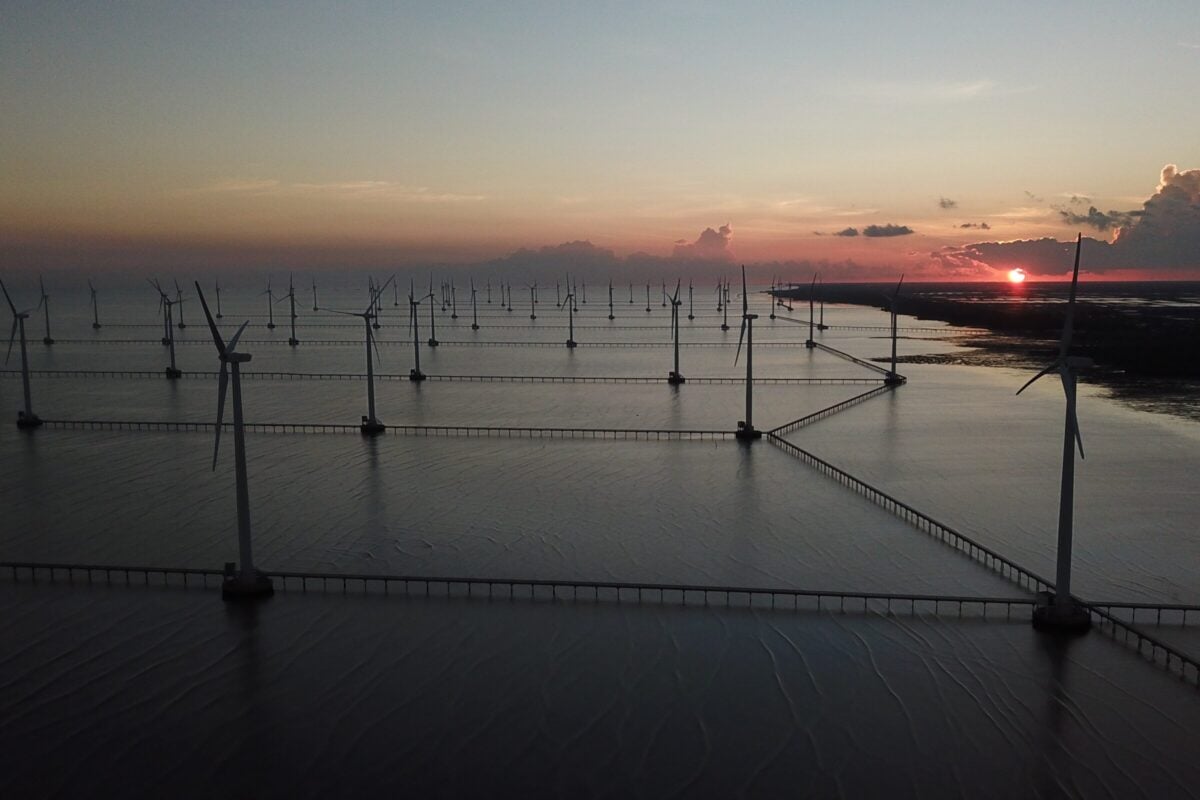
The Bac Lieu wind farm’s phase 1 and phase 2 projects in Bac Lieu city have been in operation for 10 years. PHOTO: Chi Quoc
After years of anticipation, Vietnam’s Prime Minister Pham Minh Chinh recently approved Power Development Plan 8 (PDP8).
This plan determines how to invest US$13.5 billion per year during the next 10 years and put the country’s electricity system on the way to a net-zero future.
Global investment in clean energy is on course to rise to USD 1.7 trillion in 2023, with solar set to eclipse oil production for the first time
Investment in clean energy technologies is significantly outpacing spending on fossil fuels as affordability and security concerns triggered by the global energy crisis strengthen the momentum behind more sustainable options, according to a new IEA report.
About USD 2.8 trillion is set to be invested globally in energy in 2023, of which more than USD 1.7 trillion is expected to go to clean technologies – including renewables, electric vehicles, nuclear power, grids, storage, low-emissions fuels, efficiency improvements and heat pumps – according to the IEA’s latest World Energy Investment report. The remainder, slightly more than USD 1 trillion, is going to coal, gas and oil.
Annual clean energy investment is expected to rise by 24% between 2021 and 2023, driven by renewables and electric vehicles, compared with a 15% rise in fossil fuel investment over the same period. But more than 90% of this increase comes from advanced economies and China, presenting a serious risk of new dividing lines in global energy if clean energy transitions don’t pick up elsewhere.
HANOI (Reuters) -Vietnam aims to cut its rice exports to 4 million tonnes a year by 2030, the government said in a document detailing its rice export strategy, down from 7.1 million tonnes last year.Slideshow ( 2 images )Vietnam is the world’s third-largest rice exporter, after India and Thailand.
The move is aimed at “boosting the exports of high-quality rice, ensuring domestic food security, protecting the environment and adapting to climate change,” according to the government document, dated May 26 and reviewed by Reuters.
Rice export revenue will fall to $2.62 billion a year by 2030, down from $3.45 billion in 2022, the document said.
“Although Vietnam’s rice farming area is shrinking due to climate change and some farmers are switching to growing other crops and raising shrimp, the strategy appears to be too aggressive,” a rice trader based in Ho Chi Minh City said on Saturday.
KENJI KAWASE, Nikkei Asia chief business news correspondentMAY 24, 2023 04:30 JST
OMAHA, U.S. — For Antonius Budianto, an independent stock investor from Indonesia, it was a dream come true to be in Omaha, Nebraska for the first time.
Traveling from East Java with his wife and 14-year-old daughter, Antonius was standing in a queue in front of Omaha’s CHI Health Center at 3 a.m. to grab a seat at the annual general shareholders meeting of investment company Berkshire Hathaway on May 6. Antonius said they wanted to be “as close as possible” to the podium as his two business idols — Warren Buffett and Charlie Munger — sat and took questions from shareholders in the audience and around the world.
Antonius has been investing in listed stocks in Indonesia for over 20 years, faithfully following the Buffett method: focus on a few companies with strong earnings, handsome dividend payments and sound corporate governance, and hold on to them, sometimes for decades. At Berkshire, this strategy has been distilled into the oft-repeated maxim: “Just hold the goddamn stock,” as Munger put it that day.
For his part, Antonius has been making a living as a full-time professional investor since 2010.
Năm 1970, Philippines bí mật đưa quân đổ bộ chiếm một số đảo ở Trường Sa. 5 năm sau, quân Nam Việt đã lập mưu để đoạt lại một đảo từ tay người Philippines là đảo Song Tử Tây.
Beijing clamps down on ‘expert networks’ over threats to national security, sending shockwaves through the financial world with experts saying the move will derail China’s push to attract foreign investors
Private conversations with corporate insiders and ex-government officials that cost upwards of US$10,000 an hour. Coded language and blurred regulatory lines.
For hedge funds and other global investors, China’s vast web of “expert networks” has become a key tool for navigating an opaque but potentially lucrative economic powerhouse. For Xi Jinping’s (習近平) Communist Party, the secretive industry represents something far more ominous: a threat to national security that must be reined in.
That contradiction is now sending shockwaves through the financial world as China’s government cracks down on the expert networks it had showered in praise less than a decade ago during Xi’s first term as president. The anti-espionage campaign — which centers on Capvision, a giant of the industry with offices in Shanghai and New York — has reignited concern among China watchers that Xi’s fixation on security and tightening grip on information will derail his push to attract foreign investors.
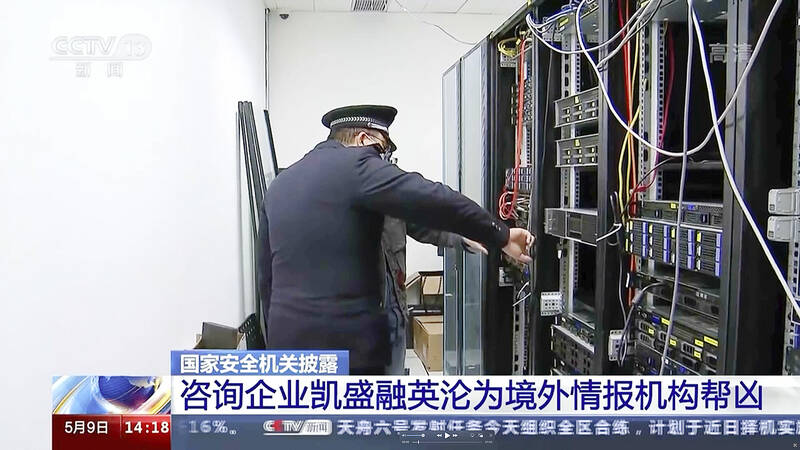
In this image taken from undated video footage run by China’s CCTV, Chinese police raid the Capvision office in Shanghai. China’s chief foreign intelligence agency has raided the offices of business consulting firm Capvision in Beijing and other Chinese cities as part of an ongoing crackdown on foreign businesses that provide sensitive economic data. Photo: AP
Visitors stand in front of a giant screen displaying Chinese leader Xi Jinping next to a flag of the Communist Party of China, at the Military Museum of the Chinese People’s Revolution in Beijing last October. | REUTERS
With the U.S. and its allies rapidly bolstering military capabilities around Taiwan, a successful Chinese invasion, let alone an occupation, of the self-ruled island is becoming an increasingly difficult proposition.
But with the Chinese People’s Liberation Army (PLA) increasingly focused on “intelligent warfare” — a reference to artificial intelligence-enabled military systems and operational concepts — experts warn that Beijing could eventually have a new card up its sleeve: “cognitive warfare.”
The 52-page report addresses a key aspect of the clean energy transition, finding that utility ownership of EV charging stations is generally not in the public interest and that allowing monopoly utilities to own charging stations will deliver less efficient, lower-quality service and choice to EV owners. This will result in unfair cost shifting to other electricity consumers.
“Regulators and legislators will serve the EV charging public best if they provide for a competitive and nondiscriminatory environment for public charging stations” said Rob Gramlich, President of Grid Strategies and one of the four co-authors of the study. “We should enable the market to work if we want to build-out EV charging infrastructure and give drivers the best prices and services possible along the way.”
The report stresses that extending the monopoly position of utilities into the EV charging sector would hurt the EV charging public and, by extension, the overall effort to electrify transportation.
Frank Lacey, a co-author, emphasises a key finding in the study: “Regulators should proclaim EV charging to be a competitive service and then focus on policies to support the development of the charging network. Competition in charging will lead to the best results for the build-out of EV charging, for consumer pricing of electricity, and for service of EV drivers. The time to make these policy choices is now, before charging becomes monopolised.”
The report makes the following recommendations:
Regulated Rate Policies – Regulators need to consider the impact of regulated rates and rate design on EV charging stations and station owners.
Utility Ownership – Regulators should ban or disfavor utility ownership of charging stations.
Distribution Planning – Regulators should support an increased focus on planning using state-of-the-art tools and should allow for proactive, rather than reactive, development of the distribution systems.
Interconnection Policies – Regulators should support the development of dedicated interconnection personnel, work with utilities to standardise and streamline timelines and processes, allow more flexible policies with respect to inventory and supply chain issues, and ensure that nonutility owners of charging stations receive fair and equal service from the utility when developing charging stations.
Private Sector Access – Regulators should work with utilities to develop, train, and certify third parties to work with private investors to build out the distribution network, where feasible.
Cost Allocation – Regulators should create cost-allocation policies fair to all parties to recover the costs of developing the infrastructure required for robust EV charging.
Meeting Public Need at the Lowest Cost – If a public need arises, regulators should look for solutions other than a utility to meet the need.
Divestiture of utility-owned charging stations – Regulators should have utilities sell any utility-owned EV charging stations to nonutility entities.
The report was sponsored by the National Association of Convenience Stores (NACS), which represents a business sector with considerable investment in robust distribution and service networks designed to meet the motoring public’s needs. Convenience stores sell an estimated 80 percent of the fuels purchased by drivers.
Wealthy countries and investors are planning to give Vietnam billions of dollars to help it transition from coal to renewable energy. But the climate deal has come under fire because of Vietnam’s record on human rights.
STR/AFP via Getty Images
Vietnam is set to get billions of dollars from wealthy countries and investors over the next few years to help it move from coal to renewable energy. The goal is to fight climate change while boosting the country’s economic development.
The money — at least $15.5 billion — was promised after climate activists in Vietnam pushed the government to commit to eliminating or offsetting the country’s carbon dioxide emissions by midcentury. The United States and other backers of the funding plan, known as the Just Energy Transition Partnership (JETP), say that kind of advocacy is critical for making sure the benefits of the climate deal are widely shared in Vietnam.


 Mục lục bài viết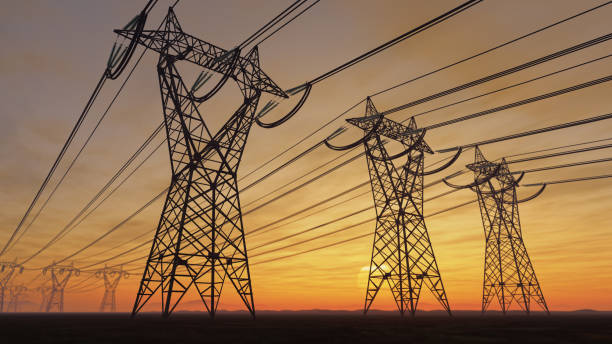




 CVD
CVD 