552 vụ xâm phạm động vật hoang dã bị xử lý hình sự từ năm 2015 – 2020. Con số này được cho là vẫn chưa tương xứng với thực tế buôn bán, xâm phạm động vật hoang dã đã và đang diễn ra ở Việt Nam.
Một trong 7.000 xác rùa biển chết được công an Nha Trang phát hiện trong kho của Hoàng Tuấn Hải. Năm 2018, Hải bị kết án bốn năm sáu tháng tù. Ảnh: ENV
Nguyễn Hữu Huệ, 52 tuổi, giám đốc một công ty thương mại, bị Công an Hà Nội bắt vào tháng 7.2019, khi đang vận chuyển 7 xác hổ đông lạnh trên xe ô tô. Mỗi xác hổ có thể nặng tới 300kg được Huệ trực tiếp sang Lào thu mua rồi vận chuyển về Việt Nam. Cơ quan điều tra xác định Huệ cầm đầu một đường dây buôn bán các loài động vật nguy cấp, quý hiếm xuyên quốc gia trong nhiều năm qua. Năm 2020, Tòa án Nhân dân thành phố Hà Nội xét xử và tuyên phạt Huệ 6 năm tù giam. Hai đồng phạm bị bắt cùng Huệ – Phan Văn Vui (34 tuổi) và Hồ Anh Tú (28 tuổi) – mỗi người bị tù 5 năm sau khi bị kết tội vi phạm các quy định về bảo vệ các loài nguy cấp, quý hiếm.
Trung tâm Giáo dục thiên nhiên (Education for Nature Vietnam – ENV) nhận định, hình phạt này chưa đủ tính răn đe đối với một “ông trùm” buôn hổ như Huệ, nhất là trong bối cảnh tình trạng tội phạm về động vật hoang dã đang diễn biến hết sức phức tạp tại Việt Nam. Dữ liệu thu thập được từ các phiên toà từ năm 2018-20120 cho thấy, các án phạt quá nhẹ so với mức độ phạm tội không hiếm ở Việt Nam, mặc dù trong hơn ba năm gần đây, Việt Nam đã tăng đáng kể án phạt cho tội phạm về động vật hoang dã.
Qua hàng chục năm đối thoại giữa chính quyền Trung ương và địa phương, với rất nhiều các “cơ chế đặc thù” nhưng dường như các địa phương không chỉ không sáng tạo hơn, phát triển mạnh hơn, tự do hơn mà kết cục lại…xin cơ chế riêng nhiều hơn nữa. Nhưng đó mới là phần nổi của tảng băng.
Hà Nội đang đề xuất sửa Luật Thủ đô để “xây dựng, phát triển thành phố Hà Nội xứng tầm”. Ảnh: hanoimoi.com.vn
The Chinese entrepreneurs chasing an Afghan ‘gold rush’ | 101 East Documentary
Al Jazeera English – 24 thg 11, 2022
When the Taliban returned to power in August 2021, most foreigners and multinational companies had already packed up and left Afghanistan.
Going against the stream of foreigners fleeing the country was a group looking for “once-in-a-lifetime” opportunities: Chinese entrepreneurs.
Despite the ongoing unrest, an economic crisis and United Nations’ concerns over human rights, more Chinese citizens are joining the country’s “gold rush”. Once a small minority, Chinese nationals now make up Afghanistan’s biggest group of expatriates.
With exclusive access to leading Chinese investors, 101 East investigates their growing influence across Afghanistan’s business and media sectors.
The administration of Taiwan’s President Tsai Ing-wen is wary of a Chinese attack launched from the nearby provinces of Fujian and Guangdong. This September photo shows piles to prevent Chinese ships from landing on the island of Kinmen, just off the mainland.
With the Chinese Communist Party’s 20th National Congress now finished, President Xi Jinping is closer than ever to becoming a leader on a par with founding father Mao Zedong. His third term as party leader will be the final stage of the “Great China” project, an initiative fraught with contradictions. This series will examine the next five years by unpacking China’s perspective and logic.
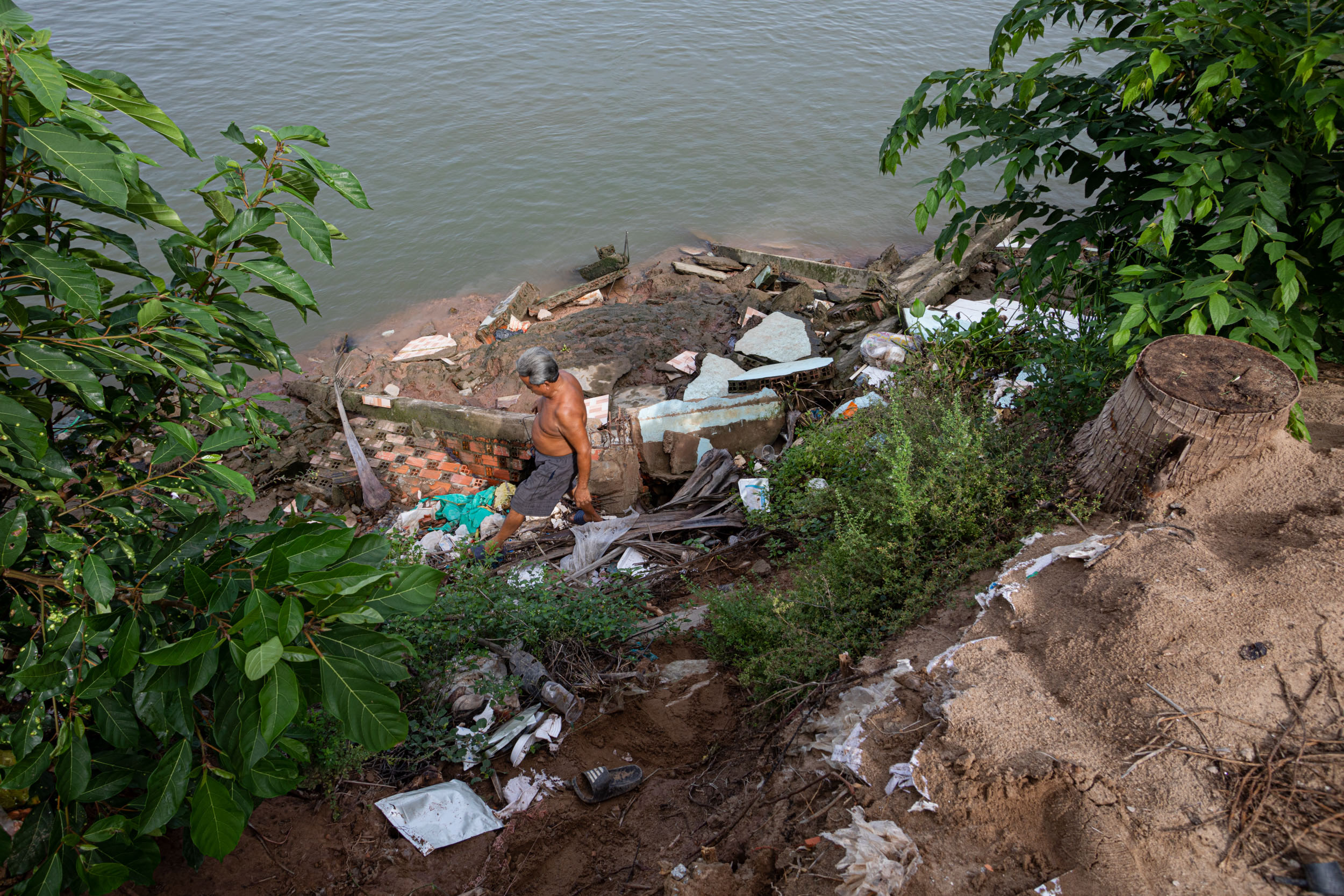
Phải mất hàng nghìn năm, đồng bằng sông Cửu Long mới ra đời. Con người có thể chỉ cần vài thập kỷ để làm nó co rút. Sạt lở chỉ mới là triệu chứng khởi đầu.
Ông Trương Phi Hải bên khu vực sạt lở từng là căn nhà của gia đình bên sông Tiền, thị xã Hồng Ngự, tháng 6/2020. Ảnh: Thành Nguyễn
Euro Cup 2016, sân vận động Parc des Princes (Pháp) nhuộm nỗi buồn của các cổ động viên Bồ Đào Nha khi cầu thủ của họ liên tục dứt bóng hỏng trước khung thành Áo. Cùng thời khắc ấy, ở một múi giờ khác cách Trung Âu sáu tiếng, nơi cuối dòng Mekong, trận bóng thất vọng của Bồ Đào Nha đã cứu một người đàn ông thoát chết trong gang tấc.
Đêm ấy, ông Trương Phi Hải không ngủ sớm như thường lệ. Người đàn ông 67 tuổi thức bên chiếc tivi, cổ vũ cho Cristiano Ronaldo, cầu thủ ông ái mộ. Phía sau nhà, dòng sông Tiền chảy qua thị xã Hồng Ngự (Đồng Tháp) đang trong con nước ròng, đâu đó vài chiếc sà lan chở cát nổ máy rì rì chạy ngang.
3h sáng, tiếng nước sôi xuất hiện, kéo ông Hải ra khỏi trận đấu. “Nó kêu ục ục. Tui đoán bọn cá lóc trong hồ trước nhà làm bọt bóng”, ông chủ trại cá nhớ lại. Nhưng âm thanh sủi bọt lớn dần, át cả giọng bình luận viên trên tivi. Lo cho đàn cá chỉ còn vài tiếng nữa là đến giờ hẹn bán, ông uể oải đứng lên kiểm tra. Được vài bước, bên tai ông vang tiếng “roạt-rầm”. Và nền đất dưới chân như ai đó bẻ ra, căn nhà tường gạch mái tôn ông vừa bước khỏi bỗng rớt gọn xuống con sông. Tủ, giường, bàn ghế, và cả chiếc tivi đang chiếu hình ảnh Ronaldo cũng trượt vào làn nước.
Trong tích tắc, mảnh sân sau ông Hải đang đứng biến thành một hòn đảo nhỏ giữa dòng nước xoáy đục ngầu. Rồi “hòn đảo” cũng tụt dần. Cú sốc đông cứng chân người đàn ông, ông ngồi thụp xuống, hai tay ôm đầu, phó mặc cho số phận. “Người tôi giống như đi thang máy vậy đó. Ngước mắt lên nhìn, không còn thấy trời, không còn thấy sao. Tôi nghĩ mình chết rồi”, ông Hải rít mẩu thuốc, nhớ lại giây phút sinh tử lúc đó.
By Raphael S. Cohen, the director of the Strategy and Doctrine Program at the Rand Corporation’s Project Air Force, and Gian Gentile, the deputy director of the Rand Corporation’s Army Research Division.
Russian President Vladimir Putin chairs a commission on military-technical cooperation with foreign states in 2017.
NOVEMBER 22, 2022, 1:36 PM
“Give diplomacy a chance.” This phrase gets repeated in almost every conflict, and the war in Ukraine is no exception. A chorus of commentators, experts, and former policymakers have pushed for a negotiated peace at every turn on the battlefield: after the successful defense of Kyiv, once Russia withdrew to the east, during the summer of Russia’s ploddingprogress in the Donbas, after Russia’s rout in Kharkiv oblast, and now, in the aftermath of Russia’s retreat from Kherson. The better the Ukrainian military has done, the louder the calls for Ukraine to negotiate have become.
And today, it’s no longer just pundits pushing for a negotiated settlement. The U.S. House of Representatives’ progressive caucus penned a letter to President Joe Biden calling for a diplomatic solution, only to retract it a short time later. Republican House leader Kevin McCarthy has promised to scrutinize military aid to Ukraine and push for an end to the war. Even Joint Chiefs of Staff Chairman Mark Milley has reportedly pushed for Ukraine to negotiate, although he subsequently made clear that the decision should be Kyiv’s alone.
And why not negotiate? Isn’t a diplomatic solution the best—indeed, the only—option for any kind of long-term settlement between Russia and Ukraine? And if so, what could possibly be the harm in exploring those options? Quite a lot, actually: Despite the way it is commonly portrayed, diplomacy is not intrinsically and always good, nor is it cost-free. In the Ukraine conflict, the problems with a push for diplomacy are especially apparent. The likely benefits of negotiations are minimal, and the prospective costs could be significant.
First, the argument that most wars end with diplomacy and so, therefore, will the war in Ukraine is misleading at best. Some wars—such as the U.S. Civil War and World War II—were fought to the bitter end. Others—like the American Revolution, the Spanish-American War, World War I, or the First Gulf War—were won on the battlefield before the sides headed to the negotiating table. Still others—like the Korean War—ended in an armistice, but only after the sides had fought to a standstill. By contrast, attempts at a diplomatic settlement while the military situation remained fluid—as the United States tried during the Vietnam War and, more recently, in Afghanistan—have ended in disaster. Even if most wars ultimately end in diplomatic settlements, that’s not in lieu of victory.
Pushing Ukraine to negotiate now sends a series of signals, none of them good.
At this particular moment, diplomacy cannot end the war in Ukraine, simply because Russian and Ukrainian interests do not yet overlap. The Ukrainians, understandably, want their country back. They wantreparations for the damage Russia has done and accountability for Russian war crimes. Russia, by contrast, has made it clear that it still intends to bend Ukraine to its will. It has officially annexed several regions in eastern and southern Ukraine, so withdrawing would now be tantamount, for them, to ceding parts of Russia. Russia’s economy is in ruins, so it cannot pay reparations. And full accountability for Russian war crimes may lead to Russian President Vladimir Putin and other top officials getting led to the dock. As much as Western observers might wish otherwise, such contrasts offer no viable diplomatic way forward right now.
Nor is diplomacy likely to forestall future escalation. One of the more common refrains as to why the United States should give diplomacy a chance is to avert Russia making good on its threats to use nuclear weapons. But what is causing Russia to threaten nuclear use in the first place? Presumably, it is because Russia is losing on the battlefield and lacks other options. Assuming that “diplomatic solution” is not a euphemism for Ukrainian capitulation, as its proponents insist, Russia’s calculations about whether and how to escalate would not change. Russia would still be losing the war and looking for a way to reverse its fortunes.
Diplomacy can moderate human suffering, but only on the margins. Throughout the conflict, Ukraine and Russia have negotiated prisoner swaps and a deal to allow grain exports. This kind of tactical diplomacy on a narrow issue was certainly welcome news for the captured troops and those parts of the world that depend on Ukrainian food exports. But it’s not at all clear how to ramp up from these relatively small diplomatic victories. Russia, for example, won’t abandon its attacks on Ukrainian infrastructure heading into the winter as it attempts to freeze Ukraine into submission, because that’s one of the few tactics Russia has left.
At the same time, more expansive diplomacy comes at a cost. Pushing Ukraine to negotiate now sends a series of signals, none of them good: It signals to the Russians that they can simply wait out Ukraine’s Western supporters, thereby protracting the conflict; it signals to the Ukrainians—not to mention other allies and partners around the world—that the United States might put up a good fight for a while but will, in the end, abandon them; and it tells the U.S. public that its leaders are not invested in seeing this war through, which in turn could increase domestic impatience with it.
Starting negotiations prematurely carries other costs. As Biden remarked in June: “Every negotiation reflects the facts on the ground.” Biden is right. Ukraine now is in a stronger negotiating position because it fought rather than talked. The question today is whether Ukraine will ultimately regain control over Donbas and Crimea, not Kharkiv and Kherson. This would not have been the case had anyone listened to the “give diplomacy a chance” crowd back in the spring or summer.
READ MORE
Joe Biden and Vladimir Putin meet during the U.S.-Russia summit at Villa La Grange on June 16, 2021 in Geneva, Switzerland.
There are plenty of reasons to believe that Kyiv will be in an even stronger bargaining position as time passes. The Ukrainians are coming off a string of successes—most recently retaking Kherson—so they have operational momentum. While Ukraine has suffered losses, Western military aid continues to flow in. Despite Russia’s missile strikes on civilian infrastructure, Ukrainian morale remains strong. By contrast, Russia is on the back foot. Its military inventories have been decimated, and it is struggling to acquire alternative supplies. Its mobilization effort prompted as many Russian men to flee the country as were eventually mobilized to fight in Ukraine. Moreover, as the Institute for the Study of War has assessed, “Russian mobilized servicemen have shown themselves to be inadequately trained, poorly equipped, and very reluctant to fight.”
By contrast, a negotiated settlement—even if it successfully freezes a conflict—comes with a host of moral, operational, and strategic risks. It leaves millions of Ukrainians to suffer under Russian occupation. It gives the Russian military a chance to rebuild, retrain, and restart the war at a later date. Above all, a pause gives time for the diverse international coalition supporting Ukraine to fracture, either on its own accord or because of Russian efforts to drive a wedge into the coalition.
Eventually, there will come a time for negotiations. That will be when Russia admits it has lost and wants to end the war. Or it will come when Ukraine says that the restoration of its territory isn’t worth the continued pain of the Russian bombardment. So far, neither scenario has come to pass. Indeed, the only softening of Russia’s position was Putin’s statement last month seemingly ruling out nuclear use—at least for the time being. Apart from that, the Kremlin seems intent on doubling down, even as its military continues to be slowly pushed out of Ukraine. That’s hardly an invitation to negotiate.
Might these arguments against the reflexive call for negotiations mean that war continues for months and possibly even years? Perhaps. But it’s not yet clear that there is a viable diplomatic alternative. And even if there was, it should be Ukraine’s choice whether or not to pursue it. Ukraine and its people, after all, are paying the price in blood. If the United States and its allies are sending tens of billions of dollars in military and economic aid to Ukraine, this is only a tiny fraction of what Washington has recently spent on defense and otherwars. Thanks to the Ukrainians’ excellent use of this aid, the military threat from the United States’ second-most importantadversary has been dealt a serious blow. The cold, if cruel, reality is that the West’s return on its investment in Ukraine seems high.
The harshness of these realities, however, does not make current calls for a negotiated settlement intrinsically moral. If diplomacy means ramming through a settlement when the battlefield circumstances dictate otherwise, it is not necessarily the morally more justifiable or strategically wiser approach. Sometimes fighting—not talking—is indeed the better option.
“To everything there is a season,” Ecclesiastes says, including “a time of war, and a time of peace.” There will come a time for diplomacy in Ukraine. Hopefully, it will come soon. But it doesn’t seem to be today.
Raphael S. Cohen is the director of the Strategy and Doctrine Program at the Rand Corporation’s Project Air Force.
Gian Gentile is the deputy director of the Rand Corporation’s Army Research Division.
Join the Conversation
Commenting on this and other recent articles is just one benefit of a Foreign Policy subscription.
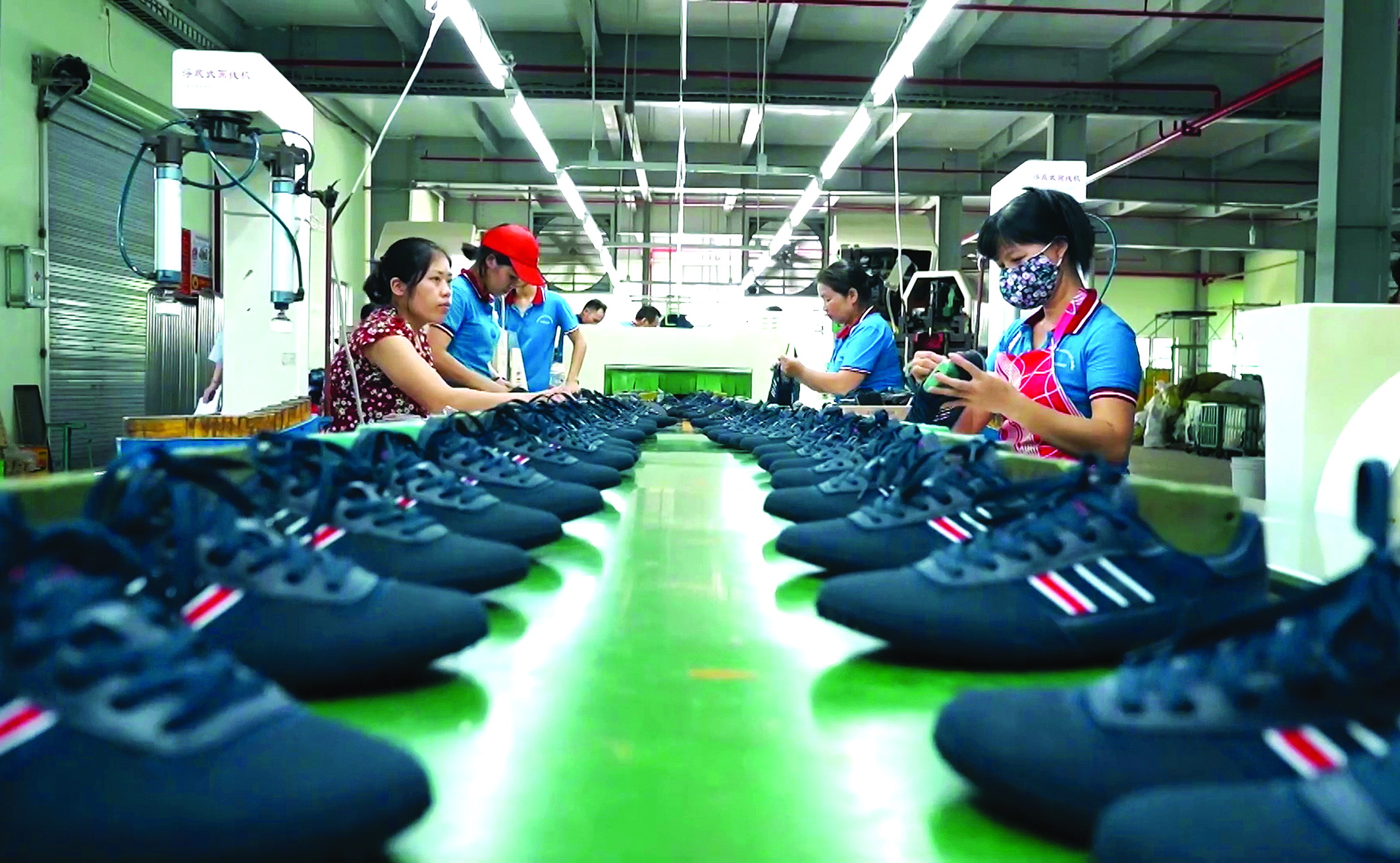
TTCT –Tình trạng cắt giảm lao động năm nay khiến nhiều người nhận định còn tệ hơn cả năm ngoái, khi đại dịch Covid hoành hành. Không còn hình ảnh thường thấy dịp cuối năm – thời điểm công nhân tăng ca liên tục để doanh nghiệp kịp giao hàng cho đối tác. Hàng loạt doanh nghiệp cắt giảm lao động, giảm
Nhiều nhà máy da giày đang cho công nhân làm việc cầm chừng do đơn hàng khan hiếm. Ảnh: TIẾN THẮNG
TTCT – Bất chấp những chỉ trích đủ kiểu từ phương Tây, thường là đậm màu chính trị, Qatar thực ra là một trong những quốc gia tiến bộ nhất ở vùng Vịnh.
Ngày chủ nhật 24-10-1971, đại sứ Trung Hoa Dân quốc (Đài Loan) tại Kuwait cuống quýt chạy lên chạy xuống Manhattan ở New York, nơi Liên Hiệp Quốc đặt trụ sở, để tìm gặp lại ba người bạn mới quen. Đó là ba vị đại diện các tân quốc gia Qatar, Bahrain và Oman, vừa độc lập và gia nhập Liên Hiệp Quốc tháng trước.
Ảnh: Morning Consult
Là chuyên gia vùng Vịnh, vị đại sứ Đài Loan được cử sang New York để níu áo ba đồng nghiệp mới bổ nhiệm, tranh thủ họ trong cuộc bỏ phiếu tại đại hội đồng ngày thứ hai 25-10 về quyết định công nhận Cộng hòa Nhân dân Trung Hoa (Trung Quốc).
TTCT – Lần đầu tiên trong lịch sử World Cup nam, có ba trọng tài nữ tham gia điều hành. Điều này càng ý nghĩa khi World Cup 2022 diễn ra ở một quốc gia Hồi giáo: Qatar. Nhưng ở Việt Nam, sự hưởng ứng World Cup có vẻ đang ngược chiều, nhìn từ một chương trình của đài truyền hình quốc gia.
Sau khi có bản quyền truyền hình, đài truyền hình quốc gia rầm rộ tổ chức tuyển chọn 32 “hot girl” tham gia chương trình “Nóng cùng World Cup” với những lời rao, tít tựa xoáy vào sức nóng hình thể phụ nữ…
The Paradox of Asia and the Scope of this Report Asia presents a paradox. Many of the more than forty countries in this vast region aren home to vibrant civil society sectors, engaged in everything from social services to advocacy to mutual benefit activities and other pursuits that fall within the definitions of non-profit or charitable activity. Yet in many countries of Asia, government regulatory controls on civil society are restrictive or highly restrictive. Indeed, based on reports from countries as diverse as India, China, Thailand and Vietnam, among many others, the legal operating environment is becoming more restrictive, particularly for advocacy and other groups engaged in independent civil society activity.
This report is an overview of the regulatory environment affecting civil society and civil society organizations (CSOs)2 across Asia, focusing on a number of countries and key themes. These themes include: general constitutional and legal frameworks; types of organizational forms of CSOs; establishment requirements; registration and incorporation requirements; termination and dissolution procedures; state supervisory requirements; legal treatment of foreign organizations; and rules related to funding sources, including cross-border philanthropy and economic activities. While this report may make reference to any country in Asia, it focuses predominantly on Afghanistan, Kazakhstan, Kyrgyzstan, Tajikistan, Turkmenistan and Uzbekistan (Central Asia); Bangladesh, Bhutan, India, Nepal, Pakistan and Sri Lanka (South Asia); Cambodia, Indonesia, Laos, Malaysia, Myanmar, Philippines, Singapore, Thailand and Vietnam (Southeast Asia); China, Hong Kong, Japan, Mongolia and South Korea (East Asia); and Fiji (Pacific).
This report is intended to identify key trends in the regulation of civil society and CSOs across Asia. As readers will note, it is not a detailed study of each country, and not all issues are covered for each country. For more detail, we invite readers to consult other
Though the idea of helping and giving back to others has existed since Biblical times, nonprofit organizations in the United States have a much shorter history. Every couple of decades, a new era ushers in a new set of ideas, principles and practices that affect how the nonprofit sector functions. Let’s take a look at what we can learn from the history of nonprofit organizations.
Without being too retrospective, we can learn a thing or two from the past when it comes to fundraising for nonprofits. When problems emerge, you have to think of new and creative ways to deal with them. But why spend hours trying to blaze your own trail when others have done it before you? Below, you’ll find some key turning points in the history of the nonprofit sector and what we can learn from them.
Improving lives just as important as closing coal power plants
Training workforce for green energy is key to ‘just transition’
KUALA LUMPUR, Nov 18 (Thomson Reuters Foundation) – After clinching one of the largest-ever climate finance deals to shutter its coal-fired power plants early, Indonesia needs to work out how to make sure communities that will be impacted by the shift to renewable energy do not lose out, analysts said.
A coalition of rich nations pledged $20 billion of public and private finance to help Indonesia retire its coal power plants sooner than planned, the United States, Japan and other partners said this week
The Indonesia Just Energy Transition Partnership (JETP), which involves providing grants and concessional loans over a three- to five-year period linked to cuts in emissions from the power sector, is based on a similar deal made with South Africa last year.
Tommy Pratama, executive director of Indonesian policy think-tank Traction Energy Asia, said a “just transition” that benefits local communities is vital for the green deal’s success.
“The key decisions about how the funding is spent must be open and transparent with the full involvement of acknowledged experts, affected local communities and civil society groups,” said Pratama in an interview.
The final deal of this year’s UN climate conference, COP27, included two historic firsts (Bloomberg): an agreement to establish a fund to help poor countries cope with climate damages, and a call for multilateral lenders such as the World Bank and International Monetary Fund to implement reforms ensuring that more of their funding addresses the climate crisis. The details of the loss and damage fund were left for future talks. Meanwhile, the communiqué left out proposed text on phasing down use of all fossil fuels, mentioning only coal. Negotiators were given an unusually short period of time to review the draft text on several major aspects of the communiqué, the Financial Times reported. After some delegates criticized the lack of transparency in negotiations, UN climate chief Simon Steill said he would review the summit process before next year’s conference to make it “as effective as possible.”
Analysis “The loss and damage deal agreed is a positive step, but it risks becoming a ‘fund for the end of the world’ if countries don’t move faster to slash emissions,” the World Wide Fund for Nature’s Manuel Pulgar Vidal tells the New York Times. “[The loss and damage agreement] tees up a big fight for next year’s Cop28 over who pays into and who benefits from the fund. Rich countries are pushing for China to chip in and finance to be targeted at ‘vulnerable’ countries,” Climate Home News’ Megan Darby, Joe Lo, and Chloé Farand write. This Backgrounder looks at the successes and failures of global climate agreements.
Các đề xuất tăng thuế thuốc lá của Việt Nam để giảm tiêu dùng thuốc lá thường gặp phải một số lo ngại như gây ảnh hưởng xấu đến ngành công nghiệp thuốc lá trong nước, làm tăng thuốc lá lậu và không giảm tiêu thụ thuốc lá tổng thể một cách hiệu quả. Liệu những lo ngại này có cơ sở đến đâu?
Vùng trồng thuốc lá ở Tiên Lãng, Hải Phòng. Ảnh: Báo Hải Phòng.
Mặc dù đã thực hiện một loạt các biện pháp phòng chống thuốc lá theo Công ước khung về Kiểm soát Thuốc lá (FCTC), nhưng tiêu dùng thuốc lá vẫn là một vấn đề y tế công cộng nghiêm trọng ở Việt Nam. Với hơn 15 triệu người hút thuốc, hằng năm có đến hơn 40.000 người chết vì các bệnh liên quan đến hút thuốc lá. Bên cạnh các chi phí liên quan tới các vấn đề về sức khỏe, chi tiêu cho thuốc lá thường đi kèm với chi tiêu cho bia, rượu, đồng thời tạo ra “hiệu ứng lấn át” – làm giảm chi tiêu cho giáo dục của hộ gia đình. Kết hợp với nhau, tiêu dùng thuốc lá có tác động tiêu cực tới mức sống của hộ gia đình, cũng như ảnh hưởng xấu tới sự phát triển tương lai về cả thể chất và tinh thần của trẻ em.
Republish our articles for free, online or in print, under Creative Commons licence.
Republish this article
EPA/SEDAT SUNA EPA-EFE/SEDAT SUNA
For 30 years, developing nations have fought to establish an international fund to pay for the “loss and damage” they suffer as a result of climate change. As the COP27 climate summit in Egypt wrapped up over the weekend, they finally succeeded.
While it’s a historic moment, the agreement of loss and damage financing left many details yet to be sorted out. What’s more, many critics have lamented the overall outcome of COP27, saying it falls well short of a sufficient response to the climate crisis. As Alok Sharma, president of COP26 in Glasgow, noted:
Friends, I said in Glasgow that the pulse of 1.5 degrees was weak. Unfortunately it remains on life support.
But annual conferences aren’t the only way to pursue meaningful action on climate change. Mobilisation from activists, market forces and other sources of momentum mean hope isn’t lost.







 We believe in the free flow of information
 CVD
CVD 