Raisi hosts Erdogan, Putin in Tehran

foreignpolicy

Days after U.S. President Joe Biden made his tour of the Middle East, the leaders of Iran, Russia, and Turkey meet in Tehran for a three-way summit.

Raisi and Putin are trying to talk Turkey out of war. With Russia engaged in Ukraine, Turkey is planning its own “special military operation”—this time against the Kurds in Syria’s north.

Tiếp tục đọc “Raisi hosts Erdogan, Putin in Tehran”

Nearly 1bn people lack access to disability aids

sciedev.net

Almah Kuambu with a prospective assistive technology user during a National Orthotic and Prosthetic Services outreach programme in Popondetta in southern Papua New Guinea.

Almah Kuambu and a prospective assistive technology user during a National Orthotic and Prosthetic Services outreach programme in Popondetta in southern Papua New Guinea. Copyright: National Orthotic and Prosthetic Services (PNG).

Speed read

  • Majority of people who would benefit from assistive technology lack access
  • Devices such as glasses, hearing aids, wheelchairs can be life-changing
  • 3.5 billion people will need assistive technology by 2050

By: Neena Bhandari

[SYDNEY]: Almost one billion children and adults with disabilities, and older people, are unable to access the assistive technology they need, according to a UN report, which calls for more investment in these life-changing products.

Tiếp tục đọc “Nearly 1bn people lack access to disability aids”

Điện hạt nhân, liệu có hồi sinh?

Nguyễn Vũ18/07/2022 09:14 GMT+7

TTCTVới giá thành ngày càng cao, sự thiếu hụt tay nghề chuyên môn chưa khắc phục được, điện hạt nhân khó lòng một sớm một chiều hồi sinh như mong muốn.

Điện hạt nhân, liệu có hồi sinh? - Ảnh 1.

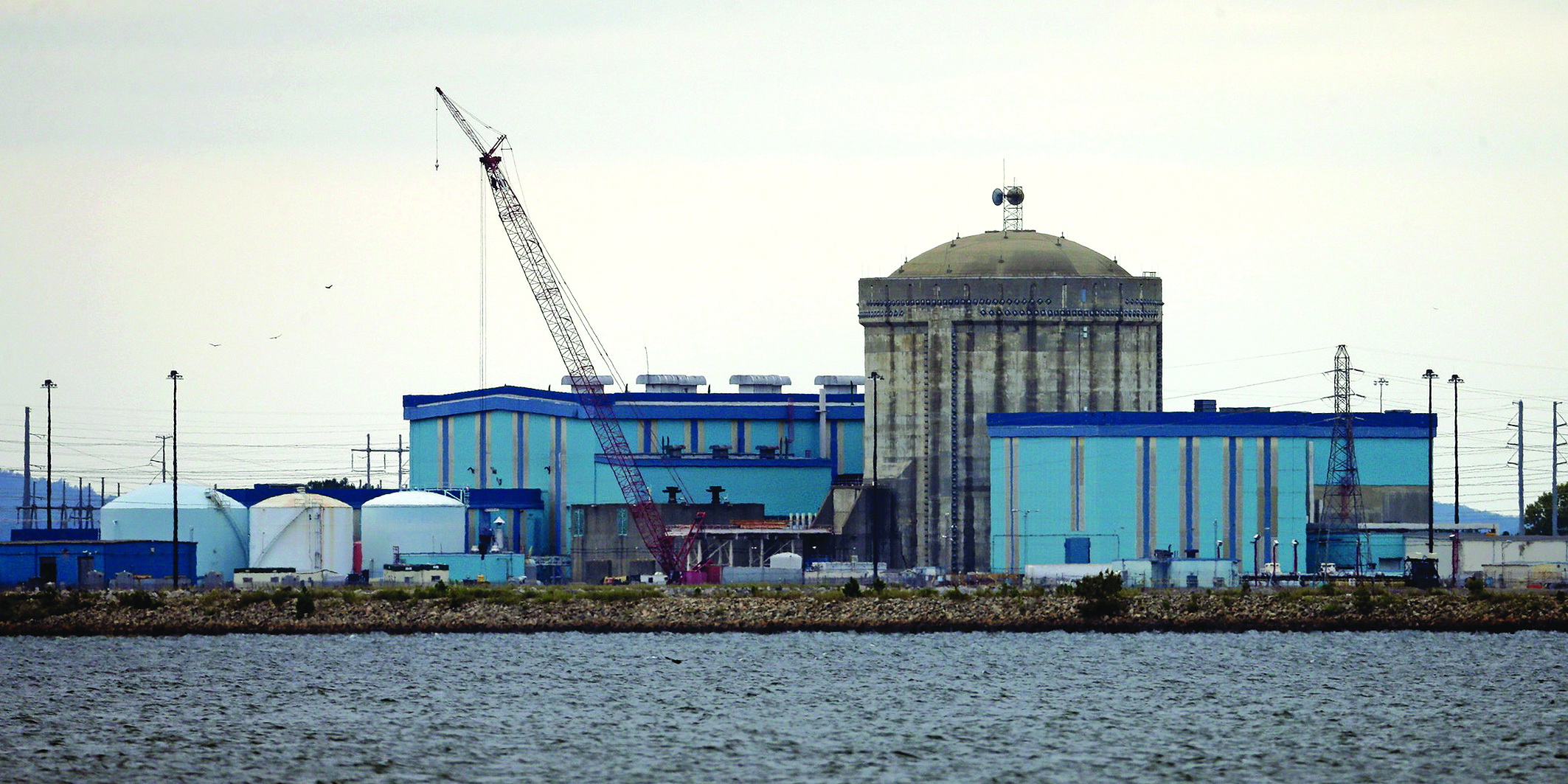
Nhà máy hạt nhân V.C. Summer ở South Carolia, nơi kế hoạch xây lò phản ứng hạt nhân để thay thế nhà máy điện chạy than năm 2008 đã thất bại. Ảnh chụp tháng 9-2016 của AP

Sau nhiều năm dài bị đóng băng, các nước phương Tây đang khởi động lại nhiều dự án điện hạt nhân trong bối cảnh nhiên liệu hóa thạch đắt đỏ, gây ô nhiễm, là thủ phạm làm trầm trọng hơn tình trạng biến đổi khí hậu toàn cầu. Tuy nhiên, các dự án này đang gặp nhiều trở ngại, trong số đó việc thiếu nhân lực có chuyên môn là trở ngại có nhiều tiền bạc cũng không giải quyết được.

Điện hạt nhân từng được xem là giải pháp lý tưởng của loài người nhằm chấm dứt sự phụ thuộc vào dầu mỏ; hàng loạt nhà máy điện hạt nhân được xây dựng từ thập niên 1950 đến 1970 ở Mỹ và châu Âu. Nguồn nguyên liệu cho các nhà máy này là uranium được làm giàu ở mức độ thấp, nhằm tạo ra phản ứng dây chuyền có kiểm soát và sản sinh ra nhiệt. Nhiệt được dùng để đun nóng nước biến thành hơi nước chạy các turbine khí để phát điện. Mấu chốt của công nghệ là làm sao kiểm soát được phản ứng dây chuyền không để lò hạt nhân quá nóng gây sự cố có thể dẫn tới thảm họa.

Tiếp tục đọc “Điện hạt nhân, liệu có hồi sinh?”

Why is the US not pushing for an end to the Ukraine war?

Al Jazeera English – 16/6/2022

The United States is principally responsible for creating the crisis in Ukraine, according to University of Chicago political science professor John Mearsheimer, and it has no current interest in reaching a negotiated settlement now.

Mearsheimer sees US sanctions against Moscow as an attempt to knock Russia out of the ranks of the great powers.

The way he sees it, the US has declared war against Russia, in effect, but the Ukrainian people are doing the fighting.

Join host Steve Clemons for this wide-ranging conversation about how both sides consider themselves locked in an existential threat, with no way out.

Civilians killed as Russia intensifies attacks across Ukraine

Aljazeera.com

Russian forces fire missiles and shells across Ukraine after military announces it is stepping up its onslaught.

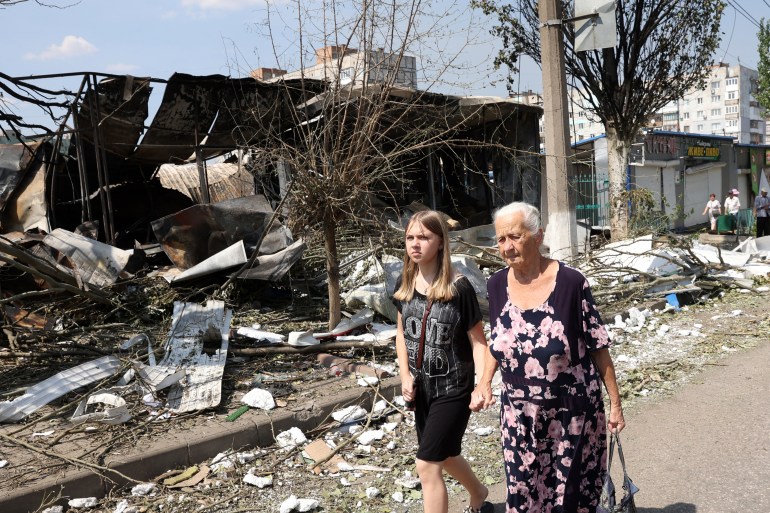
A girl and an elderly lady walk among the debris of a destroyed local market after a Russian missile strike in the town of Bakhmut, Donetsk region on July 16, 2022
People walk by debris of a destroyed local market after a Russian missile attack in the town of Bakhmut, Donetsk region, Ukraine [Anatolii Stepanov/AFP]

Published On 16 Jul 202216 Jul 2022

Russian forces have fired missiles and shells at cities and towns across Ukraine after Russia’s military announced it was stepping up its onslaught against its neighbour, with Ukrainian officials reporting that at least 17 more civilians had been killed.

Russian Defence Minister Sergei Shoigu gave “instructions to further intensify the actions of units in all operational areas, in order to exclude the possibility of the Kyiv regime launching massive rocket and artillery attacks on civilian infrastructure and residents of settlements in the Donbas and other regions,” his ministry said on Saturday.

Tiếp tục đọc “Civilians killed as Russia intensifies attacks across Ukraine”

The New 14th BRICS Summit Declaration (Brazil, Russia, India, China, and South Africa)

 Jun 28, 2022 Posted by Silk Road Briefing Written by Chris Devonshire-Ellis

By Chris Devonshire-Ellis   

While the G7 group of nations (Canada, France, Germany, Italy, Japan, the United Kingdom, and the United States together with the European Union) has been meeting in Germany, the BRICS nations (Brazil, Russia, India, China, and South Africa) have been meeting in China for the 14th Summit. The contrasts could not be more different – one the grouping of mainly white, powerful Western nations, representing contemporary global leadership, the other a grouping of globally powerful emerging markets wanting a larger say in the developing world. The BRICS nations differ from the G7 in two main factors, most notably in the populations they serve – 3 billion as opposed to the G7’s 987 million (including the EU), and GDP, where the G7’s GDP is currently US$33.93 trillion and the BRICS about US$23.5 trillion.

Western economists as a result tend to talk up the G7’s role in global financial strength however the growth rates of both the G7 and BRICS predicted by the IMF suggest that the latter could be responsible for 50% of all global trade by the 2030’s. This means that paying attention to the BRICS consensus leads to some direction over how the global economy is likely to change over the next decade.

At present, the G7 appear determined to continue with the existing world order, which China and Russia in particular view as ‘unipolar’, meaning centered around the United States and directed by whatever US foreign, global and domestic policies are at the time. Both countries (and others) are looking for a more inclusive role in global affairs as befits their status. China for example is the world’s second largest economy, and India the fifth. Yet neither have the percentage say in global financial institutions such as the World Bank and IMF they would like – hence the development of alternative policy banks such as the Asian Infrastructure Investment Bank and the BRICS own New Development Bank. There are also accusations that global institutions such as the United Nations (based in New York) has begun to be too influenced by Washington’s policies than global ones. Calls for reform are increasingly being heard.

Tiếp tục đọc “The New 14th BRICS Summit Declaration (Brazil, Russia, India, China, and South Africa)”

The semiconductor problem

The military relies on advanced semiconductors. The U.S. doesn’t make any.

Chips on display in Taiwan.
Chips on display in Taiwan.Credit…Ann Wang/Reuters
David Leonhardt

By David Leonhardt

NYTimes – July 14, 2022

The most advanced category of mass-produced semiconductors — used in smartphones, military technology and much more — is known as 5 nm. A single company in Taiwan, known as TSMC, makes about 90 percent of them. U.S. factories make none.

The U.S.’s struggles to keep pace in semiconductor manufacturing have already had economic downsides: Many jobs in the industry pay more than $100,000 a year, and the U.S. has lost out on them. Longer term, the situation also has the potential to cause a national security crisis: If China were to invade Taiwan and cut off exports of semiconductors, the American military would be at risk of being overmatched by its main rival for global supremacy.

Tiếp tục đọc “The semiconductor problem”

 How South Korea is transforming into a top global arms exporter

JULY 14, 2022 | FP Situation Report

By Robbie Gramer and Jack Detsch

Welcome back to Foreign Policy’s SitRep! 

Before we get to our regularly scheduled programming, if you haven’t done so already, take a few minutes to marvel at the new high-definition imagery coming out of deep space, courtesy of the James Webb telescope.Alright, back to more earthly matters, here’s what’s on tap for the day: How South Korea is becoming a top global arms exporter, a new report warns of laggard U.S. missile defense capabilities, and Congress sours on F-16 sales to Turkey.

The Business of Booms Is Booming in South Korea

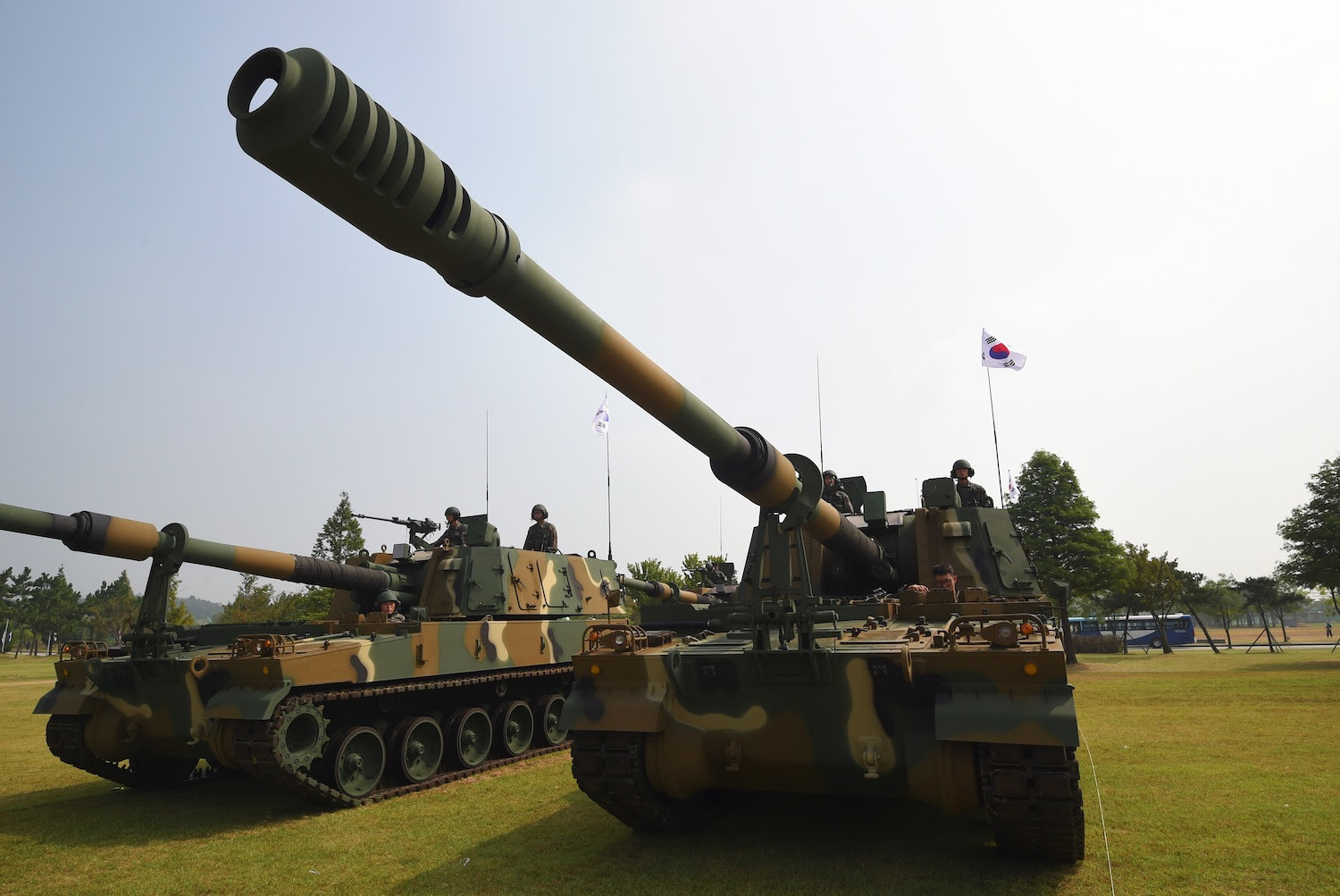
There’s been a not-so-quiet revolution taking place in South Korea in recent years, and it’s all about the defense industry.Since former President Moon Jae-in first took power in 2017, South Korea has turbocharged its arms sales abroad, positioning the country to become one of the world’s leading arms exporters and vastly outpacing the rest of the world in increasing the volume of its arms exports. Under the new conservative government, led by Yoon Suk-yeol, that trend shows no signs of slowing down.
Tiếp tục đọc ” How South Korea is transforming into a top global arms exporter”

“Viết cho trẻ em là một trách nhiệm lớn lao”

PHAN XUÂN LOAN 26/10/2017 2:10 GMT+7

TTCT Quan sát Tamara Kriukova trò chuyện với các độc giả của mình tại hội sách quốc tế Matxcơva tháng 9-2017, khó tưởng tượng nữ nhà văn đã ngoài lục tuần. 

Tamara Kriukova với chú mèo (nhưng không phải là Barsik) của mình.-Ảnh: P.X.L.

 Trẻ trung, hóm hỉnh khiến các khán giả nhí cười vang, Tamara Kriukova cùng các nhân vật của mình đã chiếm một góc ấm áp và tin cậy trong tim những người đọc trẻ. Bà đã dành cho TTCT cuộc trò chuyện nhân cuốn sách đầu tiên của bà, Nhật ký mèo khôn, ra mắt độc giả Việt Nam.

Sinh nhật ngày cá tháng tư

Chị nổi tiếng ở Nga là nhà văn thiếu nhi với đủ các thể loại chinh phục, từ cổ tích, truyện tranh, nhật ký các chú mèo… tới những truyện dài về rung động đầu đời của tuổi thiếu niên… Vì sao chị chọn độc giả trẻ?

Tiếp tục đọc ““Viết cho trẻ em là một trách nhiệm lớn lao””

NuScale’s Small Modular Nuclear Reactor Passes Biggest Hurdle Yet

James Conca, Forbes

May 15, 2018,06:00am EDT

NRC just completed their Phase 1 review of NuScale’s Small Modular Nuclear Reactor. The small size... [+] of its Power Module means it can be factory-built and shipped by truck, deceasing construction costs enormously.

NRC just completed their Phase 1 review of NuScale’s Small Modular Nuclear Reactor. The small size… [+]

NUSCALE

NuScale Power is on track to build the first small modular nuclear reactor in America faster than expected.

Two weeks ago, NuScale’s small modular nuclear reactor design completed the Phase 1 review of its design certification application (DCA) by the U.S. Nuclear Regulatory Commission. That’s a huge deal because Phase 1 is the most intensive phase of the review, taking more hours and effort than the remaining five phases combined.

Tiếp tục đọc “NuScale’s Small Modular Nuclear Reactor Passes Biggest Hurdle Yet”

Making sense of Shinzo Abe

On the day of his funeral service, we consider the full legacy of Japan’s longest-serving prime minister.

A tribute to Shinzo Abe, Japan’s longest-serving prime minister.
A tribute to Shinzo Abe, Japan’s longest-serving prime minister.Credit…Kimimasa Mayama/EPA, via Shutterstock
David Leonhardt

By David Leonhardt

Nytimes – July 12, 2022

Shinzo Abe could sometimes look like yet another one of the world’s modern breed of nationalist leaders, alongside Viktor Orban in Hungary, Vladimir Putin in Russia, Xi Jinping in China and Donald Trump in the U.S.

Abe came from a family of Japanese nationalist politicians, including a grandfather whom the U.S. accused of war crimes during World War II. Abe himself downplayed Japan’s wartime atrocities and spoke of the importance of patriotism and “traditional values.” Above all, he pushed his country to shed its post-1945 pacifism and become more militaristic.

Tiếp tục đọc “Making sense of Shinzo Abe”

India & China Continue to Lead –as World Population Projected to Reach 8.0 Billion

ipsnews.net

Credit: Freepik

UNITED NATIONS, Jul 11 2022 (IPS) – India and China, two Asian nuclear powers who are also longstanding rivals embroiled in the geo-politics of the Indian Ocean region, have remained two of the world’s most populous nations accounting for over a billion people each.

But as the world’s population reaches the 8.0 billion mark, come November, India is projected to surpass China.

The current numbers stand at 1.44 billion people in China and 1.39 billion in India. But the numbers are expected to change as India races ahead of China. The US ranks third with over 335 million people. By the end of last yar, the world’s total population was approximately 7.9 billion.

According to a report in the New York Times July 9, China is going through a “demographic crisis”. With abortion and reproductive health heavily centered on the Chinese Communist Party, the CCP now wants women to have multiple children abandoning the country’s longstanding one-child policy.

Tiếp tục đọc “India & China Continue to Lead –as World Population Projected to Reach 8.0 Billion”