Southeast Asia’s longest road tunnel opens

By Nguyen Dong   January 11, 2021 | 01:27 pm GMT+7 vnexpressSoutheast Asia's longest road tunnel opensA staff stands inside the Hai Van Tunnel 2, January 10, 2021. Photo by VnExpress/Nguyen Dong.

Hai Van Tunnel 2 in central Vietnam has opened to traffic Monday after four years of construction.

Connecting Thua Thien-Hue Province with central hub Da Nang, the tunnel of 6.2 kilometers (3.85 miles) is the longest road tunnel in Southeast Asia and helps reduce traffic pressure on Hai Van Road Tunnel 1.

Tiếp tục đọc “Southeast Asia’s longest road tunnel opens”

Bans on Parler and Trump Show Big Tech’s Power Over Web Conversation

bloomberg.com

As Facebook Inc. and Twitter Inc. banished users and groups supporting the violent mobs at the U.S. Capitol last week — including President Donald Trump himself — downloads surged for a less restrictive social media app called Parler. But in an effort to prevent further riot organizing, Google Inc. and Apple Inc. booted Parler from their app stores, and Amazon.com Inc. shut off its web services.

“We will not cave to pressure from anti-competitive actors!” John Matze, Parler Inc.’s chief executive officer, said on his site Friday. “We WON’T cave to politically motivated companies and those authoritarians who hate free speech!”

In reality, Matze doesn’t have much choice. His free-speech-centric network, where some extremists turned to rally insurgents and organize future uprisings, was deemed an “ongoing and urgent public safety threat” by Google. Apple quickly rejected as insufficient a Parler plan to moderate its content. Amazon employees asked that the web giant “deny Parler services until it removes posts inciting violence, including at the Presidential inauguration.” Amazon plans to shut down the service at midnight Sunday, according to Matze.
Tiếp tục đọc “Bans on Parler and Trump Show Big Tech’s Power Over Web Conversation”

What are Vietnam’s options for dealing with plastic waste?

By Viet Anh    January 5, 2021 | 11:54 am GMT+7 vnexpressWhat are Vietnam's options for dealing with plastic waste?Plastic waste at a private collecting site in Go Vap District, HCMC, August 2019. Photo by VnExpress/Thanh Nguyen.Vietnam should set up legal framework for recycling plastic waste, reduce plastic use and find new materials to replace non-recyclable plastics, according to experts.

“The best solution would be recycling as much plastic waste as you can,” George Huber, professor of chemical and biological engineering, University of Wisconsin-Madison, the U.S., said when asked about possible options for Vietnam.

In the U.S., there are hundreds of material recovery facilities (MRFs) where people can leave everything that can be recycled, he said.

Either workers or robots sort the materials, including plastic, and palletize them and they are later sold to secondary recycling people who do further sorting and turn them into pellets.

There is a whole market for these pellets for making new products.

For instance, there is a company called Placon that produces food and medical packaging and other types of plastic from MRFs.

They buy recycled PET bottles and thermoform them, thus keeping over one billion PET bottles out of landfills each year.

Huber said: “This is called closed-loop recycling. They produce the ecostar plastic which is a recycled plastic.”

Technologies used by companies like Placon are pretty similar, usually involving floating. They put plastics in water, and some float while others sink. They then purify the floating plastic and grind it to make pellets. There are many things that can be made from recycled plastic.

Highlighting another good recycling model, Professor Michael Braungart, founder of Internationale Umweltforschung GmbH, an environmental research institution based in Hamburg, Germany, said the U.S.’s Envision Plastics is the only company in the world that makes polypropylene approved by the U.S. Food and Drug Administration for making food-grade packaging.

In Italy, a company called Aquafil has reprocessed around 15,000 tons of nylon from driftnets in oceans to make clothing, carpets and other products, he said.

Associate Professor Duong Hai Minh of the department of mechanical engineering, National University of Singapore, said Vietnam could consider the option of converting plastic waste into aerogels, which are used in billion-dollar engineering applications such as heat and sound insulation, oil spill cleaning, fruit preservation, air pollution filtering, personal care products, and wastewater treatment.

He said this is a cost-effective and eco-friendly method since no toxic solvent is used or discharged into the environment, and it requires 70 percent less energy.

Aerogels can be reused and recycled.

Moreover, the technology can also be used on a range of wastes like paper, old clothes, rubber tires, fly ash, metal, and agricultural and food wastes.

For the first time aerogels have been made from PET, the same plastic used to make water and soft drink bottles.

“The technology might be available in April 2021,” Minh said.

He said there are various options for Vietnam for dealing with plastic that are used in Singapore such as incinerating or converting it into low-value products (chair, bag, umbrella, etc).

In incineration plants, waste is burned and the smoke quality is controlled to ensure it does not damage the air quality. The ash is used in construction as a less toxic option.

Huber said some plastics like pure PET and pure PE could be recycled but most could not, and there are also losses in the plastic recycling process. So any plastic recycling needs to be combined with long-term plans to deal with plastic wastes like incineration and landfills (where minimal leakage occurs), he said.

When incinerating, heat and energy could be recovered, then plastic does not leak into the environment and could be controlled in one location, he said.

There are companies in the U.S. burning plastic waste to generate electricity and heat and generating small volumes of ash that eventually go into landfills, he said.

“I think landfilling should be the less preferred option.”

Professor Carl Redshaw of the University of Hull, the U.K., said a number of technologies are being trialed for converting plastic waste into high-value useful products.

For instance, radiation-induced degradation, microbes, metal-based nanoparticles, and activated carbon could all turn waste into liquid fuel, pyrolysis (thermal degradation) could turn plastics into energy while the use of photo-catalysis (use of light to drive a reaction) has shown that even non-degradable plastics such as polyethylene could be converted into other useful materials, he said.

A recent report in a scientific journal illustrated how discarded drinking cups could be converted into other useful chemicals though most of these technologies are at an embryonic stage and require more investment, he added.

How to apply in Vietnam

Huber said the first step for Vietnam to recycle plastic wastes is to be able to sort them depending on their original components. Some would have to go to landfills or be burned, while the infrastructure to collect waste plastics has to be developed, he said.

If the country wants to have a similar system as the U.S., it needs to have secondary recyclers who could turn plastic into pellets and make products from them, he pointed out.

But all these involve a very large initial cost, and it takes five to eight years to recoup it before the operation becomes profitable, he said.

The legal framework is crucial, he said.

In the U.S., many material recovery facilities are owned by municipalities and states make laws. It is illegal to send certain kinds of plastics to landfills.

As for the burning option, Huber said companies need to have air pollution control equipment to make sure the smoke does not have any dangerous chemicals.

It is important that these facilities are designed in a way to minimize air pollution, he said.

In the U.S., the Environmental Protection Agency sets regulations.

Rules to prevent air pollution are vital, especially in developing countries, Huber said.

Dr Alex Ibhadon, reader in catalysis and reactor engineering, University of Hull, the U.K., said society needs plastics to create products and jobs.

Southeast Asia in general is producing more and more plastics while Europe is producing less and less, and it is not easy for Vietnam to close thousands of companies in the plastic industry, he pointed out.

Vietnamese people should reuse over and over again the plastics they already have, he said.

In the U.K., supermarkets need to produce reusable carrier bags and some charge customers for carrier bags as an encouragement to re-use, something Vietnam as a country could learn from, he said.

Experts said another way to reduce the plastics is by using new materials.

Braungart said Vietnam could learn from Novamont, an Italian company that makes plastics from starch for single use that easily degrades and is good for the environment.

It makes bioplastics from starches, cellulose, vegetable oils, and their combinations, and ideally Vietnam should decide that all the plastics ending up in the environment needs to be biodegradable, he said.

Redshaw said he and his colleagues produce polymers from renewable resources such as corn starch.

He said there are now a number of biodegradable polymers on the market like Sigma Aldrich’s poly (lactide), poly (glycolide) and their copolymers, and a number of biodegradable natural polymers.

A number of U.K. small enterprises have ongoing projects that they hope to bring to the market soon, he said.

“No doubt companies in countries such as Vietnam are thinking along these lines too.”

Vietnam needs to offer large incentives to entice the industrial sector, specifically the producers of petroleum-derived plastics, to invest in infrastructure that would allow them to make the switch to some of the greener alternatives, he said.

There is also a need to change people’s mindset on how to use plastic, and this could be achieved by good communication and having efficient protocols in place, he said.

Emphasizing the significance of the legal framework, Dr Ibhadon said the Vietnamese government should have a policy that makes plastic recycling a legally enforceable requirement and set up recycling centers throughout the country for various types of plastics.

It must take the lead in reducing plastic use and enforce recycling as a partnership between itself, plastic producers and consumers, he added.

Why some researchers struggle to escape the ivory tower

theconversation.com

Academics are increasingly expected to share their research widely beyond academia. However, our recent study of academics in Australia and Japan suggests Australian universities are still very much focused on supporting the production of scholarly outputs. They offer relatively limited support for researchers’ efforts to engage with the many non-academics who can benefit from our research.

One reason engagement is expected is that government, industry and philanthropic sources fund research. And when academics share their research with the public, industry and policymakers, this engagement is good for the university’s reputation. It can also lead to other benefits such as research funding.


Tiếp tục đọc “Why some researchers struggle to escape the ivory tower”

East Sea: What is gray zone? (Maritime Gray Zone Tactics: The Argument for Reviewing the 1951 U.S.-Philippines Mutual Defense Treaty)

By Adrien Chorn and Monica Michiko Sato – October 1, 2019, CSIS

Download PDF   |    

On August 31, 1951, representatives of the United States and the Republic of the Philippines signed the Mutual Defense Treaty (MDT) in Washington. In recognition that “an armed attack in the Pacific Area on either of the Parties would be dangerous to [the] peace and safety” of both countries, the treaty declared that each state would “act to meet the common dangers in accordance with its constitutional processes.”i However, like most conventional defense treaties and standards, the MDT is not clear about the increasingly common unconventional gray zone threats that skirt the definition of war to avoid prompting a kinetic response. Since its inception, the United States’ commitment to the MDT regarding attacks on Philippine assets in contested waters in the South China Sea has been unclear. Along with the controversial policies of the administration of Philippine President Rodrigo Duterte, the uncertainty of the MDT has strained U.S.-Philippine relations and caused Philippine Defense Secretary Delfin Lorenzana to call for a review of the relevance of the MDT in October 2018 with the main goal of determining whether the government should “maintain it, strengthen it, or scrap it.”ii

Tiếp tục đọc “East Sea: What is gray zone? (Maritime Gray Zone Tactics: The Argument for Reviewing the 1951 U.S.-Philippines Mutual Defense Treaty)”

How to transform systems: The World Resources Institute Q&A with Andrew Steer

Mongabay.com

  • Between the pandemic, rising food insecurity and poverty, and catastrophic disasters like wildfires, storms and droughts, 2020 was a year of challenges that prompted widespread calls for systemic change in how we interact with one another, with other species, and with the environment. Bringing about such changes will require transforming how we produce food and energy, how we move from one place to another, and how we define economic growth.
  • But it’s a lot easier to talk about transforming systems than to actually do it. Because real change is hard, we’re more likely to slip back into old habits and return to business as usual than embrace paradigm shifts.
  • Recognizing this limitation, World Resources Institute (WRI), a Washington, D.C.-based organization that operates in 60 countries, works across sectors by creating tools that increase transparency, create a common understanding, and provide data and analysis that enable action.
  • WRI’s development of these platforms and tools has grown by leaps and bounds since the early 2010s when Andrew Steer joined the organization as president and CEO from the World Bank. Steer spoke with Mongabay during a December 2020 interview.

Between the pandemic, rising food insecurity and poverty, and catastrophic disasters like wildfires, storms and droughts, 2020 was a year of challenges that prompted widespread calls for systemic change in how we interact with one another, with other species, and with the environment. Bringing about such changes will require transforming how we produce food and energy, how we move from one place to another, and how we define economic growth. But it’s a lot easier to talk about transforming systems than to actually do it. Because real change is hard, we’re more likely to slip back into old habits and return to business as usual than embrace paradigm shifts. Tiếp tục đọc “How to transform systems: The World Resources Institute Q&A with Andrew Steer”

As House [of Representatives] Was Breached, a Fear ‘We’d Have to Fight’ to Get Out

The New York Times

What unfolded on Wednesday was a tableau of violence and mayhem that shocked the nation, one of the most severe intrusions of the Capitol since the British burned down the building in 1814.

Representative Jason Crow, Democrat of Colorado, and other lawmakers found themselves captive in the House chamber as a mob broke into the Capitol on Wednesday.
Representative Jason Crow, Democrat of Colorado, and other lawmakers found themselves captive in the House chamber as a mob broke into the Capitol on Wednesday.Credit…Andrew Harnik/Associated Press
Zolan Kanno-Youngs
Sabrina Tavernise
Emily Cochrane

By Zolan Kanno-YoungsSabrina Tavernise and Emily Cochrane

  • Published Jan. 6, 2021Updated Jan. 7, 2021, 12:01 p.m. ET

WASHINGTON — The mob of Trump supporters pressed through police barricades, broke windows and battered their way with metal poles through entrances to the Capitol. Then, stunningly, they breached the “People’s House” itself, forcing masked police officers to draw their guns to keep the insurgents off the chamber floor.

Tiếp tục đọc “As House [of Representatives] Was Breached, a Fear ‘We’d Have to Fight’ to Get Out”

Big Tech tiếp tục bị phán xét

HOA KIM 5/1/2021 10:05 GMT+7

TTCTSự kiên nhẫn dành cho nhóm Big Tech, gồm năm công ty công nghệ Mỹ Amazon, Apple, Google, Facebook và Microsoft, rốt cuộc đã cạn.

Liên tiếp ở châu Âu và cả trên sân nhà, một loạt đơn kiện của chính quyền nhắm vào những gã khổng lồ công nghệ trong năm 2020 cho thấy những tượng đài này không hề “bất khả xâm phạm” như ta tưởng. Tiếp tục đọc “Big Tech tiếp tục bị phán xét”

Kỳ vọng về việc đàm phán hợp đồng mua bán điện (PPA) ngay trong tháng 8/2020 và ký kết PPA vào cuối năm 2020 đã không thành hiện thực

Báo Đầu Tư

TIN LIÊN QUAN

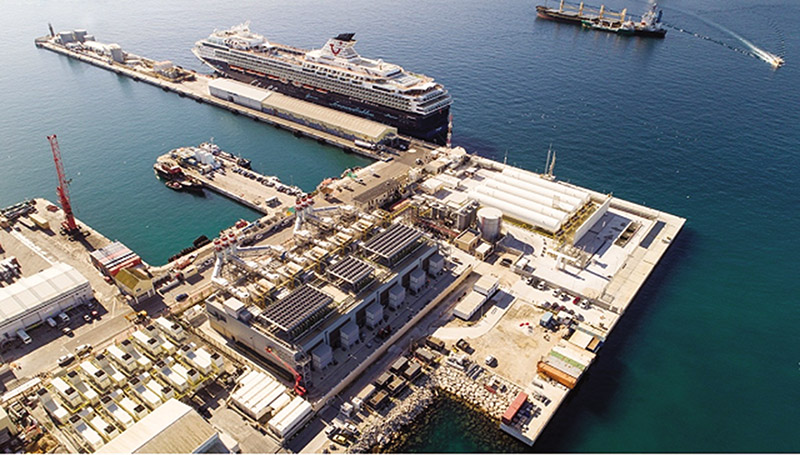
Các Dự án LNG đều yêu cầu được bao tiêu dài hạn. Trong ảnh: Mặt bằng một Dự án điện khí LNG hoàn chỉnh
Các dự án LNG đều yêu cầu được bao tiêu dài hạn. Trong ảnh: Mặt bằng một dự án điện khí LNG hoàn chỉnh

Khó đàm phán

Trao đổi với phóng viên Báo Đầu tư mới đây, một quan chức của Cục Điện lực và Năng lượng tái tạo (Bộ Công thương) cho hay, Dự án Điện khí LNG Bạc Liêu đã không thể ký được PPA trong năm 2020. Như vậy, kỳ vọng về việc “đàm phán PPA ngay trong tháng 8/2020 và ký kết PPA vào cuối năm 2020” đã không thành hiện thực.

Tiếp tục đọc “Kỳ vọng về việc đàm phán hợp đồng mua bán điện (PPA) ngay trong tháng 8/2020 và ký kết PPA vào cuối năm 2020 đã không thành hiện thực”

Renewable Energy Lab. NREL’s Updated System Advisor Model

The latest version of NREL’s popular System Advisor Model (SAM) is now available, providing more robust data and seamless integration with other NREL models to help the renewable energy industry make informed project decisions.

SAM is free, publicly available modeling software for technical performance simulation and financial analysis of renewable energy projects and includes a desktop application, software development kit, and open-source code.

Updates to the model include:

  • The addition of the latest solar resource data from NREL’s National Solar Radiation Database, including yearly and sub-hourly data and covering Europe, Africa, and Asia for the first time
  • Improved battery dispatch for both front-of-meter and behind-the-meter battery storage applications
  • Improved electricity bill calculations for distributed behind-the-meter financial models
  • Implementation of NREL’s Solar Position Algorithm for sun angle calculations of solar performance models
  • Integration of NREL’s Land-Based Balance-of-System Systems Engineering Model for improved wind power plant system cost estimation and design.

“With the recent improvements, we’re excited to continue to ensure that complex energy analysis questions can be answered quickly and easily,” said Janine Freeman, NREL lead for the SAM model.

Thăm Lăng Ông, tìm lại những dấu chân Anh Quốc đầu tiên ở Sài Gòn – Gia Định

NĐT –  14:37 | Thứ năm, 17/12/2020 “Thật thú vị khi nghĩ rằng gần 200 năm trước đã có một người đồng hương của tôi đến diện kiến Tả quân với nhiệm vụ cũng giống như của tôi hiện nay: thúc đẩy ngoại giao và thương mại giữa hai nước…” – Tổng lãnh sự Anh tại TP.HCM và Giám đốc Thương vụ Anh tại Việt Nam Emily Hamblin.

Khu Lăng Ông rộng khoảng 18.500 m2, tọa lạc giữa bốn con đường thuộc quận Bình Thạnh, TP.HCM: Phan Đăng Lưu, Trịnh Hoài Đức, Vũ Tùng, Đinh Tiên Hoàng. Từ ngày 16.9.2020, đường Đinh Tiên Hoàng (từ Cầu Bông đến giao lộ Phan Đăng Lưu) được đổi tên thành đường Lê Văn Duyệt. Ảnh: Thành Nguyễn Tiếp tục đọc “Thăm Lăng Ông, tìm lại những dấu chân Anh Quốc đầu tiên ở Sài Gòn – Gia Định”

Từ 5 “kho báu” di sản quận Ba nghĩ đến việc thúc đẩy kinh tế di sản

NĐT –   16:54 | Thứ năm, 24/12/2020 Ăn quận Năm, nằm quận Ba… Ai đó đã đúc kết thành tục ngữ. Nhưng quận Ba đâu chỉ có những con đường biệt thự “cây dài bóng mát” – mơ ước nhà cửa của thị dân. Quận Ba còn có nhiều “kho báu” khác mà người viết nhân dự Hội thảo “Tiềm năng phát triển đô thị của quận Ba, TP.HCM” vào ngày 22.12 vừa qua, đã đề nghị khai thác. Mong rằng việc nhận diện các kho báu di sản của từng quận/huyện cụ thể sẽ góp thêm việc thúc đẩy kinh tế di sản cho toàn thành phố và các nơi khác.

Biệt thự 110 – 112 Võ Văn Tần (quận 3, TP.HCM) đã có kế hoạch trùng tu để trả lại một kiến trúc ẩn chứa nhiều giá trị Việt Nam. Ảnh: Trung Dũng Tiếp tục đọc “Từ 5 “kho báu” di sản quận Ba nghĩ đến việc thúc đẩy kinh tế di sản”

Solar power boom poses a distribution challenge

By Dat Nguyen   January 5, 2021 | 08:31 pm GMT+7 vnexpressSolar power boom poses a distribution challengeA worker installs solar power panels in Ninh Thuan Province, central Vietnam. Photo by VnExpress/Quynh Tran.The increasing solar power capacity has made it difficult for national utility Vietnam Electricity (EVN) to ensure stable power distribution nationwide.

The nature of solar power capacity, which accounts for 25 percent of the total, is to produce high volumes during the day and no production in the evening. This poses difficulties for EVN in operating the national grid, the national utility has said in a report.

There have been times when the grid was oversupplied during the low-demand hours between 10 a.m. and 2 p.m. when solar radiation is at peak, the report says.

On the contrary, when power demand is at the highest, the 5:30-6:30 p.m. period, solar power production falls to nearly zero and the traditional power generators have to be mobilized.

“The ratio of renewable power generation is increasing and with it comes instability in operation,” the report says.

Vietnam’s solar power capacity was roughly 16,500 megawatt by the end of last year, nearly 48 percent of it coming from rooftop panels and the rest from plants.

Solar power production reached 10.6 billion kilowatt-hours last year, accounting for 4.3 percent of total.

There was a surge in the number of solar power projects after the government offered an incentive feed-in tariff scheme to promote renewable energy production to meet rising demand in a fast-growing economy.