
Emily Defina, The Guardian
A global treaty prohibiting nuclear weapons becomes international law today. But the fight to rid the world of these dismal weapons continues.
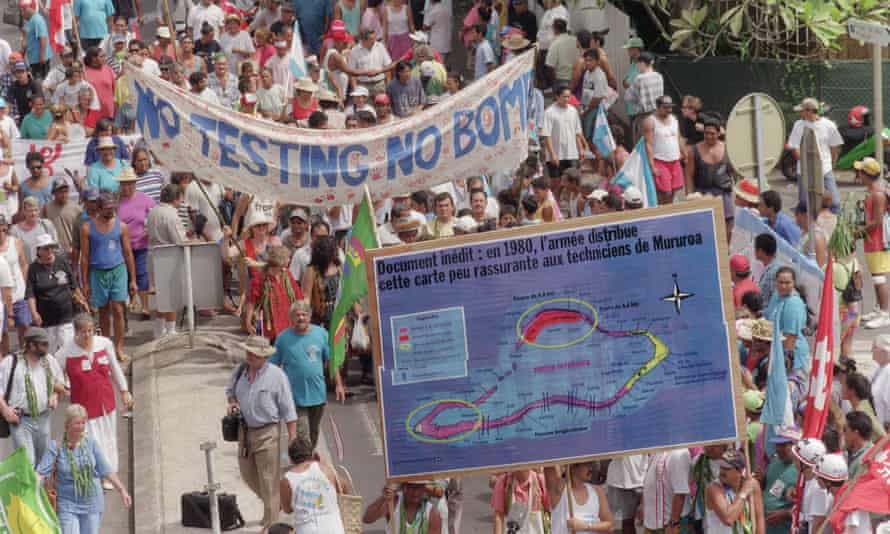
Anti-nuclear protesters march in Pape’ete, the capital of Tahiti in French Polynesia, in 1995, denouncing French nuclear testing on Mururoa atoll. Photograph: Romeo Gacad/AFPSupported by
Thu 21 Jan 2021 19.00 GMT
In 1995, thousands of people marched peacefully hand-in-hand through the Tahitian capital of Pape’ete. The palm-lined streets were awash with songs of protest.
On a nearby shorefront, Cook Islanders had just arrived by traditional voyaging canoe: a vaka. They were there to deliver a message of solidarity with their island neighbours, en route to the nuclear test site of Moruroa.
Now that nuclear weapons are illegal, the Pacific demands truth on decades of testing Read more
These warriors, sailing at the forefront of the Pacific’s fight against nuclear weapons, delivered their message of peaceful resistance with prayers, songs and hakas.
Tiếp tục đọc “Small but mighty, Pacific states have led the charge for banning nuclear weapons”





 CVD
CVD 