By Nguyen Quy November 17, 2020 | 07:58 am GMT+7 vnexpressWomen practice aerobics to beats coming off a smartphone at a Covid-19 quarantine camp in Lao Cai Province, northern Vietnam, February 17, 2020. Photo by VnExpress/Giang Huy.
Vietnam has moved up 12 places to 73rd out of 167 economies in a global prosperity ranking, ahead of several Asian peers.
With an overall score of 58.3 points, Vietnam ranked 13th out of 29 economies in the Asia-Pacific region, according to the Prosperity Index 2020 published Monday by London-based think tank Legatum Institute.
TĐH: Dear readers, for the sake of Vietnamese workers, please kindly promote this article far and wide. Thank you very much.
I am not an expert. Most certainly, I am not an economist. I just speak from the experience of being an ordinary, unskilled worker.
Le Thi Ly
Until a few years ago, as college students, my friend and I typically spent summer vacations as factory workers to earn some money and help parents pay our tuition fees.
Honestly, those three months felt like three centuries.
TĐH: There are many intangible benefits from foreign direct investments (FDI) – employment and jobs for the local population, increased education, increased professional skills, better law enforcement and legal process, better working and living conditions in general for the locality… Not just taxes. Tax is a small part of the benefit package. If we need to lower/exempt taxes to compete, then let’s do that to compete. If the entire gang of Asia or Southeast Asia countries agree not to use taxes to compete, then that is “an agreement not to compete,” in a national scene that would constitute a violation of antitrust (anti-competition) law, harmful to consumers and to the economy. The economic principle should not be different in the international scene. (But of course, we need to compete both in business environment and in financial benefits such as taxation and land lease).
By Dat Nguyen, Quynh Trang November 16, 2020 | 08:07 am GMT+7 vietnamnetWorkers seen in a foreign-invested air conditioner manufacturing plant in the northern province of Hung Yen in December 2019. Photo by VnExpress/Vien Thong.
Competing for foreign investment with tax incentives will end up hitting governments’ revenues and be a lose-lose situation for all ASEAN members, experts warn.
The average corporate income tax rate in Southeast Asia has fallen from 25.1 percent in 2010 to 21.7 percent this year, showing that countries are competing with one another in a “race to the bottom” by offering aggressive tax incentives to foreign multinationals, a recent report by Oxfam, a global organization working on poverty alleviation, and its partners said.
Mergers and acquisitions in Vietnam are forecast to change from the beginning of next year, when three amended laws will come into effect at the same time.
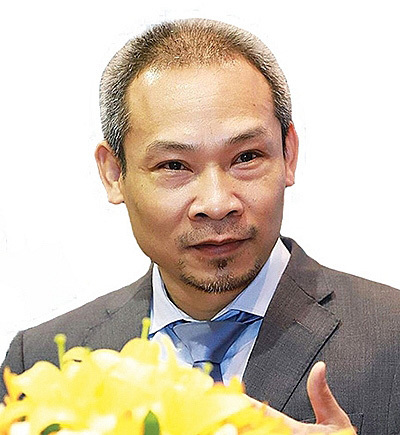
Deputy Director of the Central Institute of Economic Management Phan Duc Hieu, spoke with VIR’s Khanh An about impact of the laws on enterprises, investment, and securities on the M&A market.
Deputy Director of the Central Institute of Economic Management Phan Duc Hieu.
How do you estimate the impact of the amended laws on enterprises, investment, and securities on capital contributions and share purchases activities?
Following a proposal by 10 provinces, the Ministry of Investment and Trade (MOIT) wants to extend the deadline for FIT (Feed in Tariff) application because many wind power projects cannot become operational prior to the given date.
MOIT is consulting with relevant ministries and branches on its draft report to the Prime Minister on solutions to settle the problems of wind power projects.
On September 10, 2018, the Prime Minister released Decision 39 on wind power prices (not including VAT). EVN buys electricity from in-land wind power projects at VND1,927 per kwh (8.5 US cent), while the price of VND2.223 per kwn (9.8 cent) is applied to offshore wind power projects.
FILE PHOTO: Japanese Prime Minister Yoshihide Suga speaks to the media during a press conference in Jakarta, Indonesia, Oct 21, 2020. (Photo: Dita Alangkara/Pool via REUTERS)
TOKYO: Japanese Prime Minister Yoshihide Suga and his Australian counterpart, Scott Morrison, may agree a historic defence pact on Tuesday (Nov 17) that will closely align two key US allies in Asia as a counter to China’s growing influence in the region.
People wave Taiwanese flags during the National Day celebrations in Taipei, Taiwan, on Oct 10, 2018. (Photo: Reuters/Tyrone Siu)
16 Nov 2020 12:03PM(Updated: 16 Nov 2020 12:10PM) CNA
TAIPEI: Trade-dependent Taiwan has made “relatively” good progress towards joining the revamped version of the Trans-Pacific Partnership, but it is awaiting clearer rules on membership, the island’s chief trade negotiator said on Monday (Nov 16).
Peter Martin November 16, 2020, 9:38 PM GMT+7 Bloomberg
World could slide into catastrophe like World War I: Kissinger
Says Biden, Xi should agree not to resort to military conflict
Former U.S. Secretary of State Henry Kissinger said the incoming Biden administration should move quickly to restore lines of communication with China that frayed during the Trump years or risk a crisis that could escalate into military conflict.
“Unless there is some basis for some cooperative action, the world will slide into a catastrophe comparable to World War I,” Kissinger said during the opening session of the Bloomberg New Economy Forum. He said military technologies available today would make such a crisis “even more difficult to control” than those of earlier eras.
“America and China are now drifting increasingly toward confrontation, and they’re conducting their diplomacy in a confrontational way,” the 97-year-old Kissinger said in an interview with Bloomberg News Editor-in-Chief John Micklethwait. “The danger is that some crisis will occur that will go beyond rhetoric into actual military conflict.”
Vài năm trở lại đây, ở nước ta rộ lên thú chơi cây cảnh cổ thụ được khai thác từ rừng. Ban đầu, đây chỉ là trào lưu nhỏ lẻ của một bộ phận người đam mê cây cảnh, nhưng dần dần nó đã lan rộng trở thành “cơn lốc” triệt hạ, cưỡng bức cây rừng ở khu vực Tây Nguyên – Nam Trung bộ.
PUBLISHED FRI, NOV 13 202010:19 AM EST UPDATED FRI, NOV 13 202012:10 PM ESTSam Shead@SAM_L_SHEADCNBC
KEY POINTS
The U.K. government has rolled out new rules to protect Britain’s innovative companies from being snapped up by other nations.
But is it too little, too late? Arm was sold to Japan’s SoftBank in 2016 and DeepMind was sold to Google in 2014.
Even though DeepMind and Arm are no longer British in some people’s eyes, there are a number of other fast-growing tech companies that very much are.
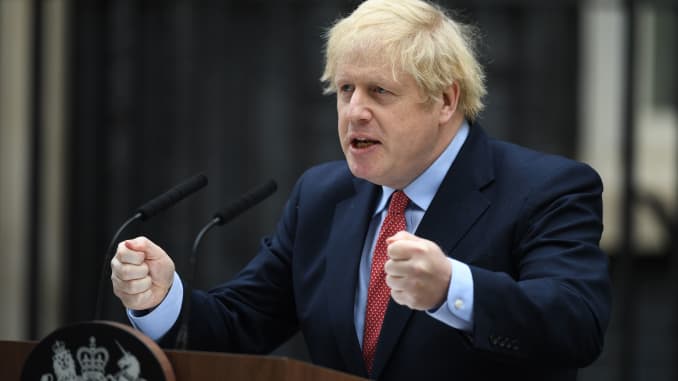
Britain’s Prime Minister Boris Johnson giving a statement in Downing Street in central London on April 27, 2020 after returning to work following more than three weeks off after being hospitalized with the Covid-19 illness.DANIEL LEAL-OLIVAS
LONDON – The U.K. government introduced new rules this week that are designed to protect Britain’s best and brightest companies from being gobbled up by other, potentially hostile, nations.
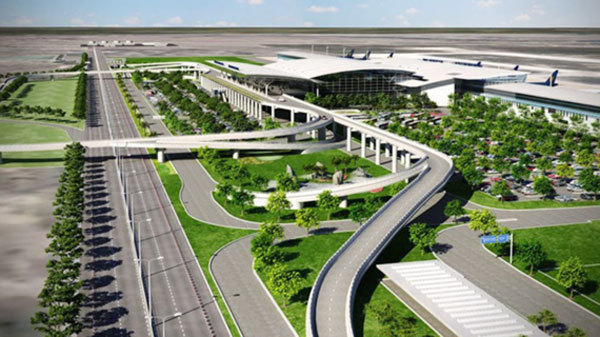
Deputy Prime Minister Trinh Dinh Dung has approved the first phase of the Long Thanh International Airport in the southern province of Dong Nai.
A rendering of the proposed Long Thanh International Airport in the southern province of Dong Nai. – Photo courtesy of Airports Corporation of Vietnam
The project has four component projects such as headquarters of State management agencies, flight management services, essential airport facilities, and other works.
Major works such as airport buildings, the aircraft apron, passenger terminals, and cargo terminals will be built by the Airport Corporation of Vietnam (ACV), which operates 21 airports across the country.
ACV has to raise funding for the construction.
The first phase of the airport, expected to cost more than US$4.6 billion, is projected to be completed by 2025.
The investment was approved by the National Assembly in 2017, which also issued a resolution on compensation and resettlement of and support for affected individuals and organisations.
Prime Minister Nguyen Xuan Phuc urged Dong Nai Province authorities to hand over the required lands in October so that construction of the airport could begin early next year.
He also set a deadline for assessing cleared land for compensation purposes by the end of this month.
The Ministry of Transport should work closely with the province to promptly resolve all challenges to ensure the project remains on schedule, he said.
The airport work requires more than 5,000ha of land and more than 364ha elsewhere to build two resettlement sites.
Around 4,800 households and 26 organisations are expected to be relocated to make way for it.
Spread over a total area of more than 5,580ha, the airport will straddle six communes in Long Thanh District. It is expected to cost VNĐ336.63 trillion ($14.47 billion), with the construction divided into three phases.
In the first phase one runway with a length of 4,000m, taxiways, an apron, and a passenger terminal with other auxiliary works involving a total floor area of 373,000 sq.m will be built to serve 25 million passengers and 1.2 million tonnes of cargo each year.
The airport is expected to have four runways, four passenger terminals and other auxiliary works to ensure a capacity of 100 million passengers and 5 million tonnes of cargo a year by 2040.
Tan Son Nhat International Airport in HCM City, the country’s largest, has been seriously overloaded for years, both in the air and on the ground.
The Ministry of Transport said Long Thanh International Airport is a key national project that would have a significant impact on the southern key economic region. VNS
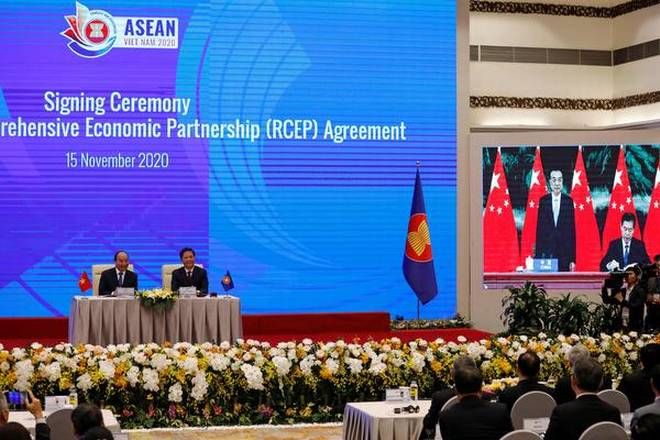
Vietnam’s Prime Minister Nguyen Xuan Phuc (L) sits next to Minister of Industry and Trade Tran Tuan Anh as they watch a screen showing Chinese Minister of Commerce Zhong Shan (R) signing next to Chinese Premier Li Keqiang during the virtual signing ceremony of the Regional Comprehensive Economic Partnership (RCEP) Agreement during the 37th ASEAN Summit in Hanoi, Vietnam November 15, 2020. | Photo Credit: Reuters
*Bài báo dưới bàn luận về vấn đề tách rời quyền sở hữu, hay tách sở hữu độc quyền trong ngành năng lượng tại châu Âu, dược khởi sướng từ đầu những năm 1990s cho đến những năm 2000s. Đây là một bước tiến giúp châu Âu có thị trường năng lượng tự do (liberal energy market) .
Tương tự, với Việt Nam, đây là một vấn đề phức tạp, và đã đến lúc đòi hỏi cần phải đầu tư cho các thảo thuận, nghiên cứu về phương tiện chính sách và hỗ trợ thực tiễn để tách rời quyền sở hữu trong thị trường năng lượng độc quyền nói chung và thị trường điện nói riêng. Đây là bước đưa Việt Nam đến một thị trường năng lượng minh bạch tự do và bền vững dưới sự quản lý tốt của nhà nước.
(Lời giới thiệu bởi T.S Đào Thu Hằng,)
Quá trình thúc đẩy tự do hóa thị trường điện thúc đẩy bởi Ủy ban châu Âu từ hai thập kỷ đang bước vào một giai đoạn mới trong cuộc tranh luận về quyền sở hữu và điều tiết cơ sở hạ tầng truyền tải năng lượng. Vấn đề trọng tâm của quá trình là loại bỏ các nhà vô địch quốc gia kết nối theo chiều dọc, tạo ra một thị trường sản xuất điện cạnh tranh và có các cơ quan quản lý mạnh và độc lập để giám sát các nhà độc quyền tự nhiên (natural monopolies) như các lưới điện cao áp. Ủy ban châu Âu, nói về cái gọi là gói thứ 3, nhìn nhận việc tách quyền sở hữu là yếu tố chính để hạn chế khả năng của các nhà sản xuất điện Châu Âu sử dụng quyền lực thị trường trong những tương tác kỹ thuật phức tạp giữa sản xuất, truyền tải và phân phối.
Cùng với nhau, các sắp xếp mới về quyền sở hữu, luật lệ đáng tin cậy về cơ sở hạ tầng (ERGEG +…) và một đơn vị giám sát thị trường có trình độ kỹ thuật cao (ACER…), là thành phần của gói biện pháp mới hiện đang được tranh luận giữa các bên có quyền lợi liên quan. Thị trường Điện 2008 của châu Âu sẽ là năm của “gói thứ ba”, gọi tắt trong nhiều báo cáo bằng thành phần chính của gói: Tách rời quyền sở hữu – Unbundling
“Unbundling – Tách rời”, một khái niệm kỹ thuật từ lúc đầu, đã đi vào từ vựng của công chúng rộng rãi hơn. Có vẻ là kỹ thuật, nhưng cuộc tranh luận trên thực tế là một tranh luận mang tính triết học cao. Đang được áp dụng và hiện thực hóa cho viễn thông và đường sắt, ngày nay Unbundling là đối tượng của các cuộc luận chiến quan trọng trong nội bộ châu Âu cho thị trường năng lượng. Sau khi trình bày tình trạng hiện tại của “dự án, cũng như các quyết định sẽ được thực hiện vào năm 2008 về cái gọi là ‘gói lập pháp thứ ba’ (xem thêm tại đây) “, các lập luận ủng hộ và phản đối sẽ là trọng tâm chính của bài báo này; một bài báo nỗ lực để tăng tính minh bạch, thay vì đưa ra quan điểm ủng hộ hoặc chống lại. Tiếp tục đọc “Tách rời Quyền Sở Hữu trong Thị Trường Năng Lượng: Khái Quát về các điểm tranh luận nảy lửa ở Châu Âu”→
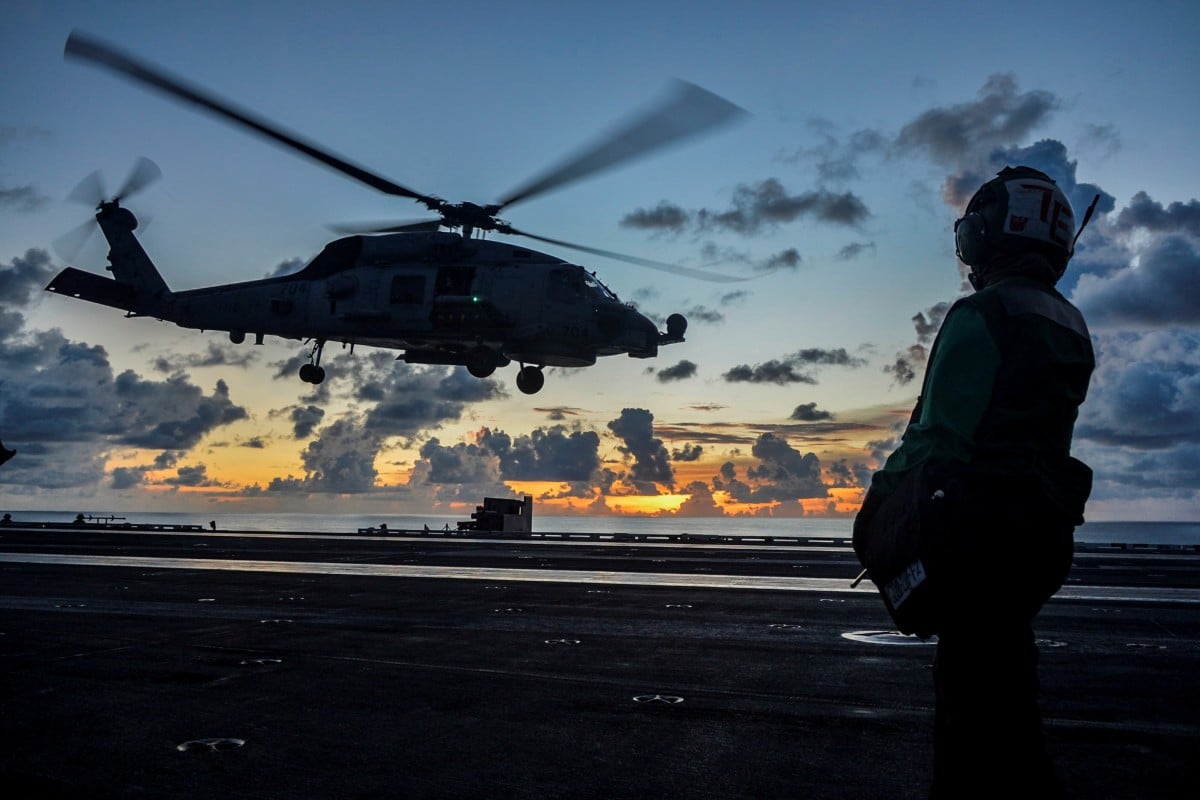
A Sea Hawk helicopter lifts off from the American aircraft carrier USS Ronald Reagan during an exercise in the South China Sea in July. Photo: Reuters
The United States is expected to take a more contained approach to the South China Sea under Joe Biden, but the disputed waters will remain a potential hotspot in the relationship between Beijing and Washington, observers say.“I think he [Biden] will take a different approach to [US President Donald] Trump,” said Wu Shicun, head of the National Institute of South China Sea Studies, which advises the government.“He is likely to pay more attention to the South China Sea but his policies will be more balanced and more contained.”
One possible change is a reduction in the number of freedom of navigation operations conducted by the US Navy in the sea, Wu said.https://www.youtube.com/embed/BcMR2ZCcheI
The patrols have been a regular feature of US military operations since Barack Obama was in the White House but became more frequent under Trump, who gave more flexibility to the Pentagon to plan its naval patrol schedules in the contested waters.ADVERTISING
American forces have conducted eight freedom of navigation operations this year, the same number as in 2019, but up from six in 2018 and four in each of the previous three years. The US says the manoeuvres are necessary to maintain balance in the region, but Beijing regards them as provocative and has condemned them.
“The US military operations in the South China Sea have affected Sino-US relations and increased tensions,” Wu said.
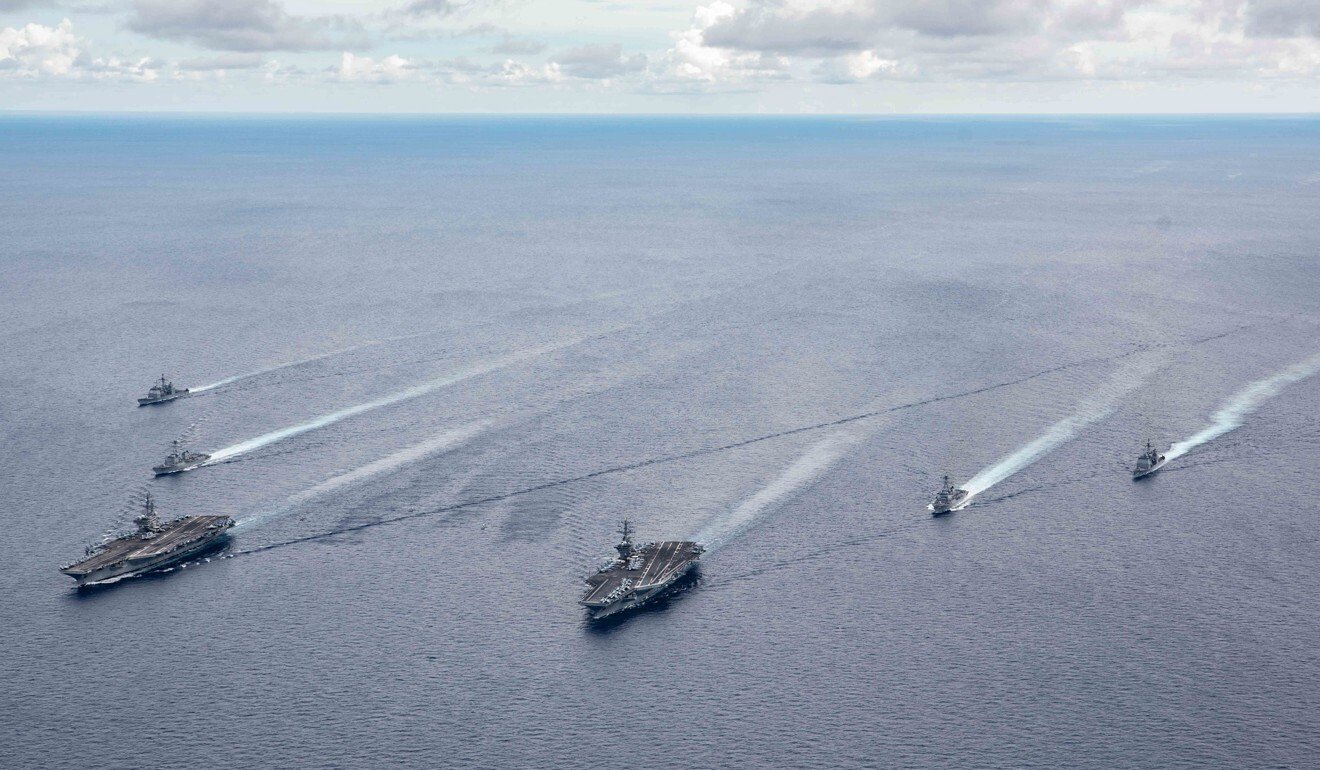
US aircraft carriers and their strike groups take part in a drill in the South China Sea in July. Photo: EPA-EFELe Hong Hiep, a fellow at the ISEAS-Yusof Ishak Institute in Singapore, said the people Biden chose to fill key defence positions would affect Washington’s relationship with Beijing in the South China Sea, but whoever they were, the tensions were unlikely to go away any time soon.
EVERY OTHER SATURDAYSCMP Global Impact NewsletterSIGN UP NOWBy registering, you agree to our T&C and Privacy Policy
Among the front-runners for the post of defence secretary is Michele Flournoy, who served as undersecretary of defence for policy under Obama and is known for advocating a tough stance on China.
“The South China Sea has become an important battleground for US-China strategic competition, where the US can mobilise countries in the region against Beijing, using China’s excessive territorial claims as the rallying call,” Le said.
“As such, under the Biden administration, the US and its allies are likely to continue to maintain or even strengthen their involvement in the South China Sea.”https://www.youtube.com/embed/8eqtl0ym1p8
Meanwhile, Beijing has been stepping up its engagement with its Southeast Asian neighbours.At a video meeting with the Association of Southeast Asian Nations on Thursday, Chinese Premier Li Keqiang said boosting relations with the 10-member bloc was one of Beijing’s priorities.He also called for the negotiations of a code of conduct for the South China Sea to be expedited. In 2018, Li proposed a three-year timeline to create such a code. A second reading of the negotiating draft began in January but the process was halted by the Covid-19 pandemic.
Wu said that Washington’s policy to reject most of Beijing’s territorial claims in the South China Sea, the political turmoil in Malaysia, and possible leadership changes in Vietnam and the Philippines over the next two years would complicate the negotiation process.
Le said that despite those hurdles, Beijing was keen to finalise the code.“[A] deepening US-China rivalry may encourage China to accelerate the negotiations,” he said.
“On the other hand, it may also prompt Washington to back nations to resist some of China’s key demands, such as excluding countries from outside the region from conducting military exercises or marine economic activities in the South China Sea.”
The European Union (EU) needs China, given their close economic ties. And China needs the EU, particularly given the sharp escalation of tensions between Beijing and Washington.
But ties are starting to fray given recognition in most European capitals that China’s economic model is not compatible with theirs, that there are security risks from China’s increasingly assertive global outreach, and that China does not place the same value on human rights as they do. Tiếp tục đọc “China-EU relations: Can the EU have its cake and eat it too?”→

 Women practice aerobics to beats coming off a smartphone at a Covid-19 quarantine camp in Lao Cai Province, northern Vietnam, February 17, 2020. Photo by VnExpress/Giang Huy.
 Workers seen in a foreign-invested air conditioner manufacturing plant in the northern province of Hung Yen in December 2019. Photo by VnExpress/Vien Thong.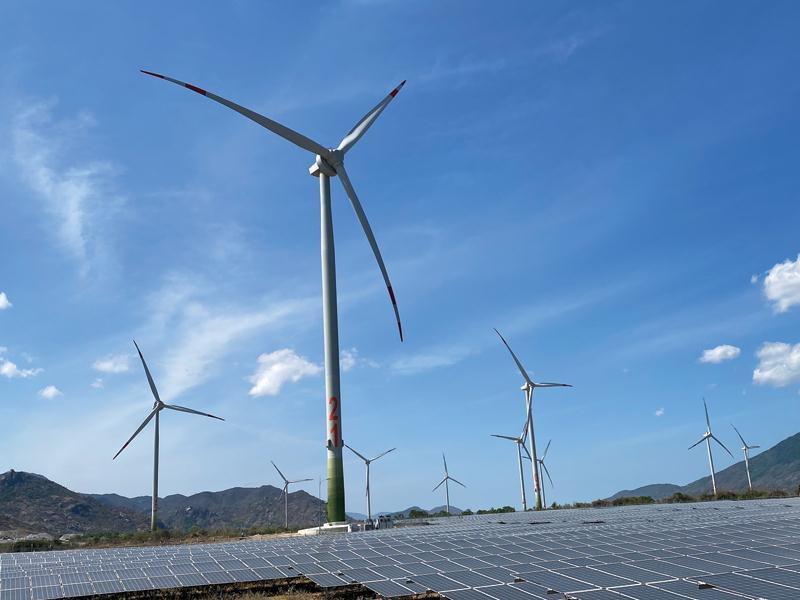




 CVD
CVD