Sự thật ‘đau lòng’ về ‘Đô thành Sài Gòn’ xưa – 2 kỳ

***

Sự thật ‘đau lòng’ về ‘Đô thành Sài Gòn’ xưa (kỳ 1)

datviet – Thứ Sáu, 01/04/2011

Sau khi loại Bảo Đại khỏi vũ đài chính trị Nam Việt Nam, Ngô Đình Diệm ký sắc lệnh 143-NV ngày 22/10/1956 đổi “đô thành Sài Gòn – Chợ Lớn” thành “Đô thành Sài Gòn”. Diệm tiếp tục ra sắc lệnh số 74-TTP ngày 23-3-1959 ấn định quy chế quản trị Sài Gòn: Tổng thống trực tiếp bổ nhiệm Đô trưởng và các quận trưởng trong đô thành. Bốn ngày sau, Diệm lại ra nghị định số 110-NV chia lại các quận. Từ sáu quận, Sài Gòn được chia thành tám quận: các quận 1, 2, 3 giữ như cũ, song quận 4 (cũ) chia đôi thành quận 5 và quận 8; quận 5 (cũ) chia thành quận 6 và quận 7; quận 6 (cũ) đổi tên thành quận 4. Toàn đô thành có 41 phường..

Kết quả hình ảnh cho Chợ Bến Thành xưa. Ảnh tư liệuChợ Bến Thành xưa. Ảnh tư liệu Tiếp tục đọc “Sự thật ‘đau lòng’ về ‘Đô thành Sài Gòn’ xưa – 2 kỳ”

Quỹ Giáo dục Việt Nam hỗ trợ gần 700 du học sinh Việt theo học ở Mỹ

15:48′ 26/03/2018 (GMT+7)   |  

(VnMedia) – Quỹ Giáo dục Việt Nam đã hỗ trợ gần 700 du học sinh Việt Nam theo học tại các trường đại học Hoa Kỳ, trong đó có nhiều người đã đạt bằng tiến sỹ trong các lĩnh vực tiên tiến về khoa học, công nghệ, kỹ sư, toán học, nông nghiệp, y dược… trong 15 năm qua.

Đại sứ Việt Nam tại Hoa Kỳ Phạm Quang Vinh (đứng thứ ba tính từ phải sang) tại buổi hội thảo.

Trong các ngày 22 – 24/03/2018 tại thành phố Arlington, bang Virginia, Quỹ Giáo dục Việt Nam (Viet Nam Education Foundation – VEF) đã tổ chức hội thảo nhân 15 năm hoạt động, cũng là năm kết thúc chương trình của Quỹ. Tiếp tục đọc “Quỹ Giáo dục Việt Nam hỗ trợ gần 700 du học sinh Việt theo học ở Mỹ”

Bàn tay tình báo nước ngoài trong vụ di cư 1954

VN Youtuber – Xuất bản 18 thg 3, 2017

Ngày nay trên nhiều trang mạng, người ta cố tìm cách lý giải sự kiện giáo dân miền Bắc di cư vào miền Nam Việt Nam như là một sự kiện để chứng tỏ là chính quyền Việt Minh tàn nhẫn độc ác. Thế nhưng thực chất sự kiện này có bàn tay của tình báo nước ngoài tác động

17 Năm Trong Các Trại Cải Tạo – Hồi ký KALE

Giới Thiệu Về Tác Giả KALE:

  • Tên thật là Lê Anh Kiệt
  • Sinh năm 1945, đã trãi qua gần như cả tuổi trẻ trong chiến tranh và tù đày.
  • Không có tham vọng viết văn chỉ viết để diển tả những suy nghĩ, những quan sát về thân phận mình và vận mạng đất nước sau những biến đổi thăng trầm của lịch sử.
  • Tốt nghiệp trường Đại Học Khoa Học Sài Gòn, từng làm giáo sư Toán Lý Hoá đệ nhị cấp tại các trường trung học tư thục như Nguyễn Bá Tòng (Sài Gòn và Gia Định), Hoàng Gia Huệ (Trung Chánh), Khiết Tâm (Biên Hoà), Trần Hưng Đạo (Tổng Tham Mưu).
  • Phục vụ tại Phủ Đặc Ủy Trung Ương Tình Báo VNCH.
  • Sau ngày 30 tháng 4 năm 1975, đi tù cải tạo của cho đến năm 1992.
  • Sang Mỹ năm 1993 và hiện định cư ở tiểu bang Indiana.
  • Về hưu từ năm 2012

17 Năm Trong Các Trại Cải Tạo CSVN >>

Vietnam War in photos, Part III: Hands of a Nation

Part I: Early Years and Escalation
Part II: Losses and Withdrawal
Part III: Hands of a Nation

The Atlantic, Alan Taylor, Apr 1, 2015
26 Photos

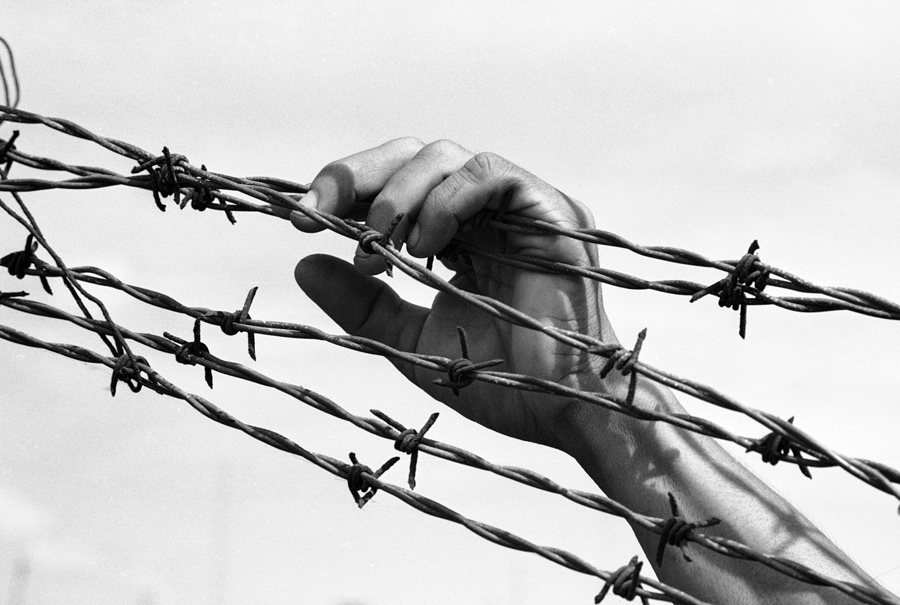
The photojournalist Eddie Adams, who covered the Vietnam War for the Associated Press, not only captured the action and chaos but took the time to get up close to the Vietnamese people whenever he could. In 1968, he undertook a project called “Hands of a Nation,” taking intimate photos of the hands of Vietnamese soldiers and civilians. Their hands were busy doing so many things then: reaching out for medicine, grasping weapons, straining against bindings, soothing, praying, rebuilding. Adams photographed hands young and old, belonging to the healthy and the wounded, the living and the dead.
Hints: View this page full screen.

Vietnam War in photos, Part II: Losses and Withdrawal

Part I: Early Years and Escalation
Part II: Losses and Withdrawal
Part III: Hands of a Nation

The Attlantic, Alan Taylor, Mar 31, 2015.
50 Photos

Early in 1968, North Vietnamese troops and the Viet Cong launched the largest battle of the Vietnam War, attacking more than 100 cities simultaneously with more than 80,000 fighters. After brief losses, U.S. and South Vietnamese forces regained lost territory, and dealt heavy losses to the North. Tactically, the offensive was a huge loss for the North, but it marked a significant turning point in public opinion and political support, leading to a drawdown of U.S. troop involvement, and eventual withdrawal in 1973. This photo essay, part two of a three-part series, covers the war years between 1968 and 1975.

Warning: Several of these photographs are graphic in nature.

Hints: View this page full screen.

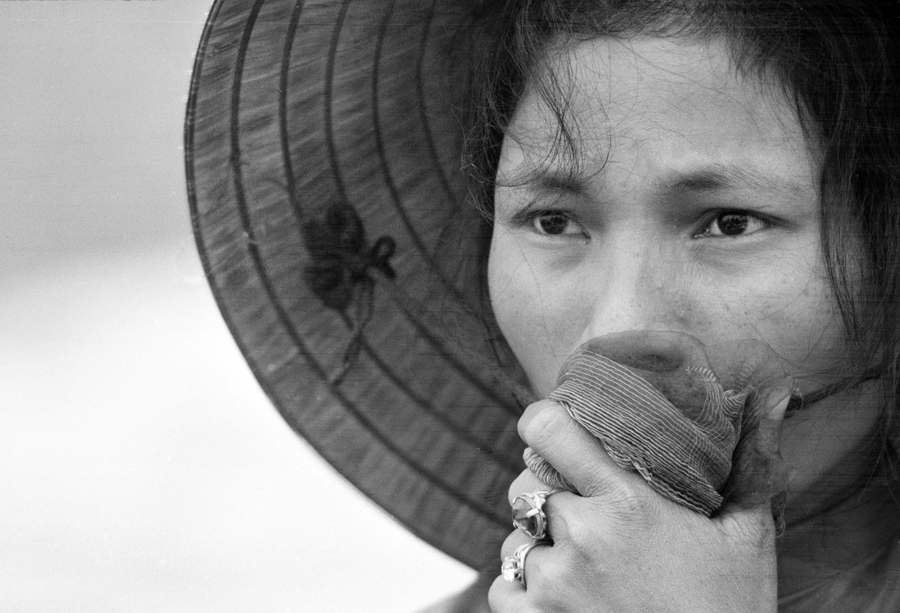
  • A young South Vietnamese woman covers her mouth as she stares into a mass grave where victims of a reported Viet Cong massacre were being exhumed near Dien Bai village, east of Hue, in April of 1969. The woman’s husband, father, and brother had been missing since the Tet Offensive, and were feared to be among those killed by Communist forces.

    Tiếp tục đọc “Vietnam War in photos, Part II: Losses and Withdrawal”

Vietnam War in photos, Part I: Early Years and Escalation

Part I: Early Years and Escalation
Part II: Losses and Withdrawal
Part III: Hands of a Nation

The Atlantic, Alan Taylor, Mar 30, 2015.
46 Photos

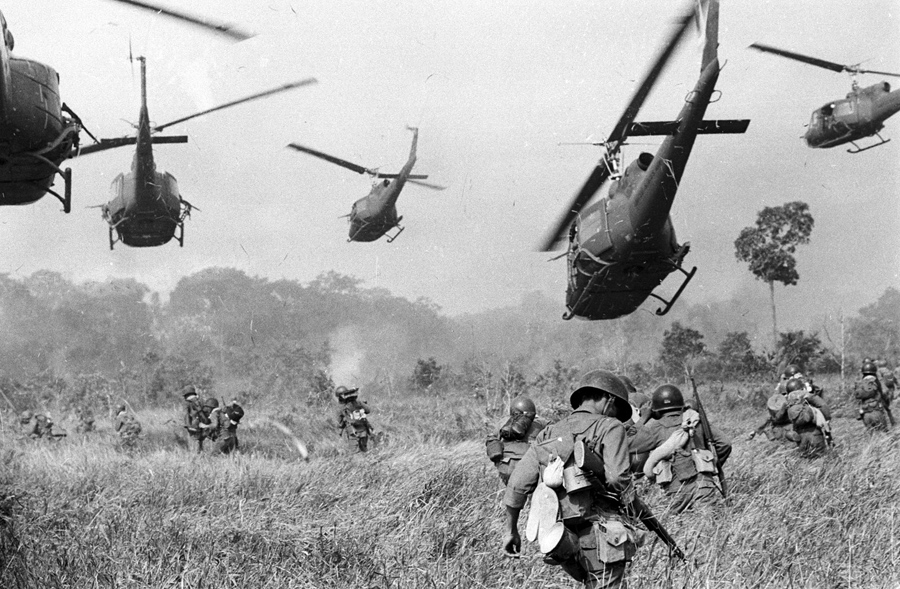
Fifty years ago, in March 1965, 3,500 U.S. Marines landed in South Vietnam. They were the first American combat troops on the ground in a conflict that had been building for decades. The communist government of North Vietnam (backed by the Soviet Union and China) was locked in a battle with South Vietnam (supported by the United States) in a Cold War proxy fight. The U.S. had been providing aid and advisors to the South since the 1950s, slowly escalating operations to include bombing runs and ground troops. By 1968, more than 500,000 U.S. troops were in the country, fighting alongside South Vietnamese soldiers as they faced both a conventional army and a guerrilla force in unforgiving terrain. Each side suffered and inflicted huge losses, with the civilian populace suffering horribly. Based on widely varying estimates, between 1.5 and 3.6 million people were killed in the war. This photo essay, part one of a three-part series, looks at the earlier stages of U.S. involvement in the Vietnam War, as well as the growing protest movement, between the years 1962 and 1967.

Warning: Several of these photographs are graphic in nature.

Hints: View this page full screen.

21 Iconic Photos of the Vietnam War

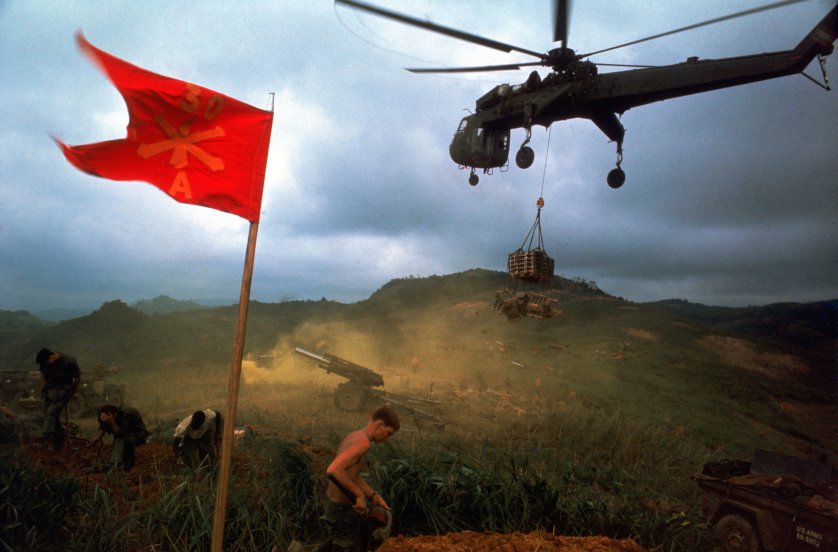
An American 1st Air Cavalry Skycrane helicopter, during Operation Pegasus in Vietnam in 1968, delivering ammunition and supplies into a US Marine outpost besieged by North Vietnamese troops at the forward base of Khe Sanh. (Larry Burrows—The LIFE Picture Collection/Getty Images).

HISTORY

See 21 Iconic Photos of the Vietnam War

TIME Photo
Apr 30, 2015

It has been 40 years since the spring day when the last U.S. helicopters lifted up and, shortly after, the North Vietnamese army entered Saigon, deciding a conflict that had raged for years. News photographs from the time showed the world what was going on, from a country full of death in all its gruesome forms to peaceful protests across the ocean. Despite their age, those images have not lost their impact. Tiếp tục đọc “21 Iconic Photos of the Vietnam War”

1965-1975 Another Vietnam: Unseen images of the war from the winning side

1972

Activists meet in the Nam Can forest, wearing masks to hide their identities from one another in case of capture and interrogation. From here in the mangrove swamps of the Mekong Delta, forwarding images to the North was difficult. “Sometimes the photos were lost or confiscated on the way,” said the photographer.

Image: Vo Anh Khanh/Another Vietnam/National Geographic Books

Tiếp tục đọc “1965-1975 Another Vietnam: Unseen images of the war from the winning side”

Vietnam marks 50 years since U.S. massacre at My Lai

QUANG NGAI, Vietnam (Reuters) – Vietnam marked 50 years since the My Lai massacre on Friday in a memorial ceremony at the site of the killings that was attended by survivors of the massacre, their families, and around 60 U.S. Vietnam War veterans and anti-war activists.


Performers take part during the 50th anniversary of the My Lai massacre in My Lai village, Vietnam March 16, 2018. REUTERS/Kham

American soldiers killed 504 people on March 16, 1968, in Son My, a collection of hamlets between the central Vietnamese coast and a ridge of misty mountains, in an incident known in the West as the My Lai Massacre.

Tiếp tục đọc “Vietnam marks 50 years since U.S. massacre at My Lai”