8 người phụ nữ săn thần chết

19/10/2014 16:11 GMT+7

TT – “Bom mìn là thần chết, nhưng công việc của chúng tôi là đi tìm thần chết ấy.

Rà phá bom, mìn luôn đầy rẫy hiểm nguy

14 năm lăn lộn khắp vùng rừng rú của tỉnh Quảng Trị này, chúng tôi đã phát hiện và phá hủy hàng ngàn quả bom, quả đạn, mìn và các vật liệu chưa nổ” – chị Trần Thị Thảo, 39 tuổi, đội trưởng đội 1 của dự án MAG Quảng Trị (viết tắt của Mines Advisory Group – nhóm cố vấn bom mìn do Vương quốc Anh tài trợ), nói.

Trước khi ra hiện trường thực hiện phóng sự này, quy định bắt buộc chúng tôi phải đăng ký nhóm máu của mình với nhân viên y tế để xử lý cấp cứu nếu xảy ra rủi ro. Trên tấm bảng thông tin ở các điểm rà phá bom mìn luôn nổi bật sơ đồ chuyển thương ngắn nhất đến các bệnh viện. Tiếp tục đọc “8 người phụ nữ săn thần chết”

Con đường lên nắm quyền của Ngô Đình Diệm, 1945-54 (3 Phần)

Con đường lên nắm quyền của Ngô Đình Diệm, 1945-54 (P1)

Posted on by NCQT

ngo-dinh-diem1

Nguồn: Edward Miller “Vision, Power and Agency: The Ascent of Ngô Ðình Diệm, 1945–54“, Journal of Southeast Asian Studies, 35 (3), October 2004, pp 433–458.

Biên dịch: Hoài Phi & Vy Huyền

Tóm lược: Bài viết này phản bác lại những diễn giải hiện có về Ngô Ðình Diệm bằng cách xem xét những hoạt động của ông trong vòng một thập kỷ trước khi ông trở thành lãnh đạo của miền Nam Việt Nam vào năm 1954. Ngô Ðình Diệm đã chủ động tìm cách nắm quyền trong những năm đó, và ông thành công chủ yếu nhờ nỗ lực của chính mình và của những đồng minh người Việt của ông. Cùng thời gian đó, ông và em trai là Ngô Ðình Nhu cũng phác thảo ra viễn kiến đặc biệt về quá trình hiện đại hoá, so rõ cho chúng ta thấy chiến lược xây dựng quốc gia ở miền Nam Việt Nam sau năm 1954. Tiếp tục đọc “Con đường lên nắm quyền của Ngô Đình Diệm, 1945-54 (3 Phần)”

Mine Risk Education

Team Leader Truong Cong Vinh taking notes from Hoa and Phien, ninth graders at Trieu Van School, whose information guided a RENEW team to four different locations littered with more than 500 wartime unexploded ordnance (UXO).

LM – The main objective of Project RENEW’s Mine Risk Education is the risk of ERW accidents among chilren and adults is reduced and eventually eliminated through education, information, and public awareness in support of EOD quick response.

World War I and World War II-era bombs are still found by the thousands in European countries, even today. According to Spiegel Online, in Germany alone, more than 2,000 tons of aerial bombs and all sorts of munitions ranging from hand grenades and tank mines to artillery shells are recovered each year.  So it is impossible – and not necessary –  to clean up every bomb and mine in Vietnam.  The real goal must be to make Quang Tri safe ­– which means placing priority on removing cluster bombs, grenades, mortar and artillery rounds, and other small ordnance on the ground or just under the surface – the main items that kill and injure children, farmers, and other adults. Tiếp tục đọc “Mine Risk Education”

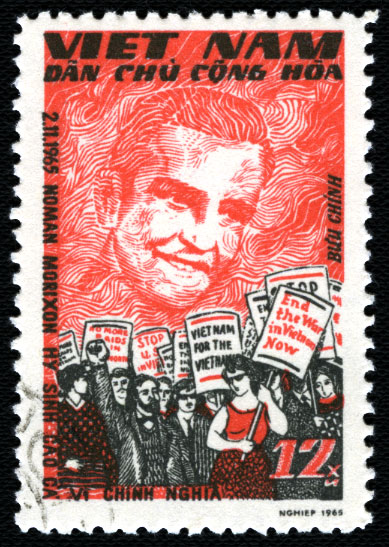
Norman Morrison Commemoration on the 50th Anniversary of His Sacrifice On Behalf of the Vietnamese

 Brian’s Blog

November 2​, 2015Morrison-Stamp

Fifty years ago today, November 2, 2015, at about 5:20 p.m., a 31-year-old Quaker named Norman Morrison immolated himself 40 feet from the window of US Secretary of War Robert McNamara’s office at the Pentagon. I was a law student in Washington, DC at the time.

Most US Americans know little of our nation’s history and seldom reflect on the moral issues relating to its genocidal origins and imperial nature. And, it seems, they avoid at all costs reflection on anything that may produce “negative” feelings (i.e., the truth). Tiếp tục đọc “Norman Morrison Commemoration on the 50th Anniversary of His Sacrifice On Behalf of the Vietnamese”

170,000 người thoát khỏi nguy cơ bị phơi nhiễm dioxin

19-03-2015 image

UNDP – Hà Nội, ngày 19 tháng 3 năm 2015 – 170,000 người dân sống ở khu vực gần sân bay Biên Hòa ở miền Nam và các vùng lân cận của căn cứ không quân Phù Cát ở miền Trung sẽ không còn phải đối mặt với nguy cơ bị phơi nhiễm dioxin.

Văn phòng Ban Chỉ đạo Quốc gia (Văn phòng 33) và Chương trình Phát triển Liên Hợp Quốc (UNDP) đã công bố kết quả này trong hội nghị tổng kết dự án tại Hà Nội vào ngày 19 tháng 3 năm 2015. Tại hội nghị, các kết quả chính của dự án “Xử lý dioxin tại các vùng ô nhiễm nặng ở Việt Nam” đã được chia sẻ với Chính phủ và các đối tác phát triển cũng như các chuyên gia, các nhà nghiên cứu trong nước và quốc tế. Tiếp tục đọc “170,000 người thoát khỏi nguy cơ bị phơi nhiễm dioxin”

Cluster bomb is safely destroyed so construction of a new clan temple in Quang Tri Province can continue

Hai Lang District, Quang Tri Province – 30 October 2015

The O Lau River flows through Hai Lang District in Quang Tri Province.  Along its banks is historic Luong Dien Village, one of the oldest villages in the province. In 1508, people migrating from Tonkin settled in this area and founded a small village named Ke Lang.  Called Luong Phuc in the 18th century, the village was chosen by the Nguyen Lords as the location to be their headquarters and army base for their conquest of the south. Luong Phuc was again renamed as Luong Dien in 1804; two years after Emperor Gia Long – the first king of the Nguyen Dynasty – ascended the throne. Tiếp tục đọc “Cluster bomb is safely destroyed so construction of a new clan temple in Quang Tri Province can continue”

A triple amputee who overcame tragedy and built a new life

landmines.org.vn – Trieu Phong, Quang Tri Province, 10 September 2015 – On the road that leads to Ai Tu Village of Trieu Ai Commune, a man is hurrying home on his three-wheel bike.  He has finished tending his cows, and now he’s coming home to have lunch with his family.  He’s bringing fruit he just bought at the market.

As his wife prepares lunch, 44-year-old Hoang Than talks with his two children, 9-year-old son Hoang Anh and 6-year-old daughter Hoang Thi Dieu Anh, about their first day at school. The kids just started school after their summer break. The photo above is a picture of happiness, father and children together.

However, it was not always this way.  Than has overcome much tragedy in his life. Tiếp tục đọc “A triple amputee who overcame tragedy and built a new life”

When the U.S. dropped barrel bombs in war

Washington Post
By Ishaan Tharoor February 16

People inspect damage at a site hit by what activists said were barrel bombs dropped by forces loyal to Syria’s President Bashar al-Assad in Aleppo’s district of al-Sukari on March 7, 2014. (Hosam Katan/Reuters)

“It’s a childish story that keeps repeating in the West,” smiled Syrian President Bashar al-Assad, in an interview with the BBC last week. He was dismissing allegations that his regime is attacking Syrian civilians with barrel bombs, crude devices packed with fuel and shrapnel that inflict brutal, indiscriminate damage. Tiếp tục đọc “When the U.S. dropped barrel bombs in war”

The Lethal Legacy of the Vietnam War

Fifty years after the first US troops came ashore at Da Nang, the Vietnamese are still coping with unexploded bombs and Agent Orange.

By George Black
The Nation
February 25, 2015

On a mild, sunny morning last November, Chuck Searcy and I drove out along a spur of the old Ho Chi Minh Trail to the former Marine base at Khe Sanh, which sits in a bowl of green mountains and coffee plantations in Vietnam’s Quang Tri province, hard on the border with Laos. The seventy-seven-day siege of Khe Sanh in early 1968, coinciding with the Tet Offensive, was the longest battle of what Vietnamese call the American War and a pivotal event in the conflict. By the off-kilter logic of Saigon and Washington, unleashing enough technology and firepower to produce a ten-to-one kill ratio was a metric of success, but the televised carnage of 1968, in which 16,592 Americans died, was too much for audiences back home. After Tet and Khe Sanh, the war was no longer America’s to win, only to avoid losing. Tiếp tục đọc “The Lethal Legacy of the Vietnam War”

VEF – Quỹ Giáo dục Việt Nam lấy tiền từ đâu?

Mark Ashwill là nhà giáo dục người Mỹ, tiến sĩ, và cựu giám đốc của Học viện Giáo dục Quốc tế – International Institute for Education (IIE) – , trước khi ông và vợ ông sáng lập Capstone Việt Nam vào năm 2009, một cơ sở tư vấn giáo dục đặt tại Hà Nội. Khi Mark diễn thuyết tại một Diễn đàn Giáo dục cấp cao Việt Nam – Hoa Kỳ tại Hà Nội, ông rất ngạc nhiên khi thấy gần như không ai trong số 150 thính giả biết rằng một chương trình học bổng rất nhiều danh tiếng – Quỹ Giáo dục Việt Nam (VEF) – được cho rằng được bảo trợ bởi Chính phủ Hoa Kỳ – thực ra là chính do Chính phủ Việt Nam gây quỹ bằng một thỏa thuận hoán đổi nợ. Chính phủ Việt Nam đã đồng ý, như một phần của tiến trình bình thường hóa quan hệ 20 năm trước, để trả lại khoản nợ 146 triệu USD trong nông nghiệp và các khoản nợ khác mà Mỹ đã cấp cho bên bại trận – Chính quyền Sài Gòn. Với khoản nợ và khủng hoảng của Hy Lạp gần đây, chi tiết của điều khoản Việt Nam trả nợ cho Mỹ dưới đây do Mark Ashwill đưa ra có thể khiến nhiều người Mỹ cũng như người Việt Nam bất ngờ.

11-29-2010 http://markashwill.com/2010/11/25/vef-from-vietnam-with-money/

VEF: Tiền đến từ Việt Nam Tiếp tục đọc “VEF – Quỹ Giáo dục Việt Nam lấy tiền từ đâu?”

Mine Action Alert: Wartime ordnance explosion kills farmer, father of three, near the former DMZ

Project RENEW
Gio Linh, Quang Tri (25 June 2015)

An explosion of wartime ordnance on Tuesday afternoon killed a 42-year-old farmer and father of three young children in Trung Son Commune of Gio Linh District, Quang Tri Province.  The exact circumstances of the tragedy are unknown.

Tiếp tục đọc “Mine Action Alert: Wartime ordnance explosion kills farmer, father of three, near the former DMZ”