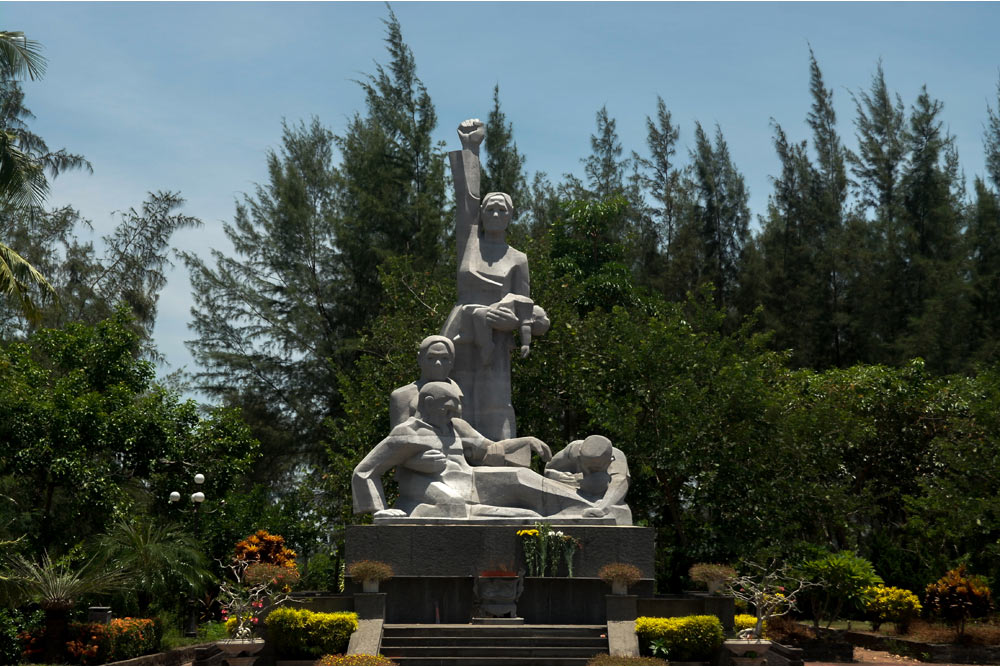
My Lai Massacre Anniversary

    TĐH: Below is an article written by Mike Hastie, an American Army medic who started his service in Vietnam in 1970, two years after the Mỹ Lai Massacre happened. Mike has been raising funds to support My Lai Massacre Memorial and the last time he visited My Lai was on April 5-6, 2016. He wrote this article on the occasion of the 49th Anniversary of the Massacre.
    These articles by American veterans about Mỹ Lai have always been some education for me. They are always full of pain, anger, shame and guilt, so full and fresh as if everything has just happened yesterday. And that always amazes me about the American soul.
    We Vietnamese don’t keep things that long. We may talk about an event, but always with a distance between us and it, more like a history lesson than a fresh wound. I teach my Buddhist students non-attachment: “Do not grasp onto anything. All things – good or bad, happy or sad, rewarding or punishing – are simply fleeting clouds sailing through the blue transparent permanent sky which is our Buddha heart.” But these veterans’ letters, always fresh in anguish, show me more than often the depth and the purity in the American heart. Though I would still say: “Don’t grasp onto anything. Let go”.
    This article is about misery but also about healing.  It is a history lesson and a lesson about the human heart.
    After Mike’s article is a comment from our friend Chuck Searcy.


My Lai Massacre Anniversary

Today, March 16, 2017, is the 49th anniversary of the My Lai Massacre, located in Quang Ngai Province, Vietnam.

It was Saturday morning, March 16, 1968, when approximately 115 U.S. Army soldiers of the Americal Division’s Charlie Company, 1st Battalion, 20th Infantry, landed in helicopters just outside the village of My Lai 4. Over the course of the next four hours, these American soldiers, and their Military High Command, who were flying overhead in helicopters observing the massacre, took part in a horror show far beyond the human imagination. They took the term “War Crimes” and added a butcher shop to the equation of morbid extermination. In essence, they became a U.S. version of the final solution. They committed an act of barbarity that would redefine the war in Vietnam. It would take years to decipher what happened that day, as denial is the elixir that protects us from experiencing national shame. It is these two words, ” National Shame,” that continues to hide the truth of what really happened in Southeast Asia. Tiếp tục đọc “My Lai Massacre Anniversary”

It’s payback time, America

By Calvin Godfrey   March 13, 2017 | 02:18 pm GMT+7

It's payback time, America

Visitors learn about the Vietnam War at a museum in Ho Chi Minh City in a file photo taken in March 2015. Photo by Minh Le

A diplomatic kerfuffle in Phnom Penh reminds us that the U.S. owes Vietnam $25.7 billion.

Last week, for seemingly no reason whatsoever, an anonymous U.S. State Department official made the strongest argument to date for Donald Trump to make good on wartime reparations promised to Vietnam by his political idol, Richard Nixon.

During Trump’s skinny days, he flew to Houston to attend a birthday party for a bankrupt Texas governor that was attended by the ex-president. Years later, Nixon wrote Trump a letter, urging him to make a play for the White House — a document Trump cherishes even today.

One wonders what Trump might make of another Nixon correspondence, one he penned at the height of his powers, to Vietnamese Prime Minister Pham Van Dong promising roughly $4.7 billion in wartime reconstruction aid without political conditions.

Tiếp tục đọc “It’s payback time, America”

Fury in Cambodia as US asks to be paid back hundreds of millions in war debts

    I forwarded this first to a delegation of Veterans For Peace who are now touring Viet Nam for 17 days, and I am accompanying them. They have seen some of the terrible legacies of the war in Viet Nam — consequences very similar to what neighboring Laos and Cambodia have experienced.  So this article has special resonance for them.

    It is also a reminder of the hard bargain the U.S. insisted upon during negotiations with Viet Nam which led to normalization of diplomatic relations in 1995.  The current government of Viet Nam was required to repay an old debt of the Saigon regime which collapsed in 1975, loans which had been provided during the war totaling some $145 million US dollars.  The Vietnamese eventually agreed, and repaid the first installments totaling about $15 million before then-Sen. John Kerry and Sen. John McCain intervened (and rightly so, in the opinion of many veterans) with congressional action which converted that debt to an “education” fund to provide study opportunities for Vietnamese students in the U.S. and American students in Viet Nam.  That was better than an outright repayment, of course — particularly when U.S. humanitarian assistance at that time was less than $4 million a year, for efforts related to UXO cleanup and disability programs that might bring some relief to families facing the awful consequences of Agent Orange.

    Sometimes simple fairness and justice, common decency, and morality must take precedence over the U.S. government’s bookkeeping requirements.  (It might occur to some of us that the U.S. Ambassador in Cambodia should be reminded of that.)
    CS

MARCH 11 201

Fury in Cambodia as US asks to be paid back hundreds of millions in war debts


Lindsay Murdoch

Half a century after United States B-52 bombers dropped more than 500,000 tonnes of explosives on Cambodia’s countryside Washington wants the country to repay a $US500 million ($662 million) war debt.

The demand has prompted expressions of indignation and outrage from Cambodia’s capital, Phnom Penh.

Over 200 nights in 1973 alone, 257,456 tons of explosives fell in secret carpet-bombing sweeps – half as many as were dropped on Japan during the Second World War.

The pilots flew at such great heights they were incapable of discriminating between a Cambodian village and their targets, North Vietnamese supply lines – nicknamed the “Ho Chi Minh Trail.” Tiếp tục đọc “Fury in Cambodia as US asks to be paid back hundreds of millions in war debts”

CƠ SỞ DỮ LIỆU VỀ BOM CÓ ÍCH CHO CHIẾN TRANH TRONG QUÁ KHỨ VÀ HIỆN TẠI

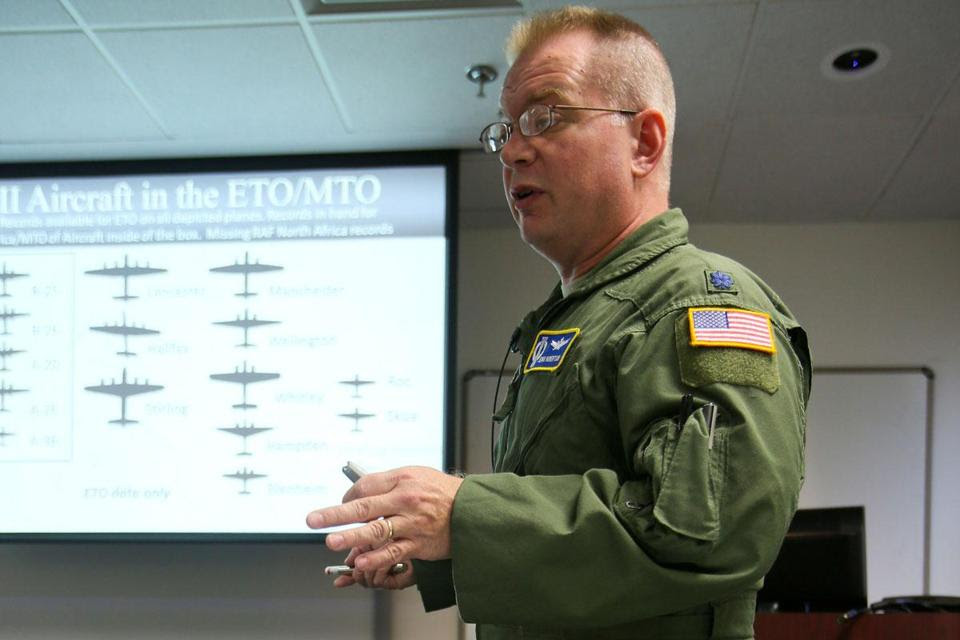
Lieutenant Colonel Jenns Robertson’s project is aiding efforts to spot unexploded bombs that still endanger civilians.

MEG MCKINNEY FOR THE BOSTON GLOBE

Dự án của Trung tá Colonel Jenns Robertson đang hỗ trợ các nỗ lực định vị các quả bom chưa phát nổ vẫn đang gây nguy hiểm cho người dân.

Cách đây 6 năm, dường như là một ý tưởng ngây thơ khi Trung tá Colonel Jenns Robertson, 45 tuổi, một người bản xứ ở Minnesota đeo kính hạng ngoại hạng thậm chí hơn cả các tiêu chuẩn của quân đội, đã bắt đầu một sở thích khá bất thường: ghi lại dữ liệu về bom của không lực Mỹ trong một thế kỷ – từng quả bom một Tiếp tục đọc “CƠ SỞ DỮ LIỆU VỀ BOM CÓ ÍCH CHO CHIẾN TRANH TRONG QUÁ KHỨ VÀ HIỆN TẠI”

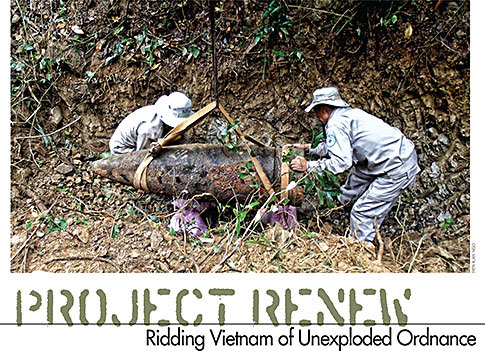
Project Renew: Ridding Vietnam of Unexploded Ordnance

I was invited by the editors of The VVA Veteran, publication of Vietnam Veterans of America, to submit an article reviewing the history of mine action efforts in Viet Nam, including the role of American veterans and U.S. veterans organizations. Over the past couple of decades of cooperation with our Vietnamese colleagues, and with support from the U.S. government and other international donors and project partners, we are coming very close to the reality of “making Viet Nam safe” from the daily threat of cluster bombs and other ordnance left from the war. CS
The VVA Veteran
January/February 2017

Project RENEW: Ridding Vietnam of Unexploded Ordnance

BY CHUCK SEARCY

For most Americans, the Vietnam War ended in 1975. But for too many Vietnamese, the war didn’t end then. They continued to suffer death, injury, and lifetime disabilities from munitions that remained on the surface or just under the soil. These weapons posed a constant danger to unsuspecting residents throughout the country—but especially along the former demilitarized zone.

Tiếp tục đọc “Project Renew: Ridding Vietnam of Unexploded Ordnance”

Xin lỗi và bồi thường chiến tranh trong quan hệ quốc tế ; Kinh nghiệm lịch sử trong quan hệ Việt – Mỹ

  • VHNA –  NGUYỄN THÁI YÊN HƯƠNG
  • Thứ ba, 26 Tháng 5 2015 21:26

                                                                Hòa giải và giảng hòa một cách chân tình không có nghĩa là chúng ta quên quá khứ

Nelson Maldela

Trong quan hệ quốc tế nói chung, vấn đề xin lỗi và bồi thường chiến tranh là một vấn đề luôn song hành với quan hệ giữa các nước trong quá trình hàn gắn vết thương để đến bình thường hóa quan hệ ngoại giao. Đây là vấn đề đã được nhiều nhà nghiên cứu quan hệ quốc tế đề cập theo góc độ xã hội, lịch sử. Tiếp tục đọc “Xin lỗi và bồi thường chiến tranh trong quan hệ quốc tế ; Kinh nghiệm lịch sử trong quan hệ Việt – Mỹ”

The 30-Years War in Vietnam

Viet Minh in battle in Dien Bien Phu, Vietnam. Credit Collection Jean-Claude Labbe/Gamma-Rapho, via Getty Images

It should go without saying that the Vietnam War is remembered by different people in very different ways. Most Americans remember it as a war fought between 1965 and 1975 that bogged down their military in a struggle to prevent the Communists from marching into Southeast Asia, deeply dividing Americans as it did. The French remember their loss there as a decade-long conflict, fought from 1945 to 1954, when they tried to hold on to the Asian pearl of their colonial empire until losing it in a place called Dien Bien Phu.

The Vietnamese, in contrast, see the war as a national liberation struggle, or as a civil conflict, depending on which side they were on, ending in victory in 1975 for one side and tragedy for the other. For the Vietnamese, it was above all a 30-year conflict transforming direct and indirect forms of fighting into a brutal conflagration, one that would end up claiming over three million Vietnamese lives.

The point is not that one perspective is better or more accurate than the other. What’s important, rather, is to understand how the colonial war, the civil war and the Cold War intertwined to produce such a deadly conflagration by 1967.

Continue reading on New York Times

Phát triển bền vững ở Tây Nguyên

– Tính nghiêm trọng của các vấn đề Tây Nguyên. Làm gì để giải quyết?

Nguyên Ngọc

I – Một số nét tổng quan

A – Khái niệm Tây Nguyên :

Theo địa lý hành chính hiện nay, Tây Nguyên gồm có năm tỉnh, kể từ bắc vào nam : Kontum, Gia Lai, Đắc Lắc, Đắc Nông, Lâm Đồng.

Tiếp tục đọc “Phát triển bền vững ở Tây Nguyên”

Đạo Thiên Chúa và Chủ nghĩa thực dân tại Việt Nam

image

Luận án Tiến Sĩ Quốc Gia Khoa Học Chính Trị Đại Học Paris.

“Truyền bá Thiên Chúa giáo, điều nầy đem lợi ích gì cho việc chiếm đất thuộc địa” . không một ai chối cải điều đó, trừ những người có thiên kiến…. Đức ông Guebriant, vị Tổng quản trị bề trên của phái bộ truyền giáo ngoại quốc tại Paris đã viết như thế trong tờ “Thông Tin” số ngày 25-1-1931 (1). Tiếp tục đọc “Đạo Thiên Chúa và Chủ nghĩa thực dân tại Việt Nam”

Bomb database useful for past, present wars

Boston Globe
JULY 30, 2012

Lieutenant Colonel Jenns Robertson’s project is aiding efforts to spot unexploded bombs that still endanger civilians.
Lieutenant Colonel Jenns Robertson’s project is aiding efforts to
spot unexploded bombs that still endanger civilians. MEG MCKINNEY
FOR THE BOSTON GLOBE

MAXWELL AIR FORCE BASE, Ala. — Six years ago it seemed a zany idea when Lieutenant Colonel Jenns Robertson, 45, a bespectacled Minnesota native with an outsized gee-whiz quality even by military standards, began a rather unusual hobby: documenting a century of US air power — bomb by bomb. Tiếp tục đọc “Bomb database useful for past, present wars”

Tàu ngầm Mỹ trong cảng Subic – 4 kỳ

  • Kỳ 1: Trở lại sau 20 năm
  • Kỳ 2: Bến cũ, người xưa và…
  • Kỳ 3: Chiếc USS Louisville từ đâu tới?
  • Kỳ 4: Ngó trước ngó sau
USS Louisville từ đâu tới?
Một góc vịnh Subic năm 1990 – Ảnh: d.r.sanner

***

Tàu ngầm Mỹ trong cảng Subic

09/07/2012 11:01 GMT+7


TT – Nó nằm đó thù lù “một cục” trên bờ kè sát con đường Water Front cảng Subic, chiếc tàu ngầm hạt nhân USS Louisville của hạm đội 7 Mỹ, sáng nay thứ tư 27-6. Thật yên ả thả neo trên bến cảng ngày nào là căn cứ hải – không quân Mỹ.

Tiếp tục đọc “Tàu ngầm Mỹ trong cảng Subic – 4 kỳ”

In Vietnam, the Ghost of Agent Orange Still Looms Large

50 years after the herbicide was used by the U.S. during the Vietnam War, Agent Orange continues to wreak havoc.

thediplomat_Some nights, the illuminated oval-shaped building hovering over a thick row of trees keeps Trinh Bui Kokkoris, 48, restless. Each time she looks out of the window from her apartment in Brooklyn Heights, the sight of the U.S. District Court reminds Trinh of the lawsuit she and her husband lost more than a decade ago with other Vietnamese victims of Agent Orange. Tiếp tục đọc “In Vietnam, the Ghost of Agent Orange Still Looms Large”

50 năm sự kiện Vịnh Bắc Bộ: Khi một tổng thống nói dối để tuyên chiến

(TN) Sự kiện Vịnh Bắc bộ diễn ra cách đây 50 năm, khi tổng thống Mỹ lúc đó là Lyndon B. Johnson tuyên bố hải quân Việt Nam Dân chủ cộng hòa tấn công 2 tàu chiến Mỹ trên Vịnh Bắc bộ tối 4.8.1964 và ra lệnh tiến hành cuộc chiến chống miền Bắc Việt Nam. Thực sự ông Johnson đã nói dối công luận khi chẳng có vụ tấn công nào, theo báo Boston Globe (Mỹ) trong loạt bài về chủ đề này ngày 3.8.2014.

50 năm sự kiện Vịnh Bắc Bộ: Khi một tổng thống nói dối để tuyên chiến - ảnh 1Tranh vẽ minh họa cuộc đấu súng giữa khu trục hạm USS Maddox và 3 tàu phóng ngư lôi của Việt Nam Dân chủ cộng hòa trên vịnh Bắc bộ ngày 2.8.1964 – Nguồn: Trung tâm lịch sử Hải quân Mỹ

Tiếp tục đọc “50 năm sự kiện Vịnh Bắc Bộ: Khi một tổng thống nói dối để tuyên chiến”

Nhìn lại 20 năm bình thường hóa quan hệ Việt – Mỹ: 2 kỳ

  • Kỳ 1: Nhiệm vụ cơ mật của Đại tướng Lê Đức Anh
  • Kỳ 2: Chuyện Đại tướng Lê Đức Anh thuyết phục ông John Kerry

Đại tướng Lê Đức Anh, Việt Mỹ, Bill Clinton, đối ngoại, ngoại giaoTổng thống Mỹ Bill Clinton và phu nhân đón tiếp Chủ tịch nước Việt Nam Lê Đức Anh và phu nhân tại Mỹ năm 1995. Ảnh tư liệu

***

Kỳ 1: Nhiệm vụ cơ mật của Đại tướng Lê Đức Anh

VNN – Bộ Chính trị một lần nữa đặt trọng trách lên vai Đại tướng – ông sẽ cùng với Bộ Ngoại giao tìm cách thăm dò và “mở đột phá khẩu” để tiến tới việc bình thường hóa quan hệ với Mỹ. 

Tiếp tục đọc “Nhìn lại 20 năm bình thường hóa quan hệ Việt – Mỹ: 2 kỳ”