A deep dive into the rationale behind some of Asia’s reclamation projects, the toll they take on our environment and communities, and the search for more sustainable alternatives.
Reclamation is seen as a solution for countries to deal with increasing land demands, by expanding their territory and rehabilitating previously uninhabitable lands or seas. Yet, the process guzzles an alarming amount of sand, causing massive environmental damage as well as a rise of transnational criminal syndicates trading in illegal sand.
Coastlines, ecosystems, and entire populations are now facing adverse impacts due to increased sand-mining activity, with one of the major driving forces being land reclamation. This practice of creating new land at sea is often touted as a solution to urban expansion and climate change.
As well as sending remittances, many are returning to their homeland
Photograph: Hannah Reyes Morales/New York Times/Redux /Eyevine
May 22nd 2025|HO CHI MINH CITYShareListen to this story
Fifty years ago Thinh Nguyen left his homeland aboard an American navy ship. Some of his compatriots escaped in helicopters. Tens of thousands fled in makeshift boats. Many more, including Mr Nguyen’s father and brother, were left behind as troops from North Vietnam stormed into Saigon, then the capital of American-backed South Vietnam. The chaotic evacuation marked the end of the Vietnam war, badly damaged American credibility and left Vietnam in Communist hands. It also helped create one of the world’s biggest diasporas.
The intricate histories and niche experiences that we love about Saigon can make it difficult to explore. If you enjoy reading about Saigoneer’s favorite destinations, Urbanist Travel can help create a tailor-made itinerary based on your requests. More Informatio
Read this article in Vietnamese at Sài·gòn·eer.From the very first discussions in 1868 regarding a new marketplace for Saigon, it was not until 1914, that Bến Thành Market became a reality. The birth of the market was like a dream come true, one that came together after nearly five decades of debate in search of solutions for the city’s infrastructure woes.
The five-decade quest to seek a “worthy” marketplace
In her research conducted on the vendors of Bến Thành, anthropologist Ann Marie Leshkowich recounts the lengthy discussions of then Saigon’s colonial administration regarding the establishment of a new commercial center, one that, according to them, must become a place “worthy” of the metropolis they were helping to create.
In 1868, the French had only spent about one decade trying to install a colonial network in Vietnam. Members of the Municipal Council (Conseil Municipal) had the thought of building a new marketplace from metal, replacing traditional thatch markets. In 1869, a budget of 110.000 francs was greenlit, but by 1870, the estimated expenditure had ballooned threefold, causing them to reconsider the planned building methods and amount of materials.
Author Mehebub SahanaLeverhulme Early Career Fellow, Geography, University of Manchester
China recently approved the construction of the world’s largest hydropower dam, across the Yarlung Tsangpo river in Tibet. When fully up and running, it will be the world’s largest power plant – by some distance.
Yet many are worried the dam will displace local people and cause huge environmental disruption. This is particularly the case in the downstream nations of India and Bangladesh, where that same river is known as the Brahmaputra.
The proposed dam highlights some of the geopolitical issues raised by rivers that cross international borders. Who owns the river itself, and who has the right to use its water? Do countries have obligations not to pollute shared rivers, or to keep their shipping lanes open? And when a drop of rain falls on a mountain, do farmers in a different country thousands of miles downstream have a claim to use it? Ultimately, we still don’t know enough about these questions of river rights and ownership to settle disputes easily.
The Yarlung Tsangpo begins on the Tibetan Plateau, in a region sometimes referred to as the world’s third pole as its glaciers contain the largest stores of ice outside of the Arctic and Antarctica. A series of huge rivers tumble down from the plateau and spread across south and south-east Asia. Well over a billion people depend on them, from Pakistan to Vietnam.
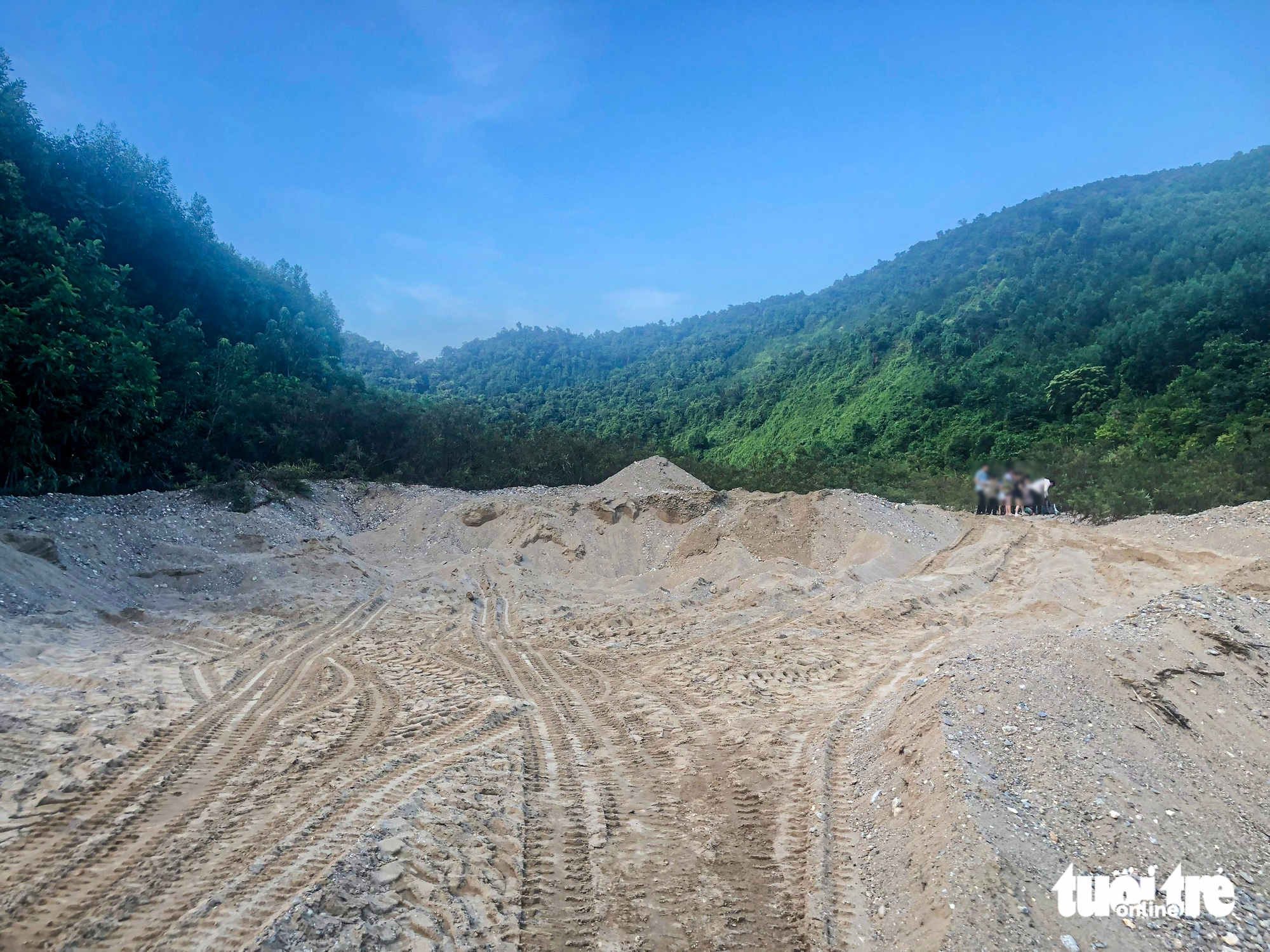
Tại khu vực thượng nguồn sông Cu Đê (Đà Nẵng), một đoạn sông Bắc đang bị những kẻ trộm cát cày xới, xâm hại đến cảnh quan và môi trường tự nhiên.
Hình ảnh tại hiện trường bãi khai thác cát trái phép ở một đoạn sông Bắc (xã Hòa Bắc, huyện Hòa Vang, Đà Nẵng) – Ảnh: THANH NGUYÊN
Xe múc, phương tiện âm thầm đào trộm cát
Xã Hòa Bắc (huyện Hòa Vang) đang được xây dựng thành điểm du lịch sinh thái ở Đà Nẵng với nhiều con suối trong lành. Vào mùa hè, dòng sông Cu Đê và những con suối nằm ở thượng nguồn như sông Bắc thu hút đông đảo người dân và du khách đến vui chơi, nghỉ mát.
Tuy nhiên, một đoạn sông Bắc đang bị “cày xới” bởi các đối tượng khai thác cát lậu.
00:01:44
Xe múc đào trộm cát trên thượng nguồn sông Cu Đê ở Đà Nẵng, chính quyền nói gì? – Video: THANH NGUYÊN
Theo ghi nhận của Tuổi Trẻ Online, tình trạng khai thác cát trái phép ở khu vực này đã diễn ra được một thời gian.
Trước đó vào tháng 8-2024, phóng viên ghi nhận nhiều người đã đưa máy móc, xe tải tiến về khu vực sông Bắc (phía trên vũng Bọt) để múc trộm cát.
Các hoạt động khai thác cát trái phép này thường diễn ra vào ban đêm hoặc rạng sáng để tránh bị lực lượng chức năng phát hiện.
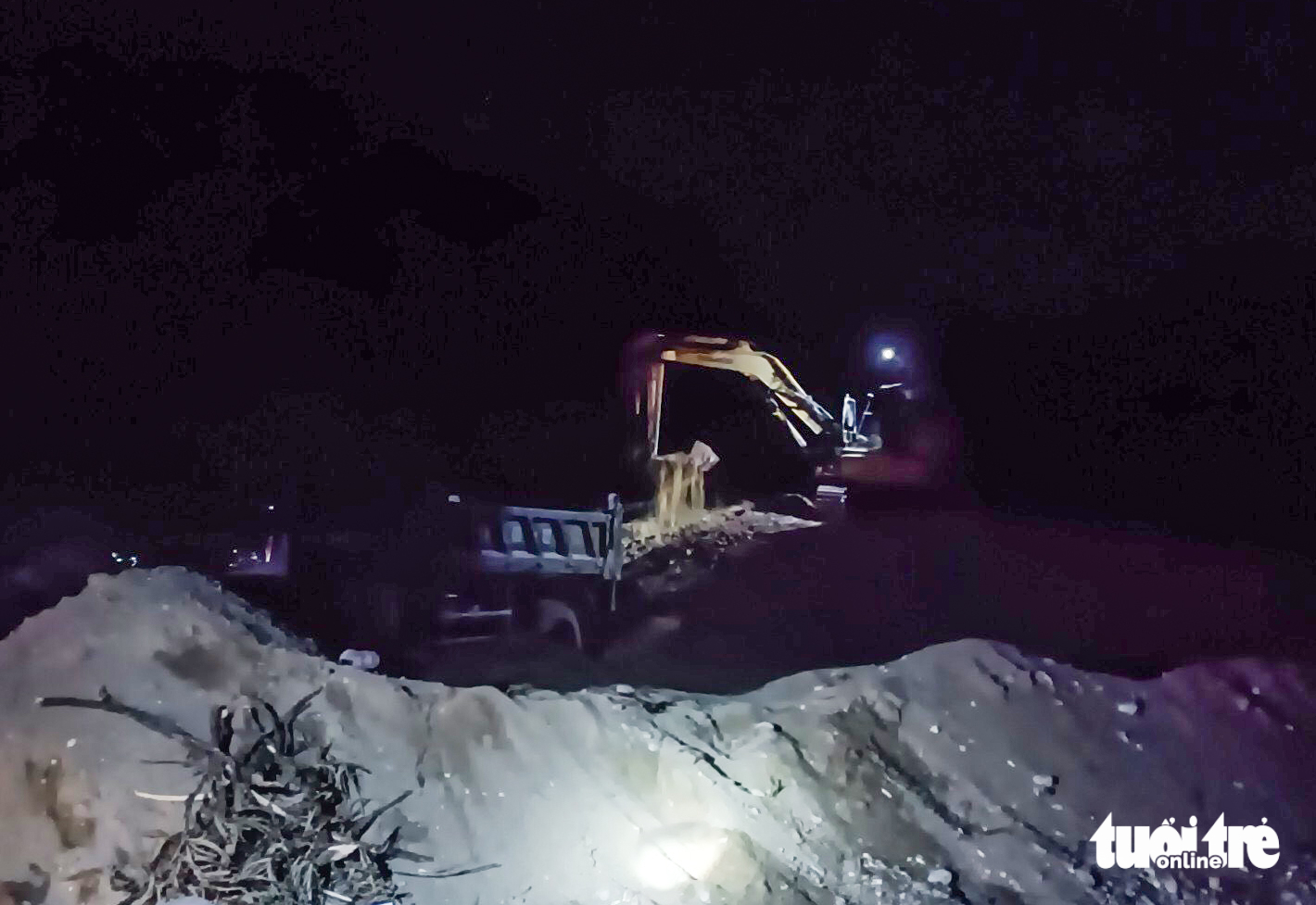
Theo ghi nhận, khoảng 22h, một người lái xe tải chở theo máy xúc tiếp cận đến điểm khai thác. Người này nhanh chóng xúc cát đổ đầy thùng xe tải dưới ánh sáng lờ mờ của chiếc đèn pin.
Hình ảnh khai thác cát trái phép trong đêm – Ảnh: THANH NGUYÊN
Trước khi chở cát rời đi, người này gom cát lại thành đống để thuận tiện cho việc khai thác lần tiếp theo.
Sau một thời gian, các hoạt động khai thác tạm ngưng khi nước suối dâng cao vào mùa mưa cuối năm 2024. Tuy nhiên, thời gian gần đây, việc khai thác cát trộm tái diễn ở khu vực này. Các đối tượng tiếp tục tuồn đi nhiều m3 cát, sỏi dọc bờ suối.
Hậu quả để lại là một đoạn bờ suối bị cày xới, biến dạng, nguy cơ làm thay đổi dòng chảy và tiềm ẩn nhiều nguy cơ sạt lở vào mùa mưa.
Vietnam and China, the two largest markets for traditional medicine (TM) that uses wild plants and animals, announced a new partnership in January to adopt practices that protect wildlife while preserving the countries’ cultural heritage.
The first-of-its-kind agreement involved leading TM associations from Vietnam and China — the Vietnam Oriental Traditional Medicine Association (VOTMA) and the China Association of Traditional Chinese Medicine (CATCM) — along with researchers, policymakers and pharmaceutical leaders. TRAFFIC, an international NGO monitoring illegal wildlife trade, facilitated it.
The partnership aims to explore “several sustainable practices to make traditional medicine more conservation-friendly,” said TRAFFIC Vietnam director Trinh Nguyen in a statement to Mongabay. She said these include encouraging practitioners to switch to legal, sustainable and cultivated plant-based alternatives, and eliminating illegal wildlife ingredients in prescriptions.
Historical TM practices in the two countries have incorporated wildlife-derived ingredients, including those from threatened species, such as tiger bones, pangolin scales, rhino horns and bear bile. While many such ingredients are legal to trade inside China, the wildlife parts are often sourced from other countries to meet domestic demand. Many of the threatened species are, however, listed on CITES Appendix I, making the international trade in their parts illegal. As TM becomes popular globally, conservationists worry about its impact on wildlife.
Plastic is now ubiquitous in the Mekong, Asia’s Mother of Rivers, and experts and local people are struggling to contain the risks to human health, biodiversity and livelihoods
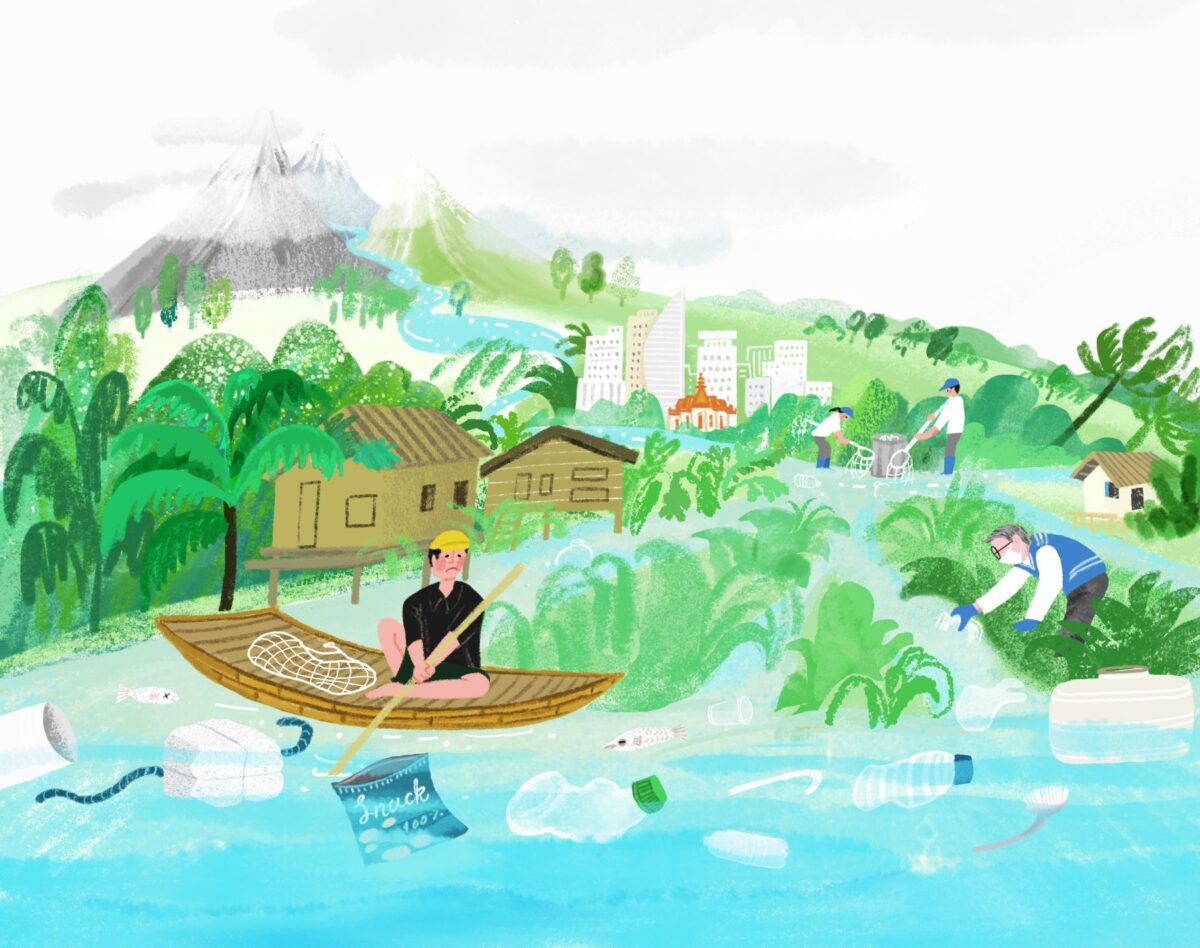
ILLUSTRATION: Sunhee Park / Dialogue Earth
On Sơn Island in Viet Nam’s Mekong Delta, Le Trung Tin scatters fish feed into his ponds, where dozens of snakehead fish leap through the surface in synchronized bursts. “I taught them how to do that,” he says proudly, tossing another handful of feed at his fish.
The scene looks idyllic, but Le’s fish farm is a reluctant response to an escalating crisis. For decades, he made his living fishing the Hậu River, a distributary of the Mekong. But in recent years, plastic waste clogged his nets and strangled the fish. “I had no choice but to stop,” he says. “Everything was tangled – trash, nets, even the fish themselves. It was hopeless.”
Now, Le relies on enclosed ponds using filtered water to keep his fish alive. “I built this ecological environment free of plastic waste, chemical spills and [protected it from] extreme weather,” he says.
Le’s experience reflects the wider challenges facing the Mekong. Stretching over 4,300 kilometres from the Tibetan Plateau to the South China Sea, the river supports nearly 70 million people and some of the world’s most biodiverse ecosystems. Yet, it is one of the most plastic-polluted rivers in the world and among the 10 rivers in Asia that carry the vast majority of plastic to the sea. The Mekong dumps – by some estimates – tens of thousands of tonnes each year into the ocean, with plastic waste accumulating along its banks, tributaries and lakes.
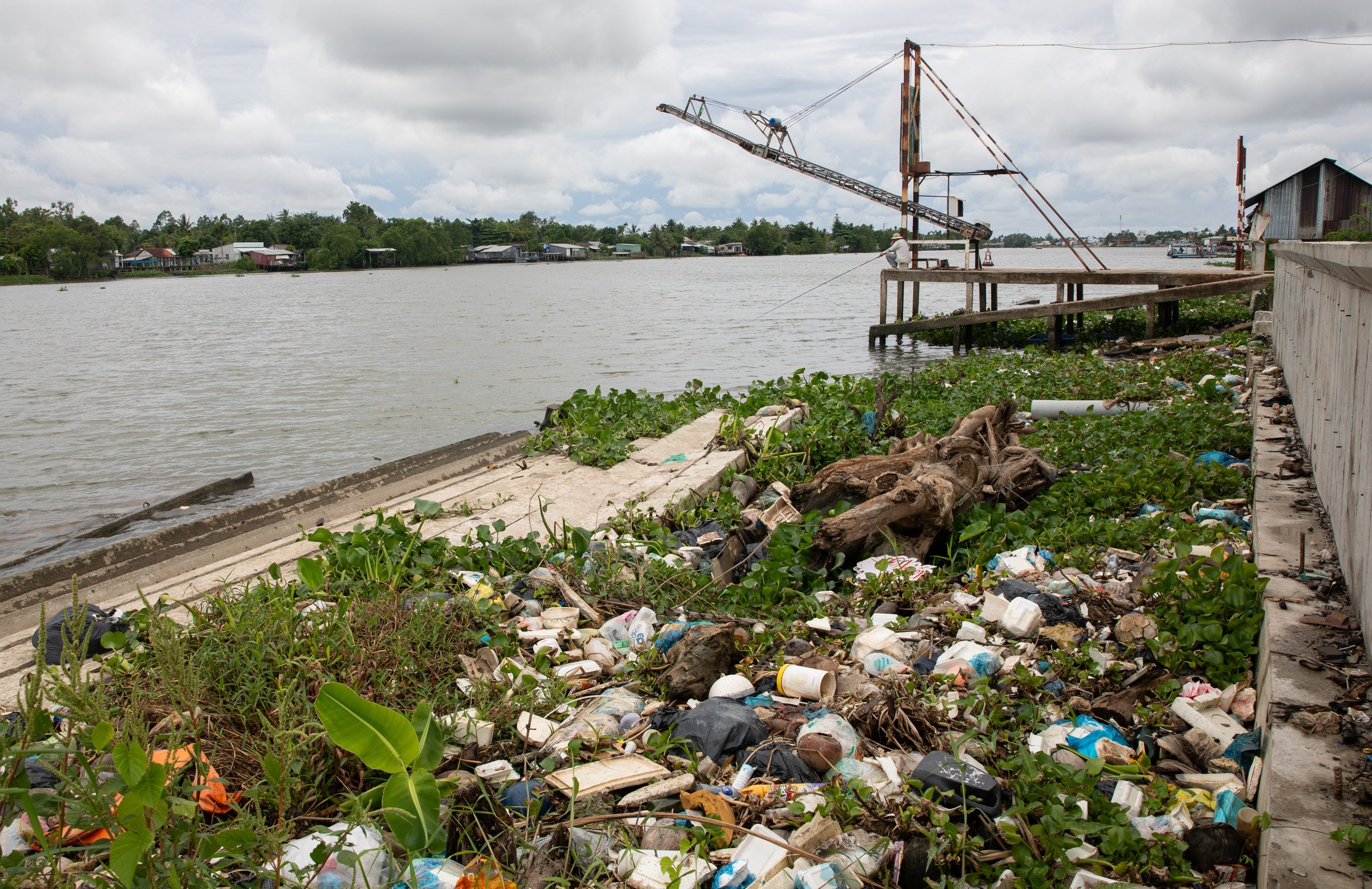
Plastic enters the Mekong in myriad ways – agricultural runoff, unregulated dumping and a flood of single-use packaging from upstream countries like China and Myanmar. It accumulates in hotspots like Tonle Sap Lake in Cambodia and the wetlands of Vietnam’s Mekong Delta, where this plastic waste threatens biodiversity, food security and human health.
Plastics and other waste accumulate along the riverbank near the city of Can Tho in Vietnam’s Mekong Delta region. PHOTO: Anton L. Delgado / Dialogue Earth