
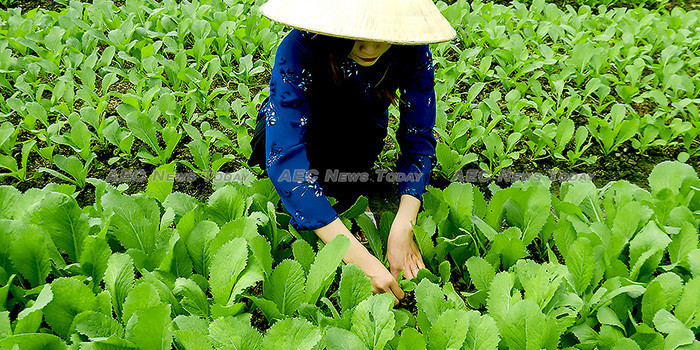
After profound advances in manufacturing and services most observers now believe that Vietnam is well-positioned to meet its principal Vision 2035 goal of achieving upper middle-income status. But sustained agricultural gains are by no means assured and key agricultural officials recognise this.
At the end of the American-Vietnam war agriculture in Vietnam employed around 75 per cent of the total workforce and produced roughly 10 million tons of rice, the country’s staple. The majority of Vietnam’s population of 50 million was significantly undernourished. Tiếp tục đọc “Vietnam agriculture: government will & education needed”
![African swine fever, which has hit the world's top pork producer, China, especially hard, originated in Africa before spreading to Asia and Europe [File: Kacper Pempel/Reuters]](https://www.aljazeera.com/mritems/imagecache/mbdxxlarge/mritems/Images/2019/10/30/aaf3e1d7582b462faca8fdd43b067b1e_18.jpg "African swine fever keeps spreading across Asia")






 CVD
CVD 