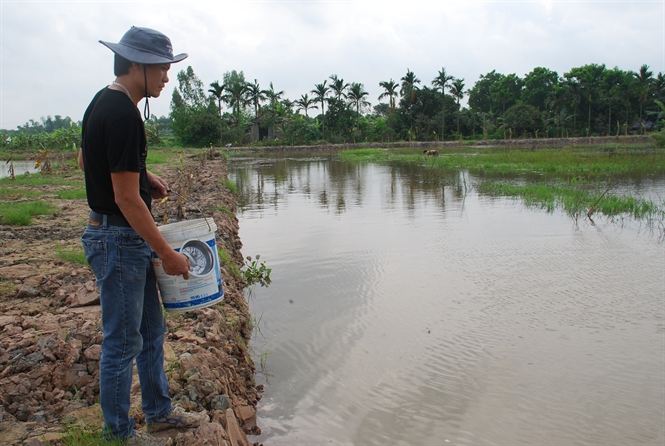
Choáng váng hình ảnh ô nhiễm nặng ở kênh Ba Bò

VNN – Tổng vốn đầu tư cải tạo kênh Ba Bò lên đến 1.100 tỉ đồng nhưng chỉ để…làm đẹp cảnh quan hơn là giải quyết dứt điểm tình trạng ô nhiễm.

Rạng sáng16/6, bà con cư ngụ doc hai bên bờ kênh Ba Bò (P. Bình Chiểu, Q.Thủ Đức, TP.HCM) tỉnh giấc bởi mùi hôi thối nồng nặc từ ngoài xông vào nhà.

Như một thói quen có từ lâu, mọi người mở cửa nhìn ra dòng kênh. Dưới kênh, một lớp bọt trắng khá dày đang nổi. Mùi hôi từ đó lan tỏa vào từng nhà dân…

kênh ba bò, ô nhiễm, cải tạo kênh, Bình Dương
Kênh Ba Bò trắng xóa bọt

7g sáng, PV VietNamNet có mặt tại hiện trường ghi nhận từ cầu Tỉnh lộ 43 nhìn xuôi về hạ lưu, toàn bộ mặt kênh phủ một màu trắng xóa. Lớp bọt trắng khá dày từ thượng nguồn trôi về đây mang theo mùi tanh tưởi khó thở. Tiếp tục đọc “Choáng váng hình ảnh ô nhiễm nặng ở kênh Ba Bò”

Massive island-building and international law

June 15, 2015

AMTI. CSIS – Within the short span of a year, China’s rapid construction of artificial islands in the disputed Spratlys has radically changed the geographical and security landscapes in the South China Sea.

This island construction has so far created over eight million square metres of real estate in the open sea, outstripping other countries’ reclamation activities by far, and shows no sign of abating. Hundreds of millions of tons of sand and coral have been dredged from the seabed and dumped atop fragile coral reefs that are vital components of the maritime ecology. Marine experts expect that the work has already caused disastrous and essentially irreversible environmental impacts. Tiếp tục đọc “Massive island-building and international law”

Southeast Asia’s Geopolitical Centrality and the U.S.-Japan Alliance

JUN 11, 2015

CSIS – Building on a careful analysis of Southeast Asia’s recent history, politics, economics, and place within the Asia Pacific, this report looks forward two decades to anticipate the development of trends in the region and how they will impact the U.S.-Japan alliance. How will Southeast Asian states come to grips with the political and economic rise of China? How will they modernize their military forces and security relationships, and what role can the United States and Japan play? How will they manage their disputes in the South China Sea, and how will they pursue greater regional integration? These questions will prove critical in understanding Southeast Asia’s role in the Asia Pacific, and in the U.S.-Japan alliance, in the decades ahead.

Publisher CSIS/Rowman & Littlefield
ISBN 978-1-4422-4086-5 (pb); 978-1-4422-4087-2 (eBook)


Phát triển ngành công nghiệp môi trường ở Việt Nam

Hoạt động của ngành CNMT sẽ cung cấp các sản phẩm và dịch vụ môi trường đáp ứng nhu cầu phòng ngừa ô nhiễm và bảo vệ môi trường, bao gồm: các hoạt động đánh giá, phân tích và bảo vệ môi trường; các hoạt động kiểm soát ô nhiễm, quản lý chất thải và tái sinh các nguồn chất thải; cung cấp và vận chuyển các tài nguyên môi trường như nước, các loại vật liệu tái sinh và các nguồn năng lượng sạch; các hoạt động góp phần tăng hiệu quả sử dụng năng lượng và tài nguyên, tăng năng suất sản xuất và tăng hiệu quả kinh tế; các hoạt động thu gom, xử lý các loại chất thải từ tất các hoạt động trong xã hội.

Vacne.org.vn – Một trong những yêu cầu chiến lược, có vai trò then chốt để đảm bảo cho sự phát triển kinh tế hài hòa với các vấn đề môi trường là phải phát triển một ngành Công Nghiệp Môi Trường (CNMT) đặc thù, phát triển song song với các ngành công nghiệp khác. Tiếp tục đọc “Phát triển ngành công nghiệp môi trường ở Việt Nam”

1m2 đất ruộng, giá ngang bát phở

1m2 đất ruộng, giá ngang bát phở

NongNghiep.vn – 29/05/2015, 15:12 (GMT+7)

Cấy lúa kém hiệu quả khiến nhiều nông dân Hải Dương chán ruộng, bỏ ruộng rồi bán ruộng với mức giá nhiều khi 1m2 chỉ ngang 1 bát phở.

lúa cá 1
Mô hình lúa cá của hai ông Chủ nhiệm

Tình trạng bĩ cực của người này đôi khi lại mở ra cơ hội làm ăn mới cho kẻ khác khi có thể tích tụ đất đai để SX hàng hóa quy mô lớn… Tiếp tục đọc “1m2 đất ruộng, giá ngang bát phở”

Có 2.732 con sông vì sao vẫn thiếu nước ?

TNTheo chỉ tiêu đánh giá của Hội Tài nguyên nước quốc tế (IWRA), quốc gia thiếu nước nếu chưa có đến 4.000 m3/người/năm, con số này ở VN là 3.370 m3/năm.

Sông Gianh (Quảng Bình) đoạn chảy qua xã Đức Hóa cạn trơ đáy, chỗ có nước chỉ ngang đầu gối
Sông Gianh (Quảng Bình) đoạn chảy qua xã Đức Hóa cạn trơ đáy, chỗ có nước chỉ ngang đầu gối – Ảnh: Phan Thủy

VN là một đất nước nằm trong vùng châu Á gió mùa, có lượng mưa khá lớn, xấp xỉ 2.000 mm/năm, cả nước có đến 2.732 con sông có chiều dài trên 10 km và khá nhiều chi lưu, dòng suối, hồ đầm, có nguồn nước ngầm hiện diện tương đối đều khắp và có một vùng bờ biển dài và rộng. Với ưu thế địa lý tài nguyên như vậy, nhiều người vẫn nghĩ rằng nguồn nước ở VN rất dư thừa dẫn đến sử dụng nguồn nước khá lãng phí. Tiếp tục đọc “Có 2.732 con sông vì sao vẫn thiếu nước ?”

Climate or the Economy? Vietnam´s Attempts to Balance Growth and the Environment

By Rabea Brauer | Vu Dang Tuan

Although Vietnam has very comprehensive frameworks for its climate and energy policy, there are justified doubts about the practicability of the strategy and its compatibility with economic development. This is reflected in the current climate and energy policy. Right now, it is impossible to consistently pursue the goal of balancing an effective climate policy with a low-carbon economy. This is because the goal is at odds with current developments in Vietnam’s energy sector. Germany Trade & Invest says that, in contrast to Germany’s energy policy, Vietnam has made the construction of coal-fired power plants a top priority, and this despite the fact that the country has considerable potential when it comes to renewable energies
(hydropower, biomass, nuclear energy).

CLIMATE OR THE ECONOMY? VIETNAM’S ATTEMPTS TO BALANCE GROWTH AND THE ENVIRONMENT

How do you achieve harmony between economic prosperity and a decisive climate policy? Governments all over the world are facing this dilemma and trying to tackle the serious challenges presented by the reciprocal relationship between economic policy and climate policy. Tiếp tục đọc “Climate or the Economy? Vietnam´s Attempts to Balance Growth and the Environment”

What motivates Vietnam to strive for a low‐carbon economy? – An explorative case study on the drivers of climate policy in a developing country

By Anne Zimmer, Michael Jakob, and Jan Steckel

Against the intuition of standard economic theory on collective action problems a number of developing countries engage in unilateral climate change mitigation policy. Ostrom (2010) gives several potential reasons why conventional theory fails to explain this observation, as for example the existence of multiple benefits. By analyzing the case of Vietnam, this study intends to give insights on the potential motivation for climate policy in a developing country. By means of qualitative interviews with Vietnamese policy makers and other stakeholders we examine the determinants that have shaped climate related policies recently launched in Vietnam, focusing on renewable energy policy and fossil fuel pricing policies. We find that emission reductions are not a main objective of these policies. Distinguishing between domestic and external factors, we argue that multiple policy objectives related to multiple benefits stemming from climate policy played important roles for national policy making as well as Vietnam’s international climate policy. Along the lines of Kingdon’s (1995) ‘multiple streams framework’ our analysis suggests that the interplay of those external and internal factors has opened a ‘window of opportunity’ enabling a policy change from a climate policy focused on adaptation to one in which increased emphasis is put on mitigation

Concluding thoughts Tiếp tục đọc “What motivates Vietnam to strive for a low‐carbon economy? – An explorative case study on the drivers of climate policy in a developing country”

Nông dân sáng chế máy biến rác thải thành phân hữu cơ

Thứ Năm, 20/11/2014 – 07:21

Dân trí – Từ khi sáng chế ra máy chế biến phế phẩm nông nghiệp thành phân hữu cơ, gia đình anh Phúc không phải mua phân ngoài thị trường để bón cho trên 1ha hoa màu. Từ đó, mỗi năm gia đình anh tiết kiệm được khoảng 70 triệu đồng tiền mua phân bón.

Trưa ngày 19/11, chúng tôi tìm tới nhà cũng là lúc vợ anh Vũ Đình Phúc (khu Đất Mới, phường 7, TP Đà Lạt, Lâm Đồng) đang sốt sắng chuẩn bị một số nông sản là rau, hoa, cho chồng đem ra Hà Nội làm quà biếu người quen. Anh Phúc cho biết, đầu giờ chiều qua anh bay ra Hà Nội để ngày 20/11 nhận giải thưởng Nhân tài Đất Việt cho sản phẩm máy nghiền rác tạo thành phân hữu cơ do anh sáng chế. Có được thành quả như hôm nay, mấy ai biết rằng anh nông dân này đã phải trải qua những khó khăn, vất vả đến nhường nào.

Tiếp tục đọc “Nông dân sáng chế máy biến rác thải thành phân hữu cơ”

Cải thiện tình trạng lạm dụng phân bón hóa học: Nhiệm vụ bức thiết của nông nghiệp

Thứ hai, ngày 3 tháng 11 năm 2014 | 10:33

KTNT – Do thói quen canh tác, nhiều nông dân vẫn lạm dụng phân bón hóa học, nhất là urê, để chăm sóc cho cây trồng, vừa lãng phí, vừa gây ô nhiễm môi trường. Để khắc phục tình trạng này, Trung tâm Khuyến nông Quốc gia và hệ thống khuyến nông ở các địa phương đã xây dựng nhiều mô hình canh tác sử dụng phân bón hợp lý, hiệu quả.


Đại diện Trung tâm Khuyến nông Quốc gia thăm mô hình liên kết sản xuất ngô giống sử dụng phân bón Lâm Thao tại HTX Kinh Kệ (Lâm Thao – Phú Thọ).

Tiếp tục đọc “Cải thiện tình trạng lạm dụng phân bón hóa học: Nhiệm vụ bức thiết của nông nghiệp”

Enter Science & China’s Blue Economy in the South China Sea’s Policy Discussion

by  • June 2, 2015 •

By James Borton

Source: Vladimir Varfolomeev's flickr photostream, used under a creative commons license.

cogitasia – The role of marine science and the emergence of China’s blue economy helped frame a new narrative on the South China Sea’s policy debate, as shown at a CSIS discussion on May 21titled “The Convergence of Marine Science and Geopolitics in the South China Sea.” Two of the panelists John McManus from the University of Miami’s Rosentiel School of Marine & Atmospheric Science and Kathleen Walsh from the U.S. Naval War College agree that the South China Sea is not simply a sovereignty dispute but is likely to be recognized as one of the most significant environmental issues of the 21st century. Tiếp tục đọc “Enter Science & China’s Blue Economy in the South China Sea’s Policy Discussion”

Ô nhiễm đất do hóa chất nông nghiệp

Thứ Ba, 02/06/2015 07:28 | Tin tức VN

Lạm dụng thuốc bảo vệ thực vật, sử dụng phân bón hóa học không đúng cách, nguồn thải từ chăn nuôi… trong sản xuất nông nghiệp là những nguyên nhân gây nên tình trạng ô nhiễm đất ngày càng nghiêm trọng ở nhiều nơi.

Đất bị “ngộ độc”

Theo thống kê của Cục Bảo vệ thực vật (Bộ Nông nghiệp và Phát triển nông thôn), việc nhập khẩu và sử dụng thuốc bảo vệ thực vật (BVTV) đang gia tăng một cách đáng báo động. Số lượng thuốc BVTV nhập khẩu từ 20.000 tấn năm 2005 lên đến gần 50.000 tấn năm 2014. Cả nước có khoảng 20.000 đại lý buôn bán thuốc BVTV, 97 nhà máy chế biến thuốc với khoảng 30.000 – 40.000 tấn/năm. Cùng với đó, số lượng phân bón cũng tăng đáng kể. Từ năm 1985 đến nay, số lượng phân bón tiêu thụ đã tăng tới 500%. Việt Nam hiện sử dụng khoảng 10 triệu tấn phân bón các loại mỗi năm. Tiếp tục đọc “Ô nhiễm đất do hóa chất nông nghiệp”

Climate Change and Energy in Vietnam – Is the door open for civil society?

Fes-sustainability – by Ha Thi Quynh Nga

Over the last decades, the discourse on sustainable development has significantly contributed to the formation as well as the strengthening of the civil society in Vietnam. In the mid-1980s, the Government of Vietnam (GoV) introduced Doi Moi (reforms) which moved the economy from centrally-planned to a more market-based approach. This historical milestone has raised the country to a new level of development and transformed its social and economic structures. Foreign investments, bilateral and international trade have grown rapidly but at the same time created multiple development challenges to the country. Vietnam is witnessing serious forest degradation, environmental pollution and loss of natural resources, and the growing threat of climate change poses increasing challenges on Vietnam to sustain its economic achievements. Climate change is undermining efforts in poverty alleviation, making the fight against it even harder and more expensive. According to DARA International’s Climate Vulnerability Monitor 2012, total economic losses due to climate change are estimated to have cost Vietnam 5 per cent of its GDP in net terms in 2010 and are expected to grow to 11 per cent of GDP by 2030 as the country’s vulnerability shifts from severe to acute.
Tiếp tục đọc “Climate Change and Energy in Vietnam – Is the door open for civil society?”

Việc làm trong ngành năng lượng sạch tăng 18% trong năm 2014

Bài báo được đăng lần đầu tiên trên Business Green

Châu Á là một khu vực mà IRENA xác định thiết lập mức tăng trưởng đáng kể trong năng lượng xanh khi tiếp tục chuyển công việc sản xuất từ Bắc Mỹ và Châu Âu. Trong khi Trung Quốc dẫn đầu với 3,4 triệu việc làm, các nước láng giềng như Ấn Độ, Indonesia, Nhật và Bangladesh cũng nằm trong tốp 10 nước đứng đầu về việc làm trong ngành năng lượng xanh.

Chỉ riêng Trung Quốc đã có gần 3,4 triệu người trong ngành công nghiệp năng lượng xanh. Điều gì phía sau sự tăng trưởng việc làm này? Tiếp tục đọc “Việc làm trong ngành năng lượng sạch tăng 18% trong năm 2014”

Quang Tri fights DDT pollution

The foundation staff found the Trieu Long 2 Primary School on a contaminated site. — VNS Photo Phuoc Buu

QUANG TRI (VNS) — Non-governmental organisations have started investigating several sites in the central Quang Tri Province that have become polluted by pesticides.

Following a report in Viet Nam News on pollution causing locals hardship, Rosa Luxemburg Stiftung from Germany last week held a preliminary survey in the area. Tiếp tục đọc “Quang Tri fights DDT pollution”