Thẻ: Mekong Delta – Đồng Bằng Sông Cửu Long
Cần 2.500 tỉ đồng đầu tư dự án thủy lợi Cái Lớn- Cái Bé giai đoạn 2
Thứ Bảy, 4/1/2020, 18:45
(TBKTSG Online) – Bộ Nông nghiệp và Phát triển nông thôn đang cần đến 14.200 tỉ đồng để đầu tư các công trình thủy lợi ở Đồng bằng sông Cửu Long (ĐBSCL) giai đoạn 2021-2025, trong đó, dự án hệ thống thủy lợi Cái Lớn- Cái Bé giai đoạn 2 cần đến 2.500 tỉ đồng.
Dự án Cái Lớn- Cái Bé kiểm soát nguồn nước hơn 384.000 ha bán đảo Cà Mau
Sau nhiều tranh cãi, dự án thủy lợi Cái Lớn – Cái Bé được phê duyệt
Dự án Cái Lớn – Cái Bé có làm nghị quyết “thuận thiên” phá sản?
Tiếp tục đọc “Cần 2.500 tỉ đồng đầu tư dự án thủy lợi Cái Lớn- Cái Bé giai đoạn 2”
Experts say water release from Chinese dams too little to reach Vietnam
Even if China releases water from its hydropower dams on the Mekong River, it might not reach the Mekong Delta in Vietnam, experts warn.
![]() |
|
A farmer in Long Phu District in the Mekong Delta province of Soc Trang holds rice plants that have all died because of drought, January 22, 2020. Photo by VnExpress/Huy Phong. |
Releasing water is a task China has to do periodically as its dams cannot keep holding back water, and given the increasing level of ice melt that raises sea level, it is a must for China to save its land from salt intrusion, Le Anh Tuan, deputy head of the Climate Change Institute at Can Tho University, said.
Tiếp tục đọc “Experts say water release from Chinese dams too little to reach Vietnam”
Saltwater intrusion to enter deeper in Mekong Delta
07/01/2020 14:06 GMT+7
Saltwater intrusion in the Mekong Delta during the dry season, is forecast to enter local rivers 30-40km deeper than the annual average.
![]() |
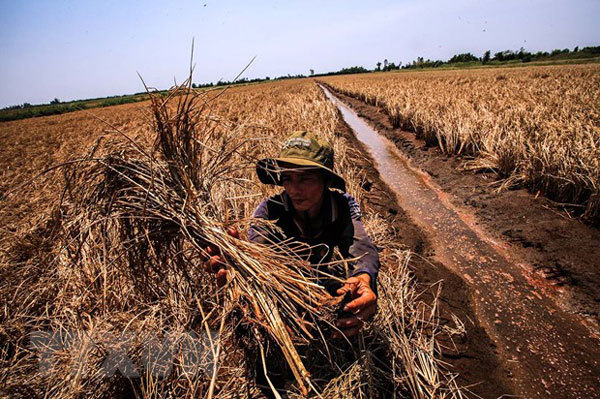
| Salinity intrusion destroyed rice fields in the Mekong Delta province of Kien Giang in 2016.—VNA/VNS Photo Trong Dat |
That is more severe than 2016, the year of historic salinity which caused VND15 trillion (US$ 646 million) damage to the delta.
The concentration of salinity was about four grammes per litre, said minister of Agriculture and Rural Development Nguyen Xuan Cuong at a meeting held on Friday in the Mekong Delta province of Ben Tre. Tiếp tục đọc “Saltwater intrusion to enter deeper in Mekong Delta”
Mekong Delta stays alert for severe drought
Vietnam’s Mekong Delta is bracing severe drought and salinity in the coming months, and local authorities have been told to take every step possible to mitigate the damage.
For this dry season, which has already started in southern Vietnam and normally lasts until late April, drought conditions are likely to be more severe, resulting in more salinity in the delta, which spreads over 40,577 square kilometers (15,670 square miles).
The nation’s most fertile region for long, the Mekong Delta has been called the Vietnam’s rice granary. It is also the nation’s aquaculture hub.
Gravest threat to Mekong delta today is sediment starvation not rising seas
Posted on 10 December 2019
Published in the journal Nature Scientific Reports, the findings of the Rise and Fall Project at Utrecht University are clear: the growing threat to the Mekong Delta – and the communities, cities, rice fields and biodiversity that depend on it – posed by higher tides and salt intrusion is almost entirely due to the loss of river sediment because of upstream dams and sand mining in the delta.
Rising tides in the delta have major ramifications for flooding in subsiding and increasingly vulnerable cities, and river bank erosion. While sea level rise and climate change have received most attention in relation to the sinking and shrinking of the Mekong delta, the research shows that in the last 20 years, they have driven less than 5% of these trends.
Tiếp tục đọc “Gravest threat to Mekong delta today is sediment starvation not rising seas”
Mekong ký sự
Ấn chuột vào chữ "Youtube" ở cuối màn ảnh, bên phải, để xem trực tiếp trên Youtube và thấy được danh sách của tất cả các clips trong chuỗi bài. Tổng cộng 4800 km chiều dài sông, khoảng 37 tiếng đồng hồ video clips.
Đi dọc dòng Mekong từ thượng nguồn đến hạ nguồn, do Đài Truyền Hình TP Hồ Chí Minh thực hiện.
https://www.youtube.com/watch?v=M1MJtAIQBO8&list=PLE8LsRBt82UMj4TcZrh85GkIqz6EHFMy5
Phát triển Đồng Bằng Sông Cửu Long
Chào các bạn,
Mình viết bài này về phát triển Đồng Bằng Sông Cửu Long vì (1) mình yêu người dân miền Tây rất hiền lành chân thật, (2) mình phục dân miền Tây với tinh thần chiến đấu và sáng tạo đã được minh chứng hơn 300 năm, (3) ĐBCCL là một trong những vùng bị ảnh hưởng nhất thế giới bởi biến đổi khí hậu, (4) phát triển ĐBSCL cũng là một phần lớn của phát triển đất nước, và (5) quan trọng nhất là chính sách của VN cho đến lúc này là không công bình với người dân ở ĐBSCL.
Cho phép mình nói về điểm quan trọng nhất, điểm số 5 bên trên: Chính sách của VN cho đến lúc này là không công bình với người dân ở ĐBSCL. Tiếp tục đọc “Phát triển Đồng Bằng Sông Cửu Long”
Các con đập hủy hoại Mê Kông như thế nào?
02/11/2019 – BVR&MT
Khi người Trung Quốc đến làng Lat Thahae – ngôi làng tọa lạc trên một khúc cong đục ngầu của một nhánh sông Mê Kông, họ vẽ nguệch ngoạc mấy chữ tiếng Trung lên các bức tường nhà cửa, trường học và chùa chiền.

Vietnam – “Rise and Fall” toward a sustainable Mekong Delta
>> Bài liên quan: Biện pháp đo độ cao mới cho thấy biến đổi khí hậu có thể nhanh chóng nhấn chìm đồng bằng sông Cửu Long
Hanoi, 24 October 2019 – The Mekong Delta is one of the most vulnerable deltas to climate change, particularly sea level rise. However, the social and economic developments in the region also have a significant impact on the land. Urbanisation, land-use transformation, intensification of economic activities and human protection against natural disasters has led to the large-scale extraction of fresh groundwater, heavy loading of infrastructure, upstream dykes and dam construction as well as loss of habitat and biodiversity. These human activities have accelerated the sediment starvation, salinisation, land subsidence and erosion. The Rise and Fall research program, a cornerstone in the Vietnam – the Netherlands delta collaboration, addresses these challenges with the Dutch multi-disciplinary approach in delta management by following four lines of research: fresh groundwater reserves, saline intrusion to surface water, land subsidence and governance. This research program plays an important role in the development of strategies and policies for the sustainable development of Mekong Delta with the significant findings as follow.
Mekong delta is much lower than previously assumed
Tiếp tục đọc “Vietnam – “Rise and Fall” toward a sustainable Mekong Delta”
DÒNG SÔNG KHÔNG QUAY ĐẦU: MEKONG ĐỐI MẶT VỚI TƯƠNG LAI U ÁM
(River of no return: Mekong faces grim future)
Luke Hunt – Bình Yên Đông lược dịch
UCANews – August 21, 2019
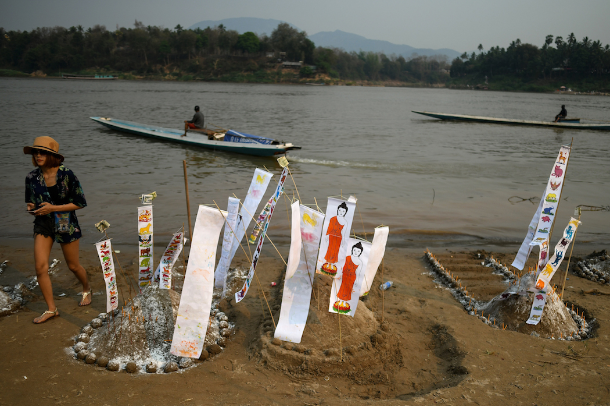
Hình chụp ngày 14 tháng 4 cho thấy một du khách đi ngang đụn cát hay “Toppathatsay” trên bờ sông Mekong đánh dấu năm mới ở Lào hay “Pi Mai” tổ chức ở Luang Prabang. [Ảnh: Manan Vatsyayana/AFP]
Một lần nữa, sông Mekong xuống thấp đến mức kỷ lục, đe dọa việc sản xuất hoa màu, ngư nghiệp và sinh kế của 70 triệu người giữa việc phát triển thái quá và những báo động tàn khốc. Nhưng hạn hán năm nay, lần thứ hai trong vòng 3 năm, có thể đánh dấu một bước ngoặt và một tương lai đen tối.
Tiếp tục đọc “DÒNG SÔNG KHÔNG QUAY ĐẦU: MEKONG ĐỐI MẶT VỚI TƯƠNG LAI U ÁM”
Biện pháp đo độ cao mới cho thấy biến đổi khí hậu có thể nhanh chóng nhấn chìm đồng bằng sông Cửu Long
English: New Elevation Measure Shows Climate Change Could Quickly Swamp the Mekong Delta
scientificamerican.com
Tiết lộ bất ngờ này có nghĩa là 12 triệu người Việt Nam có thể sẽ cần phải sơ tán
• Tác giả Charles Schmidt vào ngày 28 tháng 8 năm 2019

Theo một nghiên cứu mới của Philip Minderhoud, nhà địa lý học tại Đại học Utrecht, Hà Lan, 12 triệu người có thể bị di dời do lũ lụt ở đồng bằng sông Cửu Long tại Việt Nam trong vòng nửa thế kỷ tới. Minderhoud và các đồng nghiệp đã đi đến kết luận ngạc nhiên này sau khi phân tích các phép đo trên mặt đất của địa hình sông Mê Kông mà chính phủ Việt Nam giữ kín khỏi các nhà khoa học phương Tây trong nhiều năm. Kết quả được công bố hôm nay trên tạp chí Nature Communications, cho thấy độ cao của sông Mê Kông trên mực nước biển trung bình chỉ 0,8 mét, thấp hơn gần hai mét so với ước tính thường được trích dẫn dựa trên dữ liệu vệ tinh miễn phí có sẵn. Tiếp tục đọc “Biện pháp đo độ cao mới cho thấy biến đổi khí hậu có thể nhanh chóng nhấn chìm đồng bằng sông Cửu Long”
New Elevation Measure Shows Climate Change Could Quickly Swamp the Mekong Delta
The surprise revelation means 12 million Vietnamese may need to retreat

A stunning 12 million people could be displaced by flooding in Vietnam’s Mekong Delta within half a century, according to new research led by Philip Minderhoud, a geographer at Utrecht University in the Netherlands. Minderhoud and his colleagues arrived at that surprising conclusion after analyzing ground-based measurements of the Mekong’s topography that the Vietnamese government shielded from Western scientists for years. The results, published today in Nature Communications, show the Mekong’s elevation over sea level averages just 0.8 meter, which is almost two meters lower than commonly quoted estimates based on freely available satellite data.
Tiếp tục đọc “New Elevation Measure Shows Climate Change Could Quickly Swamp the Mekong Delta”
Hạ nguồn Mekong trong cơn khát vô tận của Bắc Kinh
Gần hai mươi triệu người Việt Nam phụ thuộc vào nước ở hạ nguồn sông Mekong. Nhưng thượng nguồn bị kiểm soát bởi một quốc gia có cơn khát vô tận.
“Chúng không chết nhưng cũng không lớn nổi”, Hủ nói, ném lại những con tôm bé hơn ngón tay út xuống hồ. Đó là lần thả lưới thứ ba trong ngày, mới có vài con tôm vướng lưới.
Như nhiều nông dân khác ở Đồng bằng sông Cửu Long, Trần Văn Hủ đã từng chuyển đổi từ hai vụ lúa sang một vụ lúa một vụ tôm, rồi cuối cùng chuyển hẳn sang quảng canh tôm. Đất nhiễm mặn, cây lúa cho năng suất thấp. Nước ngọt ngày càng khan hiếm mà cây lúa lại tiêu tốn nhiều nước. Tiếp tục đọc “Hạ nguồn Mekong trong cơn khát vô tận của Bắc Kinh”